
From folk to funk, here's an introduction to the impressive portfolio of Labi Siffre.
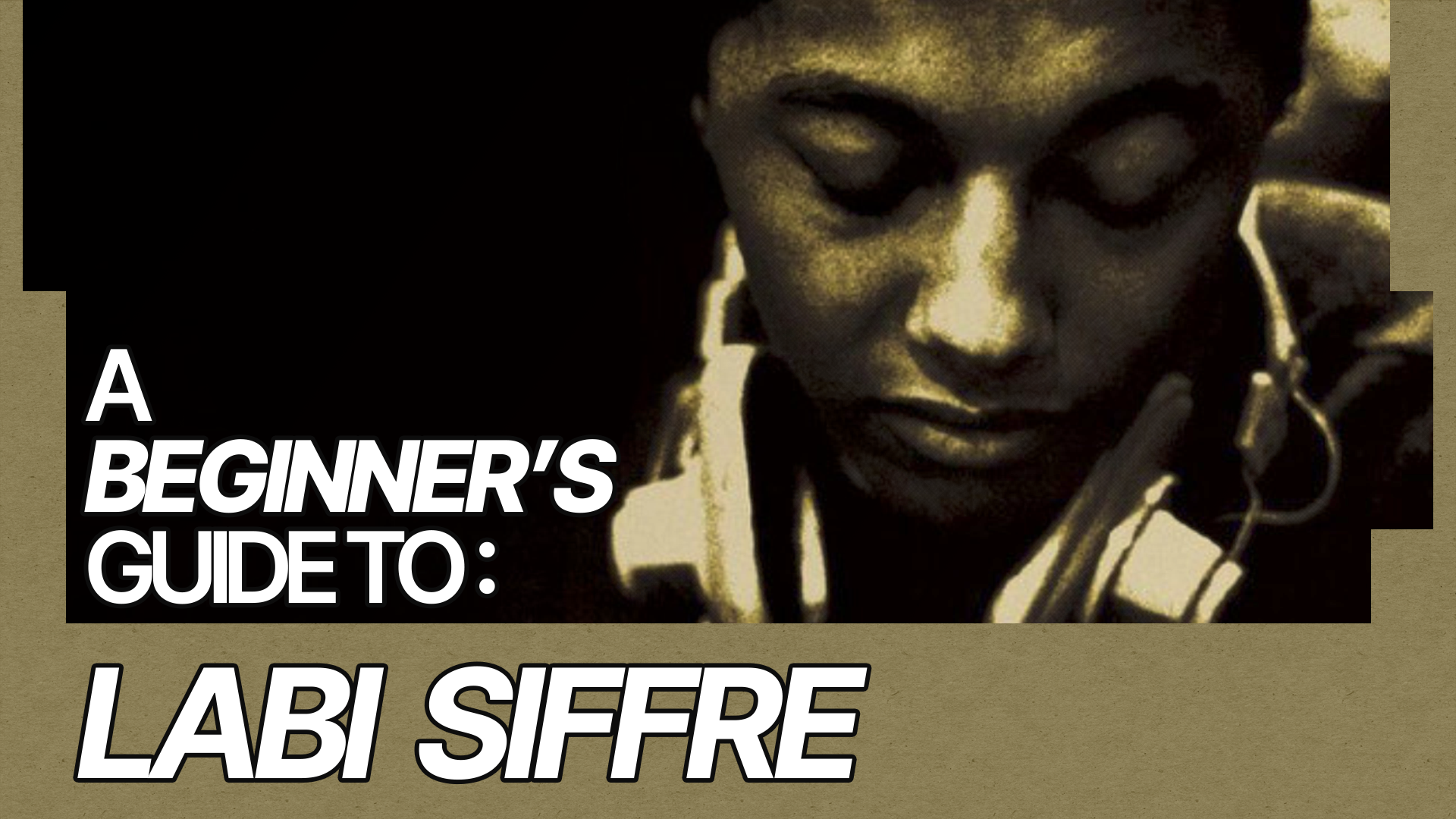
Anyone who has turned on a radio since 1999 will know his Wurlitzer hook underscoring Eminem’s ‘My Name Is’. Rap fans will know his chorus ‘And I wonder if you know/ What it means’, foregrounding Kanye West's downbeat loops. And those with ska-leaning parents (or maybe just anyone who's been to a British wedding in the last four decades) will have heard his composition in Madness’s ‘It Must Be Love’. Fewer people may know him by name, but the man behind these works is the musical genius Labi Siffre.
Labi Siffre is a folk-soul artist, a poet, an activist, a playwright, an openly queer, black, Catholic-turned-atheist, and a true pioneer of modern music in so many ways. Operating since 1970, Siffre has released ten studio albums, each met with varying degrees of commercial reception.
It's important to note that his earlier obscurity was most likely not a simple case of bad luck. Operating as a black, queer artist (and more importantly a black and queer artist discussing his identity) in an industry that sought (and seeks) to uphold existing hegemonies may offer an explanation as to the more subdued reception during his releases.
However, fifty years on from the advent of his career, it seems Siffre’s music is finally gaining the widespread recognition it deserves. The last three years alone have seen his music featured in the Christmas bildungsroman The Holdovers, as well as the Norwegian tragicomedy Sentimental Value. Perhaps related, two of his 1970s-produced songs have also permeated the TikTok sphere, proving Siffre's continued impact.
If you would like to get to know Labi Siffre's music more intentionally, but don’t know where to start, here I guide you through the best and most Siffre of his work.
Song: ‘Bless The Telephone’
It's only right to begin with Siffre's ‘Bless The Telephone’. The track was at one point strictly for the aficionados. But in 2025, the force of TikTok intervened, sending this 1971 ditty into a new orbit. It is Labi Siffre at his sweetest and most sincere. He somehow has the ability to make the well-explored theme of love feel like a new discovery.
Bound by a sense of simplicity, the song's texture is stripped-back, with a solo guitar drawing from a small but rich catalogue of chords. The guitar is plucked so tenderly it evokes the sound of a harp or lyre. Alongside Siffre’s lyrics, the track becomes an ode to the telephone. His narrative ability shines as he transforms a mundane object into a magical medium for expressing the depths of love.
Album: Crying Laughing Loving Lying
To sink your teeth into a larger body of Siffre’s work, try his critically acclaimed album Crying Laughing Loving Lying. The LP was released in 1972 and was Siffre's greatest commercial success, although still only reaching a humble No. 46 in the UK charts.
Crying Laughing Loving Lying explores human emotion and the human experience in its entirety, perfectly encapsulated by its title. Siffre opens with his lone but resounding vocals singing ‘I am a free man, and my father, he was a slave/ I have been broken, but my children will be saved’. He alludes to his rejection of the dogmatic Catholicism he was brought up with: ‘Well, I don't need religion to tell me what to do /I know that I should love you’. His political prelude weaves into the pensiveness of ‘Cannock Chase’. The lithe guitar fingerpicking bends to the contours of Siffre’s voice. He sings ‘Sitting in the backseat of my car/ With my arms around my guitar/ And the rain falls/ From the roof of the world’. There's a subtle complexity to his poetry, at once unpretentious but profound.
While diverse in his topical exploration, Siffre’s varying themes never give you whiplash. ‘Fool Me A Good Night’ manages to subtly creep in with its ragtime guitar and spectral vocals. Siffre's voice cracks and trembles as he sings of a deep yearning. ‘'Till Forever’ morphs the narrative, instead offering a quintessential Siffre love song. His dulcet vocals complement the in medias res lyricism. It creates the feeling that you, the listener, are supposed to be right there with him in that moment. These varying emotional fabrics create a patchwork of stories, experiences, and emotions all stitched together with the earnest thread of being human and able to love.
Song: ‘I Got The…’
Lastly, I direct you to the track that possesses possibly the most instantly recognisable hook in the contemporary pop music canon. ‘I Got The…’ is indeed the track that offers the crucial (and aforementioned) Eminem sample. The ascending motif, however, makes up only six seconds of this six-minute song, and a whole world of funky, groovy magic exists outside of it.
Bursting with blues notes, syncopation and driving rhythms, ‘I Got The…’ cements a funk sound Siffre had only previously flirted with. His vocals translate brilliantly into this new genre, pairing seamlessly with the colourful string and brass entries.
After the (in)famous hook is planted, the remaining minutes are used to sonically water it. As the phrase is expanded, the arrangement becomes more unbridled. By the end, the piece has become an all-out orchestral jam, and the song fades out. A fitting conclusion to the introduction of this remarkable artist.