
From youthful alienation to wry humour and unguarded sincerity, Simon & Garfunkel’s five albums reveal a more adventurous and complex side of Paul Simon’s songwriting than his reputation might suggest.
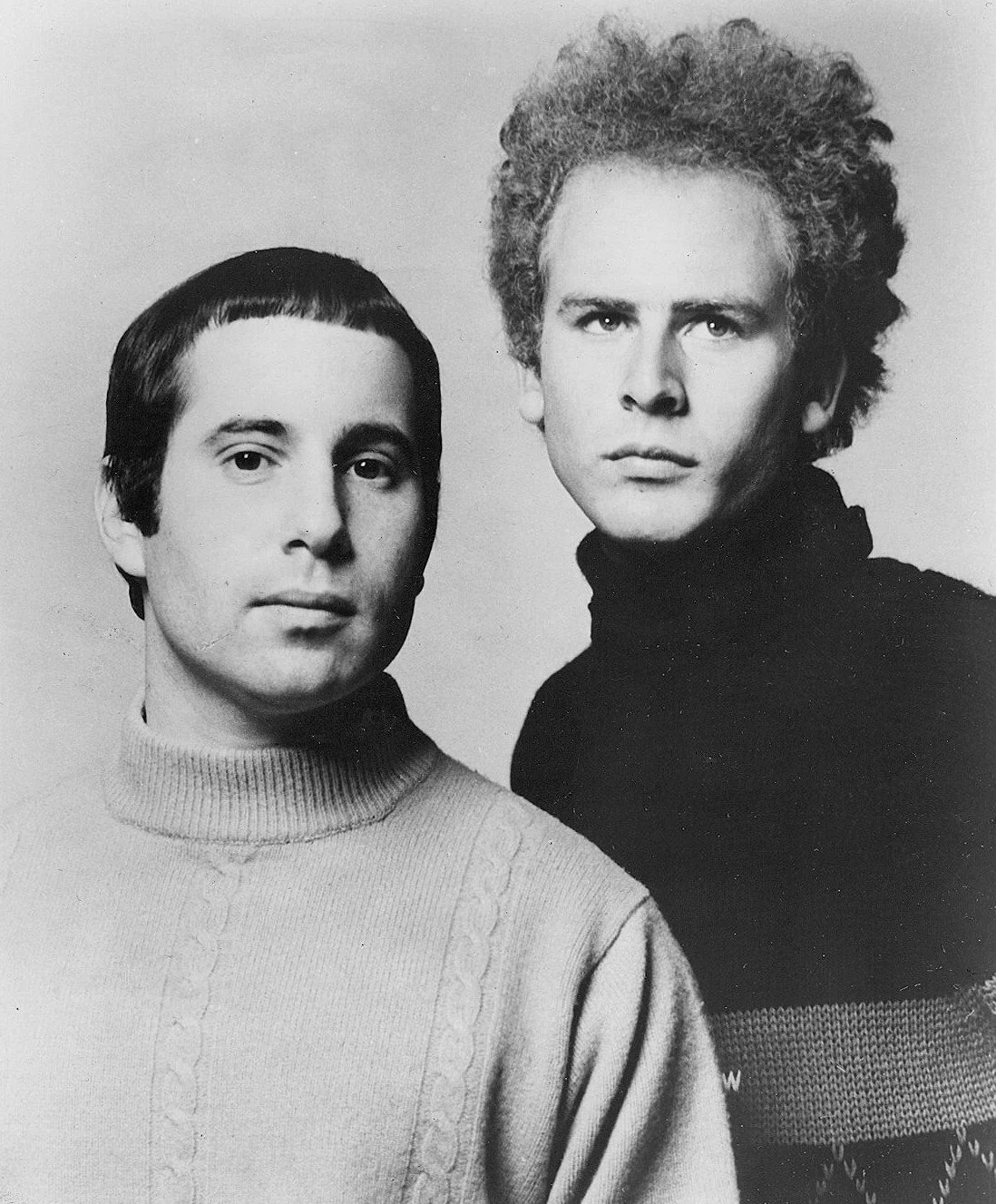
Paul Simon has an image problem. Whereas similarly critically acclaimed songwriters like Bob Dylan, Leonard Cohen and Joni Mitchell are still supremely cool (in some niche groups), Paul Simon is lame. It would be hard to imagine Cameron Winter obsessively listening to Bookends instead of The Songs of Leonard Cohen, or Lana Del Rey covering ‘The Boxer’ instead of ‘Chelsea Hotel #2’ (she did cover the duo’s arrangement of ‘Scarborough Fair’, but not any of Paul Simon’s original music). However, though the characterisation of Paul Simon as a skilled but uncool songwriter isn’t necessarily inaccurate, it’s also deeply superficial. Each of Simon and Garfunkel’s albums reveals new layers to Paul Simon’s songwriting, showing just how much ground the duo managed to cover in five albums and how he evolved as a songwriter over the duo’s discography.
Sounds of Silence
Wednesday Morning, 3 A.M. is the Bob Dylan of Simon and Garfunkel’s discography: worth it for completionists and superfans only. Sounds of Silence, though, is a wholly different beast. Described by Simon as ‘a very late adolescence’, the album is plagued by a few growing pains, but it is a compelling and strangely bleak listen. Bleak is a word rarely used to describe Paul Simon, but throughout the eleven tracks there are three deaths, two of which are suicides. It is obviously an album about alienation, with Simon remembering how the reception to ‘The Sound of Silence’ drove him in that direction: ‘They put a tag on the alienation. And it was a self-fulfilling prophecy, so I wrote alienation songs.’
The album is also bookended by ‘The Sound of Silence’ and ‘I Am a Rock’, both explicit reflections on isolation that take wildly different lyrical approaches. ‘The Sound of Silence’, despite being Simon and Garfunkel’s most acclaimed song, is one of the worst victims of Simon’s ‘late adolescence’ (it was also written several years before the others, being a re-recording of the version on the duo’s first album). From the first line, ‘Hello darkness my old friend’, to the even more dramatic proclamation, ‘Silence like a cancer grows’, the lyrics are rooted in a poetic language that, though technically impressive, was anachronistic even in 1966. Paul Simon is occasionally given to overwrought songwriting (even his most acclaimed songs like ‘Bridge Over Troubled Water’ come across a little strong), and this song is one of the worst offenders.
The last lines of ‘I Am a Rock’, though, show Simon’s rapid growth as a writer. With a surprisingly layered vocal performance, he paints a compelling portrait of denial; of the singer trapped in his ‘fortress deep and mighty’. When he claims, ‘I have my poetry to protect me’, it can easily be read as a repudiation of ‘The Sound of Silence’. The album begins with a real attempt to describe an alienated society and ends with the singer using that same poetic impulse as a shield. Whereas ‘The Sound of Silence’ is a societal lament, ‘I Am a Rock’ is entirely interior. Though the ‘words of the prophet […] whispered in the sound of silence’ sound arch and impressive, the final lyrics of ‘I Am a Rock’ are most potent in their simplicity. Finally defeated, the singer retreats into himself as Simon half-mumbles the words: ‘And a rock feels no pain/And an island never cries’.
Parsley, Sage, Rosemary and Thyme
On Parsley, Sage, Rosemary and Thyme, Simon further develops these ideas of isolation, but the album sheds the oppressive gloom of Sounds of Silence. Though songs like ‘The Dangling Conversation’ and ‘Homeward Bound’ are sad, they are never quite so aggressively bleak. ‘The Dangling Conversation’ in particular demonstrates a maturity in its quietness. Even when the strings swell and lines like ‘Trapped in our indifference/Like shells upon the shore’ are thrown out, the mundane core of the song’s drama keeps it anchored. Simon generates a similar pathos as the suicides of ‘Richard Cory’ and ‘A Most Peculiar Man’ in the misery of an unfulfilling conversation.
The most interesting part of this phase of Simon and Garfunkel’s career, though, is Paul Simon’s burgeoning comedic chops. ‘A Simple Desultory Philippic’ is a light-hearted joke song at Bob Dylan’s expense, and it is also probably the funniest song he’s ever written. In a poor imitation of Dylan’s drawl, Simon cribs his lines (‘It’s alright ma, everybody must get stoned!’) and makes masturbation jokes (‘That’s the hand I use… well never mind’). Several of Dylan’s most obvious trademarks abound: internal rhyme, seemingly random references to cultural figures (like Robert McNamara and Ayn Rand) and the occasional screeching harmonica. Abandoning his usual poise, Simon shows a surprising looseness here. He also reserves the best joke for the last seconds of the song. After a final blow on his harmonica, the instrument can be heard dropping to the floor, and Simon quietly says, ‘I’ve lost my harmonica Albert’ (Albert Grossman was Bob Dylan’s manager in the ’60s).
‘A Simple Desultory Philippic’ is also an example of one of Paul Simon’s great songwriting virtues: his earnestness. The song is witty and occasionally childish, but it never veers into meanness. Unlike many of his cooler contemporaries, Paul Simon has no real capacity for cruelty. His humour, and even his anger, is gentle by contrast. Paul Simon could never write as biting a song as ‘Ballad of a Thin Man’, and Bob Dylan practically did write ‘A Simple Desultory Philippic’.
Bookends
If Parsley, Sage, Rosemary and Thyme demonstrates Paul Simon’s maturity as a dramatic songwriter and birth as a comic, then Bookends demonstrates his growth as a comedic songwriter and introduces a new complexity to his drama. The economy of lyrics found in songs like ‘I Am a Rock’ is further developed (in a Rolling Stone interview, Simon claimed that ‘the concept in Parsley, Sage wasn’t to get each line perfect, and it was in Bookends’). The result is unquestionably their best album, and also their funniest, with Simon learning how to balance comedy with moments of real pathos.
A fairly obscure song, ‘Punky’s Dilemma’, is a fantastic example of that balance, with its gentle guitar strumming and restrained vocal performance. Whereas the internal rhyme on ‘A Simple Desultory Philippic’ is a direct jab at Dylan, here it gives the song a far subtler comedic lilt. Lines like ‘Wish I was an English muffin/’Bout to make the most out of a toaster’ are sweetly absurd and more likely to elicit a smile than a laugh. When Simon sings ‘I’m a “Citizens for Boysenberry Jam” fan’, riffing on the anti-Vietnam War ‘Citizens for Peace’, he subtly telegraphs the dramatic shift at the end of the song without compromising its tone. By this point he has entirely abandoned the verbosity of his earlier songs, and for good reason: though Bookends reaches, and even surpasses, the emotional heights of the duo’s previous albums, it is entirely devoid of melodrama. The most intense moment of the album, the dissonant and frantic conclusion to ‘Old Friends’, is instrumental, with the lyrics building up to the emotional resolution of the song.
‘Punky’s Dilemma’s’ shift, of course, is where Simon finally makes the Vietnam War connection obvious, singing about ‘old Roger, draft-dodger/Leavin’ by the basement door’. Even so, he doesn’t fully commit to seriousness, singing that ‘everybody knows what he’s/Tippie-toeing down there for’. The sound effects return with the noise of ‘Roger’ hitting his head, injuring himself to avoid the draft whilst the guitars maintain the same gentle strumming pattern. Unlike earlier songs, which were far more consistent in tone and approach, the songs on Bookends are harder to pin down. As the group’s trademark harmonies and instrumentation evolved, their prim rigidity began to dissolve.
Bridge Over Troubled Water
After the (relatively) experimental Bookends, Paul Simon had clearly established himself as a multifaceted songwriter, but Bridge Over Troubled Water is in many ways a return to Simon’s previous songwriting. As a result, it is also their best-selling album by far. Songs are more neatly divided into comic and dramatic tracks, and songs like ‘The Boxer’ represent the absolute apex of Simon’s earlier songwriting approach: full of dramatic scenes, clever rhymes and a big singalong chorus. In contrast to ‘America’s’ comparative weirdness, with its paranoid bridge about government surveillance, ‘The Boxer’ has far more in common with ‘The Sound of Silence’ and is also emblematic of Paul Simon’s image: a brilliant but conventional songwriter. The title track represents that same backslide into formal rigidity: it is a conventional piano ballad executed to perfection, but is also part of the image that has helped pigeonhole Paul Simon as a less interesting songwriter than his contemporaries.
Despite all this, Bridge Over Troubled Water still has a few tricks up its sleeve. What really elevates the album is Simon’s unabashed sincerity. ‘Frank Lloyd Wright’, which was actually written about Art Garfunkel, is a lovely song about the bittersweet ending of a friendship, and when Simon calls out ‘so long already Artie!’ the overriding impression is one of gentleness. Though the duo’s relationship was famously fractious, the song is a sweet and genuine send-off.
This open-faced sincerity is something that Paul Simon shares with few of his songwriting contemporaries, and though it can be cloying, it can also be disarming. The album’s final track, ‘Song for the Asking’, is the most complete realisation of that earnestness. There are no pyrotechnics, no emotional sleights of hand. Instead, there are lines like ‘ask me and I will play/All the love that I hold inside’ and ‘I’ll play so sweetly/I’ll make you smile’. With only his guitar and a restrained string section, it’s maybe the best example of unadorned sincerity in the group’s catalogue, and a lovely way to close out their discography. As he plays through the chord progression one last time, Paul Simon hums gently, wordlessly expressing the kind of emotional depth that he had once strained so hard to capture.