
Three recurring lines reveal how Will Toledo turns familiar words into new expressions of love, resentment and loss.
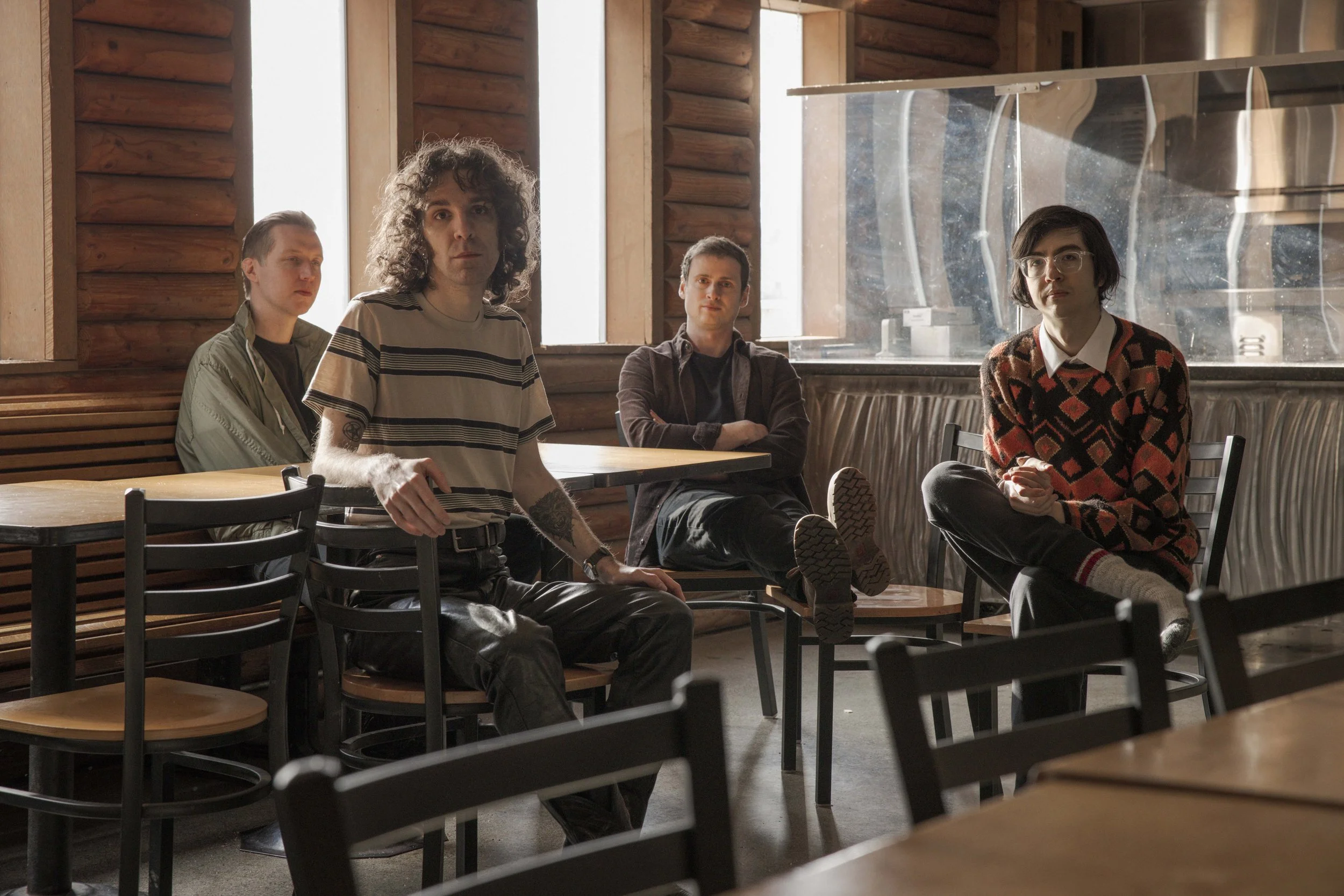
Car Seat Headrest began as Will Toledo’s private solo project before becoming an acclaimed indie band signed to Matador Records. A little less well known is 1 Trait Danger, the side project in which Toledo and drummer Andrew Katz make songs around their fursonas and make fun of Elon Musk and Grimes without any shame or tiptoeing. But something perhaps most familiar to dedicated Car Seat Headrest listeners is how often Toledo’s lyrics return to recurring themes and phrases. Since the early 2010s, lines introduced in one song have found their way back into the music years later, taking on new meanings or offering a different perspective. As Car Seat Headrest is one of the bands I spent the most time analysing and dissecting during my formative years, many of these phrases are stuck with me and regularly come back like mental vocal stims. Here, I’ll look at three of the most interesting, the songs they appear in and how they serve each song.
1) ‘The ocean washed over/open your grave’: the water motif
Variations of this line appear in two of the most important songs on the band’s most recognised and arguably best album, Twin Fantasy: ‘Beach Life-In-Death’ and ‘Famous Prophets (Minds)’, as well as the latter’s counterpart on the re-recording, ‘Famous Prophets (Stars)’. The image feels essential to the album because, in both songs, it symbolises what the narrator keeps failing to do: keep his feelings under control and move on from the failed relationship. I find the difference in delivery especially interesting. While ‘Beach Life-In-Death’ presents the line in the midst of chaos, with loud guitars, banging drums and a screaming Toledo behind it, in ‘Famous Prophets’ it is sung with an exhausted voice. It feels like a moment of acceptance and defeat, when the narrator recognises that the more he tries to bury his feelings, the faster they return. The image also connects with an older song directly mentioned in ‘Beach Life-In-Death’: ‘beach funeral’, from the album 3. In that song, the narrator imagines he has died and asks the people around him to send his body into the ocean and cut it up. Read together, the songs give the returning water a particularly unsettling significance.
2) ‘I can’t turn this thing off, it keeps following me’: the switch motif
This line was introduced in the 2012 track ‘Overexposed (Enjoy)’, from Monomania, and returned in 2018 for the new version of ‘High to Death’ on Twin Fantasy (Face to Face). Monomania was the immediate follow-up to the original Twin Fantasy and explores the aftermath of a relationship with more anger and resentment in the narrative voice. In ‘Overexposed (Enjoy)’, the line reads as a reprimand to the other person: the narrator can’t feel that the relationship is really over because it keeps coming back to haunt him, even after the breakup has been stated. He is bitter towards his ex-partner’s apparent lack of effort and can’t get the closure he needs. The two questions that follow sharpen that uncertainty: ‘When’d you say you were leaving? When’d you really leave?’
In ‘High to Death’, however, the line feels directed at the narrator himself. The song finds him in a very dark place, using drugs to feel better, only for his physical and mental state to worsen. This returns to the struggle with repression explored through the water motif: the more he forces these feelings and thoughts away, the stronger they come back. Here, the line sounds like an admission that his coping mechanisms aren’t working.
3) ‘Don’t worry, you and me won’t be alone no more’: the comforting motif
Introduced in the timeless ‘Sober to Death’ on the original Twin Fantasy from 2011, this line returns in ‘Overexposed (Enjoy)’ on Monomania. It also remains in the 2018 version of ‘Sober to Death’. The contrast between the songs is interesting on its own: one is a love song built around the struggles of a long-distance relationship, while the other directly confronts a partner over the relationship’s failings. In ‘Sober to Death’, the line expresses the narrator’s need to comfort his partner and the desperation of being far away from someone you love when they need you. It offers reassurance that they will get through these difficulties together and eventually live together, as they want so badly. Soon, they will be able to be there for each other properly, face to face.
In ‘Overexposed (Enjoy)’, the line comes back as an echo between the verses and chorus, like a distant memory or reminder. It isn’t even sung in full, only repeated as ‘Don’t worry, you and me won’t…’. The way I interpret it, the narrator is remembering every unfulfilled promise between him and his ex-partner, everything he would have done for them that he feels wasn’t returned. Cutting the line short becomes another attempt to repress the memory before it is fully formed and can invade him again.
These are just three of the recurring phrases I find most interesting, but there are many more scattered throughout the band’s discography. Part of the pleasure of returning to these albums is hearing a familiar line somewhere unexpected and finding that, this time, it means something different.