
Every Elliott smith album ranked from worst to best
From the raw recordings of his early work to the polished feel of his later projects, we go through all of Elliott Smith’s albums from worst to best.
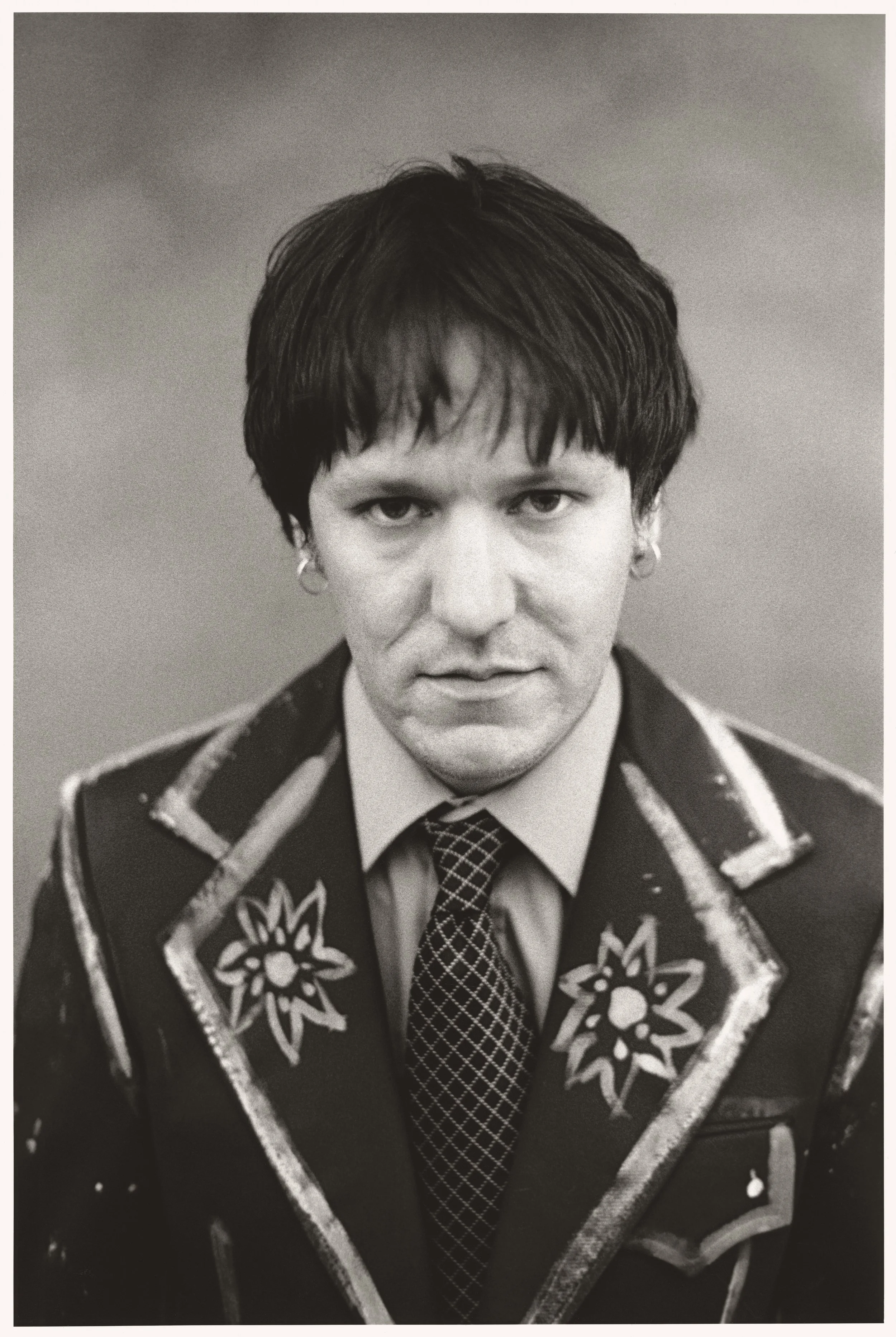
When thinking of Elliott Smith’s music, it’s hard not to think of his reputation as the king of sad music. But his work has so much more depth than that, and I hope this album ranking can show it.
It’s almost an impossible task to try and rank Smith’s albums, with each one feeling so unique and having its own distinct sound. My own ranking has changed constantly throughout the years I’ve been listening to his work and I’m sure it will continue to change during my life.
I had known the name Elliott Smith for a while before I dived into his music. In many ways, it was thanks to being a big fan of Phoebe Bridgers that I decided to give Smith a go. I had read about how he was a big influence on Bridgers and so, on one of those lazy lockdown days in my student house in Norwich with not much to do, I thought it was as good a time as any to start my Elliott Smith journey.
His music immediately captivated me and has done so ever since. Whether it’s his lyrics that sound like they’re talking directly to you or that iconic sliding guitar style that feels like a warm blanket, it’s hard not to be moved when listening to him.
As I said, ranking Smith’s music is a herculean task, but I’ve tried to help myself by not including any of his work with Heatmiser or his two posthumous albums. That being said, they are all worth checking out if you haven’t already and I’d even go so far as to say that he hasn’t put out a single bad song.
5) Roman Candle
It pains me to put Elliott Smith’s debut album Roman Candle last, but something had to be here. It’s his most stripped-back album and four of the tracks are simply titled ‘No Name’, which shows just how pieced together it is as an album.
There’s a real lo-fi, DIY feel to the production, but, as with all of Smith’s albums, it’s his vocals and guitar that really suck you in. The harmonica on ‘No Name #2’ feels very Neil Young or Bob Dylan and it works so well as Smith sings the classic lyric ‘killing time won’t stop this crime’.
‘Drive All Over Town’ is another highlight, along with ‘Last Call’, with both carrying Smith’s excellent songwriting and guitar playing. On these tracks especially, the raw production style works in their favour. When the electric guitar breaks over the acoustic on ‘Last Call’, it channels the alt-rock foundations of Heatmiser and gives a real kick to the album.
There are times when the rough recording works against the songs, though. On ‘No Name #3’, the guitar feels a little grating to the ears and it doesn’t quite have the charm that the rest of the tracks do. As well as this, the 30-minute runtime does leave me wanting a track or two more, but perhaps that’s just me being selfish. A final slight issue I have with Roman Candle is that ‘Kiwi Maddog’ isn’t quite the closer I’ve come to expect from Smith, but you can’t deny how good the guitar sounds.
Funnily enough, Roman Candle was never intended to be a full-length album and was originally only meant to be a 7-inch single. It was only after hearing the album in full that Cavity Search wanted to go ahead with it in full. It’s strange to imagine this as anything but a full album.
In many ways, this feels like a transitional album between Smith’s work with Heatmiser and the beginning of his solo career. For a lot of Smith fans, a fifth-place ranking would seem fair.
4) Elliott Smith
Okay, okay, I can already hear the shouts and jeers from readers at this placement and, don’t get me wrong, I absolutely love this album, but it just doesn’t hit in quite the same way as his next three. As with most of his albums, Smith does the majority of the instrumentation, but some members of Heatmiser also show up on this one too.
One thing that Smith’s self-titled sophomore album does have is one of my favourite openers, ‘Needle in the Hay’. It is almost an extension of his work on Roman Candle, with the stripped-back guitar and harmonica accompanying his vocals, but it feels that bit more powerful than anything off his debut. It’s hard not to associate this song with the Wes Anderson film The Royal Tenenbaums after its use in a particular scene.
While ‘Christian Brothers’ is a great track, it never quite stuck with me in the same way it has for a lot of Elliott Smith fans. ‘Clementine’, however, is one of my favourites, with Smith’s vocals gliding over guitar that lulls you into a false sense of security when the chorus lands. Another highlight is ‘Alphabet Town’, which is a stunning track that sticks with you long after listening to it.
Perhaps the only real critique I can give this album is that it does slow down a little in the middle with tracks like ‘Satellite’ and ‘Coming Up Roses’. If anything, though, these are only really nitpicks and Elliott Smith remains one of my favourite albums of the ’90s.
I could easily see Elliott Smith becoming one of my favourites in his discography at some point in the future, but I tend to prefer Smith’s albums when they are richer with instrumentation. That being said, this is a step in that direction from his debut as we see drums on a few tracks and even a cello.
3) XO
Taking third place in this ranking is Smith’s fourth album, XO. In comparison to his first two albums, the sound on this is completely different. It’s more fleshed out, with richer instrumentation and stronger production, and it’s his first on a major label, DreamWorks Records. This album came at a significant time for Smith as, in the year before, his song ‘Miss Misery’ was used in the film Good Will Hunting and nominated for an Oscar.
On XO, Smith diverts from the acoustic, stripped-back guitar playing of his previous work and embraces elements of chamber pop, art pop and alternative rock. There are a lot of overlapping vocals on here and it’s easy to hear the influence of The Beach Boys and The Beatles. He also plays a plethora of instruments across the album.
The first two tracks lead into the album’s incredible opening single, ‘Waltz #2 (XO)’, which features drums like we’ve never really heard on a Smith song up until this point. It’s a heartbreaking song, with the refrain of the chorus being particularly striking. The second single from the album, ‘Baby Britain’, is also filled with instrumentation, with piano, guitar, drums and mandolin all being used. It doesn’t quite connect with me like ‘Waltz #2’ does, but it’s still an exciting baroque pop track.
The masterpiece of this album and, indeed, what may be Elliott Smith’s greatest track, is ‘Pitseleh’. The guitars and Smith’s vocals feel so intimate and quiet as he speaks to this character, Pitseleh. The structure of it is phenomenal as he sings ‘no one deserves it’ and the track descends into this piano passage before the final verse. It’s no wonder that this has become such a fan favourite.
The album continues in this vein, with tracks featuring rich instrumentation where Smith experiments with different genres in pop and rock. This is until the final track, which is one of my favourite Smith closers, ‘I Didn’t Understand’. It’s an a cappella song with Smith harmonising through layered recordings of his own voice that give the appearance of a choir.
Perhaps the only thing letting this album down compared to the other two above it on this list is that, on some tracks like ‘Amity’ or ‘Baby Britain’, it can feel like a little too much is happening. The next two albums are a little tighter and more polished.
2) Figure 8
Figure 8 is the fifth and final album released by Elliott Smith while he was still alive. The album from 2000 follows on from the sound of XO but improves on it in many ways, embracing a power pop style that works brilliantly.
A few years ago, I was on a flight to Bulgaria and realised I had forgotten to download any films or music apart from Figure 8. It’s safe to say I got a lot out of that album on that flight and it quickly became one of my favourite records from Smith.
The opener ‘Son of Sam’ is up there with ‘Needle in the Hay’ as one of my favourite Elliott Smith opening tracks. The title refers to serial killer David Berkowitz, but in interviews Smith distanced himself from there being much meaning in this reference. The electric guitar on this is particularly powerful and it sets up where things will go on the rest of the album.
Smith explores power pop throughout Figure 8, with a lot of influence from the likes of The Beatles and Big Star. This isn’t too surprising when you consider that a lot of the album was recorded at Abbey Road Studios in London.
While there are tracks like ‘L.A.’, ‘Son of Sam’ and ‘In the Lost and Found’ which lean into this bigger sound, there are still a fair few quieter, poignant pieces which are some of the highlights on the album. There’s the yearning and heartbreak on ‘Everything Reminds Me of Her’ and the reflective ‘Somebody That I Used to Know’, which leads into the beautiful ‘Better Be Quiet Now’. The latter has some of my favourite writing from Smith as he describes a dream with an ‘armyman’ marching in his place while being screamed at by an enemy.
To find any critique, you could perhaps say that ‘Bye’ is a bit of a weak closer, but there’s something about this instrumental piano passage that feels quite powerful as the last song Smith would release on an album during his lifetime.
Between this and the number one spot, there’s very little in it, but my number one has always been the same and it’s hard to think of anything else in that place.
1) Either/Or
Elliott Smith’s third album Either/Or is comfortably my favourite and it’s one of my all-time favourite albums too. The Portland artist is at his best on this 1997 album and it has the perfect mixture of stripped-back guitar with a splash of drums and piano. It feels more fleshed out than the preceding Elliott Smith but doesn’t get too chaotic like it occasionally does on XO.
The album channels a lot of Smith’s interest in philosophy, with the title being a reference to the existentialist Søren Kierkegaard. On tracks like ‘Ballad of Big Nothing’, this is quite apparent.
One of the album’s many highlights comes in the form of what could be considered Smith’s biggest track, ‘Between the Bars’. It reads almost as a love song between alcohol and the drinker, as the narrator wanders between bars looking up to the sky as he swigs a drink. But it also shows the destructive side of alcoholism as it takes this character away from friends and family.
The album has quite a close relationship with film and TV. As mentioned in the XO ranking, Smith recorded the song ‘Miss Misery’ for the film Good Will Hunting, but this isn’t the only Smith song featured in the film. The director Gus Van Sant was a big fan of Either/Or and included the tracks ‘Between the Bars’, ‘Angeles’ and ‘Say Yes’. Unsurprisingly, this film score became one of my favourites quite quickly.
Either/Or is also featured in another popular piece of media, Normal People. The decision to include ‘Angeles’ fits perfectly with the heartbreaking series and it’s one of those moments where, as soon as you hear Smith’s guitar playing, you’re immediately hooked. The song also has one of my favourite lyrics from Smith, ‘Someone’s always coming around here, dragging some new kill.’ What a way to open a song.
The album also has my favourite ending to any of Smith’s records. From ‘Angeles’ all the way to ‘Say Yes’, it descends into some of his most heart-wrenching, tear-inducing music. ‘Cupid’s Trick’ is one of the heavier songs on the album, with the drums and electric guitar giving a grungy feel to the song that fits the ’90s alternative scene.
It then leads into the delicate, soft ‘2:45 AM’, which feels like it could fall apart at any moment. It’s one of those songs where, whenever it comes on, you have to stop what you’re doing and give it all of your attention to pick up every tiny detail. There really is no better way of listening to this album than at 2:45 in the morning.
The entire album, though, leads up to the final song, ‘Say Yes’, which, along with ‘Pitseleh’, may be my favourite Elliott Smith song. It’s a song that captures the sadness of his music while also leaving you with a smile on your face. The guitar playing is so gentle and yet it feels like it encapsulates everything that makes Elliott Smith such a mythical figure in the alternative ’90s scene.
There really is no album quite like Either/Or.
Photography By: Autumn De Wilde