
Revisiting Melodrama, I hear the love I once romanticised and the things I’m no longer willing to accept in its name.
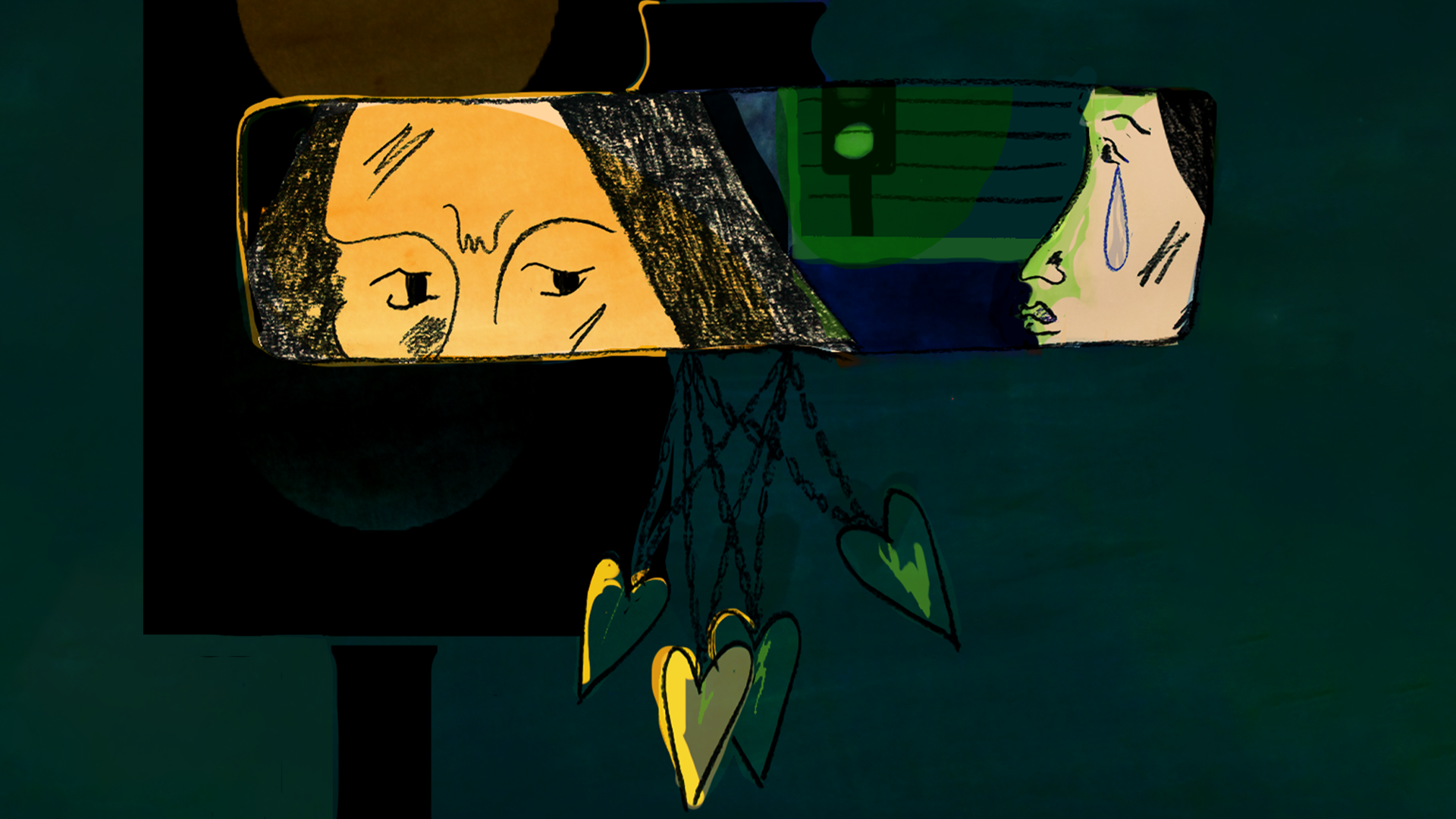
Lorde released her second studio album with the certainty of a true star. The first chords of ‘Green Light’, the single that exploded into the ears of a generation willing to hear more from her, are what we celebrate in the cracks of adolescence and the transition to being a young adult.
Melodrama moves between being the life of the party and the mediocrity of someone who wants to remain completely unknown to the eyes of the world. I will always think about this album as a big party that takes place in a house in the middle of a city that everybody loves but has secrets they can’t talk about.
It’s like she’s saying, in every song: go on, make it the best time of your life because the sunlight will punch back in the worst (best) way. It’s the sigh. The core. The vein. The syringe. The shock. The slow motion. The sweaty body. The pounding heart. The distorted lights.
Lorde prepared young hearts for the impact of having a heart broken, but also showed how we can heal from the things that hurt the most. I remember listening to ‘Green Light’ for the first time, the feeling of being somewhere I shouldn’t, because parties were not my go-to on a weekend, but I had friends, and I needed to live in a ‘dangerous’ way sometimes. The way she describes the first steps of falling in love, the anticipation of something that she doesn’t trust but still lets flow, still lets sit right next to her in a bar, is what stuck with me.
‘Sober’ comes after, and her singing about being sober made me think about all the things I used to avoid because drinking kept the shame away. But I could not live drunk forever. She never belongs anywhere, but there’s something that stuck with her. Just like her, I always felt like I never belonged in the places I used to go. Home, school, late nights, but those things still had something beneath the surface. We will always be some kind of rebel, searching for something that might rein in our urge to do crazy things.
In ‘Homemade Dynamite’, she destroys all the barriers created from within. It sounds like a race to the car; it blows into the cracks of meeting someone new and letting them lead your entire night. As if being lost with someone was the best answer to the questions we would never speak out loud. Blowing things up with something we made ourselves is like having fun until the body crashes out. This is interesting coming from me: I always fell in love too easily, too hard, and I also used to destroy those things out of fear that my feelings wouldn’t be reciprocated, but there was always a kiss here and there to cover this part of myself when things worked out.
‘The Louvre’ speaks to euphoria. Just like ‘Green Light’, it explodes through the night, the loving, the feeling of being alive. We sacrifice ourselves in the name of art, but the Louvre here isn’t where the Mona Lisa is hanging; it’s the bathroom where we share secrets, kisses and mistakes. It’s so perfect that it deserves a place in the most beautiful and devastating place in the world. When Lorde wrote this album, I was the same age as her, nineteen. I still thought about every girl that I loved as my muse. Because who cares? It’s still beautiful in the Louvre of my mind.
To me, ‘Liability’ is the best description of trying to make friends and being seen in this huge place we’ve been growing into. It’s like shattering all the pieces to the ground, and all of them looking like too much for the people who haven’t seen the things we hide. It’s like being a body on the surface of youth slipping away. This song stuck with me for years, as friendships went by, as I lost friends and the passion for life. I remember one conversation with one of my friends about how I felt like I didn’t belong there, and they said: ‘You feel like this because you don’t give yourself an opportunity to just be free.’ It was not them, not me, just what society can do to us when we try too hard to be seen.
In ‘Hard Feelings/Loveless’, our bodies are devastated but never gone. Just as she describes it as being blue, it also shines. It talks about a relationship that doesn’t work out, but never breaks entirely enough for us to give up. It also brings the rage, the teeth, the bite of being left out and still finding time to rebuild yourself. I always thought about ‘Loveless’ as Lorde criticising how our generation is averse to love. Not necessarily every time, but even in my own experience, it is really hard to grow up after having my heart broken. I don’t know how to trust anymore, so I become more indifferent about it.
Melodrama is still Melodrama, only we change when we hear it again. ‘Sober II (Melodrama)’ is one of the best-written songs of her career: ‘All the glamour and the trauma’, ‘They will talk about us, all the lovers, how we kissed and killed each other’. Lorde, in an interview for Beats 1, described this song as the opposite of ‘Sober’, but from a perspective where the party has ended, the lights are on, there are no masks, no hiding in plain sight, only bodies that tried to perform something they were never able to, facing the reality of the day. The glamour of being invincible, the trauma of falling into the heart of someone wrong, how we killed each other by romanticising too much.
I used to romanticise everything; I still do. But I had a girlfriend, and she was everything I could ask for and more. The people around me didn’t feel the same. They tried to warn me, to do something for me, but I still wanted to be in love with her. Did it end well? No, but the time we spent together was all that mattered to me, until I realised that all the things I used to accept were destroying me. I was making a homemade dynamite of my own heart just so hers wouldn’t be broken. I was broken in the end. I killed a part of me to be seen through her eyes.
‘Writer in the Dark’: bet you rue the day you found out that there’s no redemption for someone who fell in love too hard. As a writer, I resonate so much with this song. Because everybody talks about how, when a writer loves you, you will never die. But they forget about how, when a writer falls in love, they will never be forgotten either. There will always be a piece of me where her name is written, because I was once the person who loved her the most.
We will always be wild and fluorescent, but don’t come home to my heart. I still see her, in the big 2026, and I will always remember the part of myself that was fluorescent and wild because of that love, but I would never ask her to come home to my heart. This home is closed and the keys are hidden forever.
It’s a ‘Supercut’ of what happened. What it could be. What we still try to make count. Wildness and colours are similar. Both mix. Both are unravelled. Both can lie in a heart that is still young, because holding on to what once was is safer than landing somewhere you still don’t know the half of.
‘Liability (Reprise)’ is a melodrama. It’s the excuse to be young, violently honest, brutally real, still yourself even if the world around you doesn’t agree. Just like the transition between youth and adult life, it relies on the truth, the emotions, the things we want and the things we need.
Finally, it looks like the end of the party. ‘Perfect Places’, they are not real. We find them through ways we can’t tell. We find them on the radio, the streets, the windows of a car, the heroes we project onto ourselves. This song screams being nineteen, having your body touched by the right person, having your insecurities taken away by a stolen kiss. Having the fear of looking miserable fade into the back of the house.
At the end of everything, Melodrama talks about the longevity of finding out what to do after our first heartbreak, and it puts a weight on our shoulders that we have to carry until we are able to face it with salty tears and open minds. And I have learned the lesson. I still carry it, as you can see, because there will always be a part of me that remembers the love and the heartbreak, and those things walk together. To love is to accept the risk, and I did. But I don’t know if now, grown up, I can still accept the things I used to in the name of a love that never wanted to be loud about me.
Graphic Design: Olivia Juett