
Primetime Soundtrack: How Ari Balouzian’s Score Gets Inside Chris Hansen’s Head
Fairytale strings, unsettling rhythms and low woodwinds draw us into the distorted world of Lance Oppenheim’s film starring Robert Pattinson.
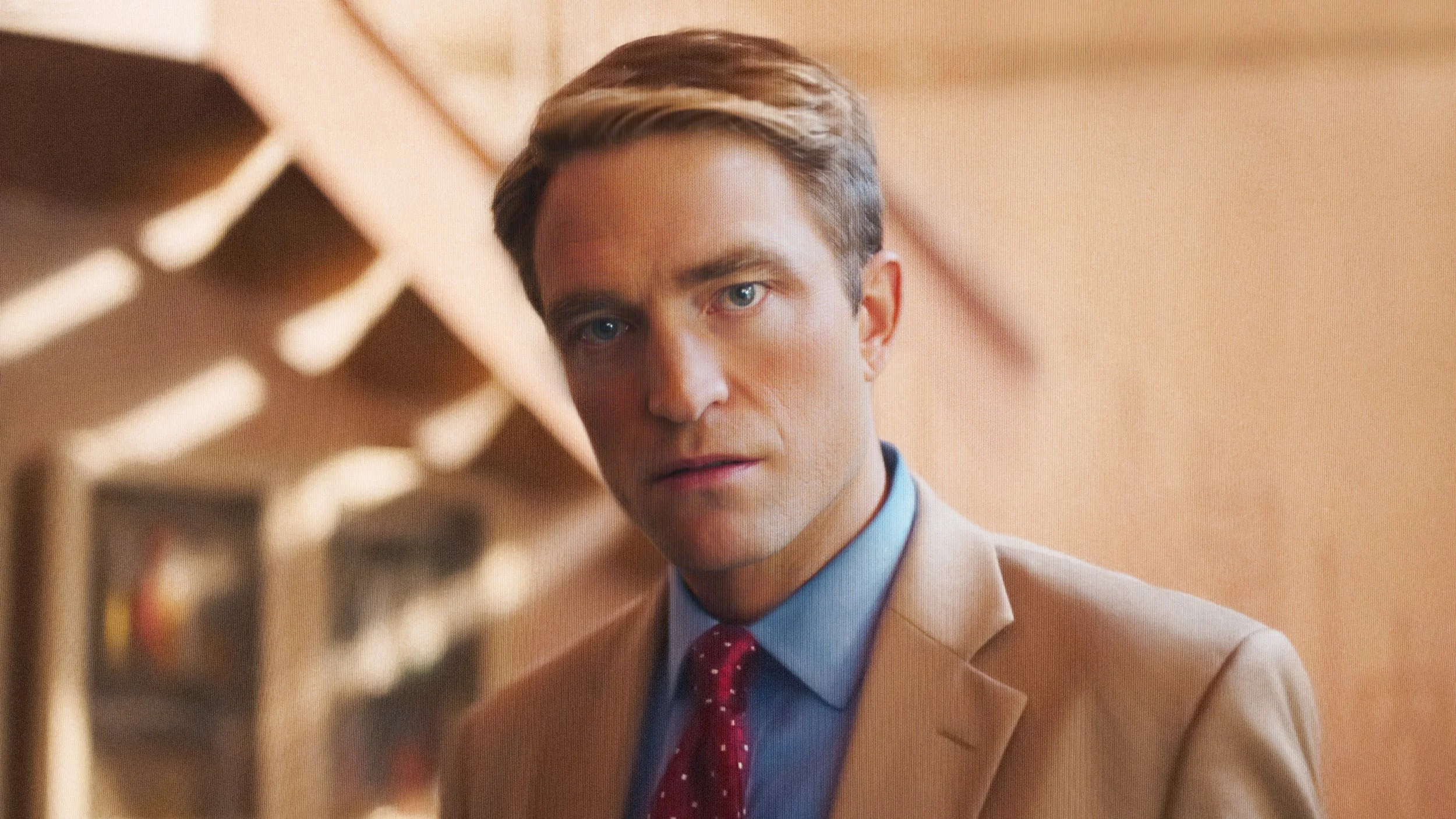
After the screening, it felt like I got sick. My body temperature seemed to rise and I suddenly had the strange feeling that I needed a painkiller. But there was no pain. It was the odd feeling of a fever dream, a twisted reality 109 minutes long. The main character, Chris Hansen, played by Robert Pattinson, constructs this weird reality in his show and we, the audience from 2026, subtly sink into this illusion. The core part of this illusion is the score by Ari Balouzian, Lance Oppenheim’s longtime collaborator. Music, image and sound design in this film complement each other in such a great way that if one component is missing, the whole illusion falls apart.
The story didn’t strike me, partly because I hadn’t known about the To Catch a Predator show before. I wasn’t satisfied by the ending and I didn’t get the highly anticipated controversial and challenging questions posed in the movie. We observe a pretty weird guy who mixes up justice, altruism and hype. It could have been a movie that divided the audience by forcing them to argue about Hansen’s morality, his hunger for attention, and the desire to decide the fate of people, but instead Lance Oppenheim slightly touched on all of the interesting and ambivalent topics and kept me underwhelmed. The main character plays a judge, a prosecutor, a narrator, an author and an all-seer, but it’s still very difficult to formulate the question the director wanted to leave us with.
Nevertheless, I’ve been thinking about Primetime for the whole week after the screening! My favourite feeling in the cinema theatre is the awareness of being manipulated and at the same time not wanting it to end. I assume that the film’s team is extremely proud of the work, because it feels uncompromisingly committed to its own strange logic. In the following paragraphs I want to focus on music specifically to explore why it is the main part of Primetime’s odd constructed reality, and how Balouzian’s score makes the audience feel trapped inside Chris Hansen’s head.
‘The Craft’
Woodwinds, haunting strings, looped melodies and cartoonish low notes. If you played this track to a stranger without context, they might mistake it for a lost 1950s Cinderella score or some kind of a ballet demo version. Keep in mind that most of the score for this film was created long before the shoot. Robert Pattinson would listen to the soundtrack during filming to get into character and the cinematographer David Bolen used to listen to the score while developing the visual identity of the film. What both Ari and David achieved is the feeling of being stuck in the TV show. Perhaps, it equally applies to everyone involved: to the audience, the host, the predators and the actors. ‘The Craft’ highlights the constructed nature of both the show and the movie. Looped melodies reflect the repetitive format of the TV programme, where characters like puppets are being moved or pushed by the same script. The ballet-like quality also evokes Chris Hansen’s desire to conduct the entire spectacle, as if he is choreographing it. The repetition in Balouzian’s score reinforces the film’s larger question of agency: who is controlling whom?
‘First Day On The Job’
This track is 2 minutes 57 seconds and it’s the perfect duration for the listener to figure out the time signature of the track by its end. In general, Ari Balouzian combines quite complicated rhythms and obscenely simple melodies. It feels like the last part of the musical phrase is being bitten off or the recording tape is being chewed up. This technique reminded me of the track ‘Dark Streets’ by Jonny Greenwood from the score for the movie You Were Never Really Here. One of the main tracks consists of a straight four-on-the-floor beat but without the last bar in the loop, making the time signature 15 quarter notes instead of the usual 16. This technique makes it hard to follow the rhythm intuitively and creates the uncanny feeling. There is another similarity between these two films: it’s in the way the footage from the CCTV cameras is edited. The sound engineers of both films made the picture and the sound slightly out of sync, which created a feeling of real immersion in the raw, unedited observation scene. Such ‘careless’ cuts pull us out from the world of a carefully thoughtful film, and it seems like we are watching real footage from hidden cameras, with natural interference, asynchronicity and inaccuracies.
‘Ghost Car’
This track reminded me of Jerskin Fendrix’s score for Bugonia in the way instruments are playing on the edge of their registers. Extremely low cello and bassoons, combined with electronic distortions and delays, echo the state of the main character: he is obsessed and on the verge of breaking down. The main character of Bugonia, a conspiracy theorist and fanatic, is also depicted in the groundbreaking soundtrack. The similarity is striking, even if there is no reason to assume a direct connection between the two scores. In both films, directors and composers trust each other and at the same time show off their insanity to each other. Such unique scores happen when all of the crew members dive into the story and merge with the characters. One of the first tracks in the movie, ‘Encounter’, consists of only three instruments: the bass drum, beeping glissando pulsations and a thin synth playing a two-note melody. It doesn’t sound like a film score at all and stands out from the rest of Primetime’s soundtrack, yet at the same time it impersonates Chris Hansen’s inner world better than any camera angle or a script line.
Alarming synthesisers, low woodwinds, jazzy drums, fairytale-like strings and flutes create a whole new character of the movie with its unique palette. This character makes us experience Chris Hansen’s distorted logic, and combined with sound design and stunning visual identity, it makes Primetime’s viewers dizzy, hunted and mesmerised.
Photography: Courtesy of A24