
Sean Lawlor, Author of ‘Psychedelic Revival’: ‘Integration Is Still the Biggest Question for Me’
Sean Lawlor, author of ‘Psychedelic Revival’ and licensed ketamine therapist, shares his findings on the role music can realistically play in ketamine therapy - and where its limitations lie.
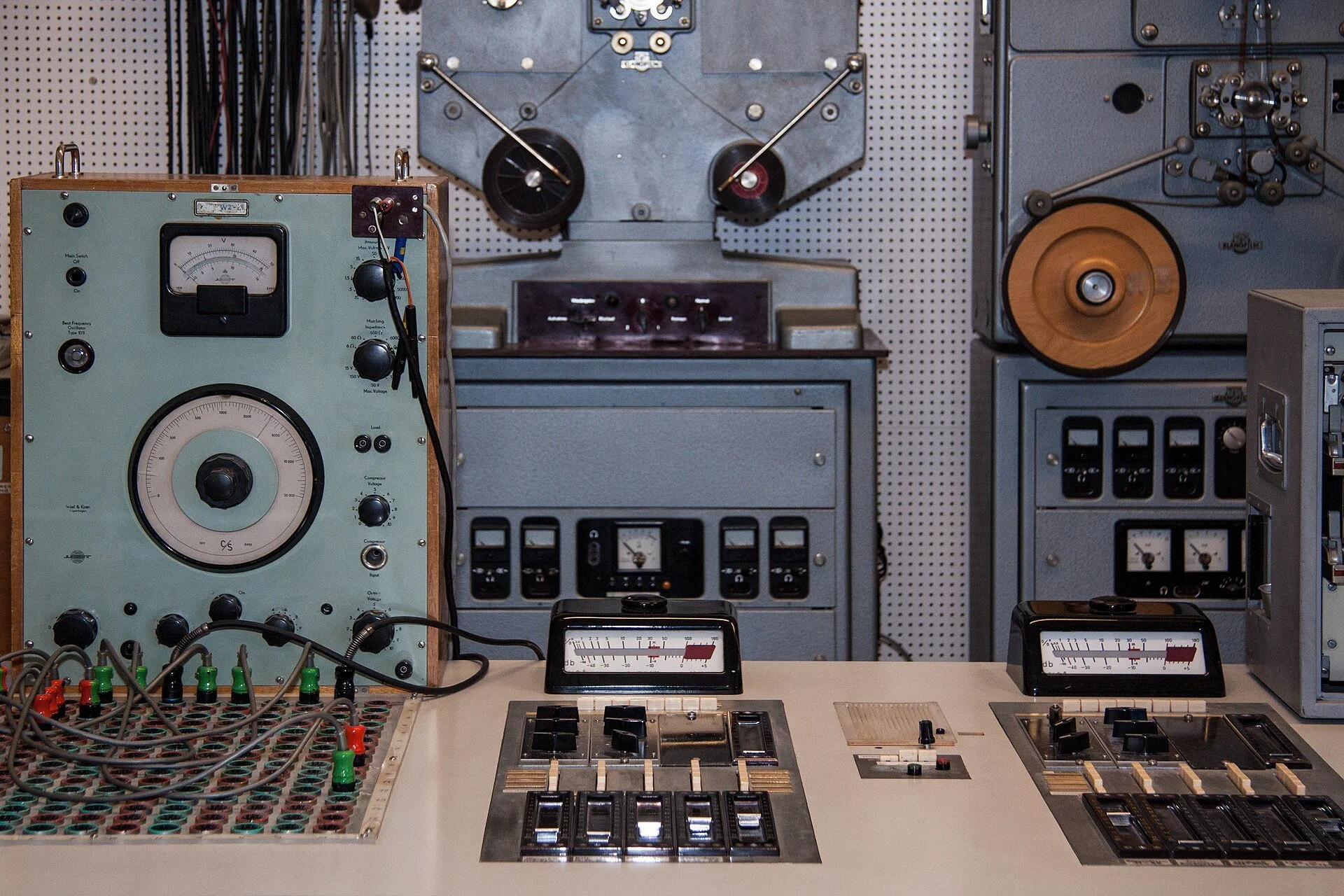
Photo credit: Stefan Schweihofer. Link to license, courtesy of Wikimedia Commons: https://creativecommons.org/publicdomain/zero/1.0/deed.en
As a serial interviewer of musicians, I have noticed that one account of the creative process continually resurfaces: in its most honest form, music supposedly feels as though it is passing through the artist rather than from them.
Psychedelics require no introduction as a well-traversed bridge connecting the brittle default psyche with the mental states that lend themselves to heightened creative instincts. All else equal, the practices of intentional creativity and dosing likely pair because both lead the mind toward its most associative and lucid, suggesting that choosing to set aside the more cautious part of the brain, which often stabilizes self-concept,we tend to feel more like ourselves rather than less.
To add an essential asterisk, psychedelics are a catalyst for enhancement of creativity, but do not emit the same chemical reaction as when the sober mind orients toward a creative gear; active creativity does not conjure the same set of reactions in the brain as a psychedelic simply because both deal in the realm of the associative mind. The parallel, however, survives differences in service of one dominating question: what combination of psychedelics and music can abridge the resting psyche with more receptive states of mind for self-discovery, without under-intellectualizing oneself toward corrosive behaviors?
This is not a question I seek to comprehensively answer in this article, nor one that I could. The case of the ambitious creative wondering whether to engage with psilocybin or LSD is an endlessly relevant one, but the debate somewhat stalled long ago toward understanding that repeated and high-dosage psychedelic usage is typically a high-risk, high-return practice: As Jimi Hendrix rose, Brian Wilson fell - before Jimi Hendrix fell, too.
As propagated by the talent of these sensitive and neurotic figures, whether one is the conductor of music or music’s conductor is already difficult to tell - which is further complicated when psychoactives are brought into the mix, since we cannot know for certain whether and which amplify thoughts or create new ones - thus changing the relation to the self and experiments that may follow. Especially if the self that relates to itself via creation can no longer be verified as the self, then creation may not be coming from the self anymore, either. The case for entirely deregulating and condoning psychedelics is therefore a difficult one to win against ones’ better judgement, an impasse at which I would recommend: ‘Approach with caution, especially if using psychedelics with the intention of regularly spurring creativity.’
The more pertinent and modern question in psychedelic research, then, correlates to a more passive and regulated therapeutic context. I spoke with Sean Lawlor, author of ‘Psychedelic Revival’ and licensed ketamine therapist, about his experience leading client trips on ketamine - a blooming field in portions of the United States - via music-mediated sessions, including his thoughts on safety, integration, and how the West ought to approach the traditionally mystical history of psychedelic usage from an unprejudiced viewpoint.
‘Currently, I am not doing ketamine therapy, but I have primarily done that since getting my Master’s in counseling’, he tells me. ‘Music is such a huge part of the ketamine therapy experience. Ketamine is unique and so much different than psilocybin and LSD in terms of what music meets the person in the space. Not being a dissociative anesthetic, it can be more disorienting. I underwent the client side and chose my own music. Tom Petty is one of my favorites, and it was really bad. It was so disorienting and jarring - it just didn’t work.
You definitely don’t want any lyrics with ketamine therapy. You kind of create a playlist around different ‘tones’ based on client needs. Some are more soft or ambient, whereas some want a more challenging experience and will pick darker tones. I think it’s important for therapists to recognize the level of responsibility in ketamine therapy, because someone could have a really bad experience and will be trying to give them a signal to communicate ‘next song’. Ketamine is such a different state that, in my experience, the brain doesn’t make musical connections as clearly.’
When asked whether psychedelics simply fast-track associative connections or are essential to their realisation, Sean soft-landed on the opinion that the answer largely depends on the dosage and chemical composition. ‘I don’t tend to agree with the attitude that meditation can just do the same thing. The commonality is loosening the filter between your conscious mind and your unconscious mind, and maybe something beyond that as well’ - though he later conceded that revelations on lower dosages of LSD and psilocybin could likely crop up via other intentional methods.
I used [a program called] Wavepaths for a while, both in work with clients and personally’, he continued. There are a lot of different things you can put in at the beginning, and it will create a whole ‘journey,’ basically. It doesn’t just plug and play; it generates in the moment, so it’s always unique. If you’re the therapist, you can adjust things as you go. If things aren’t going so well, it will seamlessly move that way without the jarring transition.
From my perspective, integration is still the biggest question regarding psychedelic therapy. I feel like I never got satisfying answers from people about that. I think it comes down to habit change; people tend to think integration just happens, or a mystical experience will cause everything to fall into place after that.
Maybe that happens sometimes, but I’ve never met anyone who had that experience. Sometimes you have specific insights about things that need to happen in your life, but I think structured therapy will help to hone in on what habits need to change, while really taking advantage of that window of neuroplasticity where the brain is more malleable.
Music does help with that, I think, when you’re either listening to it the whole time or have Wavepaths on. Going back and listening in an intentional way can just help people reconnect to emotions that came up or little memories that came and went. I really think it comes down to little habit changes. People will come out and just be like, ‘I have to change everything.’ And I’ll be like, ‘Let’s focus on one thing at a time.’
It could provide a real form of escapism where you convince yourself that you’re doing the work, but you’re actually just chasing the next peak experience because you can’t feel okay with non-peak experience life. That definitely ties into the concept of, ‘Why do we consider some drugs dirty drugs, and some drugs miracle drugs?’ Obviously, some are predisposed to have more catastrophic effects, but anything can be addictive or harmful.
Not everyone would agree with me on this, but I don’t think ketamine is good for people with addiction or tendencies toward addiction. Theoretically, it can be, but ketamine can definitely be more habit-forming and addictive than the classic psychedelics. If someone is just kind of ungrounded - like their physical reality is kind of a mess, in terms of the things that are not fun, but important to being human - a psychedelic just probably isn’t going to help that. They have to get things turning around first, and then look at the psychedelics.
I also think it’s dangerous to universalize psychedelics, both conceptually and practically,’ he later continued. ‘I’m a strong proponent of prioritizing the individual experience. Maybe someone comes away with a broader vision of what could be possible collectively, but the important part is helping them orient their own life and purpose toward building that vision rather than assuming the answer is simply the mass dissemination of psychedelics. Ultimately, everyone has to decipher their own sense of purpose and find fulfillment in their own life.
One of the prototypical examples is Timothy Leary preaching that everyone should take acid - or, as people often put it, ‘put LSD in the water.’ I don’t know if he literally said that, but it captures the mentality at the time: if everyone took LSD, the world would become a more open-minded, better place. I don’t think that’s true. That way of thinking caused a lot of chaos.
‘Under-intellectualizing in the sense of, ‘Yeah man, it’s all good stuff’ - that kind of thing - is problematic’, he later expounded. ‘I disagree with the idea that psychedelics inherently make you a more open-minded person: they can promote bypassing of difficult material and can kind of lock people into delusional mindsets through repeated use, which kind of loses touch with reality, so that they don’t inherently connect people to a deeper truth. The diversification of psychedelics could help, because when I’ve observed this, it has tended to be with the repetitive use of one. They need to be humbled by something’, he admitted sportively.
‘I think that the visions they have on psychedelics that talk about the noetic quality of the mystical experience need to be held with a certain degree of skepticism. So if someone has wild visions of something, that doesn’t mean that it is the objective truth. Maybe that’s a projection of some deep emotion of fear or something that just took this form of malevolent entities.
It would be disingenuous to simply project a framework from communities where spirituality is ubiquitous onto the Western experience. If someone resonates with a spiritual interpretation, that’s a personal choice. Whether you understand these experiences as symbols of the unconscious or as encounters with a literal spirit realm is ultimately an individual decision. I think that’s something worth honoring in the Western mindset. It shouldn’t become, ‘Well, the Lakota understand it this way, so therefore you should, too.’
It has to remain more individualized. That said, there’s still so much we can learn from more traditional models - about safety, meaning, integration, and the way these experiences are held within a community. We just have to recognize that we’re approaching them from a very different worldview. I think it could be disrespectful in a way to just copy and paste more indigenous methods, especially if therapists start thinking that they’re the same as a shaman or a medicine man.
It is important to bear in mind that, for a lot of these native cultures, they’re going into a spirit world that is very much real - just as real, or even more real, than this realm. I think it’d be really good to have more intercultural dialogue to learn from them and not act like just because we understand more because we have science, but to recognize that there’s really important validity to this wealth of knowledge.
If there could be some kind of exchange that isn’t just like extractive, where it’s like, ‘Let us take this from you, but then also kind of disrespect you in some ways and belittle your viewpoint.’ It’s more about adopting an apprentice or student kind of attitude, while holding great respect for the wealth of knowledge that comes from generations upon generations of keeping a really essential spiritual practice alive.’