
Festival Review: End of the Road 2026
Twenty editions in, End Of The Road might be Britain’s best camping festival.
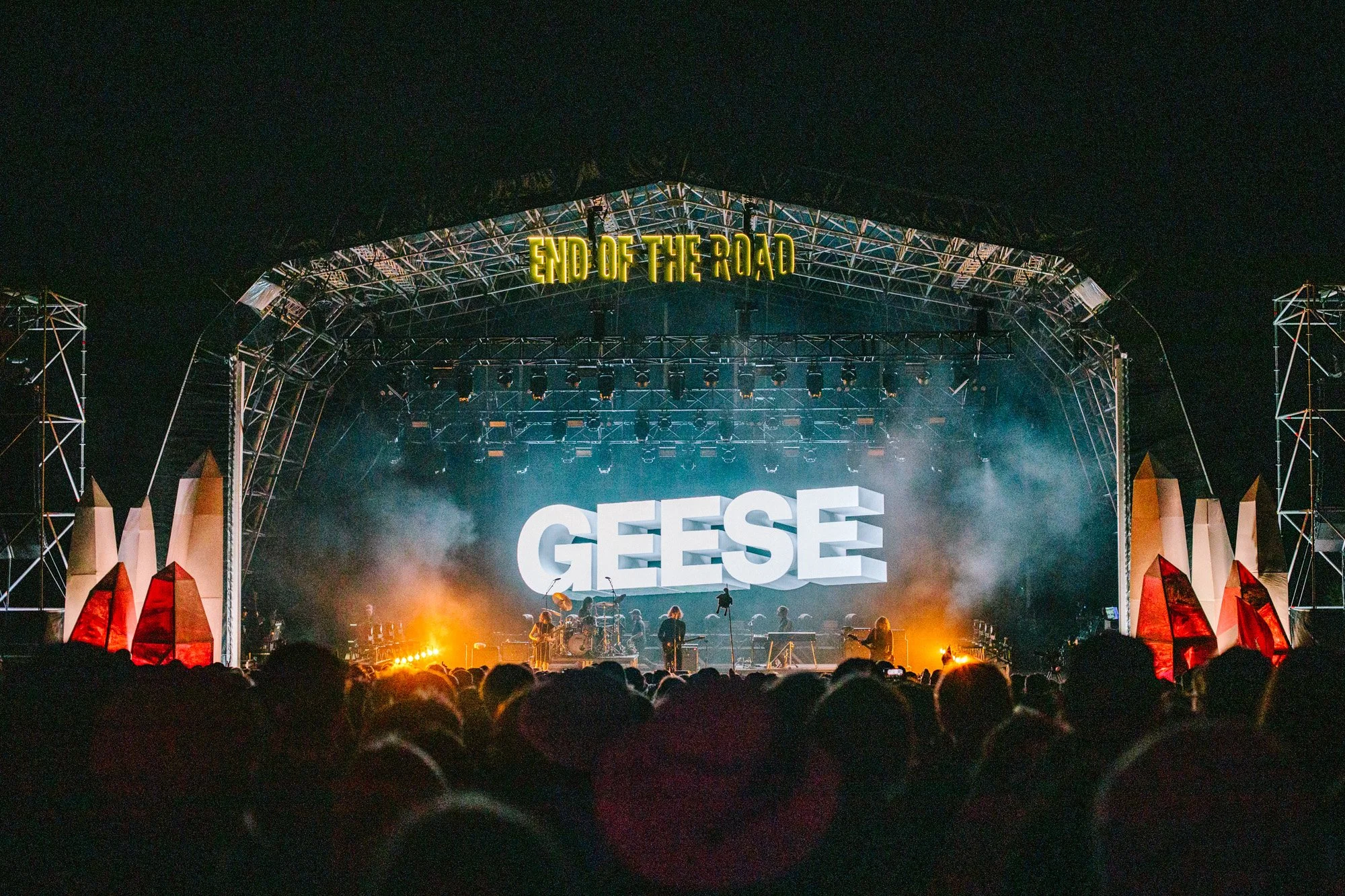
This was my first End Of The Road and, after four days at Larmer Tree Gardens, I think it might be the best festival I’ve ever been to. It certainly didn’t start that way. We arrived at Salisbury Station on Thursday and, after spending an hour waiting for a National Express shuttle bus that never arrived, eventually said fuck it and got an Uber (we are city mice after all). We then joined the tail of the enormous convoy of cars attempting to get onto the festival site. If Radio 1 DJs yapping about packed lunches from the 90s for an hour won’t kill you off, then a heavy bladder almost certainly will.
Thankfully, we made it through the gates before disaster struck. Portaloo located, piss relieved, End Of The Road could officially begin. From there, things improved pretty quickly. Even standing in the wristband queue, the mood was immediately convivial. We started bumping into people we knew: someone we’d met while doing a radio show at AAJA Music, then Alex and Gabriel, who were photographing the festival over the weekend. Alex essentially invented Still Listening’s ‘Start Listening To’ series when she was an editor here, which I’d randomly been thinking about a couple of weeks earlier. We had barely arrived and were already running into people from completely different corners of our lives.
Camping spot secured, time to put the tent up. Well, Jules put the tent up. I ate a sandwich and drank a beer. This was also the first festival where we’d attempted to bring a camping stove, which felt like a major development and a bit of a health and safety risk. Once we’d got our shit together, we headed towards the main site. The fairy-lit path through the trees from the campsite was beautiful, opening out into a festival that was much bigger than it first appeared. Food stalls glowed out of the darkness, people disappeared down little paths as we forged our own to secure a good view in front of the Woods Stage for Geese. We last saw Geese three years ago at Lafayette, the half-Disneyfied wonderland, half-Boxpark corporate venue in King’s Cross, long before they were allegedly psy-opped into everyone’s brain. They were good then, but they were still finding their feet. Cameron Winter hadn’t quite mastered the volatility of his voice and the band still struggled to make the scale and weirdness of 3D Country work live. Thursday night was different. They were brilliant.
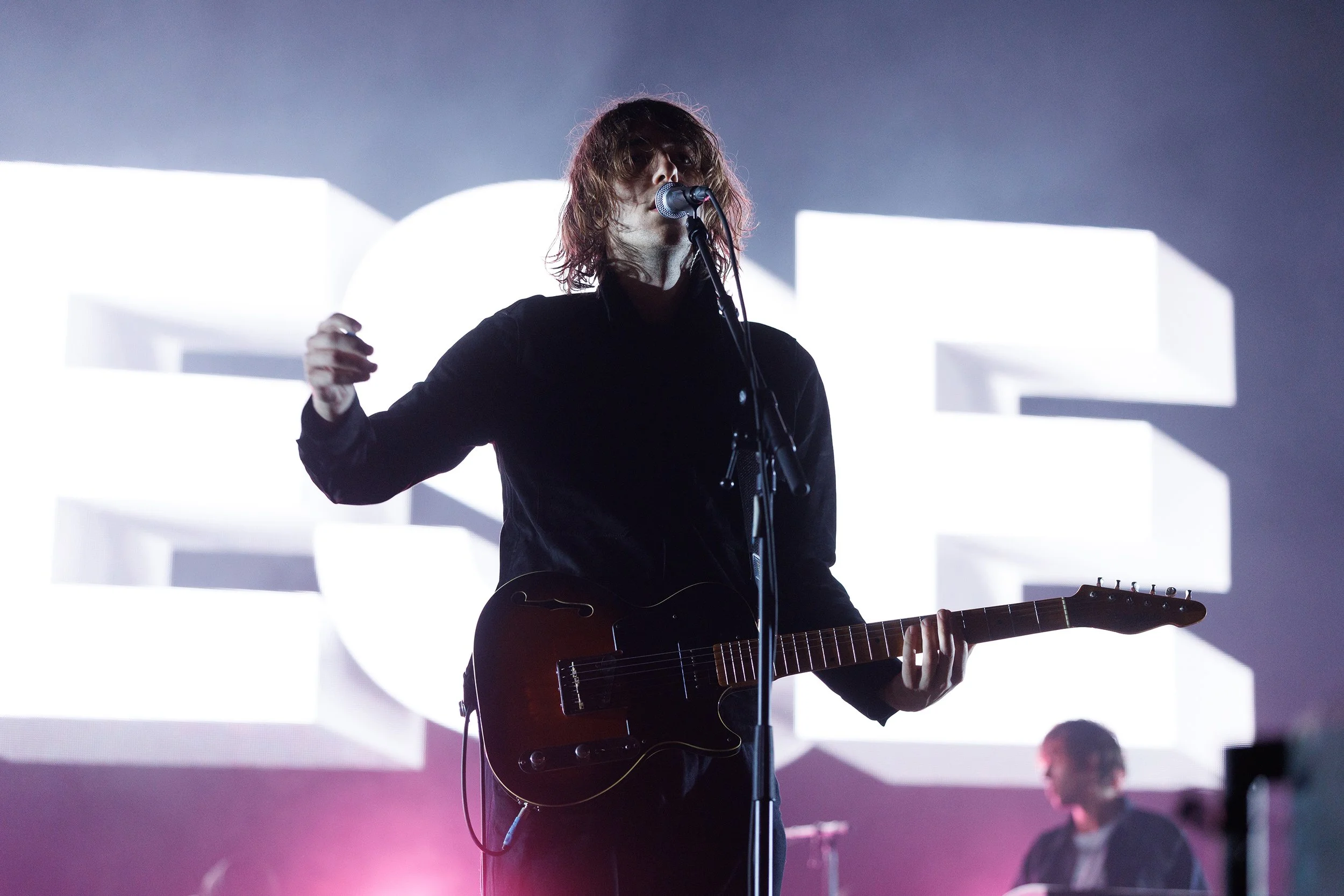
After walking on to a montage of British internet memes, Geese spent the next hour and a half proving why the hype around them has become so relentless. Songs from Getting Killed were pulled apart and stretched out, while enough of 3D Country survived to keep those of us still clinging to it happy. The whole set had a coiled quality to it, as though the songs could collapse or explode at any point. ‘Cobra’ was genuinely affecting, while ‘2122’ became completely feral, breaking into a jam on Pink Floyd’s ‘Interstellar Overdrive’ before snapping back into place. Then came ‘Trinidad’. “There’s a bomb in my car,” Winter wailed for the encore as everything descended into chaos. I’d never been particularly blown away by the studio version, but live it finally clicked. The band were tighter, stranger and far more confident than the group I’d seen three years earlier. Winter, meanwhile, finally seems to have complete command of how far he can push his voice. It was perhaps the best show I’ve seen this year. That was enough for Thursday. We walked back through the trees, made pasta in the dark and rain, an extraordinary effort by our standards, and went to bed early in preparation for Friday.
The next morning we headed back towards the site in search of the press area and, more importantly, some phone signal before an interview with Silver Gore. We arrived just in time for Ty Segall’s secret Garden Stage set. Rumours had been floating around that the slot belonged to Isaac Wood. Apparently not. Segall played material from his new record Chrome to an already packed crowd.
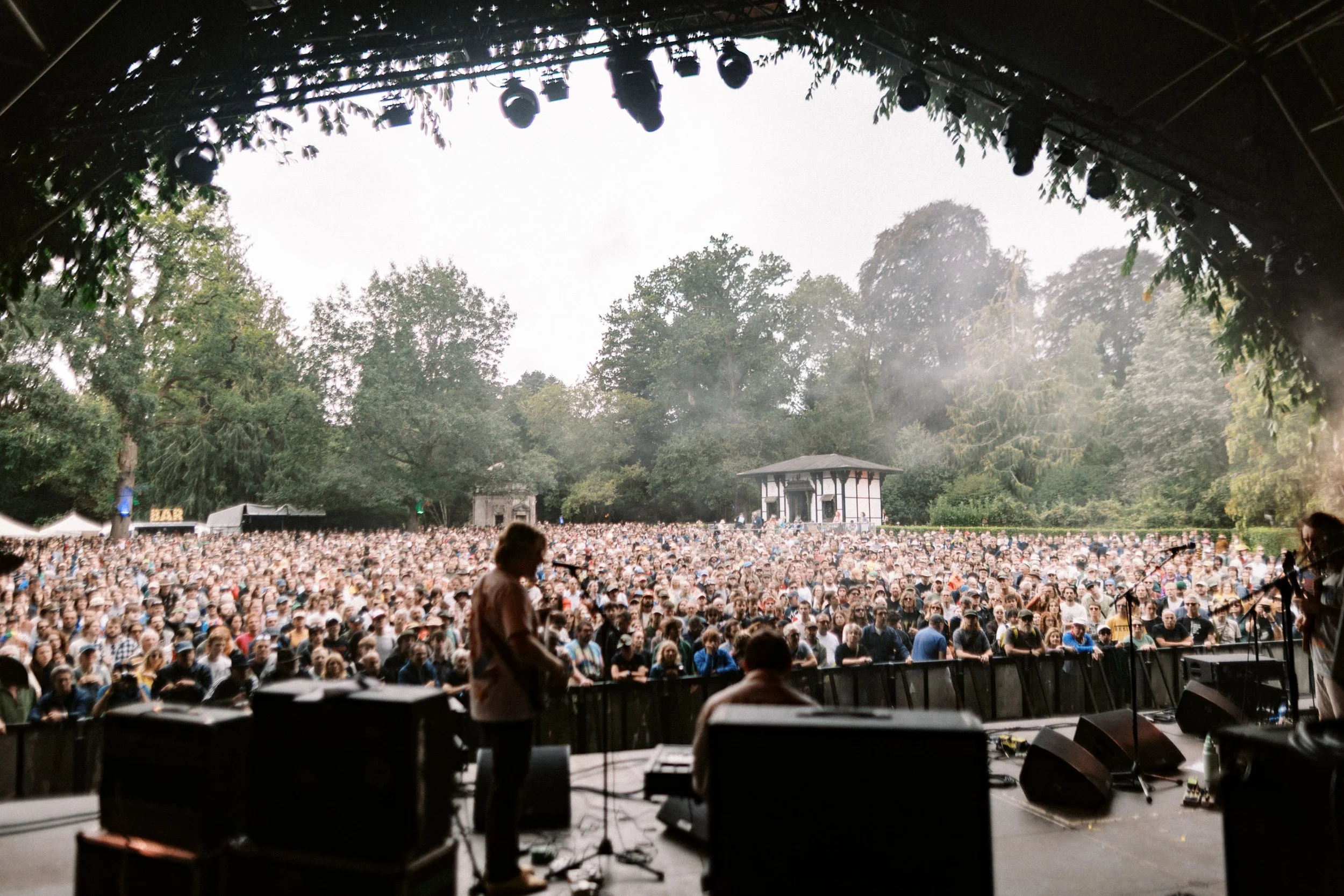
Silver Gore followed as the Garden Stage continued to buzz. They’re one of the best new bands around at the moment, and there is something in their music that scratches the same part of my brain as MGMT’s Congratulations does. Unfortunately, our interview ran over and cost us Angine de Poitrine, one of the weekend’s more painful clashes, but we made it back to the Woods Stage in time for Segall’s second appearance of the day. The hill was packed, the rhythm section was propulsive, a proper mosh pit had developed and somewhere in the middle of it all was a man wielding an inflatable guitar while an octopus bounced around on a stick above everyone’s heads.
Model/Actriz subsequently transformed the Big Top into a giant New York basement. Cole Haden prowled around the stage and through the audience while the band hammered away behind him, all serrated guitars, pounding electronics and theatrical menace. For a festival frequently associated with pastoral folk and people sitting pleasantly on camping chairs, End Of The Road is very good at suddenly throwing you into something much darker.
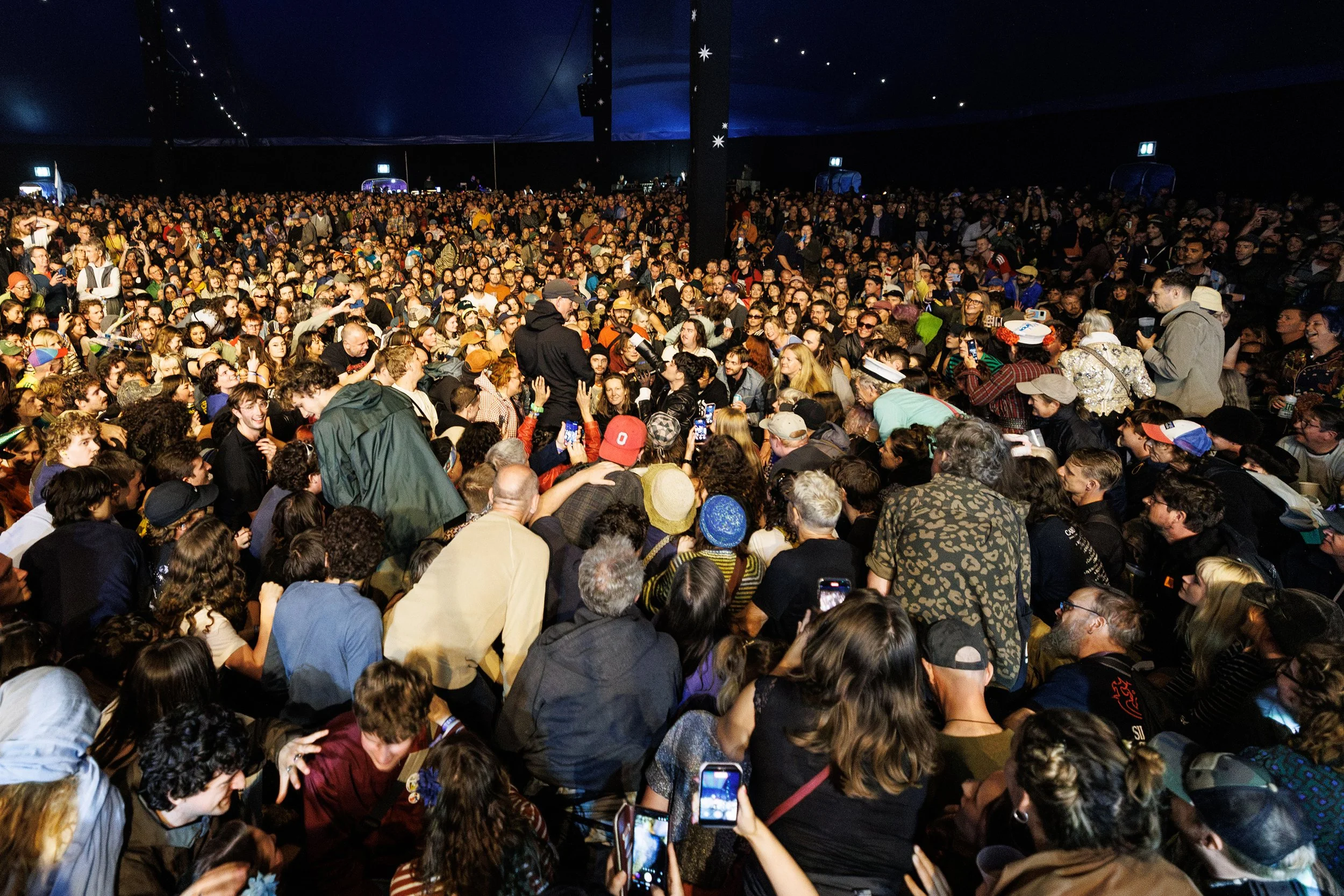
Mac DeMarco followed as Friday’s headliner. The set itself was difficult to fault. Backed by a new full band, including Daryl Johns, he moved intelligently between different periods of his career: ‘Salad Days’, ‘On the Level’, ‘Still Beating’, ‘Passing Out Pieces’, ‘Ode to Viceroy’ and ‘Freaking Out the Neighborhood’ all appeared alongside newer material. He remains an effortless songwriter, and hearing that many songs together makes it obvious how much influence he has had on the last decade of indie music.
But there was still a slight distance to the performance. Years of being turned into the patron saint of a particular type of indie fanboy seem to have taken something out of him, leaving parts of the set oddly enervated despite the strength of the songs. He finished with Michael Jackson’s ‘Human Nature’. Make of that what you will.

Jules and I somehow lost each other after the set. A couple of hours may have passed here. We found each other again outside the Big Top tent, just in time for Working Men’s Club. I’d turned my nose up at them in the past for reasons I can no longer particularly explain. Everyone we spoke to at the festival seemed to describe them differently: punk, dance, electronic, post-punk. The opening few minutes sounded vaguely like Australian indie circa 2012 and we feared our prejudices were about to be confirmed. By the end, we had joined the club.
Working Men’s Club’s dark, dance-heavy set was exactly what the night needed after DeMarco, built around driving basslines and a throbbing pulse that kept getting harder as the set went on. Ela Minus followed neatly, pushing the Big Top further into euphoric electronic territory. From there, we stopped paying much attention to the programme and started wandering, which might be the best way to experience End Of The Road. There are stages, obviously, but there are also tiny venues, strange paths, games, fires, installations and entire sections of the festival you can side quest into by accident. You can go to circus school. You can get lost in the trippy Effing Forest. You can play rounders or whatever that game is where you throw bits of wood through a gap. You can have a wagon-off with the other dads. You can warm up around the fire pit with complete strangers, talking about Boney M and Soundgarden in the same sentence. By Saturday morning, we were dead.
The sun had its hat on that Saturday. We caught Spanish Horses before interviewing them, their ragged, groove-heavy indie rock carrying enough Americana and swagger to distinguish them from the endless procession of post-punk bands Britain has produced over the past decade. RIP Magic followed with something much murkier: miasmic, nocturnal art-school dance music somewhere in the vicinity of Suicide, LCD Soundsystem, dub and early electronic music. There’s a narcotic quality to it. Then we admitted defeat (we aren’t as young as we used to be) and went back to the tent to have a lil nap. When we returned to the site, Fat Dog were busy turning the Woods Stage into the exact opposite of our mini siesta. Sweat, strobes, mosh pits and feverish electro-punk insanity.
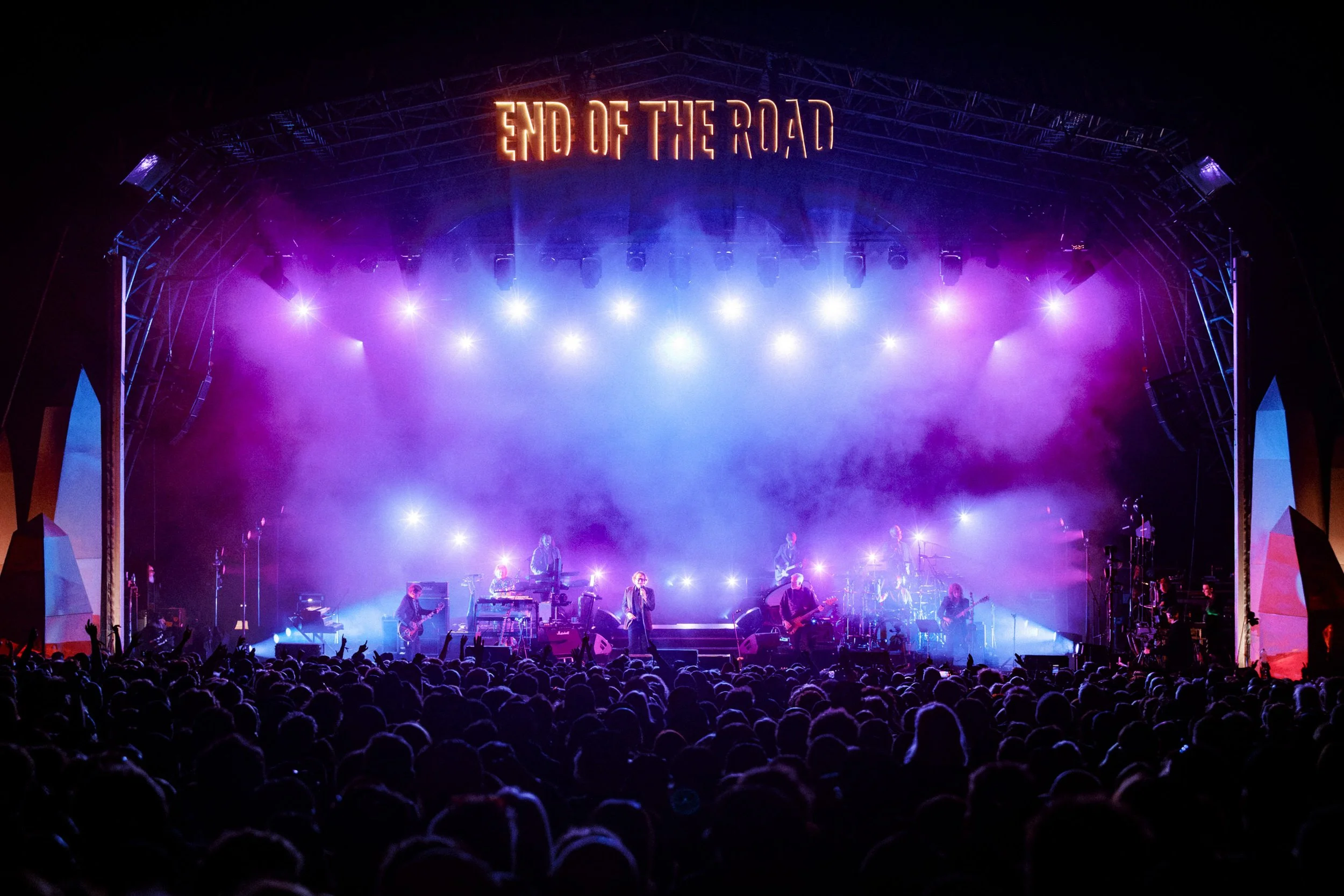
Saturday’s headliners Pulp offered something completely different. Somehow, I’d never seen them before, and what immediately became apparent is that Jarvis Cocker could probably have had a very successful career as a comedian if the music thing hadn’t worked out. He is a phenomenal showman, his between-song patter wry and occasionally mordant without ever becoming smug, and he can hold an enormous field even when the band are playing material a large portion of it clearly doesn’t know. This particular Pulp set dug unusually deep. ‘Little Girl (With Blue Eyes)’ appeared for the first time since 2012, ‘The Mark of the Devil’ and ‘Death II’ for the first time since 1992, while ‘Deep Fried in Kelvin’ received its live debut. There were still enormous moments in ‘Babies’, ‘Razzmatazz’ and eventually ‘Common People’, but the obscurities ended up being part of the appeal. Truthfully, I went into the show as the sort of casual Pulp listener who knows ‘Common People’, ‘Disco 2000’ and the obvious stuff. I left thinking I should probably listen to a lot more Pulp. There aren’t many headline sets where not knowing half the songs actually improves the experience.
Once Pulp finished, we headed towards Stop Making Sense Live, which is essentially an extraordinarily reverent tribute to Talking Heads’ legendary concert film. The troupe recreates Jonathan Demme’s concert film almost scene for scene, beginning, naturally, with a David Byrne lookalike walking onto an empty stage with an acoustic guitar for ‘Psycho Killer’. The crowd lost its mind. Musicians gradually joined him as the performance expanded just like the original, until the whole thing became an exultant, slightly surreal recreation of one of the greatest concert films ever made.
Sunday was when End Of The Road completely won me over. Determined to make the most of the final day, we headed straight out for Kitchen Lover, a band we’d previously put on at one of our nights at the Shacklewell Arms. Seeing them suddenly playing the much larger Big Top was genuinely lovely. They appeared to be suffering from the same heavy weekend as everyone watching them, but leaned into it, joking with the crowd and still managing to put on a killer show. Ratboys were next. The Chicago band can initially sound deceptively gentle, Julia Steiner’s soft, slightly hazy voice sitting over indie rock coloured by alt-country, power-pop, folk and occasional Midwest emo. That contrast is what makes them so compelling live: sweet country-rock can give way to fuzzy power-pop, punkier bursts or the sprawling guitar passages of something like ‘Black Earth, WI’. Their music can feel intimate without ever being particularly quiet. Somewhere nearby, Folk Bitch Trio’s gossamer harmonies coated the field in a warm blanket, the perfect Sunday-afternoon sound for a festival now populated by people operating on some combination of lager, coffee and the final remnants of their serotonin.
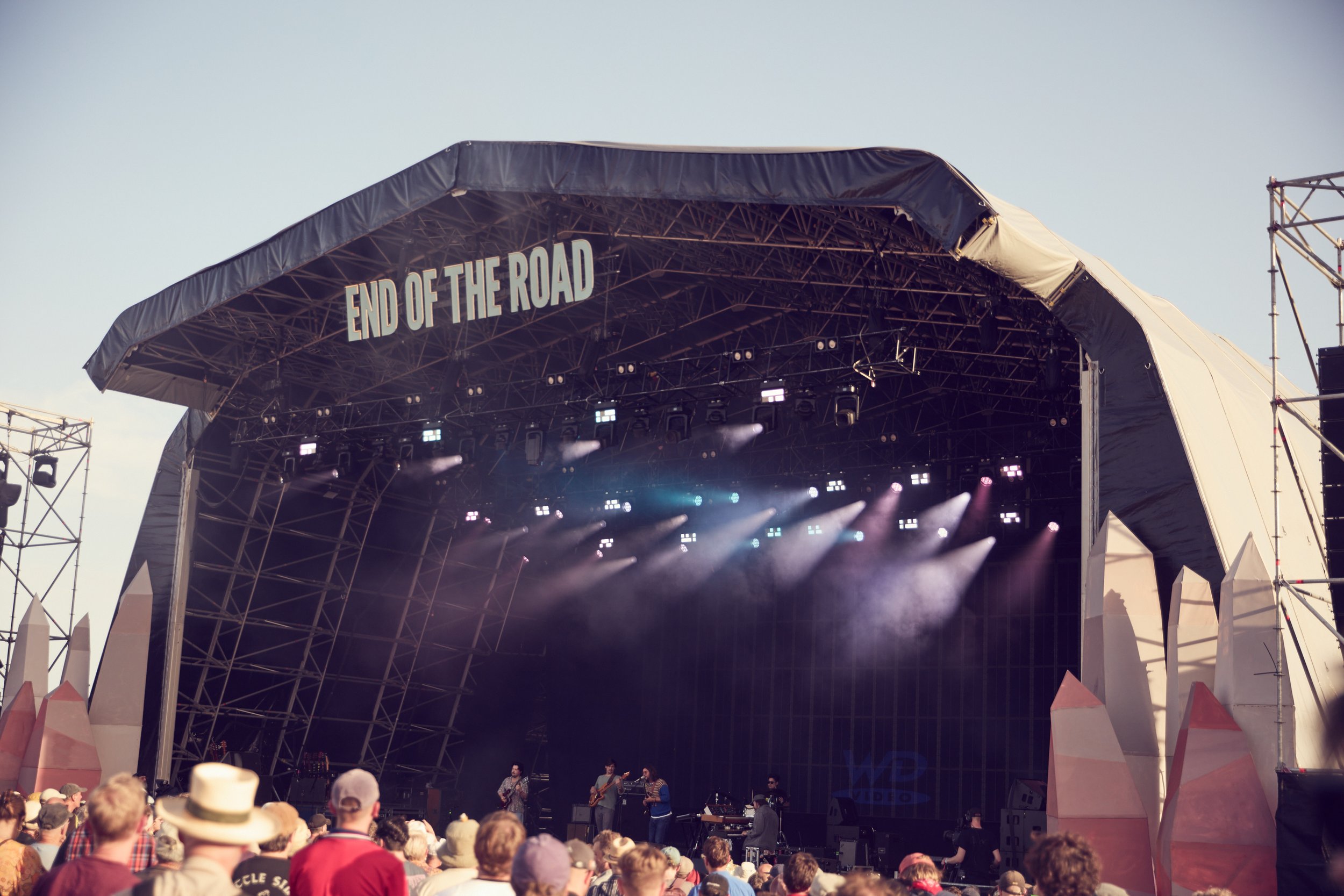
White Denim were supposed to provide our next personal highlight. I’d been hoping they might dig into Performance, my favourite of their records, and incredibly, the opening two songs delivered exactly that. Then the sound broke. Completely. The band eventually trudged off stage and we stood there gutted, assuming that was that. Only later did rumours begin circulating that they might attempt another show somewhere else that evening.
We finally caved and bought some proper food before wandering over to CMAT. I have spent years dismissing CMAT as “music for your mum”, but I finally understand why everyone talks about her live shows. She was fun, completely insouciant and much sharper than I’d given her credit for. We didn’t stay for long, though, because Kurt Vile was waiting over at the Garden Stage. Vile is almost absurdly well suited to End Of The Road. As ‘Bassackwards’, ‘Pretty Pimpin’ and finally ‘Wakin on a Pretty Day’ drifted across the Garden Stage, older fans reclined in camping chairs like the cast of King of the Hill.
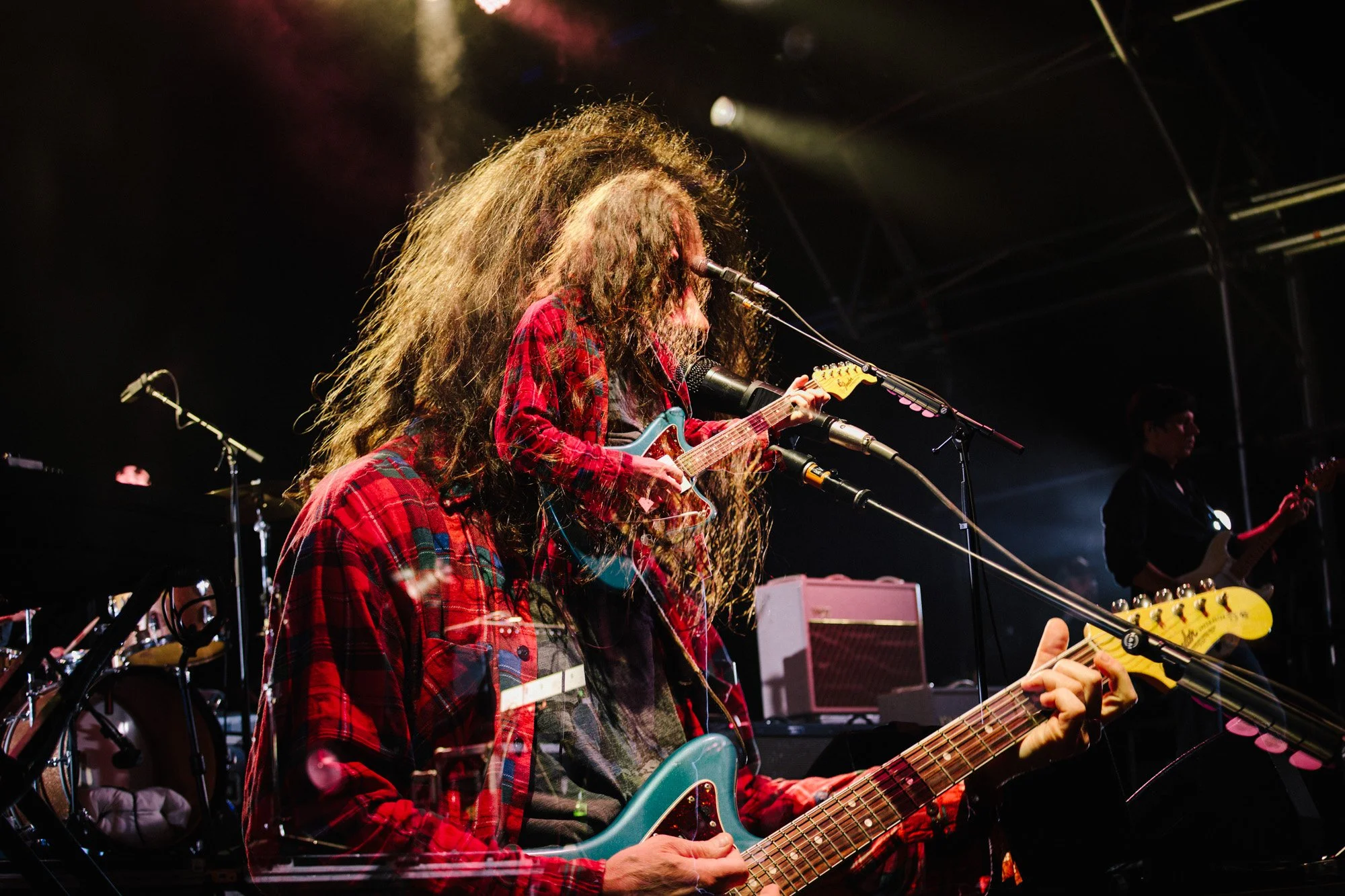
Anna von Hausswolff was one of the artists I’d been most excited to see all weekend, and her voice was even more extraordinary in person. There is something of Kate Bush in its power, but von Hausswolff pushes it somewhere darker and more severe. At full force, her vocals soared across the field. Her voice remained the focus throughout, and with pipes like that, why wouldn’t it?
Then the final night went slightly off-script. We ended up at the end-of-festival party, hidden down a path that felt suitably secretive for a festival where you spend half your time disappearing into places you hadn’t planned to go. There were free drinks, journalists we’d repeatedly crossed paths with over the weekend, and nobody seemed particularly interested in going home yet. Then came the news we’d been waiting for: White Denim were playing a secret set at the Folly, the final set of the festival. Watching them from the side of the stage late on Sunday night made up for the disappointment of their cut-short afternoon show. We’d missed them once and somehow ended up with a better version several hours later.
We returned to the party afterwards, where I made a foolish joke in the bathroom about some bloke being “Mr Big Shot” because he had an enormous walkie-talkie. Turns out, it was only the guy who runs the festival. Eek. Thankfully, he was lovely. Maybe he appreciated somebody not kissing his arse, which I assume he’d had plenty of by that point. Eventually, sometime around 5am, we started walking back towards the tent for the final time. There were no headline acts left, no DJs, nothing we particularly needed to see. Yet the woods were still glowing. People were playing chess, sitting around talking and jamming together beneath the early glow of the sun coming up. Three days earlier, those fairy lights and wooded paths had been our introduction to End Of The Road. Now it summed the place up perfectly. Nobody needed a stage to keep the festival spirit going.
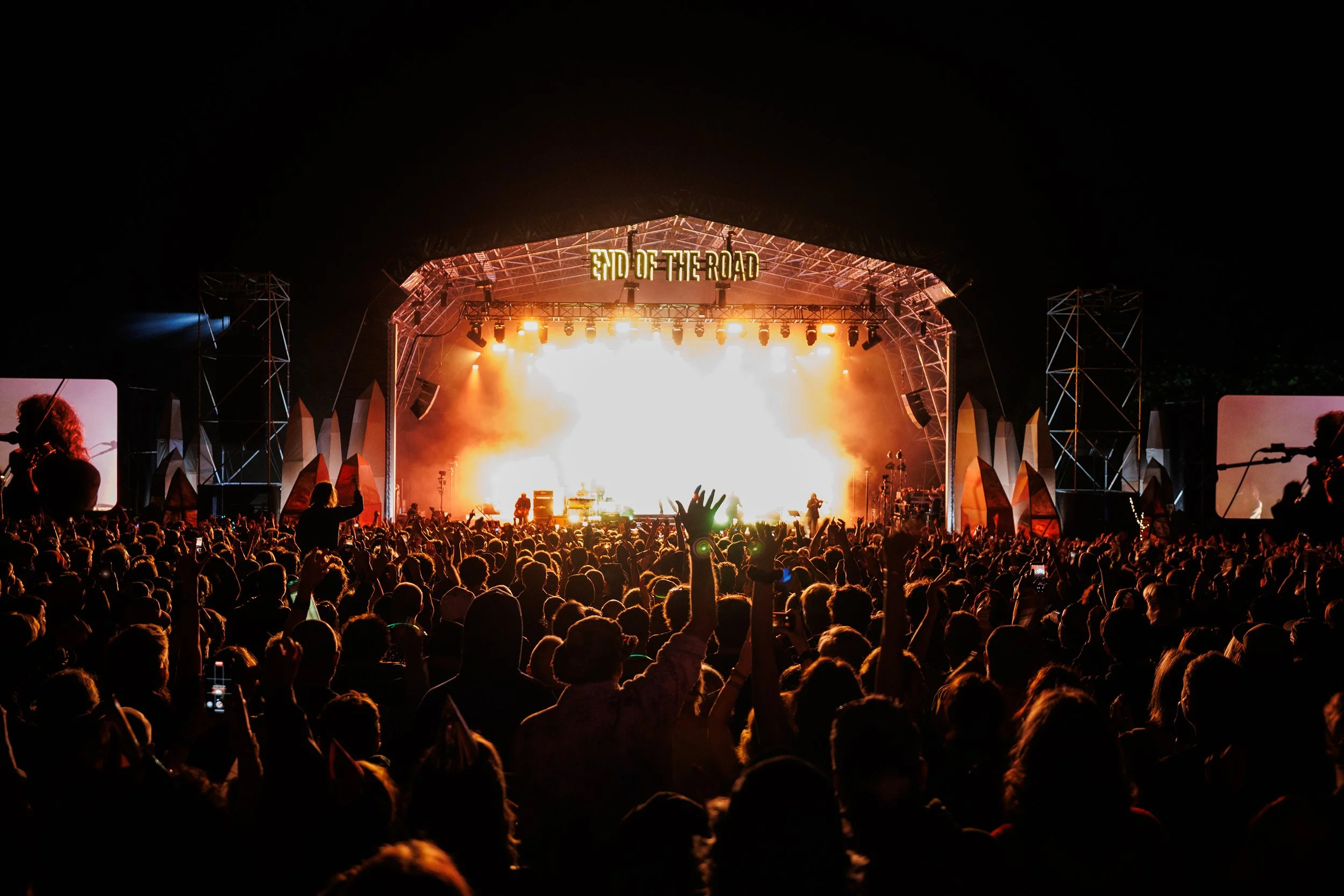
End Of The Road celebrated its 20th edition this year with 15,000 people passing through Larmer Tree Gardens, yet remarkably little about it feels designed for such mass consumption. It feels personal and thoughtfully communal. There is no single demographic being catered to. Toddlers run around while White Denim play. Older festival-goers settle into camping chairs for Kurt Vile. Somewhere else, someone is deep in experimental electronic music, learning how to juggle or listening to a literary talk. More importantly, there is none of the corporate sludge that has swallowed so many British festivals. You aren't constantly being funnelled towards some enormous branded activation or having a sponsor's product pushed into your mouth. You can bring a beer into the arena. You can bring your chair. You can drag a pimped-up wagon (ft. bunting, fairy lights, etc.) around if you want. Security aren't constantly treating you like you are attempting to commit a crime. The festival trusts its audience, and people seem to respect it because of that.
People clean up after themselves. They make room for each other. Strangers talk to each other. Even the potentially apocalyptic National Express queue on Monday morning failed to descend into Lord of the Flies-style chaos. Everyone seemed spiritually reset (or maybe just too tired to start fighting over a bus). That atmosphere is the reason End Of The Road works. Geese played the best set I saw all weekend. Pulp sent me home wanting to dig further into their catalogue. White Denim's secret show gave Sunday the ending it needed. But the parts I keep thinking about are everything around those performances: cooking pasta in the rain, disappearing down paths, bumping into old friends, sitting beside strangers, finding bands we hadn't intended to watch and wandering through an illuminated forest at five in the morning with nowhere left to be.
On Monday, we packed the tent (well, Jules did), loaded ourselves up like little donkeys and said goodbye to Larmer Tree Gardens for 2026. For years I’ve wondered why so many people I know are obsessed with End Of The Road. Now I get it. It’s one of the best festivals I’ve been to in years and, twenty editions in, it might be the best camping festival Britain has.