
Festival Review: Roskilde 2026
Still Listening heads to Denmark to discover why Roskilde is one of Europe's most ambitious and rewarding music festivals.
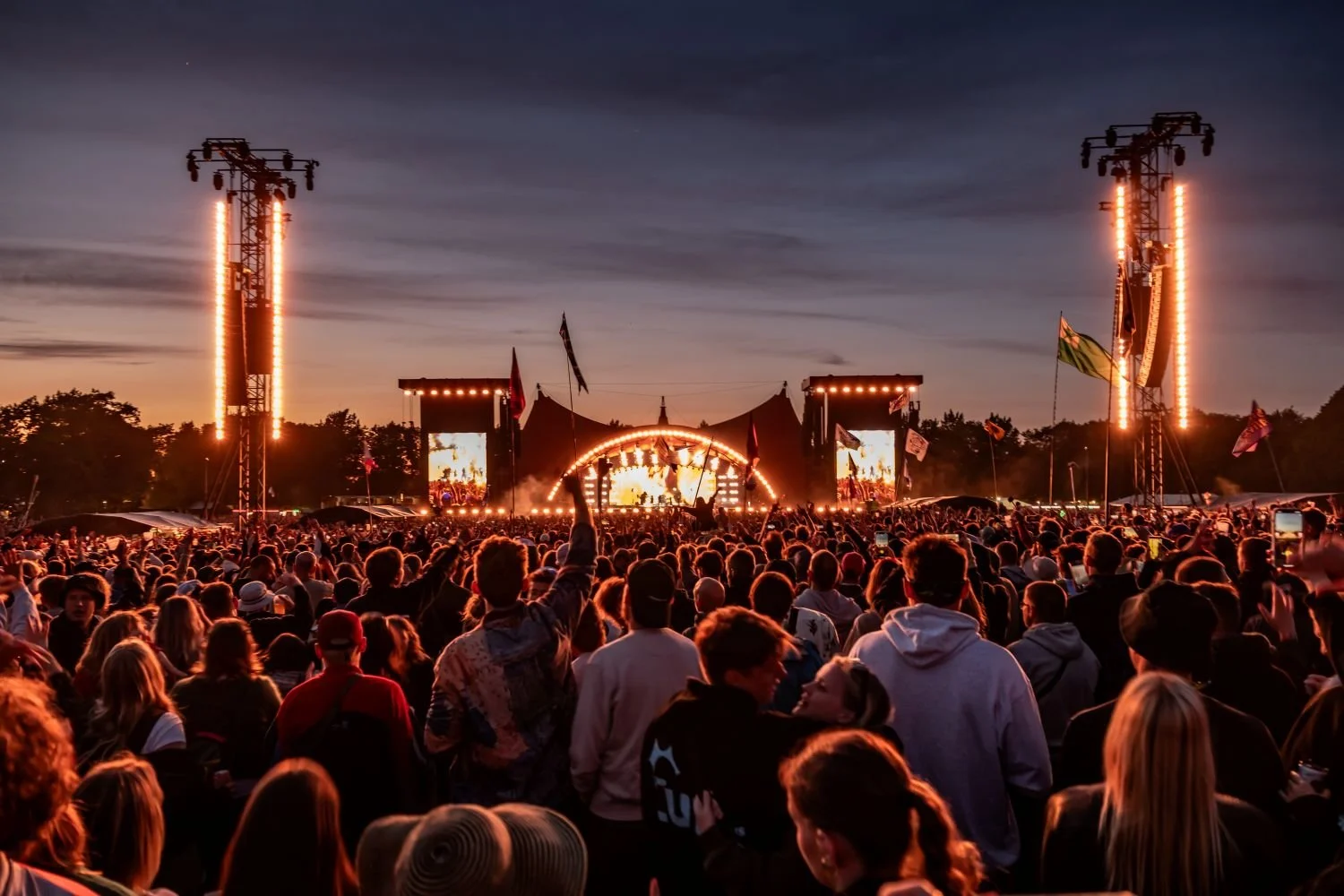
Still Listening ventured to Denmark for the first time to visit Roskilde: Europe’s answer to Glastonbury, if Glastonbury had better wayfinding, a healthier respect for sitting down and a national commitment to salt.
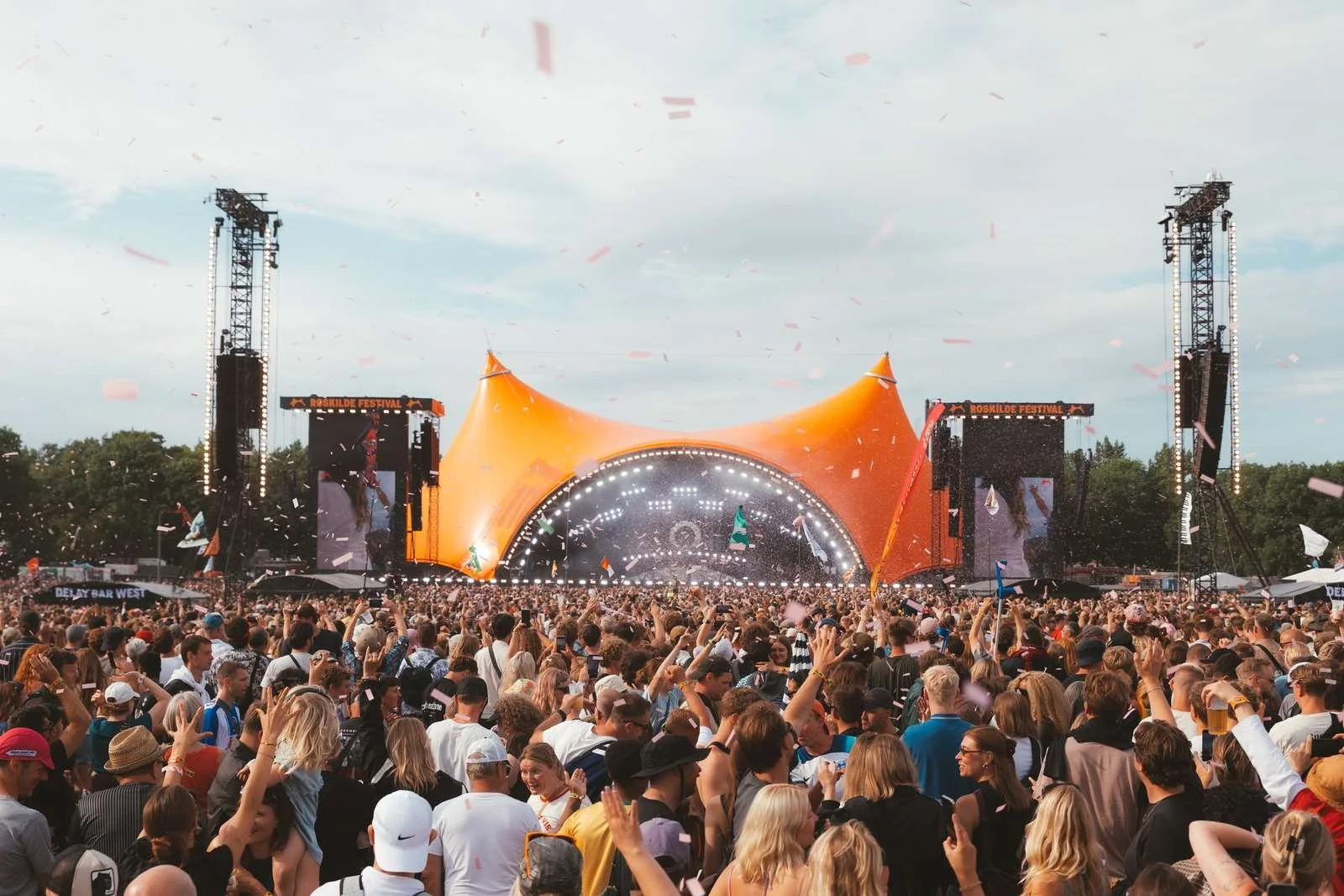
Roskilde 2026 was, in every sense, enormous. There were 177 music acts from 37 countries, two new stages and 41 acts programmed across the festival’s opening days alone, and that’s just the music. Beyond that, sat 95 art programmes spanning dance, experimental performance and film, a newly built cinema, workshops on soft activism and community organising.
The programming team, from all different ages and backgrounds are tasked each year with looking across different musical territories and figuring out how to fold them into Roskilde’s landscape. It is a festival with a serious sense of scale, but also one with enough self-awareness to know it can’t survive on line-ups alone.
Roskilde wants to be both a festival and a community: a temporary world built around collective living, shared space and the idea that music should sit alongside something more purposeful. Sometimes that sounds exhausting on paper. In practice, it mostly works.
And then there are the Roskilde specifics: the naked run, the swimming lake, Dream City, walkways stretching off into the distance and enough places to sit down that it starts to feel like a festival designed by someone who understands lower back pain. Hammocks, benches, beanbags, if you love a sit, this is the festival for you.
It’s also a festival with a strong sense of its own history. To the left of the Orange Stage, a grove of birch trees stands as a reflective memorial to the nine lives lost at Roskilde in 2000. The measures the festival has taken since to prevent anything similar happening again are serious and visible, and there’s something quietly moving about how that history is held in the site: not hidden away, not turned into spectacle.
For all its scale: around 130,000 people in and around the festival, Roskilde never felt crushing. That’s partly down to the layout, which the festival clearly prides itself on. There were very few real bottlenecks; people moved around the site with the kind of easy flow usually reserved for schools of fish and commuters who have accepted their fate. Even in bad weather, and there was plenty of that, the site held up. This is an all-weathers festival in the truest sense: sun, pelting rain, drizzle, sudden optimism, more rain. Poncho on, poncho off, poncho back on again, you catch the drift.
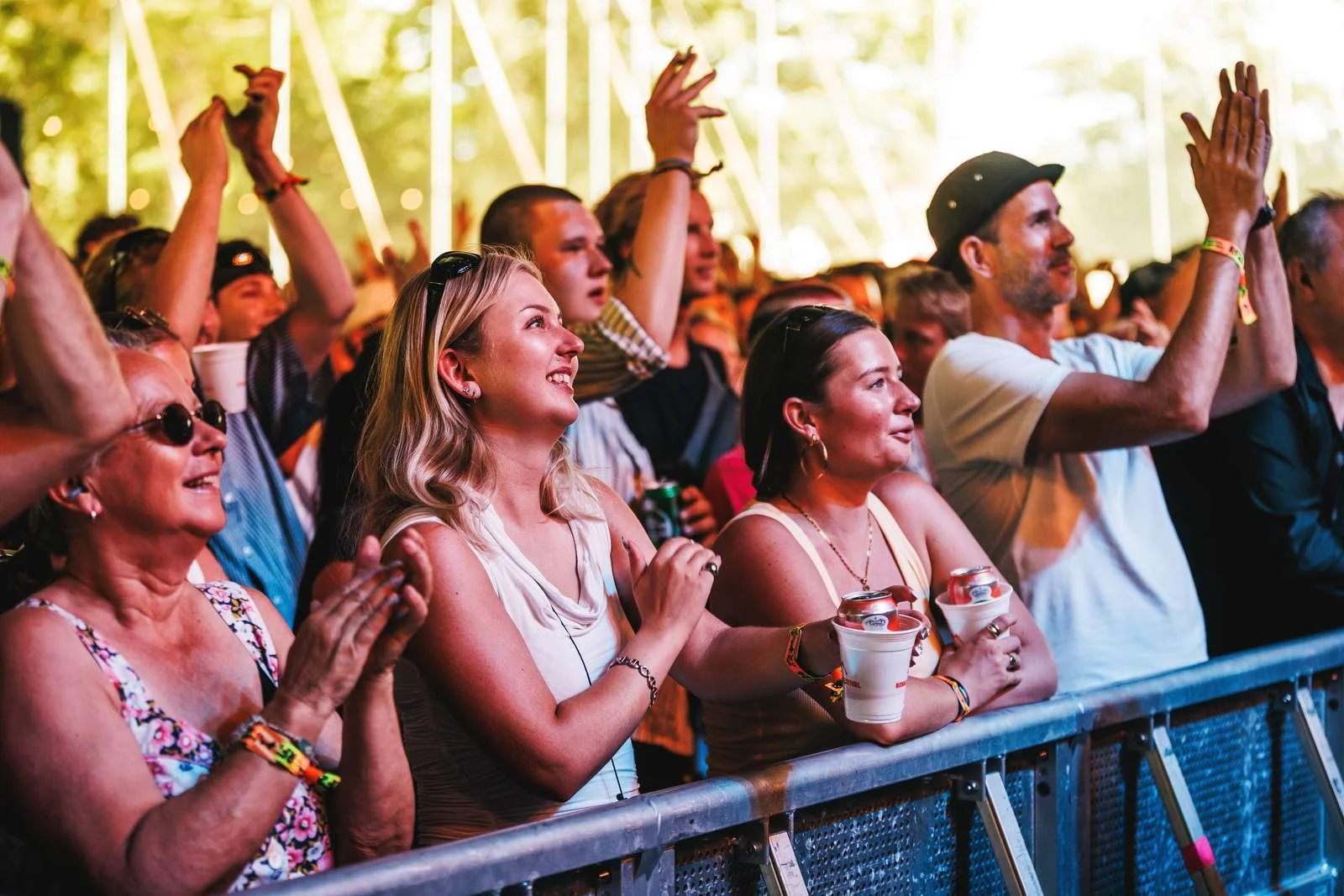
Despite alcohol doing the heavy lifting as the festival’s main sanctioned substance, the atmosphere was strikingly considerate. People looked out for each other. Queues moved. Crowds parted so people could get in and out. You could leave to get water or use the toilets without feeling like you’d forfeited your place in society. Compared to some UK and European festivals, where people become glassy-eyed and territorial the second they’re near some kind of barrier, Roskilde felt refreshingly civilised.
The pit
Roskilde’s pit system at the two main stages is one of those things that sounds faintly dystopian until you experience how well it works. The front pit is cordoned off for safety and access is managed by wristbands collected on the morning of the show you want to see. The pit then opens 15 minutes before the artist’s set.
In practice, it’s excellent. It means the front isn’t dominated by VIP lanyards, bored influencers, or people who arrived at 11am and then spent nine hours talking through bands they don’t care about. It means if you want to see an act later in the day, you don’t have to camp out at the barrier from breakfast onwards and lose the will to live. More importantly, it means fans who actually made the effort to get in there and get the wristband aren’t priced out or vibed out of seeing their favourite artist properly. The real ones win. As first-timers, we didn’t have a scooby as to where to get these magical bracelets.
The food and drink situation
The Danish, it turns out, are not afraid of seasoning, particularly if that seasoning is salt. Everything seemed to contain quite a lot of it. The beers also leaned impressively dry. But with water points appearing every five minutes or so, rehydration never felt far away, the festival is smart enough to make water feel as accessible as beer, which shouldn’t be a radical concept, but here we are.
Okay now on to our highlights:
The Cure
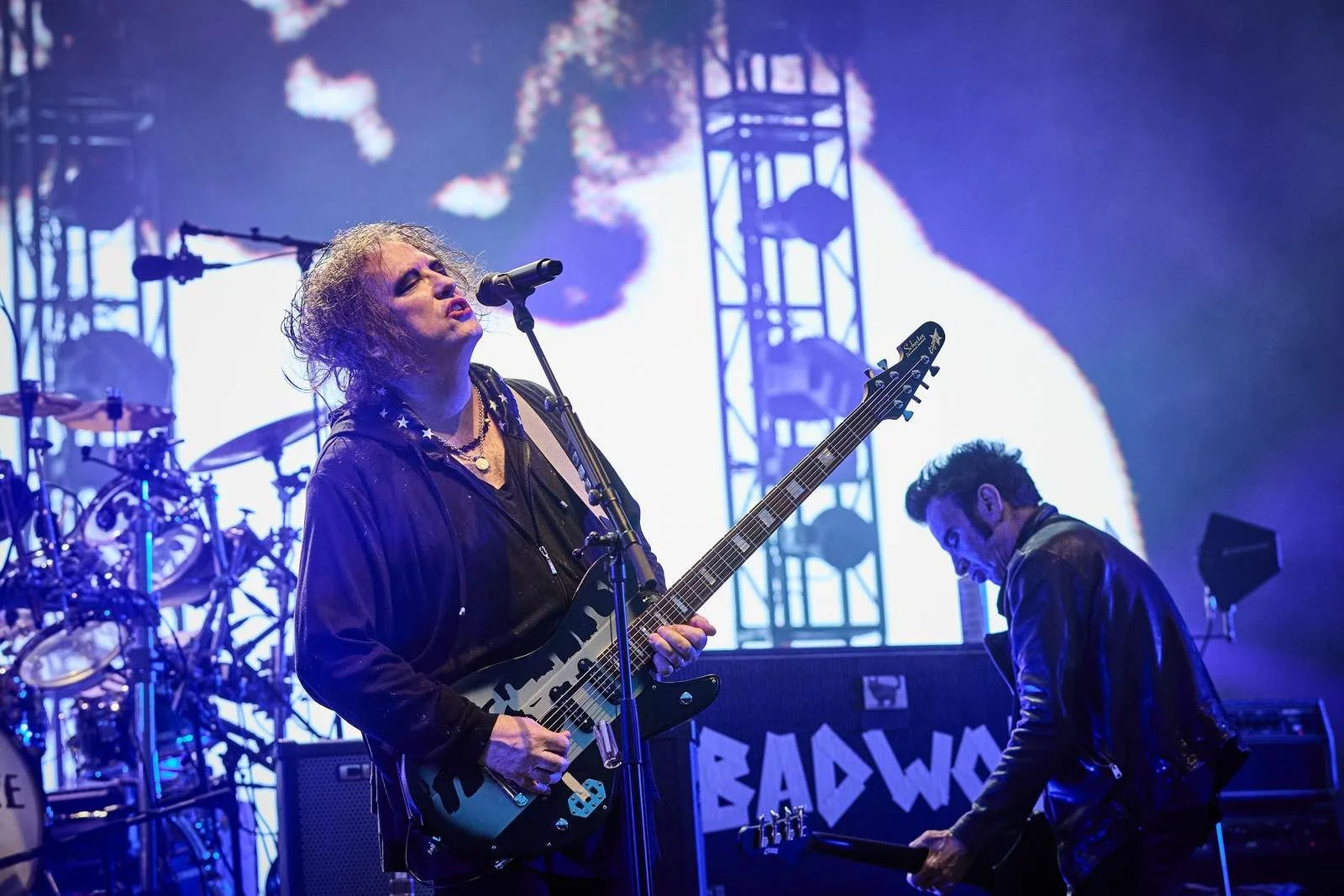
The Cure felt like one of those bookings that should be obvious for Roskilde, but still lands with a kind of awe when it actually happens. Robert Smith’s vocals sound absurdly good, like for like to the recordings.
The set stretched to a hefty 27 songs, including a nine-song encore. Opening with Disintegration's ‘Plainsong’ then drifting into your girlfriend’s favourite, ‘Pictures of You,’ towards the end of the set the audience are treated to ‘A Strange Day,’ from 1982’s Pornography, making its debut on The Cure’s Euro Summer Tour. The calm sun begins its sleepy descent over the Orange stage as the band move effortlessly through their discography, an inflatable alien on a stick humps a cow (wait, what?). The band close with ‘Disintegration.’
The encore’s opening crawl of ‘Lullaby’ spreads out over the festival’s plains making the moment feel both huge and intimate at the same time. The encore continued to lean into the more immediate hits, ‘The Lovecats,’ ‘Friday I’m in Love’ and ‘Close to Me’ filling the space. Smith in his glittery black hoody, wails through ‘Boys Don't Cry,’ into the night to close. He humbly holds his hand on his heart, soaking in the love with the response of someone still slightly surprised that people care this much about songs he wrote decades ago.
We were also told by Roskilde’s head of music that Smith was the last person standing in the artist village, hanging out and talking to volunteers late into the night and into the wee hours of dawn, a small detail, but one that made him all the more likeable.
Napalm Death
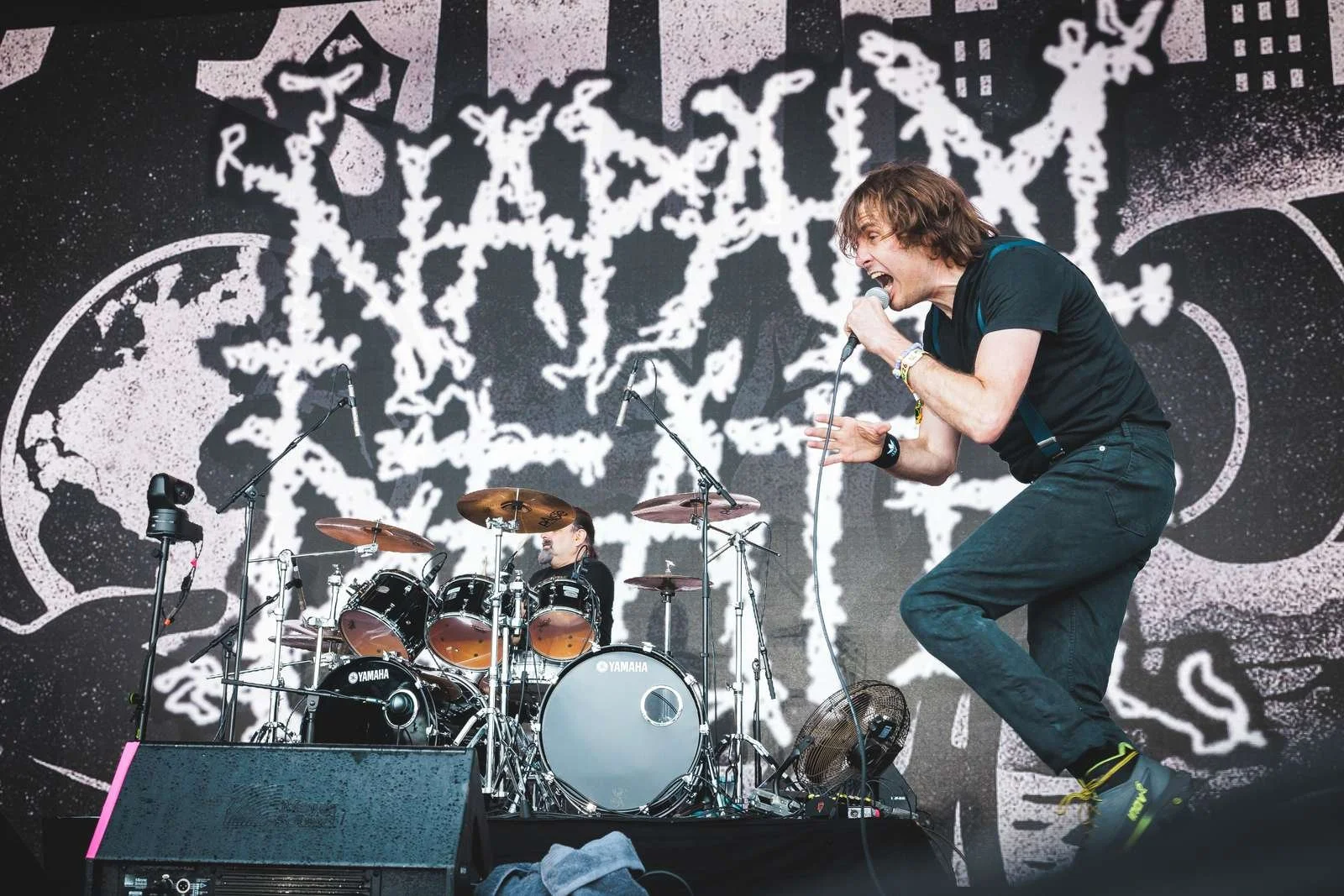
A band best experienced while dressed for imminent weather-related decline. By the time Napalm Death took to the Eos stage, the heavens had opened, closed, and then left the door ajar just to keep everyone on their nearing trench-foot toes.
Spirits restored, any fear of future pneumonia was replaced as Barney Greenway launches into opener ‘Scum.’ Greenway acknowledges bassist’s Shane Embury’s absence almost immediately, wishing him well and noting that the audience will be in guitar tech, Adam Clarkson’s safe hands.
Little Simz
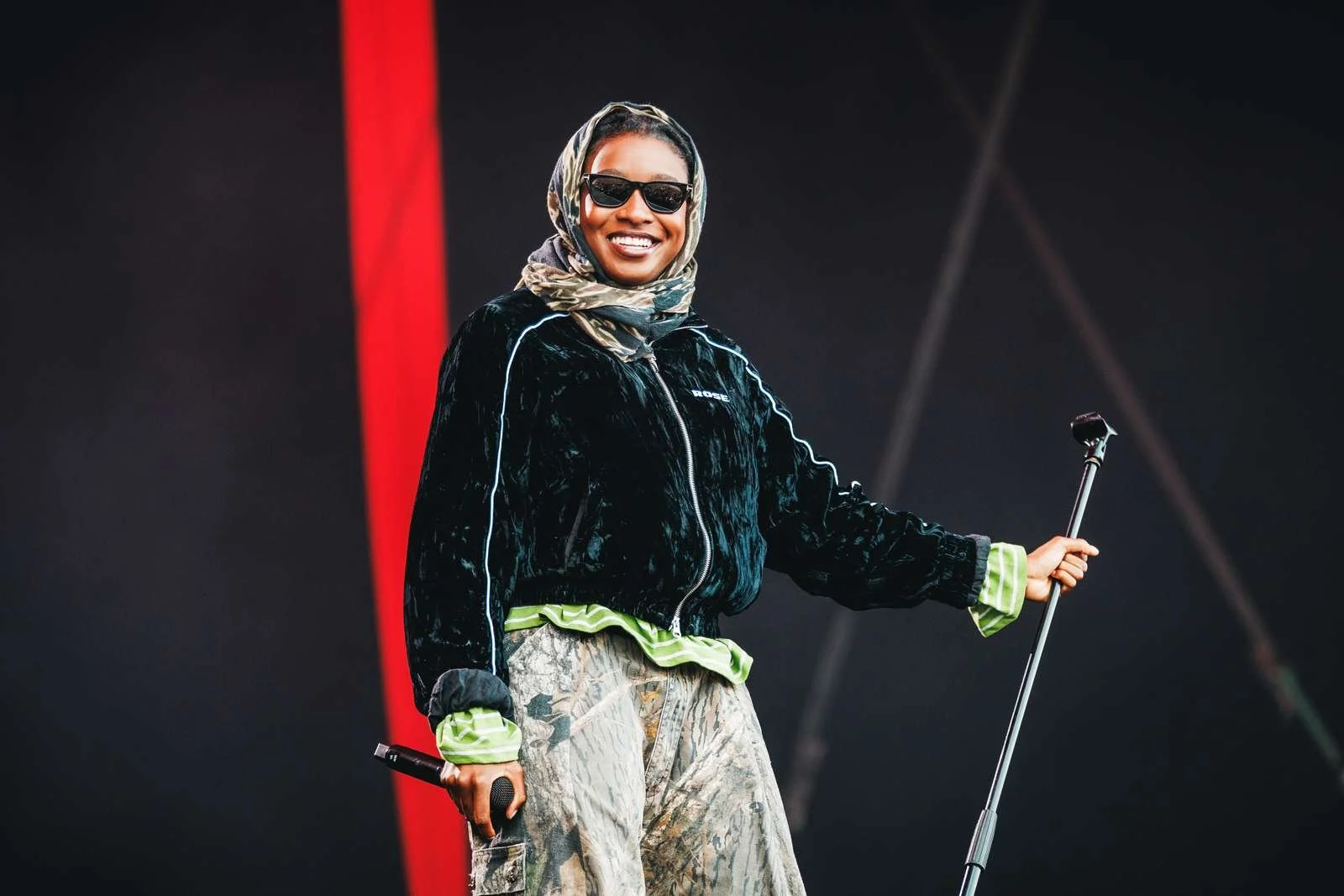
The sun always seems to come out for Simbi. The rays beam off her in the mid afternoon light on the Orange Stage. There’s a confidence to Little Simz now that has tipped her fully into certainty, complete command. She’s realised her own greatness and is moving accordingly as an unstoppable force.
‘Venom,’ holds even more weight the more times you hear it, tears inevitably well for ‘I Love You, I Hate You,’ Simz’s consistent high bar of her performance at her live shows is unmatched, operating at full power. She moves behind the decks for ‘Mood Swings,’ a brief reprieve from full dominance as she introduces her band before flowing into ‘Woman.’ Simz takes a photo of the sunswept crowd before delivering the final knockout, ‘Gorilla.’
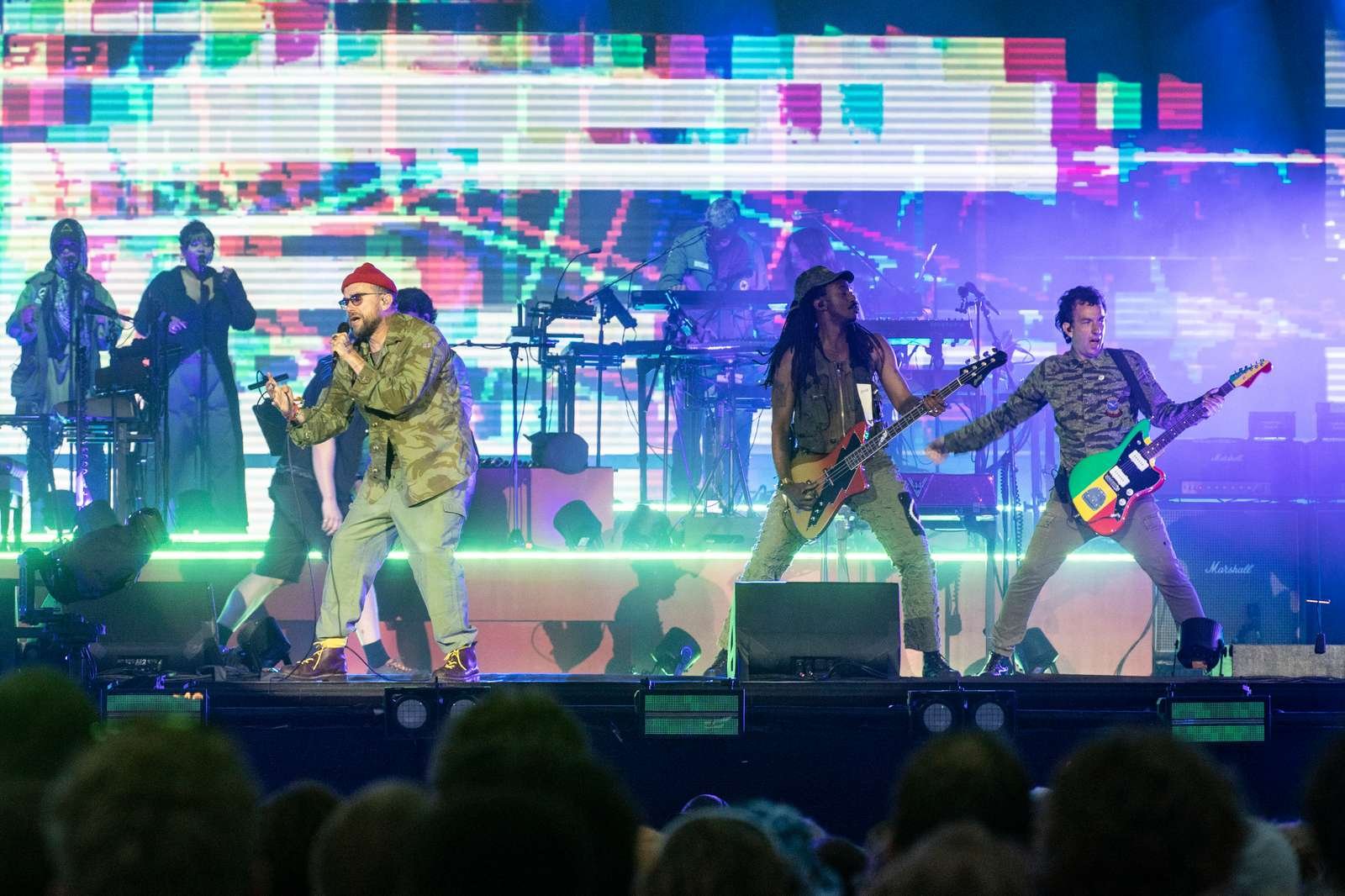
Gorillaz
Having been fortunate enough to see Gorillaz a fair few times, at festivals and on their own tours we’ve collectively observed that Damon Albarn usually appears in one of two recognisable forms. There’s Drunk Dad Karaoke Damon and there’s hyper-focused, more “music professional” Damon. Both are excellent in their own ways. Whichever Damon turns up, the show will be excellent, musically and in stage presence. At Roskilde, 2026, we got a third wildcard option: Salty Damon. Whether the mood was down to sound bleed from the other stages, (we all saw that post from Uncle Acid & the Deadbeats), technical frustrations, or something else entirely was hard to tell, but there was a level of “off” hanging over the set.
That doesn’t mean it wasn’t brilliant.
The stage was packed and at points, the band sounded huge, there were enough moments of brilliance to remind you why Gorillaz remain such a compelling live proposition even when the set itself feels slightly unstable. But Albarn seemed distracted, irritated, or perhaps just not fully with us.
Opener, ‘The Mountain’ didn’t land as cleanly as it predictably would have in a stadium setting. As David Hopper’s voice echoed the title into the Roskilde night, audience members were still meandering into position, yapping through the intro and from where we were standing the instrumentation felt oddly washed out. It was a shame, because when it works, ‘The Mountain’ is a genuinely moving opener, a wave of emotion when done right. Still, by the time ‘The Happy Dictator’ arrived, everybody felt more aligned. The Now Now’s, ‘Tranz’ followed, pushing things up into a higher gear, for the die hard fans who like to sleep in (sans wristband), in the wider audience we were all screaming “Foreverrrrr” to our festival besties who we’ll never see again.
The set’s high points were very high. ‘Empire Ants’ with Yukimi from Little Dragon was gorgeous, one of those moments where the whole field seemed to lean in. Damon lost himself in the keys and vocals, while Ajay Prasanna’s chikaari flute added a new layer of depth that lifted the track even further. ‘El Mañana’ felt like a genuine gift and ‘A Shadowy Light’ was magical, enhanced by a wave of phone lights swaying on the nighttime hill. For ‘Delirium’, Mark E. Smith’s recorded cries rattled out across the festival grounds like maniacal crows. Bootie Brown, by now a staple of the Gorillaz live machine, brought the necessary jolt to ‘Stylo’ and ‘Dirty Harry’, while the expanded band made everything feel rich and dense, even when Albarn himself felt slightly out of step with it.
There were odd moments throughout that only added to the sense that this wasn’t quite the triumphant Roskilde return it could have been. At one point, after Albarn had already made his feelings known about the sound bleed from Uncle Acid & the Deadbeats, an assumed stage manager asked whether he wanted “more ambience,” to which he shot back: “Do you know how euphemistic that is?” The audience laughed, a little awkwardly. By the time ‘On Melancholy Hill’ rolled around, he seemed to have half checked out, making a series of silly noises that felt less playful than pointed. Later, ‘Feel Good Inc.’ had to restart after Albarn missed his vocal cue, something he brushed off as he attempted to reconnect with the crowd.
Maybe we’ve just come to expect too much. With The Cure playing the previous day and Little Simz just hours earlier, there was perhaps a small, hopeful part of us expecting some grand Roskilde-specific crossover moment. Instead, what we got was a set that was musically rich and often excellent, but emotionally harder to settle into. Earlier in the day, committed campsite neighbours told us stories of previous Albarn appearances at Roskilde where he kissed the floor of the stage in gratitude; this time, it felt more like he couldn’t wait to leave.
Albarn has a long history with Roskilde, having played the festival repeatedly over the years and spoken about attending in 1991 as a formative experience. Maybe there was too much weight attached to this one. Maybe it was just one of those nights. Maybe the lack of easily accessible weed in Denmark had got to him, like it had us. Either way, there were enough moments of brilliance to remind you why Gorillaz remain such a compelling live proposition, even when the set itself feels slightly unstable. It never quite became the show it should have been, but it still contained enough magic to keep you hanging on.
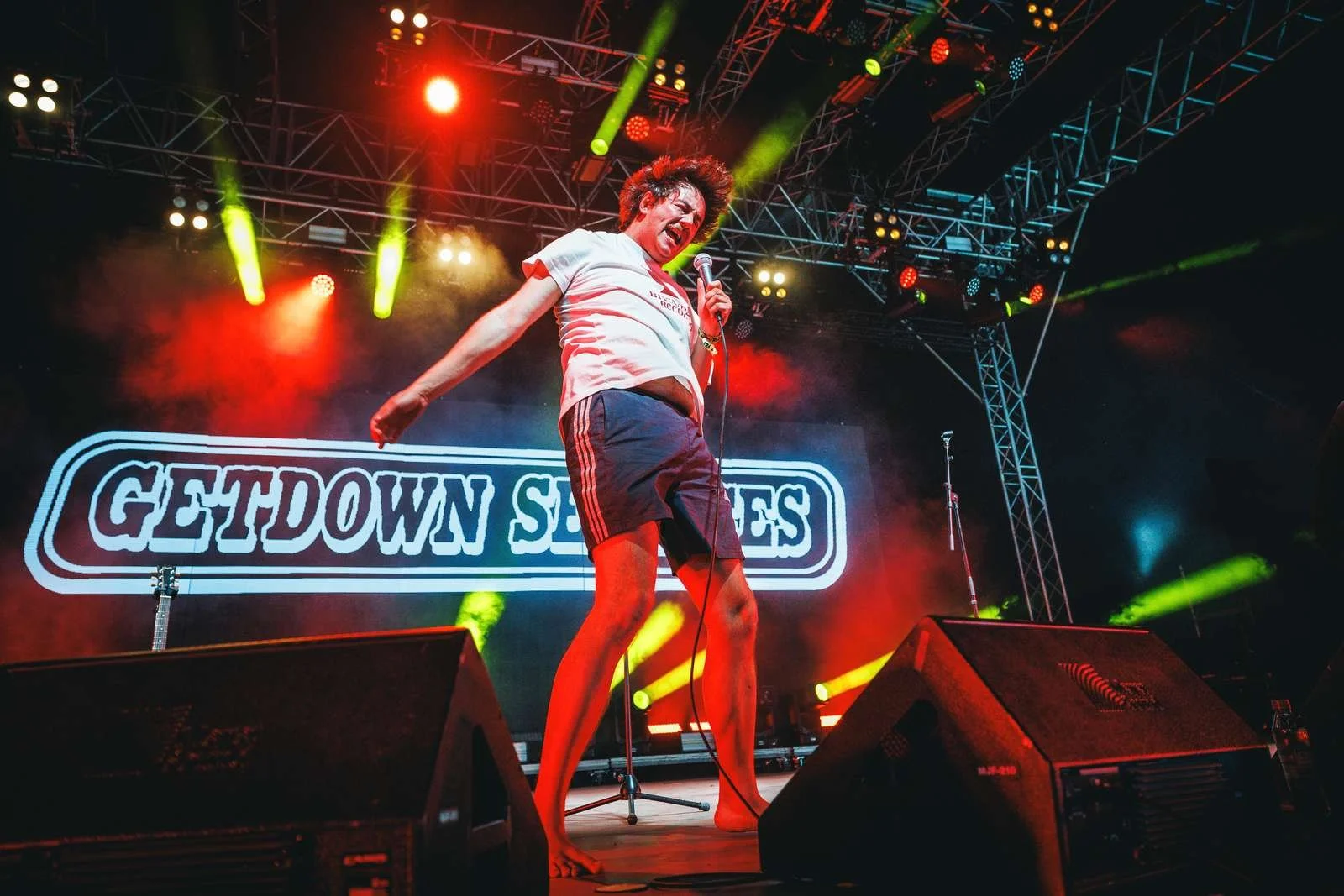
Getdown Services
Hyped up to us beforehand by the festival’s head booker, Getdown Services provided exactly the gear shift we needed. Silly, unserious music about crisps and modern life, delivered with the kind of conviction that makes you briefly evangelical about nonsense.
The Lagune tent was alive, like lifting a rock and finding every bug underneath chaotically moving and grooving to the rhythm of life. The mad lads packed it out, everyone infected by their squelchy synths, boingy beats and scrappy guitar fusion. Shirtless and liberated, they absolutely go for it on ‘The Radiator’ while ‘Caesar’ spirals into a gleeful frenzy, like two friendly farmers who just dropped a tab of good acid celebrating their shared love of Daft Punk. For a duo, their impact was enormous, the response proved Roskilde’s ear to the ground remains strong. Put Getdown Services on and you’ll feel as happy as a fucking lamb.
Addison Rae
A troupe of black trench coat, pink beret-wearing dancers snap onto stage as Rae rotates slowly on a pink heart-shaped iron frame à la Kylie at 2002’s BRIT awards.
After a teased ‘Fame Is a Gun’ intro, we go straight in with the infectious hit ‘Diet Pepsi,’ Rae’s sugary whisper vocals aren’t perfect, but her delivery is so committed and full of conviction that any doubts quickly dissolve. The performance isn’t trying to convince you she’s a flawless vocalist; it’s convincing you that she belongs here.
Tutu off, red leather lingerie on for ‘I Got It Bad.’ The sharp ’90s keys, choreography and dance break lean heavily into the Britney blueprint. The references throughout the show are solid and not a direct rip off, Rae isn’t recreating a new pop era; she’s stepping confidently into one.
At times, there was a moment of Perfect Blue unease, a feeling that we were watching the construction of a pop star in real time. Maybe that’s our cynicism talking, shaped by years of watching the Britney machine and knowing the cost that can come with it. But Rae, in all her glittering goodness, managed to sweeten the palate rather than leave a bitter taste.
A proper pop performer. The hits come thick and fast, the entire audience falls under her spell. There was a brief feeling of being “Yvan Eht Nioj”-ed, convinced against our better judgement to join the cult, but we couldn’t look away.
Rae’s performance was captivating filtered through a new generation of pop maximalism. She has the ingredients, the confidence and the stage presence to become the next big pop star. She’s not a novelty. She’s the real thing.
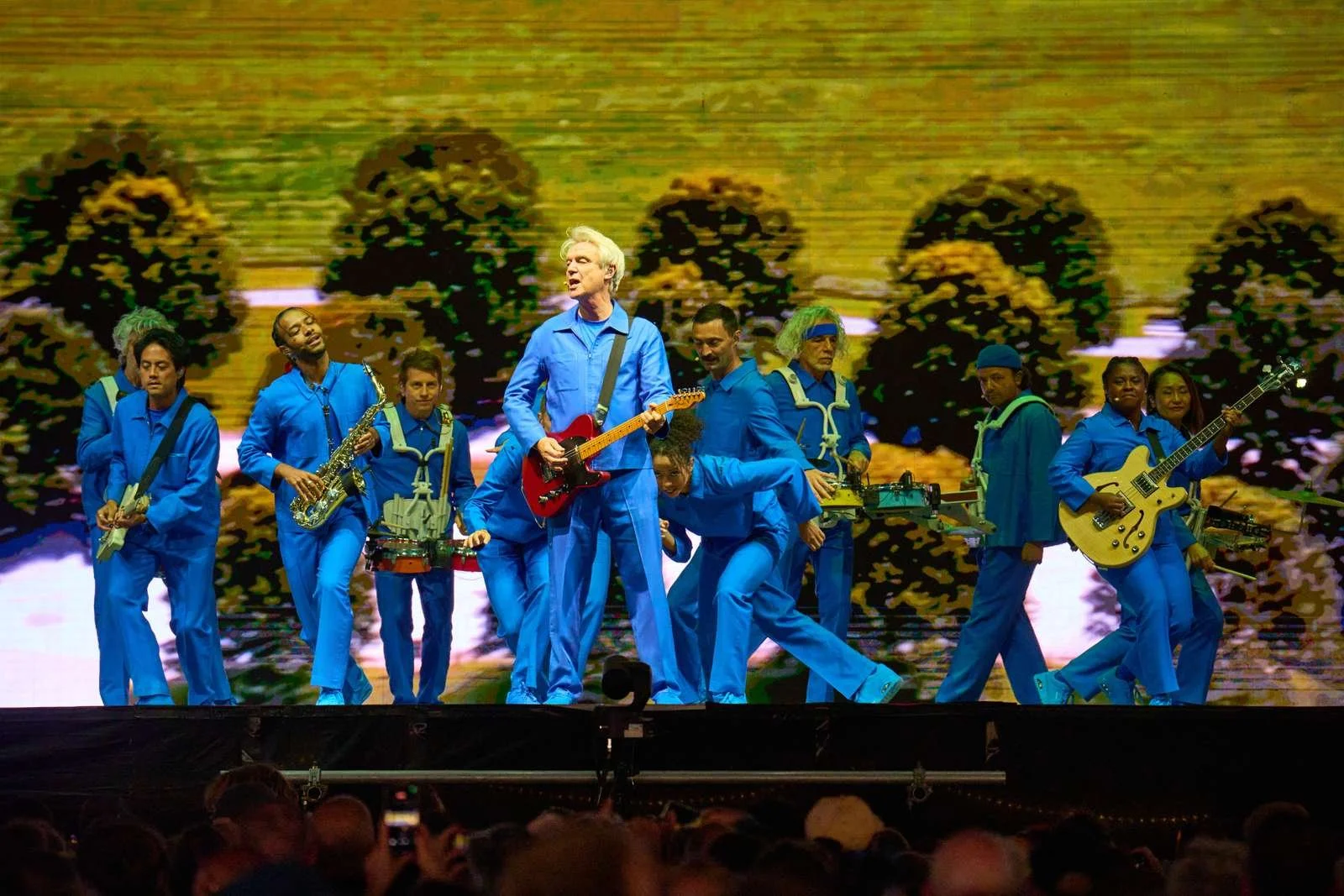
David Byrne
There is always a particular kind of fear that comes with seeing a “legendary” act of a certain age: the fear that what you’re about to witness is less a performance and more a respectable heritage run-through. David Byrne, at 76, arrived with his troupe in matching blue and immediately made that concern look deeply stupid.
What followed was one of the highlights of the weekend. Byrne was animated, warm, playful and completely in control, still able to make even familiar material feel strange and alive. He and his band moved seamlessly between Talking Heads classics and tracks from Who Is the Sky?, the newer songs sitting comfortably alongside the ones people had travelled decades to hear.
The big Talking Heads moments were met with the reaction you’d expect, but the show never felt like a greatest hits victory lap. It felt closer to a musical: choreography, synchronised movement, claps, circular harmonies — all the ingredients were there, but none of it felt gimmicky. Every performer was given space to shine, not as decoration around Byrne, but as part of the machine he was leading.
‘This Must Be the Place (Naive Melody)’ felt like a genuinely sacred opportunity to witness live. Even in a festival setting, the performance felt protected, carved out from the chaos around it. Maybe the arena tent helped, creating its own little world, but the focus never drifted.
‘Once in a Lifetime’ somehow felt exactly like its title suggests: a moment you knew you were unlikely to experience in quite the same way again.
Comments from other attendees suggested this was the best they’d ever heard Byrne sound. It felt like a bold claim at the time, but by the end of the set, it no longer seemed unreasonable.
Clipse
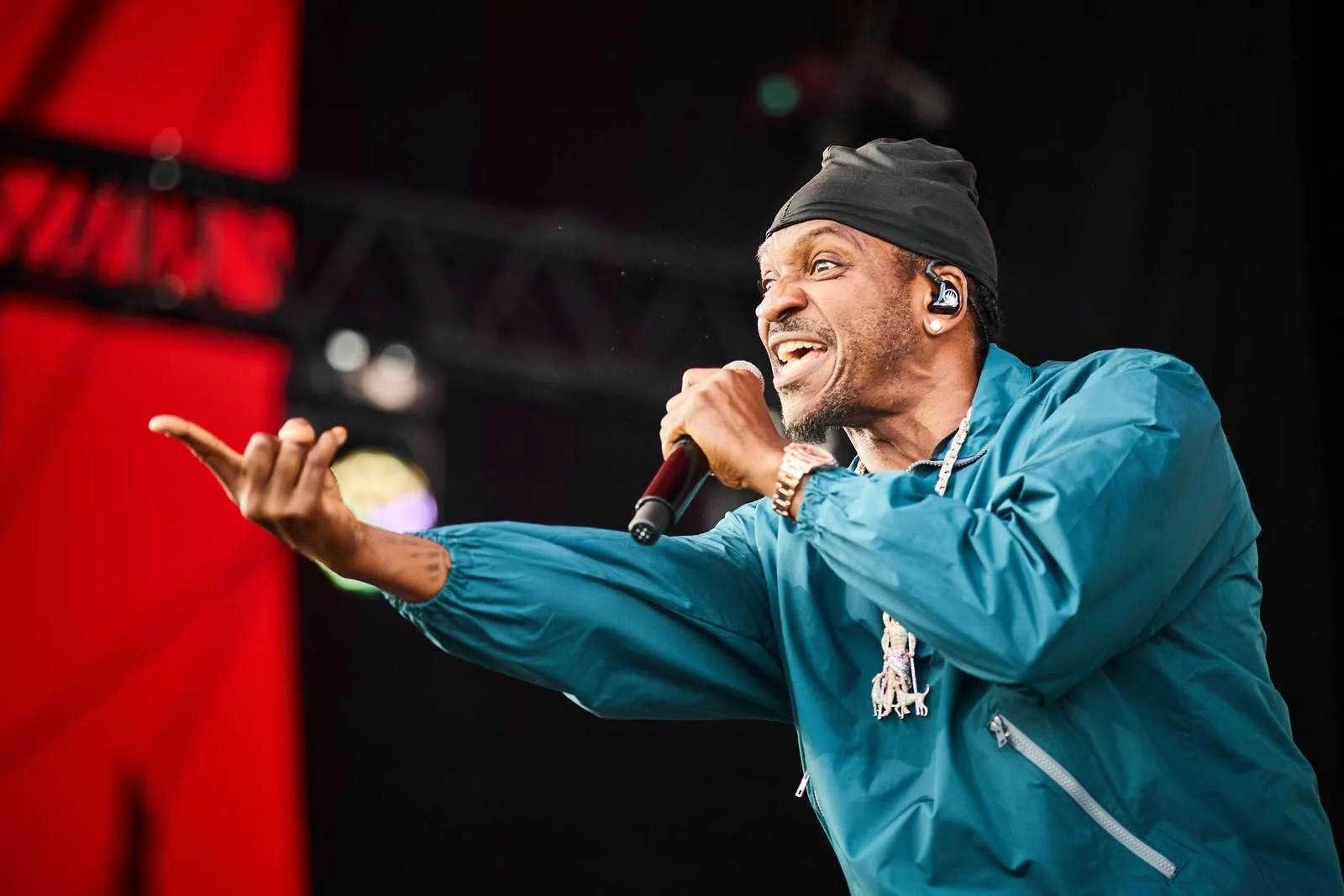
Clipse arrived at Roskilde with the kind of confidence that only comes from knowing your catalogue can do most of the talking. There were no unnecessary theatrics, no grand attempts to reinvent themselves for a festival audience, just Pusha T and Malice stalking the stage with a cool detachment that somehow made every line hit even harder. Opening with 'Chains & Whips' before moving through new material from their comeback album Let God Sort Em Out like 'P.O.V.', 'M.T.B.T.T.F.' and 'Inglorious Bastards', the duo proved that their long-awaited return isn't built on nostalgia alone. The newer songs carried the same icy precision that made Clipse so influential in the first place, while the audience, a mix of lifelong devotees and curious first-timers, quickly fell into step.
Lily Allen
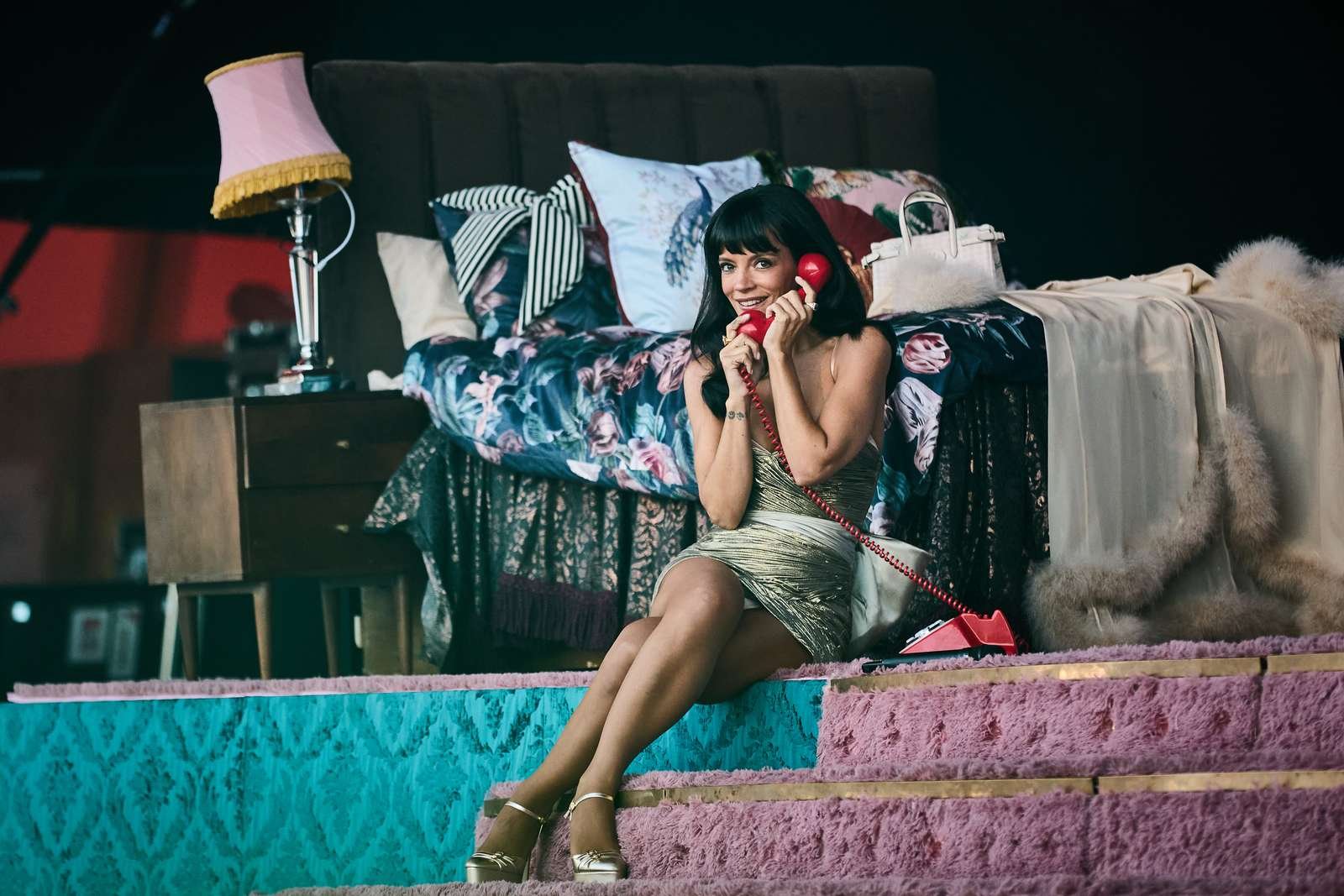
It takes a certain amount of confidence to headline a major festival with exclusively brand new material, particularly when your back catalogue contains enough hits to comfortably carry the set on nostalgia alone. Lily Allen never seemed interested in taking the easy route. Instead, Roskilde got a full immersion into her latest record, a decision that quietly demanded the audience meet her where she is now, not where she was in 2006.
The gamble paid off. Songs like 'Ruminating', 'Relapse' and '4chan Stan' landed with a surprising immediacy, Allen delivering them with the same dry wit and conversational bite that has always separated her from her pop contemporaries. There was little room for singalong comfort food, but the crowd gradually surrendered to the album on its own terms, laughing in all the right places before falling unexpectedly quiet during the more vulnerable moments.
Final Thoughts:
Roskilde is a temporary society with world-class bands passing through it. There's enough substance behind the rhetoric to stop the whole thing disappearing up its own arse. The infrastructure is thoughtful. The crowds are kinder than they need to be. The programming is broad without feeling scattershot. The art and activism elements feel integrated rather than bolted on. And crucially, for a festival this size, it remains remarkably easy to actually exist in.
It’s not perfect. Not every set lands. And there is, objectively, too much salt in Denmark. But Roskilde manages something a lot of major festivals talk about and very few pull off: it feels communal without being forced, politically engaged without being smug and massive without being alienating.
We came to Roskilde for the music and left with a lot more than that, some excellent sets, some baffling weather, a renewed respect for Danish crowd etiquette, and the knowledge that Europe’s answer to Glastonbury may, in some ways, have quietly outgrown the question.
Photography provided by Roskilde Festival