
Festival Review: We Out Here 2026
Seven years in, We Out Here’s woodland discoveries, late-night dancefloors and adventurous programming keep the spell unbroken.
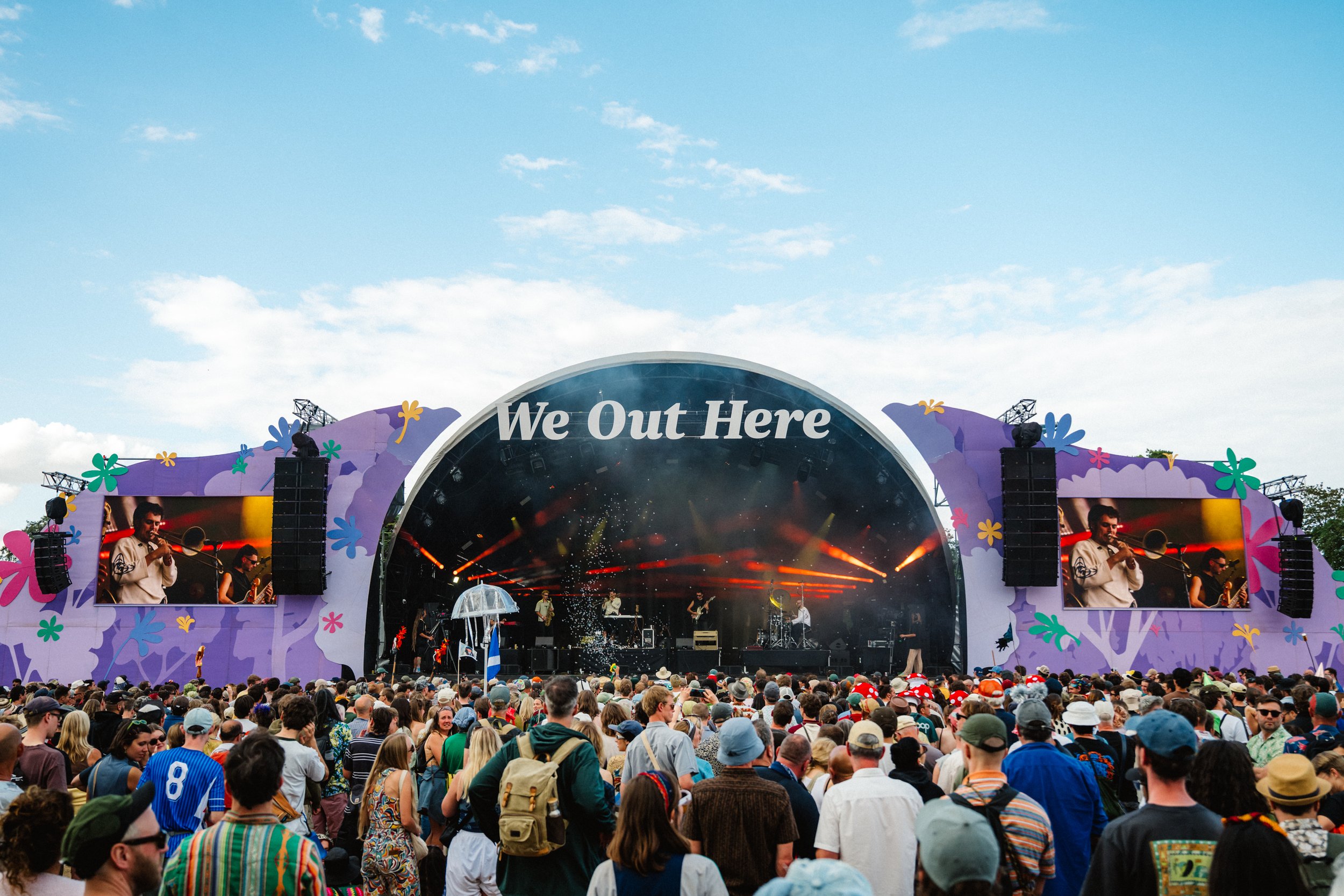
This year’s trip to Gilles Peterson’s We Out Here Festival marked my fifth year of attendance, and in that time I’ve seen it gradually evolve and expand to incorporate more performers, more stages and ever-greater genre representation. Each year, my anticipation for this magical celebration of musical diversity and UK club culture is tempered by the fear that perhaps, this time, the spell may finally be broken. However, yet again, my fears have been totally overcome.
With a huge and almost overwhelming offering of live acts and DJs, We Out Here represents an extraordinarily broad cultural offering, connecting the dots between jazz, soul, funk, electronica, reggae, house and techno. With headline performances from legendary jazz saxophonist Gary Bartz, 90s indie rock pioneers Stereolab and progressive R&B staple and bass guitar virtuoso Thundercat, this is a festival that thrives on eclecticism and the pursuit of musical discovery.
Across the weekend, the main stage produced undeniably captivating moments, with particular plaudits going to Arthur Verocai’s joy-filled performance of his cult 1972 self-titled album, and Kahil El’Zabar’s transcendental celebration of John Coltrane’s spiritual jazz masterpiece, A Love Supreme. Yet, as is customary, the true beauty of We Out Here is found in the multitude of smaller but exquisitely curated live music and DJ stages dotted throughout the festival grounds.
Excitingly, this year featured some notable additions. The most intriguing of these was a secret stage nestled in a woodland glade bordering the general camping site, its presence only becoming known as music began to push its way through the trees.
On finding our way in (via a relatively concealed entrance), we were greeted by a simple DJ booth flanked by two large, wood-finished speaker stacks boasting perhaps the crispest sound in the entire festival. And who had the luxury of playing on such a system? Well, it was Mr Gilles Peterson himself, of course, finding an opportunity in this intimate space to play the more leftfield and underground selections in his record bag. I’ll admit, I found myself Shazaming track after track, with sadly very little success.
The other notable addition this year was the rather unexpectedly Ibiza-feeling Beat Hotel, which featured a cocktail bar and a plenitude of tropical plants. Although it had a more laid-back feel, the punchy sound system, combined with a packed line-up of house, Italo and Balearic DJs, made this spot a very welcome addition.
In keeping with previous additions to the festival, the Lush Life and Brawnswood stages provided some of the most unique and nourishing live music moments across the weekend. Early on Friday afternoon, ZENA’s contemporary take on the 70s jazz of Ethiopia settled us into the flow of things perfectly, whilst on Sunday, the hypnotic jazz and drone sounds of the Natural Information Society revived us after nights of limited sleep.
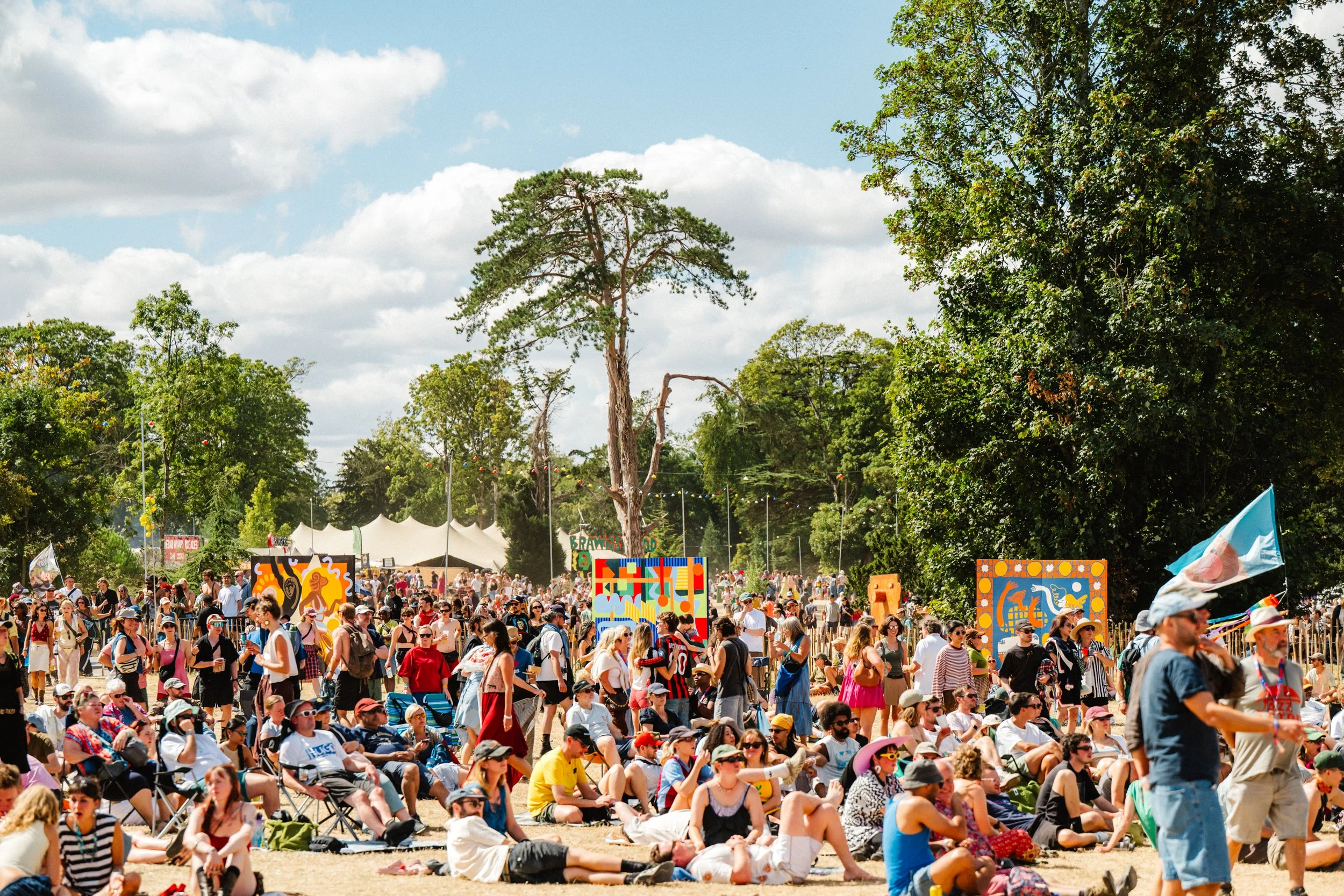
However, perhaps the most memorable moments from the festival were found late into the night, dancing to the world-class line-up of DJs and selectors gracing the seemingly infinite list of nighttime dancefloor options.
Thursday saw the best of the Love Dancin’ tent, with a collaboration between Nightmares on Wax and the Trojan Soundsystem, before it sadly suffered from overcrowding across the rest of the weekend. Friday’s highlights consisted of Kenny Dope delivering authentic, deep house goods at The Grove (on what was certainly an improved sound system) and Tasha nailing a set of bouncy and uplifting techno at The Bowl.
Saturday night was kicked into gear at The Grove by re:ni’s eclectic and bass-heavy techno explorations, closing her set with a dreamy dub-techno track that I am still yet to track down (help appreciated!). Enlisted to push things ever further was the UK techno and dubstep pioneer Blawan, who, in the space of an hour-long live set, succeeded in what can only be described as opening the sonic gates of hell, but in the best possible way. Never has music both scared and elated me in equal measure.
In need of a change of tack after the intensity of this experience, we made our way to the Roller Rink, which, after hours, has the feel of an old-school disco with minimal frills, where even the sound feels purposefully on the low-key side. Yet, it provided the perfect spot to let loose for a real dance, soundtracked by the deepest of New York house sounds played by the wonderful DJ Tara. By 4am, my knees were certainly beginning to let me know that I may have had just a little too much fun.
And lastly, as now feels customary, we closed out our Sunday night at the consistently brilliant Lemon Lounge, where the combination of an intimate dancefloor and a large surround system really is hard to top. I’m not sure I’ve ever left the Lemon Lounge feeling as though I’ve not had a great time.
Although this year my experience of We Out Here was certainly tilted towards the DJs and the dancefloors, the beauty of this festival is that this is only one way to go about navigating this magical place. If you wanted to really lock in to watching up-and-coming contemporary jazz and R&B acts, then the Tomorrow’s Warriors Tent has got you covered. Or, if you wanted to treat the space as some kind of retreat, then you need look no further than the Wellness area and swimming lake. Or, if you simply wanted to camp out and watch some of the biggest and most groundbreaking live acts performing today, then you never have to leave the perimeter of the main stage.
The point being, We Out Here has always been, and remains, a festival where you can choose your own path, and it is likely that whatever path you choose, you will leave feeling enriched and alive.