
Lankum and ØXN frontperson Radie Peat debuts her new solo album at Union Chapel – to a bewitched crowd entirely under her spell that shows why she’s Ireland’s greatest voice.
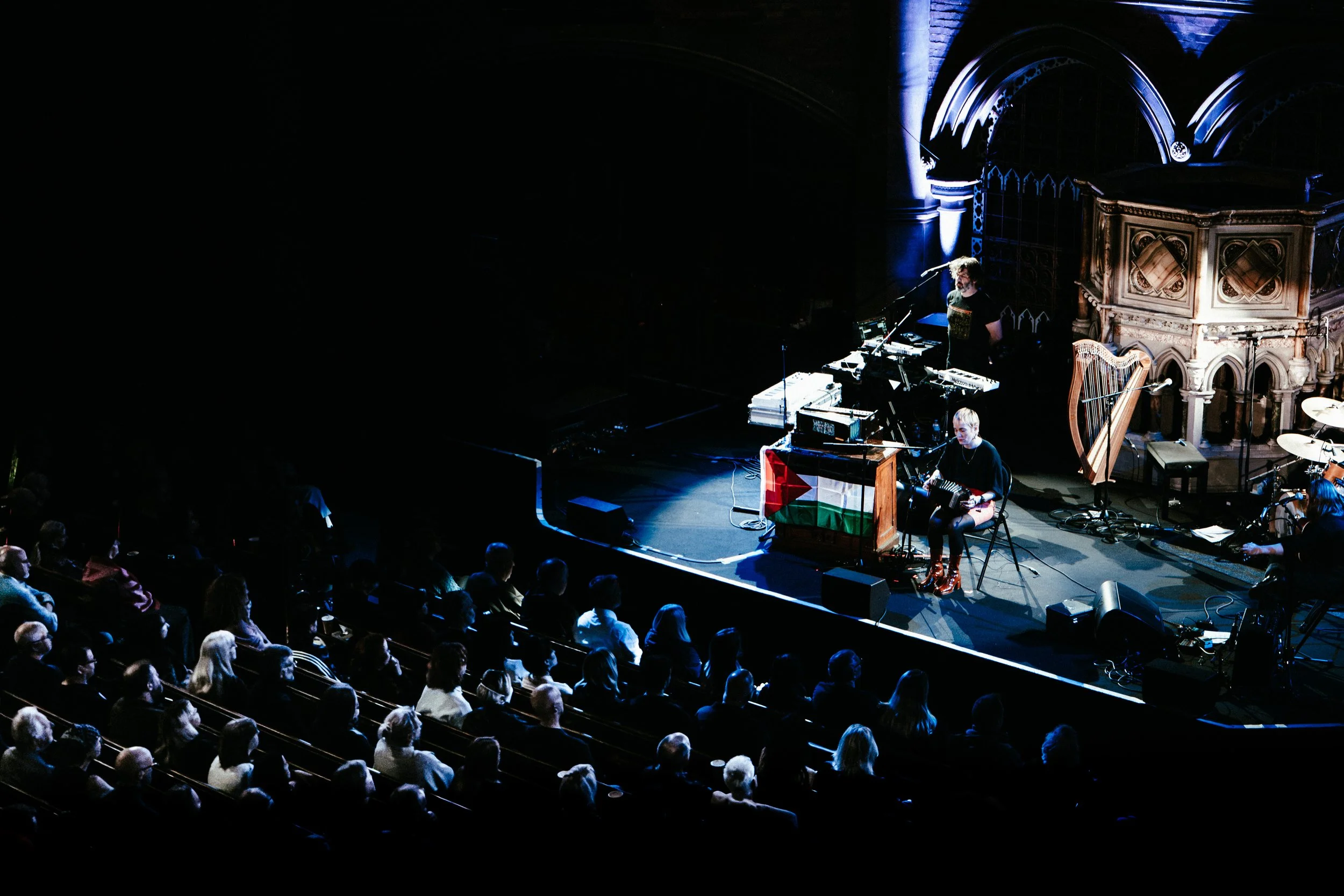
Lankum are one of the foremost bands of the Irish revival scene; but after their most recent tour in 2025 including support slots for Mogwai at Crystal Palace Bowl and playing at venues like the Auditori at Primavera Sound Festival, they decided that they were going away for a little while. Never one to rest on her laurels, Radie Peat kept on going – both as part of the band ØXN and branching out solo with the best folk album of the year, ‘No Human Tongue Can Tell’. To see it live performed in full with brilliantly haunting vocals that Peat can provide in such a unique venue is a rare dream that I was lucky to be a part of, a truly enhancing, spellbinding evening.
Her extraordinary voice is near perfect for the Church setting. Peat is in complete command of the vocals and the gothic atmosphere with projected fog creates a perfect post-Halloween pre-bonfire night gaze, in which the audience is transfixed. Her slot is just over an hour long, it is an album launch show and no Lankum songs are played, but then it is not a Lankum show and the audience is aware of that: this is some of the most respectful crowds that I’ve seen in years. When Peat sings you can hear a pin drop in the rest of the room; and the Church-like nature deliberately feels invasive to anyone disrupting the audience, as if God themselves is judging anyone brave enough to talk. The unique bar set-up out the back of Union Chapel makes having a beer in a Church pretty much a rare novelty; but this is a quiet and respectful evening - non-alcoholic drinks are only allowed past the bar.
Given the honour of supporting Radie Peat, Iona Zajac looks noticeably awed by the occasion and is grateful for the large numbers that have shown up early to see her. She has a debut album - called simply; ‘BANG’ - on the way, so we naturally make a stop to see her early. She has experience: has performed for the Pogues before. For her last solo date of the year - as is the case for many of the artists touring in November - has the crowd stunned into silence long before Peat comes on stage.
She has a darkness and allure to them that makes them instantly deserving of the venue of the Church setting - the Irish and Scottish folk aesthetic combined in a blended, sad and haunting voice that speaks beyond their years. I am reminded of Muireann Bradley, one of the foremost newer artists in the Irish folk scene - with Zajac able to convey her emotions beyond her years. Lyrically she is best compared to Agnes Obel and Hannah Frances, with plenty of banter to lighten the mood - ‘Summer’ in particular feels like one of the lighter songs on the setlist; but it is still wholly unique and capable of capturing the sadness that transfixes the room. It is not going to be a happy evening - but a vital one.
Peat’s ‘Hares on the Mountain’ opens first – the classic English folk song that has been recorded by traditional singers in England, Canada and the US – but Peat’s take on it is rich and deeply unique. The theme has the singer ask what would happen if young maidens or young men were transformed into various creatures or plants and describes the response of the opposite gender: “If maidens could sing like blackbirds and thrushes / how many young men would hide in the bushes?” this is a song that has been covered by both Peat and Daragh Lynch before, in 2018 – inspired by Shirley Collins, and now Peat is back again for a different take.
It is fascinating to watch these different versions of these songs come down throughout the years, Alt-J, All Them Witches, Shirley Collins / Davey Graham have all given us a sheer variety of different genres in its cover but there is no greater depth and range than Peat performing it, her skill as a crafts-person second to none.
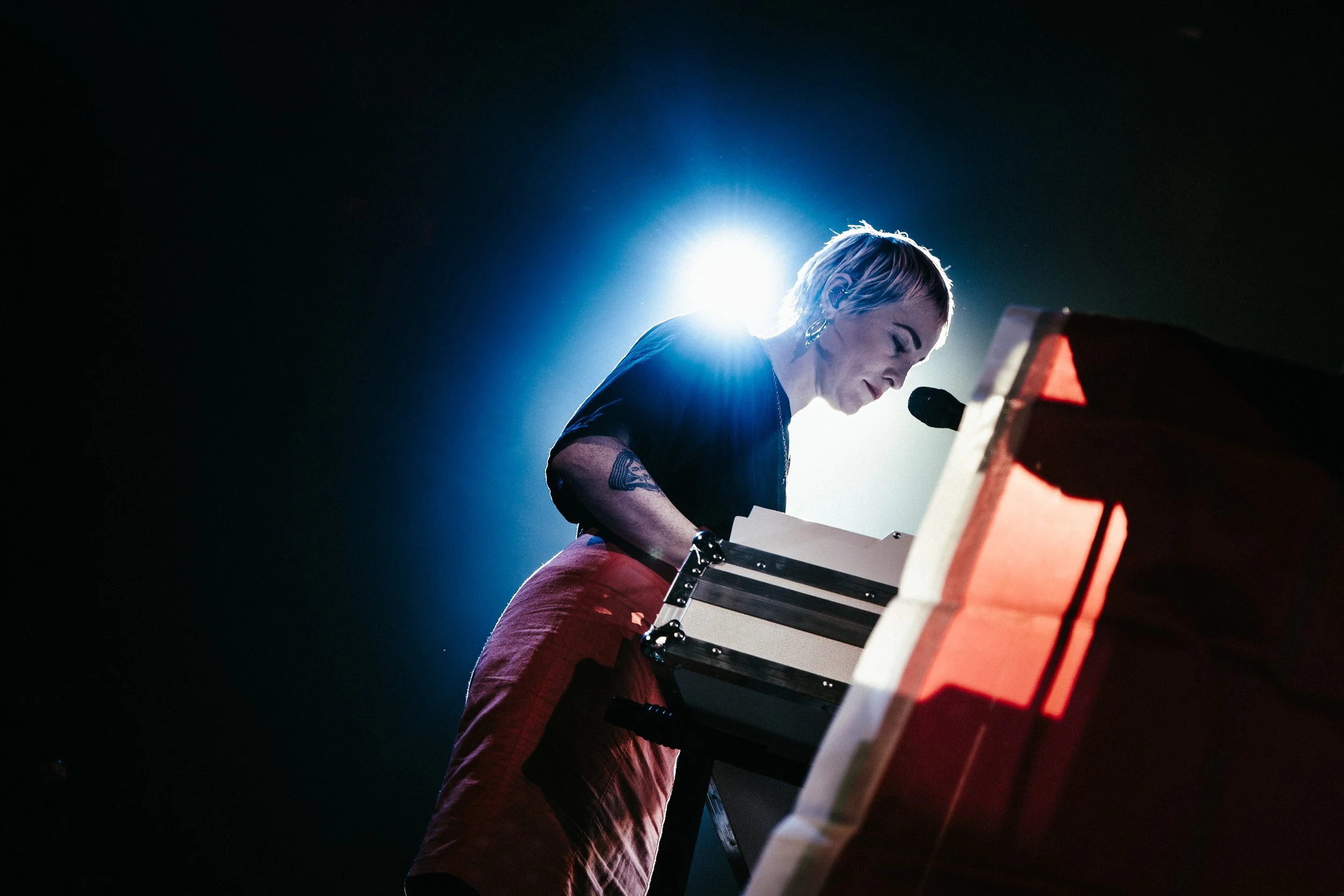
‘Willow Garden’ and ‘Bonnie Boy’ are beautiful tracks, and the voice of a new Ireland. Here once again removed from the world of Lankum we get Peat emphasising the “poor little girl” lyric with a touch of sadness and emotion that comes with mourning and loss. The traditional folk songs are the backdrop for this tale – collecting songs of female struggle, suffering and strength through endurance. Musical influences cited are the likes of Enya and Jackson C. Frank and that is evident here – as is Dolly Collins and Katie Kim.
When making this album, of which it is performed live in its entirety - Peat was drawn to stories where “the female [is not] just the victim of something or an object of lust.” It sounds like its own thing live, not just things done before with other people, and repurposing songs covered by her other bands in her own voice showcases that independence and going solo without the risk of a band – it asks her what she can and can’t do; and it becomes very much apparent that there are little things that Radie Peat cannot do. What makes a Peat song? It is something that might not suit Lankum and it might not suit ØXN – these are her stories, these are Ireland’s stories - focusing on female empowerment in becoming a personal project that is evident on stage. She has made clear the distinction as to why three artists are necessary.
‘Cailín Deas’ allows Eleanor Myler’s drums to shine and the cutting of the lyrics are given a deliberately pointed new gaze. It is a spin of ‘A Pretty Girl Milking Her Cow’ that is given new weight and meaning, fitting in with Peat’s themes of the record that she aims for - an Irish pastoral love song repurposed. The highlight is the entire set - perhaps most magically; the haunting ‘Still I Love Him’ describes how people willingly stay in toxic relationships even if they know they’re toxic out of love for that person. It highlights the ups and downs of staying in a relationship for one person – carrying a message of strength, self-ownership and sovereignty that can change shape according to the one that sings it.
Her voice works wonders here – a staggering depth of unparalleled vocal range. It is here, she is trying to capture the elation and devastation that can accompany love; and how tolerance and forgiveness weathers into resilience. It’s two sides – differences of hope and despair – and bad behaviour that slowly escalates when left unchecked.
Final song of the main set; ‘The Moon and Stars’ - is a shoe-in for the most bewitching song of 2026.“I wish I’d never seen your face or heard your lying tongue” sees the reworking of the lyrics of the original song to build towards references to unwanted pregnancies and abortions that give it a pointed edge and relevancy in the current political climate. It is incredibly claustrophobic and direct reference to the final act of John B. Keane’s 1959 play, Sive - on “The moon and stars were screeching, roaring in the sky / I laid my head upon a stone and then I closed my eyes” - that appropriately ends the main set.
The encore comes time for the iconic folk song ‘Dark Horse on the Wind’ that gets repurposed brilliantly live with Peat’s haunting vocals and offers entirely new takes. “Oh those who died for liberty / Have heard the eagle scream / All the ones who died for liberty / Have died but for a dream” is as chilling an opening as they come - the ending note leaves an instant mark; tapping into the state of the current nation using Balor; the evil god of Irish mythology, at its centre - as a warning for an audience and a rallying cry for a New Ireland that places Peat at the centre of the country’s music scene once again; looking at life beyond Lankum.
“O rise, rise, rise, Dark horse on the wind / For the one-eyed Balor still reigns king / In our nation of the blind.”
In her scene right now, Peat is incomparable. This is about as good as it gets. Truly remarkable feat that’s not just one of the best gigs of the year but one of the decade thus so far.
Photocredit Hannah Campion