
Anja Ngozi’s debut album Context moves through ambient, devotional and jazz influences, finding moments of respite in its shifting arrangements.
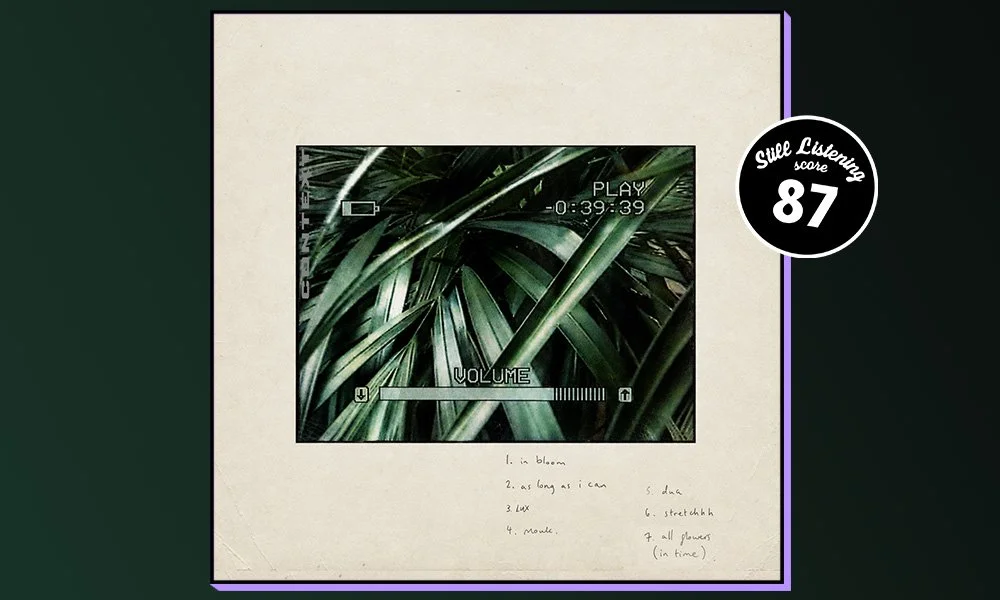
From within the cityscape of London, Anja Ngozi shares her debut album, Context. The release is a complete expression of Ngozi’s intuitive sonic and genre-wavering musical voice, sitting across blurred boundaries of ambient, devotional, and jazz categorisation.
It would, then, not be surprising to learn that Ngozi names the likes of Ichiko Aoba and Ryuichi Sakamoto among notable musical influences, as well as the soundtracks of Hayao Miyazaki’s feature films. That Ngozi is close to musicians such as Nala Sinephro and Marysia Osu fits too, invariably putting herself among a developing cohort of contemporary composers who could perhaps be best defined by their interest in blending jazz and ambient musical genres, drawing from one aesthetic crossover whereby, through improvisation and meditation, musicians of each practice seek to explore other worlds.
Foundations for Context began in Tokyo in 2024, a time and place that saw Ngozi performing her own music live for the first time. Over the next two years, ideas and melodies that were then shared on stage eventually became the eight tracks that make up Ngozi’s first album, created with contributions from Maiya Blaney, James Mollison, Mark Mollison, and Morgan Simpson.
The opening track, ‘In Bloom’, sets a scene of nature and a measured pace for the music ahead. James Mollison’s saxophone wavers across a soundscape of delicate interjections, both organic and electronic, that all play to immerse listeners in a slower time and a complex, tranquil environment scored by imagined flora.
Once Ngozi’s auditory wonderland is established, the woozy guitars, dreamlike vocals, and playful drums of ‘As Long as I Can’ echo the type of hypnotic romance one might find in Lynch’s Club Silencio, certifying the album’s disposition to dream. However, this set-up is short-lived, only playing for a brief few moments. And, just like the changeability of Lynch’s cinematic realities, Ngozi morphs the music halfway into the same composition, changing the aesthetic completely. Strummed reverberation is exchanged for clean riffs and sustained licks, drums canter in the distance, and each sound becomes tied together with a delicate electronic stitch.
This same type of mid-track switch-up happens again in ‘Lux’ where, only a couple of minutes into an introduction of distorted strums, listeners are then suddenly transported to a tender phase of hushed vocals and tinkering keys. It’s an experimentation that feeds into the idea of transportation and multiverse, travelling from one place to another, each with a different motion and mood, but all with a consistent, healing respite.
‘Dua’, my favourite track, is also the album’s most vast. Time is most thoroughly stretched here, slowly rising into an unravelling of fractured distortions. This ambience is then explored further, but with notable affection, in ‘Stretchhh’, a track laced with softly plucked strings and angelic musings that feel altogether suitably divine before the final, entirely gentle awakening of Context’s conclusion, ‘All Flowers (In Time)’.
Context, each track, and every individual minute of the album is its own wandering, a contained and complex world, seducing listeners into a shifting soundscape that is so beguiling and with such depth, that they are certain to find themselves transported.
As part of Context’s release, Ngozi held album listening parties, where guests were welcomed to sit down and bathe in curated spaces, drenched in soft lighting and immersed in the majesty of the music. Such an intimate, introspective setting, one that offers momentary respite from our daily routine, seems an ideal way to experience this debut. It would be, like the music itself, a way to experience elsewhere.