
Charli XCX - Music, Fashion, Film Review
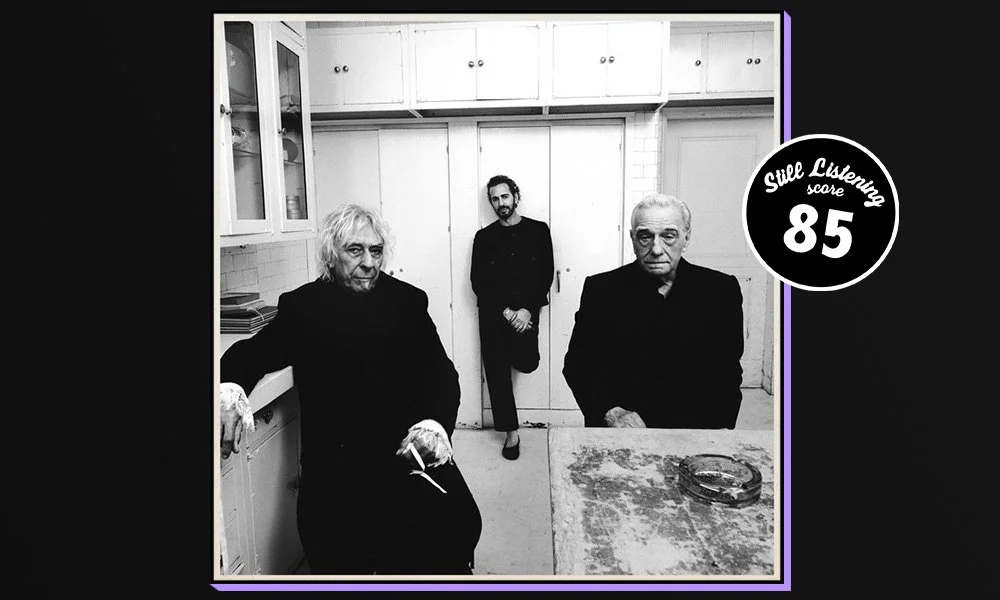
Following the impossible success of Brat, Charli XCX refuses to repeat herself on a bold, introspective album that questions fame, identity and artistic legacy.
It’s been two years since Charli XCX released Brat, an album that completely took over the world and arguably became the defining musical moment of the 2020s so far. Having an album that was both so critically and commercially acclaimed must have come as a bit of a surprise to Charli, who has spent her whole career chasing that level of recognition without ever quite catching it. Especially in her early career.
It was only when she pushed herself to the fringes of pop, refining her artistry alongside forward-thinking producers like SOPHIE and A. G. Cook, that her music started to sound like nothing else in the pop landscape. That outsider energy gradually won over different audiences: first the gays, then the hipsters, then the pop fans and, finally, with Brat, the mainstream. That battle had been her whole life in the making.
So once you finally get everything you've wanted, where do you go? You pivot.
There was no way Charli XCX was ever going to top the cultural importance of Brat, and there was definitely no point making Brat 2. So instead she made the "Lou Reed album" she'd been talking about ever since Brat came out. At first I assumed she meant the guitars. By the end of Music, Fashion, Film, I'm not so sure. More than anything, it feels Lou Reed-like in its refusal to give people what they expected. The artwork reflects that ambition too. A stark black-and-white photograph of John Cale, Marc Jacobs and Martin Scorsese places music, fashion and film side by side, framing the album through three uncompromising creative figures.
Charli XCX's new album is another reminder that she's at her best when she's doing whatever the hell she wants. Some of the songs, especially lead single 'Rock Music', were written off almost immediately, but I get the feeling she expected that. Hence the trolling. I actually love 'Rock Music'. I love how obnoxious it is, how perfectly it captures that scrappy mid-2000s attitude. The opening "me and m-oy friends" makes me smile every time and the rhythm of it is brilliant. I genuinely think this one's underrated.
'SS26' is a lovely, tender song built around muffled, broken guitar lines, but beneath that softness is one of the album's sharpest lyrical moments. Set during the Spring/Summer 2026 fashion season, it's a razor-sharp critique of celebrity culture, performative politics, PR apologies and industries obsessed with image while everything around them seems to be falling apart. By repeating "nothing's gonna save us, not music, fashion or film", Charli suggests that even art has become another product, leaving a generation more concerned with appearances than authenticity.
The final single, 'Camera', is another beautifully intimate moment. Where 'SS26' zooms out to critique celebrity culture, 'Camera' zooms back in and asks why Charli keeps participating in it. She's painfully aware of the superficiality of fame, yet admits the camera gives her a feeling nothing else can. The repeated line, "it makes me feel how it makes me feel", is almost childishly simple because she can't rationalise it. Being in front of the camera lets her become someone else, take creative risks and momentarily escape herself. That's why the closing line, "it's the only way to feel like I'm not actually me", lands so hard. If 'SS26' critiques performance, 'Camera' admits that performance can also be intoxicating, liberating and addictive. It turns the album's central idea into something much more complicated: we're all trapped in the machine because, on some level, we love what it makes us feel.
Another track I really enjoyed was 'Wink, Wink'. I love the slightly rough, almost badly produced guitars and Charli's spoken-word intro. Then the fuller production crashes in and the chorus is ridiculously catchy. The hook, "Here's the truth, and I gotta be honest, I'm not a bad girl anymore, wink, wink, wink, wink", is one of the album's best moments.
'Wink Wink' is one of the album's cleverest songs because it's impossible to tell whether Charli is telling the truth or continuing the performance. Every claim of maturity is immediately undercut by another joke or "wink, wink", suggesting it's almost impossible to escape the version of yourself the public has already decided exists. That tension runs through the album's rough-around-the-edges production too. The guitars often sound like demos or bedroom recordings, but that intimacy suits Charli's reflective songwriting following Brat and everything that's happened since. 'Magic Metal Montana' provides the emotional payoff, stripping away the masks for a heartfelt tribute to A. G. Cook and celebrating creative partnership through the simple line, "We make music, we talk that way."
'No One Lasts Forever' featuring David Cronenberg closes the digital version of the album, although I'm still not entirely sure where Cronenberg disappeared to on the vinyl, which instead loops in a locked groove before his spoken-word section. I absolutely love locked grooves, so I'm happy to forgive it. Cronenberg's repeated chant of "They are dead, they are gone, no one lasts forever" provides the album's philosophical conclusion. After spending the record wrestling with fame, identity and performance, Charli finally lets go. The mantra "nothing's gonna last forever" isn't pessimistic but liberating, suggesting that neither success, failure nor the personas we construct can outlive us. As Cronenberg concludes, "oblivion is freedom", dismantling the fantasy of artistic immortality and leaving Music, Fashion, Film on a surprisingly peaceful note.
Across Music, Fashion, Film, Charli repeatedly questions where the real person ends and the performance begins. Fame, fashion, consumerism, relationships and even identity itself are treated as roles that can be bought, styled or projected through a camera. Yet the album never pretends she's above any of it. Its tension comes from Charli recognising the emptiness of celebrity culture while still craving the freedom, attention and transformation it offers, before 'No One Lasts Forever' ultimately accepts that neither fame nor art can make anyone immortal.
Charli's been on an unbelievable run since her Vroom Vroom EP, and this album doesn't break it. It probably won't have an Apple dance or a bank card attached to it, but it's Charli doing what Charli does best: saying "fuck it", embracing something new and refusing to be boxed in by what her fans, or the industry, expect her to be. I genuinely think she's one of the most important British pop stars of this century. Few artists have reinvented themselves so completely, or taken as many creative risks, while remaining unmistakably themselves.
I don't think Music, Fashion, Film is her most polished album, but I think that's entirely the point, and I love it for that. My only real criticism is that I almost wish she'd gone even harder. Occasionally it hints at a messier, noisier record that never fully materialises. Lean further into this sound. Give me an entire album that sounds like the ending of 'Click'. (Seriously, if you somehow haven't heard 'Click', go and fix that.) This almost feels like the third part of a trilogy. Charli introduced the world she wanted to build, Brat perfected it and turned it into a cultural phenomenon, and Music, Fashion, Film tears it all apart to ask what any of it actually meant. That's a fascinating place to leave one of the most consistently exciting careers in modern pop.
From the groundbreaking futurist production of Charli, the intimacy of How I'm Feeling Now, the deliberately commercial sell-out pop of Crash and the cultural dominance of Brat, Charli has always reinvented herself with remarkable ease. She does it again on Music, Fashion, Film, despite the impossible expectations left behind by Brat.