
On Furar Hondo, Fernando Romero draws on his Asturian roots, industrial history and experimental influences to explore the uneasy relationship between violence, love and memory.
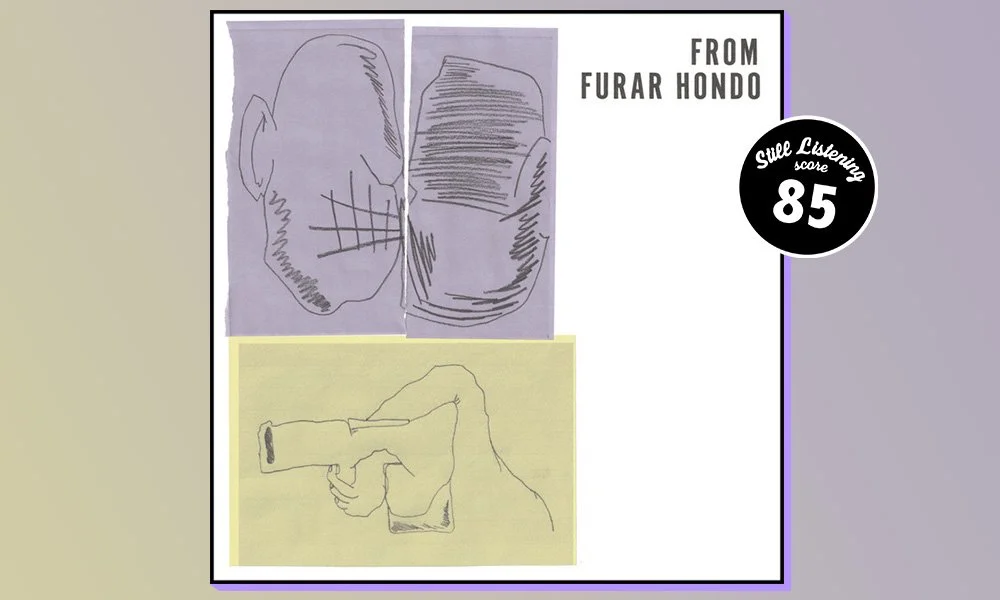
Furar Hondo could roughly be translated into English as deep digging, though according to the Asturian language dictionary (Asturian is a language spoken in Asturias, a region in the north-west of Spain), furar means ‘to pierce, to go through a hole’. It also means ‘to burrow into the hay of a barn to spend the night’ and ‘to make one’s way through a crowd when it huddles together, or through undergrowth’. For Fernando Romero (a.k.a. From), music and art are a means to pierce through the superficiality of everyday life.
Romero was born among the damp and the nineteenth-century facades of Oviedo, Asturias, a small city in the north of Spain. He grew up learning to play the drums at his local music academy and soon started writing his own songs, with his debut album, Insecto, released in 2022 by a small Madrid-based label. Not long afterward, he moved to Tilburg, the Netherlands, to study jazz piano.
His music has always had a dark, melancholic and often apocalyptic tone. On his debut, he describes his hometown through a warped lens, as a rainy and polluted place in which he bumps into several tragicomic and lonely characters who end up disappearing out of nowhere or stumbling away. Later tracks like ‘Zona de exclusión’, from his second album, Modelo para armar (2024), conjure raw, almost cinematic images, such as eyes melting under the radiation of a nuclear-war-ravaged Asturias.
In Decoy (2026), ten songs written and recorded over four days in November 2025 in his Tilburg bedroom on an eight-track Fostex, he sings of his fear of flying and having to travel everywhere by bus, revealing the isolation of living in a foreign city, where language becomes a barrier and winter days stretch endlessly. All this unfolds within a sound which hints towards The Beatles and Connan Mockasin, while remaining stripped down and intimate, reflecting the brief and intense period in which the album was created.
Last September saw the release of Furar Hondo (2026), written over the four years he spent abroad, and recorded entirely by Romero on that same Fostex M80. Throughout the album, he reveals a shifting palette of influences, from the British avant-garde group This Heat to classics like the Beach Boys, moving ever deeper into dub and experimental sounds shaped by his presence in the European DIY scene.
Furar Hondo reveals Romero at his most violent, with songs describing being murdered and buried in a meadow (prao), thrown into the sea with rocks in his pockets in ‘El enemigo’ (The Enemy), killing a local politician in ‘Peugeot’ and confronting a man who smells of gasoline in ‘Amenaza’ (Threat). When thinking of these lyrics, I am reminded of his performance live, in which he recites a short love poem whilst holding up a large cymbal which he ends up throwing violently against the floor, hoping to find a reaction in the spectator: ‘Not fear, but a strange sensation of not understanding’, he describes in an interview.
In his own words, ‘violence is like love, it’s just another part of how humans function, biologically’. And it is precisely this clash between the soft and the hard in Fernando’s music that makes his songs so striking, like the acidic ways he describes love in his songs, as even in the most tender moments of the album the darkness of death appears. Such is the case in the reminiscent Beatles-esque ’60s pop ‘Mi Jardín’ (My Garden), an apparently sweet song about returning home to his friends and family after having ‘abandoned’ his small town in ambitions to follow an artistic career. The lyrics, however, lead to a darker tone: The end doesn’t matter / One day the day will come / I will open myself in agony / I’ll infect my body with mine gas (coalbed methane).
This last reference triggers Asturias’ industrial and mining history, most relevant from the early 20th century, when miners’ strikes gained national attention, reaching a critical point in the 1990s, in which European environmental regulations led to widespread job losses, a working-class struggle deeply embedded in the region’s cultural identity. Across his discography, From has articulated his own particular view of the world: an eerie, cold and uncertain place, made livable through memory and love. In Furar Hondo he recalls the hostility present in our world and how the remains of history continue to impact the present.
That being said, Romero’s music also conveys a sense of forward motion, constantly choosing the next niche music scene to burrow into and fold into his work, as if each release were part of an ongoing process. In a landscape of playing it safe for fear the next record won’t work, From’s relentless artistic path makes his music one of the most relevant musical projects on the Spanish scene today.