
Kelela - New Avatar Review
Kelela reconnects with her guitar-band roots on a third album that brings shoegaze and alternative rock into her expansive R&B sound.
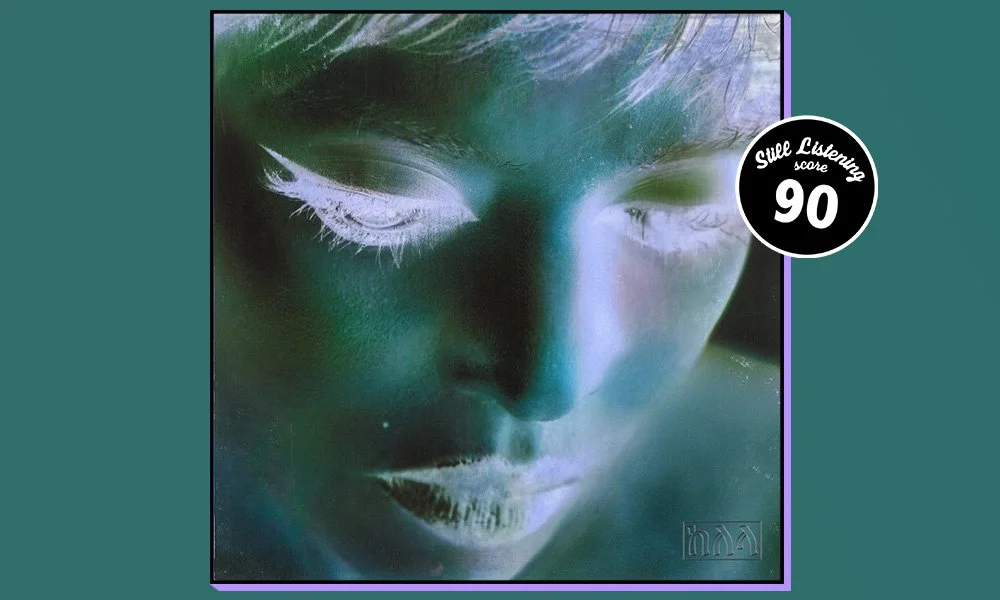
For an artist so capable of creative metamorphosis, Kelela retains a sound that is unmistakably her own. On New Avatar, her third studio album, the 43-year-old Ethiopian-American experimentalist innovates her afrofuturist R&B sound with a return to her early artistic identity.
Kelela came of age in the late 2000s, a period she spent fronting the indie rock band Dizzy Spells and collaborating with then-boyfriend Tosin Abasi, guitarist of the progressive metal band Animals as Leaders. She found notoriety with her first and second studio albums, Take Me Apart and Raven, club-forward records that placed her within the legacy of alternative R&B. New Avatar is the reconciliation of these musical identities. Splicing her two sonic characters, Kelela dons a new skin that’s fully reflective of an artist fully assured of herself: a New Avatar.
The direction is clear from the opening track, ‘idea 1’. Underpinned by a reverbed shoegaze guitar, layered with characteristically celestial vocals, and accompanied by a silver-toned music video in which Kelela strides down a windswept tunnel, we find her reeling from the end of a failed relationship. She opens with an illustration of her love’s collapse. ‘Tighter and Tighter, holdin her lover, he’ll burn it down / Darker and darker, thought you’d be home but no one around.’ It’s immediately evident New Avatar is an expression of Kelela’s early musical heritage, roots that extend themselves throughout the record. They’re evident in the urban offbeatness of ‘linknb’, the hazy melody of ‘retaliation lullaby’, and the rock ballad-inspired ‘outta time’, a collaboration between Kelela and British singer-songwriter A. K. Paul.
Standout track ‘goin down’ is Kelela at her most metamorphic. Little record remains of her time fronting Dizzy Spells, but I imagine they would sound something like this. Narrating a withering relationship, and the partner she blames for its failure, it’s reminiscent of Californian indie rock band Incubus, a formative force in Kelela’s early years. Speaking to Pitchfork earlier this year, the singer detailed her creative development: ‘Growing up, I was struggling to hone in on just one thing. I was listening to Mariah Carey, but I was also listening to Incubus. Maybe that complicates this for you, but that’s my genuine, real self’. The guitar that grounded ‘idea 1’ makes a return, lending ‘goin down’ an instrumental consistency that runs parallel to the lyrical storytelling on show.
Oscar Scheller, the British-born producer responsible for some of the year’s biggest hits, including Lily Allen’s West End Girl and PinkPantheress’ ‘Stateside’ remix featuring Zara Larsson, proves integral to the record. His palette lends the album a hyperpopness that keeps its creative direction looking forward. Nowhere is this more evident than on the penultimate track, ‘the bridge’. Co-written by Kelela and PinkPantheress, with production by Scheller, it’s a pulsing tribute to uninhibited club-lust. PinkPantheress, an artist cultivated by the UK garage scene, lends the track a two-step sharpness. Contrasted against the lull of Kelela’s voice, it paints the pair as interconnected lovers, locked in a dancefloor game of cat and mouse.
PinkPantheress joins a roll call of meticulously curated features. Fousheé’s appearance on ‘new life forms’ gives the single an airy impetus that stops the track from falling into repetitive tedium, and A. K. Paul brings a camp balladry to ‘outta time’ that adds emotive texture to the breakup track. These features take nothing away from Kelela; she’s too evolved for that. Paired with her artistry, they feel like building blocks for a complete vision.
Speaking to NME, Kelela explained the adventurism that inspired the album. ‘I’m interested in intersections. I am building those types of tapestries where it’s neither here nor there.’ She set out to create a new sound that exemplified ‘a place between that we have not quite heard yet’, one that expands the boundaries of rock, shoegaze, and R&B. Neither fully reflective of the early Kelela nor the version that found fame. A sound to itself. A musical third way. An introduction to a reimagined sense of self, her New Avatar.