
King Gizzard & The Lizard Wizard - Nonagon Infinity Review
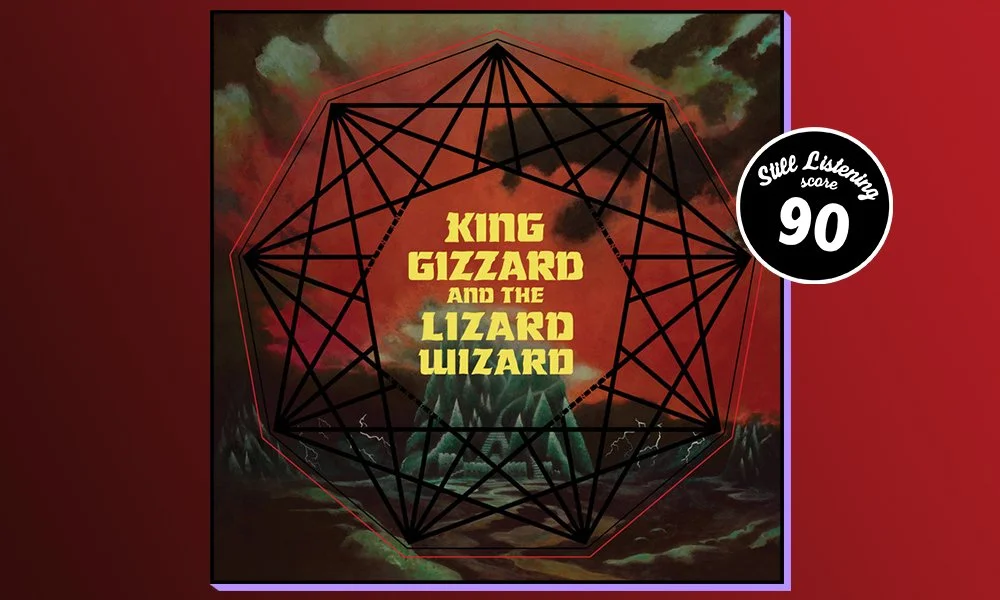
Gizz have been making the modern musical landscape their own for 15 years, but it's time to take a look at their breakout album a decade after we were first graced with it.
There are few bands with as diverse a sonic portfolio as Melbourne based sextet King Gizzard and the Lizard Wizard, who have spent the past fifteen years tearing the musical landscape into shreds and basically doing whatever the fuck they want with it. This year marks the ten year anniversary of one of their finest offerings to date and their breakout album: Nonagon Infinity. A sprawling prog-rock ouroboros that sweeps you off your feet and never puts you back down, with its excellent production, bombastic instrumentals and a gimmick employed so tactfully that it can scarcely be called a gimmick at all.
The major selling point of Nonagon Infinity is its cyclical nature, each song bleeds into the next one, creating an endless loop of sound, letting you listen to it however you want. “Nonagon Infinity opens the door” is the mantra that permeates throughout the first song ‘Robot Stop’, an unrelenting rhythmic typhoon that batters you into submission, whisking you away on a nine track odyssey that not many can ever truly recover from. The drums are the real driving force of this track, unrelenting, powerful and fast as all hell. The harmonica shrieks the song into life and is used sparingly but effectively, kicking things into gear whenever there is a threat of a lull. The bass is sturdy and uncompromising, allowing the guitar to explore further than it otherwise might be able to do. The next track ‘Big Fig Wasp’ largely continues in the same vein as ‘Robot Stop’, but the third track ‘Gamma Knife’ is where things begin to take a slightly different direction.
Starting with a scream from both the harmonica and the vocals, ‘Gamma Knife’ immediately rips into action. While maintaining the album’s overall tone, it allows each instrument more room to loosen up and shine individually, most specifically the guitar and drums which break away from each other at various points in the song. The drums are able to disengage somewhat from the bass and have some fun, rolling intermittently while the guitar solos on top of it, allowing for a sense of quite genuine paranoia to set in. It isn’t until the album’s fifth track ‘Mr Beat’ that things start to mellow out somewhat, everything slows down and you are finally given some space to breathe. The bass line is more subdued and the keys take on a more bluesy appearance, almost reminiscent of Ray Charles. Each member of the band is finally given space to showcase their individual talents as opposed to the hypersonic megalith of noise that they have presented themselves as up until this point in the album.
The band themselves are clearly better suited to this particular style of playing; it is not that they are doing a bad job of the fast, metal adjacent prog rock, it is just that they are often able to better showcase their skills on their slower numbers as they allow you to really get your teeth into exactly what it is that they are playing. This is something that they have improved on in spades in the years since this album came out, showing this off in songs like ‘Gaia’ and ‘Grim Reaper’ in 2022’s ‘Omnium Gatherum’ and once again throughout the entirety of 2023’s ‘PetroDragonic Apocalypse’, however they are still clearly finding their feet in this particular outing.
The band does manage to merge these two styles in ‘Invisible Face’, one of the album’s shorter songs that starts as a jazz number wearing a rock costume, with an almost unspeakable amount of flange before it briefly diverts into a pseudo-psychedelic samba that provides one of the album’s few moments of respite before culminating in a heavily distorted return to the earlier sounds, showing off the band’s capacity for both heaviness and intricate musicianship. This is then continued by the actual shortest song on the album ‘Wah Wah’ which once again showcases their range as the initial heaviness of the song is brought back down to a slower, more psychedelic plane. The one consistency throughout is the drums, which at no point relent and acts as the spine. The more relaxed tone continues up until the very end of the song when a didgeridoo is brought out and a deep drone permeates throughout the soundscape, setting up the next and final song on the album.
‘Road Train’ is a song that works perfectly well in the album, but utterly lacks any staying power as a stand-alone song. This is certainly not its fault, as it is given the unenviable task of simultaneously wrapping the album up while also serving as a catalyst for the repeat of ‘Robot Stop’. Disappointingly, it struggles to do either perfectly and is instead left feeling more like the album’s gearbox than its grand finale, mechanically essential but hardly its most exciting feature.
Imperfect though it may be, Nonagon Infinity remains a landmark release for many, myself included. Giving a new generation of music lovers a starting point for getting into both psychedelic and progressive rock by giving it a modern spin, taking inspiration from genres that the first wave of psych and prog inspired, most predominantly metal, and creating something both unequivocally new and exciting while managing to pay homage to the band’s roots and many of the artists and genres that have inspired them. Ten years on, It remains one of the most exhilarating records modern psych rock has produced.