
Medieval Found Footage - Abagnale Review
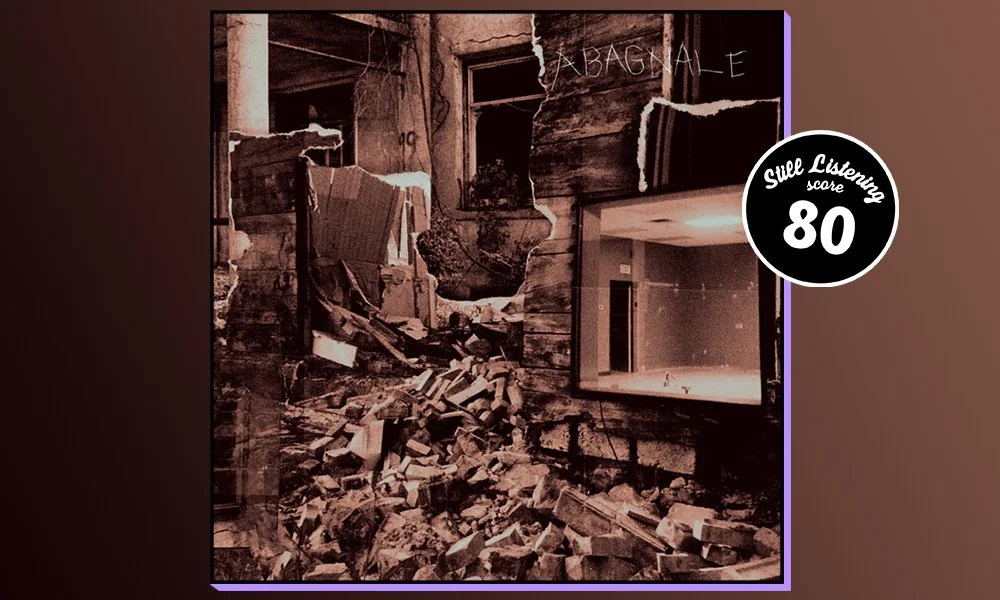
Ontario Medieval Found Footage uncompromising debut leaves little space to hide.
J.G. Ballard quipped that he wrote his infamous novel Crash to “rub the human face in its own vomit and force it to look in the mirror”; what he likely hadn’t predicted was that this would also prove to be a damningly apt summary of Ontario noise-rock quartet Medieval Found Footage’s debut album, Abagnale.
As each minute of the opening crawl of ‘Diluted’seeps into the next, it doesn’t take long for this raison d’etre to become clear – and how far the band are going to take it. Decaying from a stuttering noise groove, it becomes aware of its trappings as a song, morphing into a psychotic monologue delivered by lead vocalist and guitarist Kadin Fehr. His splenetic commands are each coloured by a see-sawing mic quality, adding dimensions to the studio space; headphones are a must to achieve the full claustrophobic effect.
It undoes the recording environment’s symbolic order, peeling away the safe two-way mirror between audience and singer. There’s no room to hide here; indeed, Abagnale refuses to let the listener be anything less than culpable in its self-abnegation, confronted by Fehr’s emotions in all their nudity. In this way, it shares DNA with the vanguard of cathartically exhausting post-rock and hardcore like Swans and Unwound, or contemporaries Shearling in more than just ear-splitting sound palette alone.
‘Greeter’ follows, originally premiered in a rudimentary cellphone recording as the band’s debut single in 2023, now given a necessary studio upgrade. Similarly dynamic to its predecessor, it bludgeons through a series of math-rock riffs and tricksy time signature changes all bidding to outsmart one another. Eventually coalescing into a seasick crescendo, it’s easy to forget that these blood-curdling slurries are generated by just four people.
Throughout the album, Brooke Sandwith’s low-slung bass chops and JJ Sorenson’s whipcrack drumkit discipline introduce a series of grooves that nail down the sounds spewed from Oliver Clarke’s guitar mauling. Once crowned by Fehr’s additional guitar work and vocals wrenched from the depths of a scream, its loudest moments reach a sonic peak typically only achieved by a collective at least twice their size.
These snatches of scathing chaos can only be most impactful when contrasted by quieter passages, a marriage thankfully given the band’s blessing. ‘Spokane, WA’ may combust on multiple occasions over its succinct 2-and-a-half-minutes, but crucially it also pares down, highlighting its scratchy guitar harmonics as they bewitch a tart bassline that wouldn’t go amiss on a Fugazi song. The remaining sparseness also draws attention to the graphic lyrical reportage of the discovery of a dead girl’s remains. Delivered in a detached newspeak monotone, it tiptoes into pitch black comedy: “We tried to carry it up to your front porch, but we dropped some on our way”.
Ironically, this morbid nugget is smuggled between arguably the LP’s two most accessible pieces – at least, in brief moments. ‘Song for a Siren’ could pass for early 2000s post-punk revival, all shimmering stop-starts and palm-muted jaggedness. They pull it off so well, it’s almost disappointing when it careers into a more typical noise-rock fare in the back half. ‘Renovation’ suffers from the same untapped potential, hinting more towards midwest emo before jolting back towards pummelling feedback. Gratifyingly, this genre teasing is brought to fruition with ‘Two Lefts.’ A dead ringer for a late ‘90s Modest Mouse tune, it’s pushed forward by a slack downtempo beat that gathers steam into a hiccuping shriek mirroring the lyrics’ pleas to “go down with the car”.
Closer ‘Shark / Eats / Man’ allows some more beauty to peer through the ugliness, laced with furiously plucked guitar trails entrenched in a sweet migraine distortion. Although the words within are of a piece with the album’s self-disgust – “what a jerk I am” Fehr repeats, mantra-like – there’s also flickers of potential acceptance gracing the diatribe: “I just can’t understand, and I tried to understand.” Compounded by the final 5 minutes blooming into a bonafide post-rock headrush, it seems power beyond pure rage can still be harnessed even in the album’s dying embers.
In spite of a few missteps, Abagnale is a remarkably assured debut. Pulling no punches in its themes or execution, it revels in drawing the listener in before forcing us into the mud with it.