
On their second album, Sadurn trade some of the intimacy and subtlety of Radiator for a bigger, louder sound, with mixed but often compelling results.
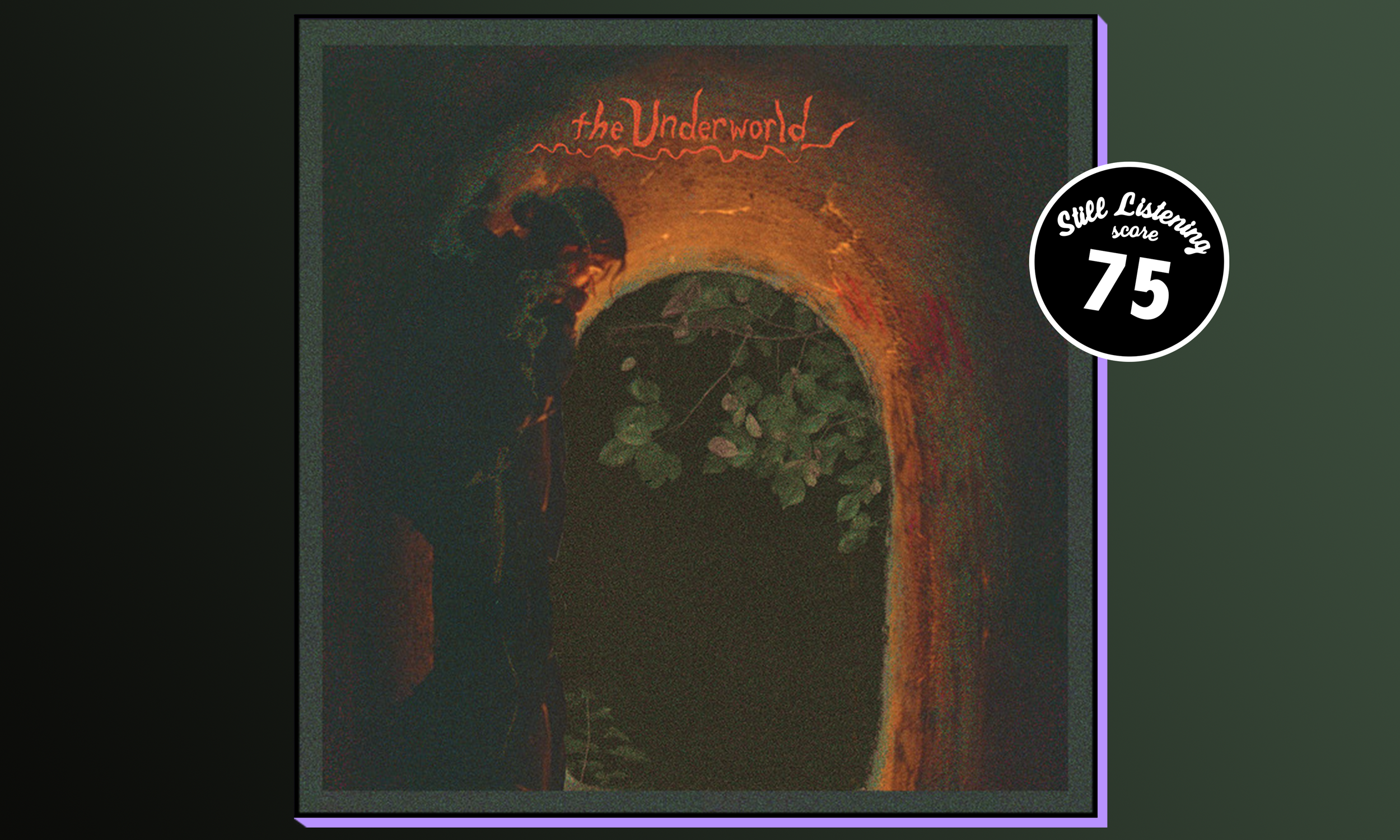
The writing and recording of The Underworld, Sadurn’s second album, took a very long time. An eight-month-long vocal injury and the intense pressure of following up the group’s acclaimed debut, Radiator, both contributed to a complex and arduous recording process. Add to that a painful and knotty breakup (at least if the album’s lyrics are to be believed), and it’s a small wonder that the album was ever recorded at all. Over nine (mostly) languid alt-country songs, G DeGroot (the group’s singer and songwriter) describes the beginning of an unsteady return from a period of profound darkness, with both lower lows and higher highs than the group’s debut.
The album, more than most, clearly reflects the struggle surrounding its creation. More thematically focused than Radiator, the overriding impression is one of distance. The first few lines of opening track ‘the weight’, ‘You had a bad dream / You didn’t wanna tell me’, highlight that space between the song’s couple. As DeGroot asks their partner to ‘tell me what you’ve been hiding’, the relationship, which continues to dissolve throughout the album, is shown even early on to be unsteady at best, characterised more by the space between the two than either person.
Although the first three minutes of the song (at six minutes, it’s already longer than anything on Radiator) build in a similar way to the group’s previous work, it is the second half which displays the scope of The Underworld’s ambition. The shriek of a distorted electric guitar brings about a new, louder section of the song, with the phrase ‘it’s not the same’ interspersed throughout a description of the relationship’s breakdown. This newfound scale, though, comes at a cost. What made Radiator so special was how restrained its most impressive moments were. The short but impressive guitar lick that acts as a post-chorus on ‘moses kil’, or the harmonies on the final lyrics of ‘golden arm’, lend their respective songs greater depth with each new listen. The Underworld mostly substitutes those moments for louder musical passages and more obviously catchy hooks. Though ‘the weight’ is a very good song, and the lurching feeling of the half-shouted ‘Stepping on my way down’ communicates a powerful sense of falling, it lacks some of the intricacy of the group’s previous work.
This substitution of intricacy for scale persists throughout the album, with the harmonies in particular feeling less inspired and less moving this time around (though they are still excellent). The two lo-fi songs are exceptions to this, though ‘maps’ is a little too underbaked to properly make use of its intimate sound. ‘can’t stop’, on the other hand, is one of Sadurn’s best songs. DeGroot’s voice, whilst always a standout, is particularly effective here, delivering some of their best lyrics with an affecting, quiet wistfulness. Images flit by, from looking at tadpoles and ‘fe[eling] like a robot’ to the ‘one fist down on the magazine’. The most affecting passage of the whole album is also the pinnacle of that concise, imagistic approach: ‘But my god, you were so lit up / And you sat between my knees / And the curse had gotten lifted up / But just for a second’.
Light is scattered throughout the album to illuminate rare moments of happiness: the ‘light, Philadelphia sun in the window of your bedroom’ (‘the weight’) or when DeGroot sings, ‘Thought I had seen you shining through the cracks’ (‘why does my heart’). That lyrical continuity also extends to other, less pleasant motifs: the ‘weight’ of the opening track that appears again in ‘whole thing’ (‘the weight is calling / And I forget what I’ve learned’) and the angels which were ‘on the side of your face’ in ‘the weight’ and then have ‘the poison in them’ by the closing track. The uncertain, contradictory final stretch of the album never undermines the depths to which the album sinks by presenting an easy out. Instead of an uplifting, affirming closing track, the album ends with ‘only angels’, which builds slowly over eight minutes and then fades away. After being pulled in by the ‘biggest tide’ (a recurring motif for DeGroot), the singer wonders how they can ‘go back again’. Concluding the album with a reflection not on recovery, but the fall itself, DeGroot sings: ‘And my only angels have the poison in them / Since I’ve been damned’. The tone of the album is always carefully balanced - it never careens into total despair but is always ambiguous about the possibility of recovery.
As a whole, The Underworld is an interesting companion to Sadurn’s debut. It is clearly a more ambitious album than Radiator, both longer and louder, but it loses some of the subtlety that made that album so charming. With the newfound tightness and scale comes a loss of spontaneity and intricacy. However, none of this is to say that the album is disappointing. The Underworld is still an impressively cohesive and consistent album, especially lyrically, and whereas Radiator had similar moments of poetic resonance, The Underworld manages to balance those moments with a compelling, larger narrative. On the occasions where DeGroot balances that lyricism with the louder, glossier approach to the music, like the brilliant ‘whole thing’, The Underworld truly shines.