
Trooper Salute’s debut LP, 友達がいました (Tomodachi ga Imashita), is a bittersweet, dynamic salute to youth and to fading friendship.
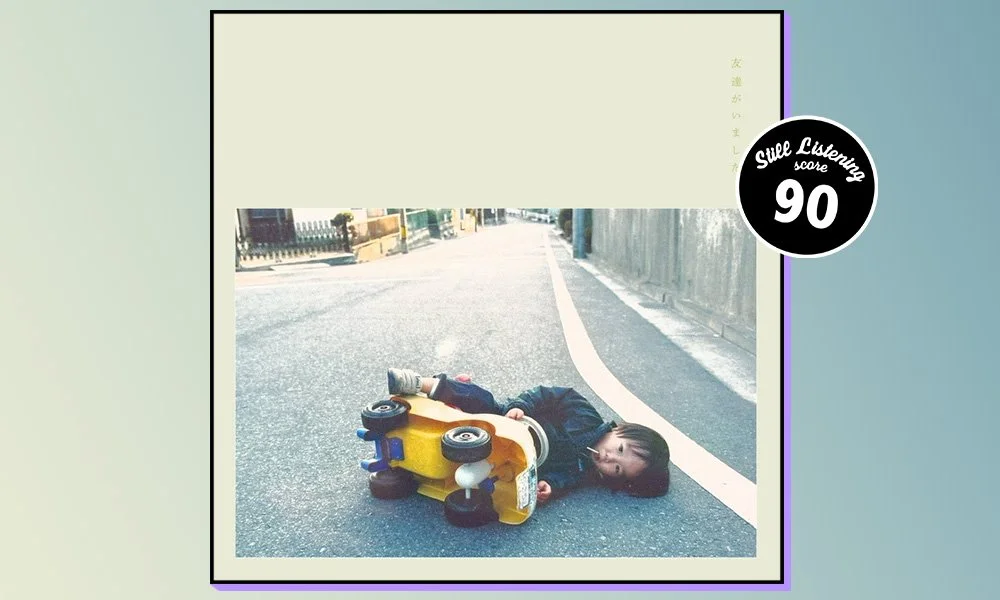
Listening to 友達がいました (Tomodachi ga Imashita, or “I Had a Friend”) can at times feel like a strange piece of magic. I ran up against the limits of language again and again while diving deeper into the debut LP of symphonic indie rock band Trooper Salute. Never have I felt a stronger desire to simply be able to understand Japanese at the flip of a switch. With just the surface scratched through basic translations, I understand there is an ocean of nuance sitting underneath each track on this record. Even so, there is that counterintuitive, strange ease in getting “the point” of each line. Credit the vocals of lead singer Musashi and the power of each instrumental from songwriter Hayato Komiya.
Trooper Salute was born out of the meeting between these artists at university in Nagoya, Japan. Komiya had been building his musical prowess and submitting demos to radio stations before connecting with Musashi through campus clubs. Previously an illustrator, she had little musical background to speak of (you never would’ve guessed upon hearing her). Their performances began as recently as 2024, with two EPs garnering them quick attention and praise, even festival slots.
Then, this June, came Tomodachi ga Imashita. The record is infused with the piercing tenderness of meeting and parting. It seems so obvious to extol the value of music as the universal language, but I’ll do it anyway. It’s deserved. How fortunate are we to have so much emotional resonance with complete strangers? The thought was ever-present through my 10+ listens to the record as I furiously scribbled notes half about the music and half about myself as pseudo-journaling.
Tomodachi ga Imashita follows the collage of feelings evoked by the painfully common experience of relationships changing and fading in the discomforting transition away from school and one’s youth. Komiya mentions a sense of overwhelming sadness watching others enter adulthood. There is inevitability and despair in parts, boundless hope and excitement in others. I’m living it now, only a few months away from the places and people where I came into myself. Some friendships, faces, and moments will slip through your fingers. They go so slowly that you end up watching it happen, like the erosion of a cliffside. Yet this album is also about living through despair, which Musashi mentioned in part came from her reflections after reading Hayao Miyazaki’s original Nausicaä of the Valley of the Wind manga.
You hear that sentiment in the sound of each track, all beautifully complex and distinct in its own right. Take the opening track ドップラー (“Doppler”), which combines a military snare march with high bell sounds that create a simultaneous sense of whimsy and struggle. Musashi then comes in with soaring vocals that seem to lift you and carry you into the grief she desperately tries to ignore. The second track, 絶縁 (“Zetsuen”), follows it with what feels like Underscores-type ear candy in its bouncy chopped-up vocals, creating a more electronic feel. It knows when to be loud and when to be light, giving you a sort of nostalgic hope with its climactic final two minutes. I should shout out the other members of the band, who bring so much texture to every single second. The record overall has some of the best instrumental artistry I’ve heard this year.
The further you progress, the more you tend to bounce back and forth between that same despair and hope. Track four, よだか (“Yodaka”), lightens the mood sonically with a flurry of drums and piano. Of course, the lyrics are pretty devastating once translated, but my god, is it catchy. Then you have track six, 埒 (“Rachi”), which slaps down a haunting instrumental only to transition into an electric rock ballad. By the end, Musashi is screaming with unbelievable force and passion in sharp contrast to the slow opener. Skip ahead another two songs to 茶番 (“Chaban”), probably my favorite on the project, to experience the whiplash from slow, shoegaze-y chord progressions and quiet singing to an absolute wall of sound. There is a climbing bass in this song that tickles my brain in such a way that cannot be put to words. Whatever is happening with the guitar and drums surely cannot be physically possible.
Nowhere is the overarching emotion felt more than in the title track, 友達がいました (“Tomodachi ga Imashita”). This catchy eight-minute ballad features an effortless duet, evoking the feeling of crying at your graduation as a friend walks across the stage. As said above, this album was a way for me to process my own grief, especially in places like this. Even so, the artistry on display is transcendent. You can listen to parts of this record and feel like dancing on a beach somewhere, or watching a college band play once it finally gets warm out. It’s worth saying that this is quite a fun listening experience. Give it a listen whether you feel like processing some things or not, and take comfort in the fact that people everywhere understand how hard it can be to get older.