
TVOD - The Farm Review
TVOD’s Orwellian second album goes for the artificial feel of small town communities that shut themselves off from the rest of the world.
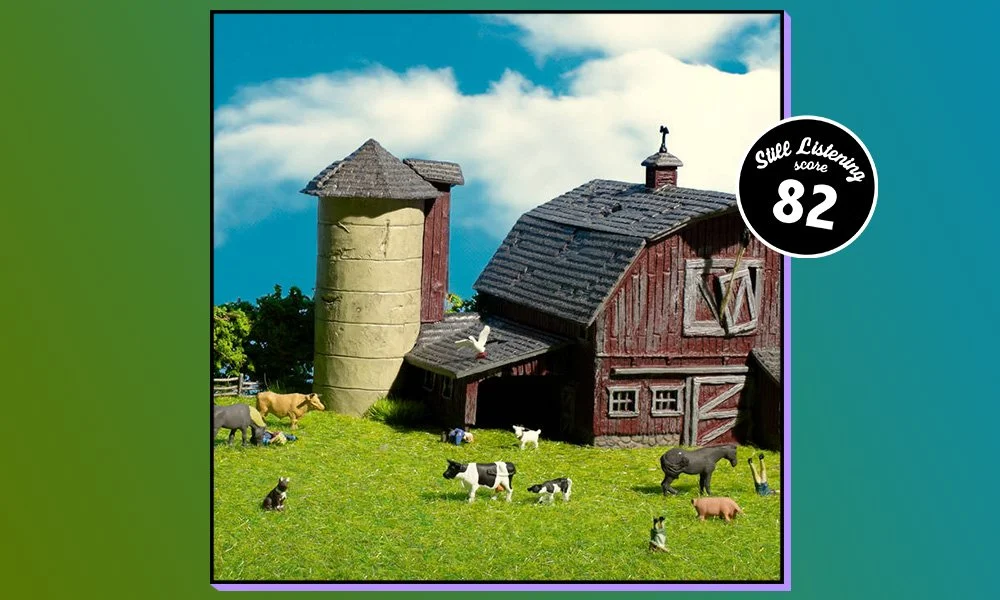
TVOD’s The Farm opens with a collection of animal and farm noises, instantly evoking village life. ‘How was your day love?’ / ‘It was bloody shite.’ You can almost see Billy the farmer returning home to Sally and immediately declaring how disgruntled he is with his day. The lyrics recall the Jim Carroll Band at times, while the rip-roaring post-punk is unafraid to get stuck in, with flashes of IDLES’ ‘Model Village’, Getdown Services and Yard Act’s post-Brexit punk. Here, the target is a disgruntled small hamlet and its so-called community, tearing down the myth of rural harmony. It’s an evolution from the sound of Party Time that stays true to its spirit.
The opener is short, sharp and punctuated, a brilliant introduction to this world of rural America and little Britain. Track two, ‘Clorox’, then launches us into the madhouse and we’re off and running. The absurdity of village life provides fertile ground for the almost Orwellian world of The Farm. Deliberately abrasive and grappling with the state of US politics, the record also marks the continuing evolution of vocalist Tyler Wright’s solo project into a collective group effort. The illusion of the pastoral community is shattered: ‘Here comes Billy / And here comes Sally,’ Wright cries, getting to grips with a ‘power hungry president’ straight away. There never was peace on the farm. Nowhere is safe from the overwhelming dread and despair of the wider world.
If the record feels European, TVOD’s time spent touring France offers some explanation: they even began working on demos for the album in the commune of Neufchâtel-en-Bray. ‘Wet Brain’ offers an insight into poverty and dead-end employment in the village, while ‘Rerun’ asks, ‘What the fuck am I still doing here?’ Its sense of being stuck on a leash will be relatable to anyone watching their life pass them by as their friends move, one by one, to big cities. Wright’s witty nihilism comes through in ‘I don’t care who I am as long as I’m not a businessman’, capturing the us-against-the-world mentality of small towns like this. ‘Get a job / Go insane,’ he declares.
People who have moved from the countryside to the city will often have been asked why they left in the first place, but Wright is quick to remind them. This is a depressing record about drinking problems and political despair, with the reach of presidential power extending all the way into village life. Orwell’s Animal Farm is a foundational text here, and reading it adds layers to the album’s concerns.
There are similarities to bands like Adult DVD, with influences crowding together as TVOD examine Europe and the United States’ woes on one record. There’s also another entry in the recent run of songs named after celebrities: alongside Basht’s ‘Keira Knightley’ and Jo From School’s ‘Julia Roberts’, we now have ‘Natalie Portman’ to complete the trifecta. Its origins are suitably surreal. A then-member of CDSM showed Wright a play about a scientist resurrecting Portman’s ghost at SXSW. ‘Natalie Portman / All of the girls / I’ve got nothing left in this world.’ Wright is sharp, focused and witty, finding humour in the oddball characters who populate these songs. It’s corny, it’s funny, but never crosses the line. A TVOD track knows how ridiculous it is without labouring the joke.
‘Rotten’ tells the audience to ‘Fuck the 1.6 / They’re living off daddy’s credit’ in another scathing attack, delivered from the perspective of people living on these farms, isolated in their world views. There’s also ‘Counting Sheep (Bed)’, because of course there is: you can’t have a punk record about a farm without counting sheep somehow. The connection to IDLES’ ‘Model Village’ is made especially apparent by, well, the model village on the album cover, looking like something from a toy train set. It’s an incredible piece of design for a record that showcases TVOD’s growth as a band.