
Start Listening To: Alden Hellmuth
On Tether, New York saxophonist and composer Alden Hellmuth embraces uncertainty, building a fearless jazz record where improvisation, structure and instinct remain in constant conversation.
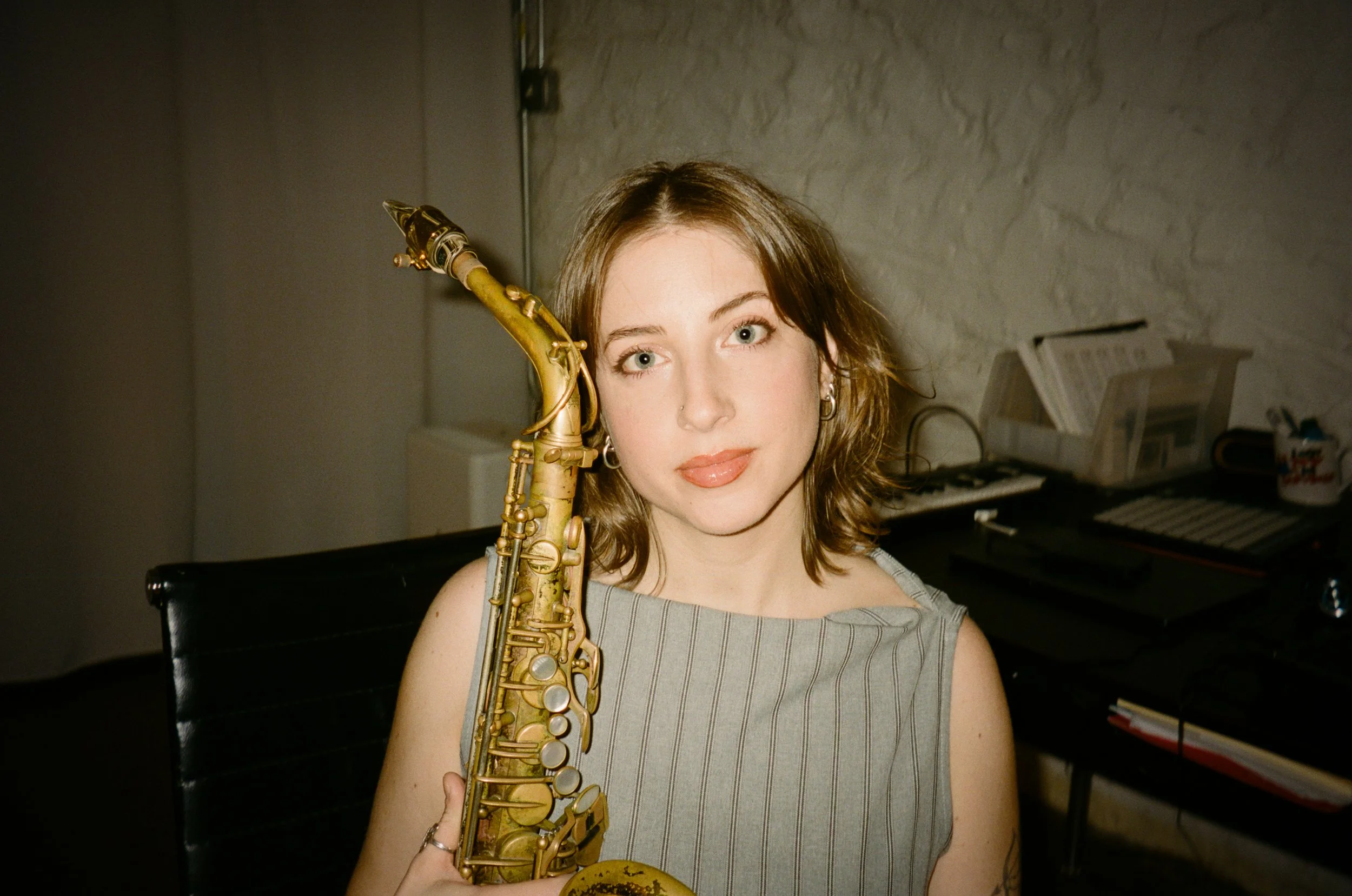
Few debut records arrive with the confidence and curiosity of Tether. New York-based saxophonist and composer Alden Hellmuth has assembled a striking ensemble built around the unusual pairing of two bassists, creating music that feels simultaneously grounded and untethered. Drawing influence from free jazz pioneers, experimental rock and contemporary composition, the album refuses to settle into easy definitions, instead treating improvisation as a living dialogue between musicians.
We caught up with Hellmuth to discuss the philosophy behind Tether, the creative possibilities unlocked by its unconventional lineup, learning from mentors including Herbie Hancock and Ambrose Akinmusire, and why the unknown remains the most exciting part of making music.
For those unfamiliar with your music, can you tell us who you are, where you’re from and about the music you make?
My name is Alden Hellmuth and I’m a saxophonist and composer based in NYC, originally from Hartford, CT. The music I make is an expression of myself, the moment, my influences (which come from all directions).
The title Tether suggests both freedom and restraint existing at the same time. At what point did you realise that idea captured not only the way your band improvises, but the philosophy behind the whole record?
I was exploring the name Tether for my next project, and how it related to the intention/composition, long before this iteration of the project came to life. The band from the record (the two bass quartet) was originally called 8leg, but that felt a bit unserious and I found myself returning to the word tether and felt it really made sense for what we had made.
You describe the album as exploring how to communicate improvisational ideas. Is improvisation something you think can be composed, or is there always an element that has to remain genuinely unknown?
The unknown is my favorite part. Each musicians’ “unknown” is completely different and that’s something really special. I was exploring how to communicate material/ideas to the band to give them space to explore the unknown while staying grounded (or tethered) to the composition/piece.

This record draws as much from Japanese punk and Deerhoof as it does from Ornette Coleman and John Coltrane. Have you ever felt constrained by people's expectations of what a jazz record should sound like?
Of course. Even after releasing it to the world there is this fear of judgement, but staying true to myself is most important. Within the history of jazz there is a long lineage of composers and improvisers that I look up to and want to honor by forging my own path.
The decision to build the ensemble around two bassists immediately changes the centre of gravity of the music. What compositional possibilities did that unlock that simply wouldn't have existed with a more conventional lineup?
I like that - the change in center of gravity. It’s really an accurate representation. The two bassists on this record (Logan and Miller) are so distinct and I was thinking a lot about their unique voices while composing. Texturally I knew they could fill up the space in a really specific way, which left a lot of room for me as the horn player.
Your playing is incredibly expressive, but it never feels like you're trying to dominate the ensemble. As a bandleader, how do you balance showcasing your own voice while creating space for everyone else's?
Thank you! I’m not sure it’s something I really think about because to me that’s not what music is about. I’d much rather have a real musical dialogue. I also really love listening to my bands and showcasing their voices.
A lot of the album seems to live in the tension between carefully written structures and complete spontaneity. Does that balance become easier to navigate over time, or is it something you're constantly renegotiating in performance?
It’s definitely developed over time - that rapport and shared language, but I think it’s important to keep things open and always be negotiating within performance because that means you’re really listening and expressing the moment.
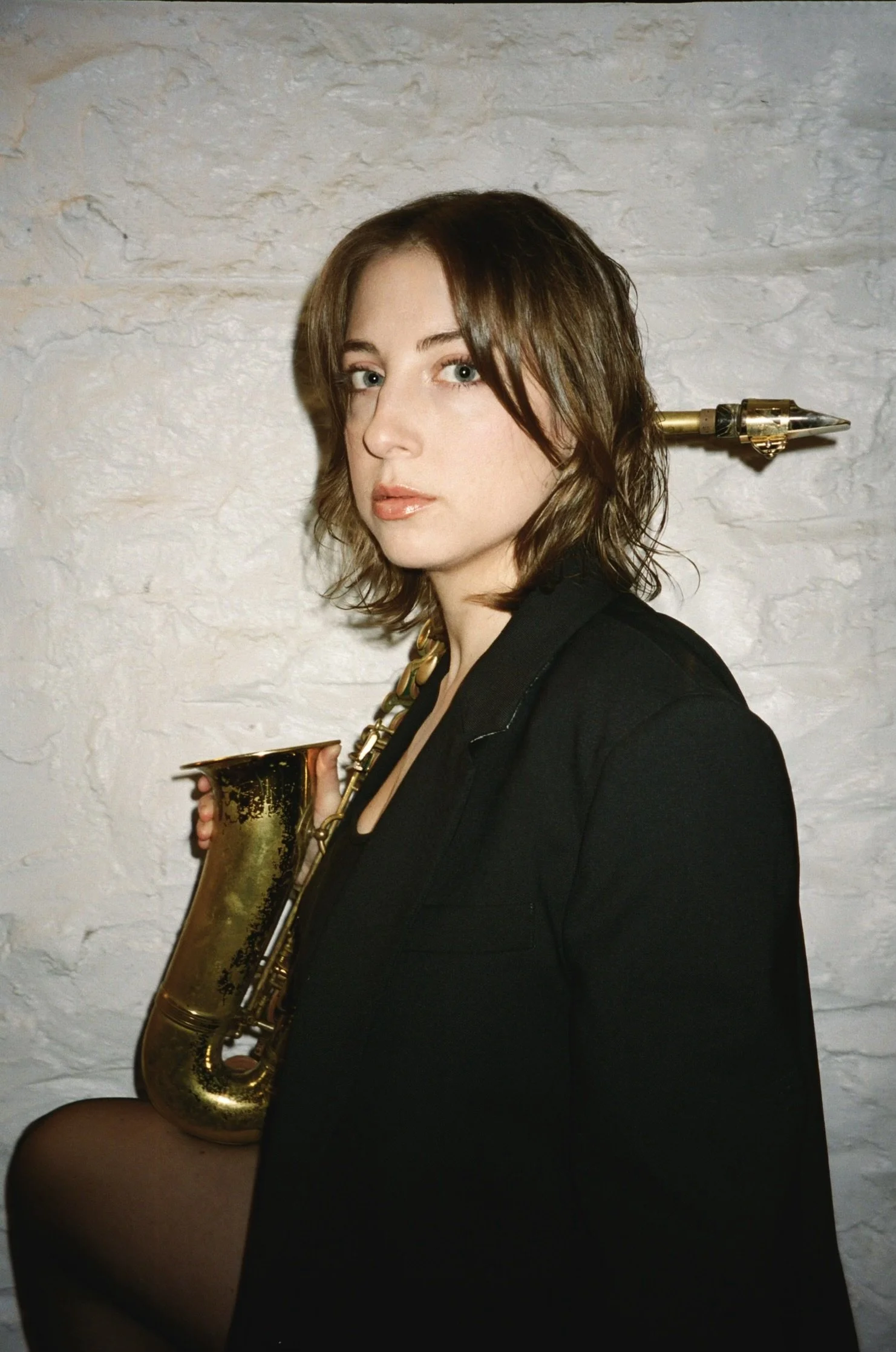
You were mentored by artists like Herbie Hancock, Ambrose Akinmusire and Walter Smith III while developing these compositions. Did studying with musicians of that calibre change your thinking more as a performer or as a composer?
Absolutely. Ambrose had such a huge impact on me compositionally - he really pushed us to experiment and go for it. Walter too was such a great mentor to have in regards to pushing myself through the saxophone. And Herbie of course, just being around him was a lesson to be in the moment.
Several tracks seem to treat composition almost like architecture, where musicians are given a framework to inhabit rather than a fixed path to follow. What fascinates you about creating music that changes every time it's performed?
As I mentioned before, I really admire the bands I work with. Each musician has a really distinct voice and I want to showcase that. I also really love how improvisation presents something totally new every time. The second quintet is honestly the biggest blue print for me. Each performance was something completely different and there’s only ever this short moment (or even just a vague suggestion) of melody. That sort of freedom of expression is jazz.
You mention wanting listeners to remain 'tethered' even when the music becomes loud or unruly. What do you think keeps adventurous music emotionally accessible rather than simply intellectually impressive?
I think when music/expression is genuine it transcends all that and I hope that listeners can feel that.
'Definitely Not Friends' and 'Fake(rs)' are intriguing titles that seem to hint at stories without ever explaining them. How much do your titles shape the way you hear a piece yourself?
I actually usually title my works after they’ve been written so the titles come from the sound or mood or compositional process.
Winning the German Jazz Prize for your debut could easily have encouraged you to repeat what had already worked. Instead, Tether feels bolder and more abrasive. Did success make you more willing to take risks rather than less?
These compositions and this work is a result of my two years of really pushing myself while in the Institute. And this band really started as an outlet for me so I think it makes a lot of sense that the record might be considered abrasive. Art is always a reflection of the times, and the state of our country is pretty grim. I think I just had some stuff to get out.
What do you love right now?
I’ve been loving pineapple. And water with fresh fruit/veggies.
What do you hate right now?
Name an album you’re still listening to from when you were younger and why it’s still important to you?
Miles Smiles, that record is so important to me.
When someone hears your music for the first time, what do you hope sticks with them?
I genuinely feel like that’s not up to me. Music is so personal and I love that you can’t control or even guide someone’s experience or relationship to a work.