
Start Listening To: Brodie Milner
Fresh from the release of Holy Ghost Survivors Group (Vol. 1), Brodie Milner talks biblical narratives, sandwiches the size of severed arms and why tragedy and comedy are increasingly difficult to separate.
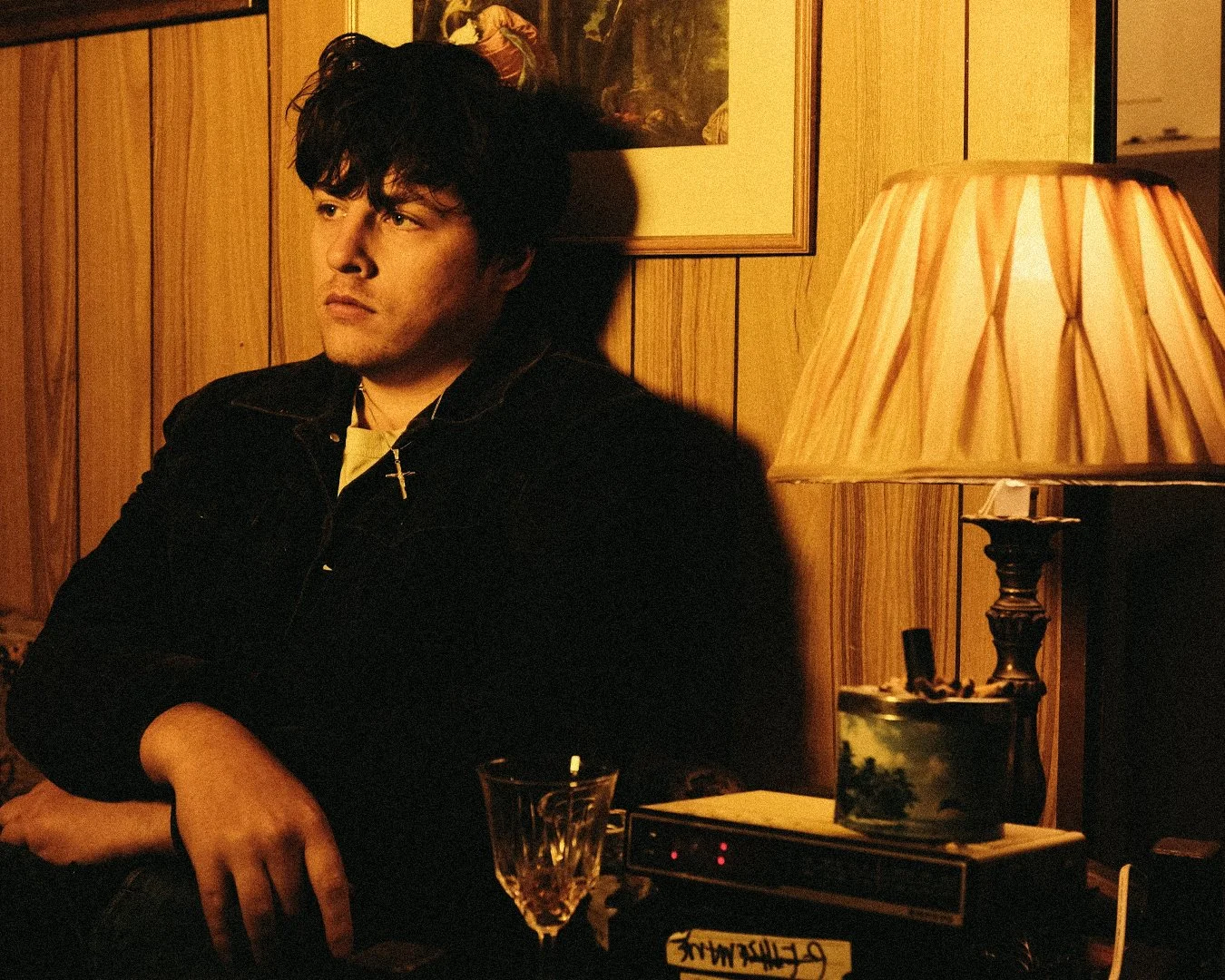
Few songwriters can move so effortlessly between the sacred and the absurd. Across Holy Ghost Survivors Group (Vol. 1), Brodie Milner fills his songs with fallen saviours, convenience stores and characters searching for meaning in increasingly strange surroundings. A few weeks on from the EP's release, we caught up with the North of England musician to discuss building narratives, touring with The Coral and BC Camplight, and why he won't feel fully satisfied until Kenneth Copeland Ministries sends him a cease and desist.
For those unfamiliar with your music, can you tell us who you are, where you’re from and about the music you make?
Hi it’s Brodie Milner here coming to you from the North of England. I have drunk six black coffees this morning and I write the sort of music that someone who drinks six black coffees in a morning writes.
Holy Ghost Survivors Group (Vol. 1) has been out for a few weeks now. How have you been feeling about the response to the EP?
This EP took at least twice as long as it should have done to make. And when all that time passes you lose perspective on the songs. So now they’ve been released and people are hearing them for the first time, your relationship with the music gets recontextualised. And that’s been good. The lyrics are a little opaque in places and there’s a story there under the surface and it seems that people are getting a kick out of putting the pieces together. I think those who get it really get it, and I’m happy they are on board. Honestly though, I won’t feel truly fulfilled until it’s big enough to receive a cease and desist from Kenneth Copeland Ministries.
You said you wanted these songs to feel like part of a larger narrative. Was there a particular song that acted as the starting point for the whole project?
Yes, but it didn’t make it onto the EP. I passed a man on the street who was half cut, half wearing his sunday best, half screaming ‘HEAVYWEIGHT CHAMPION OF THE UNIVERSE, JESUS CHRIST HIMSELF!!!’ and that was my way in. There was a story there about someone in need of a saviour, praising a saviour who would never come. I liked the irony of it.
‘Convenience Store Gospel' was one of the first tracks people heard from the EP. Why did that feel like the right introduction to this chapter?
I think that song felt like the most natural successor to the previous EP, sonically speaking. It’s a little less narrative dense than some of the other songs, but lyrically it’s a snapshot of the world this record is in, without taking itself too seriously. It’s a bit funny. It’s a bit sad. It’s a bit short.
’Drinking Martinis in The Gardens of Gethsemane' is one of the most memorable song titles I've seen this year. Where did that one come from?
Well the narrator of that song is a version of Jesus who renounces his birthright of ‘saviour’ to pursue a life of self involved celebrity. He doesn’t sacrifice himself for the sins of others, and he doesn’t go through the ‘agony in the garden’. Instead he sits around drinking martinis. It’s a subversion of scripture, I suppose, in a similar way to Jerry Springer the Opera or Life of Brian.
Your lyrics often feel very conversational, almost like you're dropping listeners straight into somebody else's life. How do you go about building the characters that populate your songs?
I take the Jeremy Strong approach to acting - unpleasantly method in the pursuit of capturing the full complexities of every single character, no matter the cost to those around me… I’m joking, but that’s more interesting than the real answer.
You've worked with both Matt Peel and Jolyon Thomas on this record. What did each producer bring to the project?
Matt introduced me to Silver’s Deli in Leeds. We’d go there and I would order a sandwich the size and shape of a severed arm. We did this every lunch time, every session. Jolyon and I spent a lot of time arguing whether or not time existed. He was always wrong.
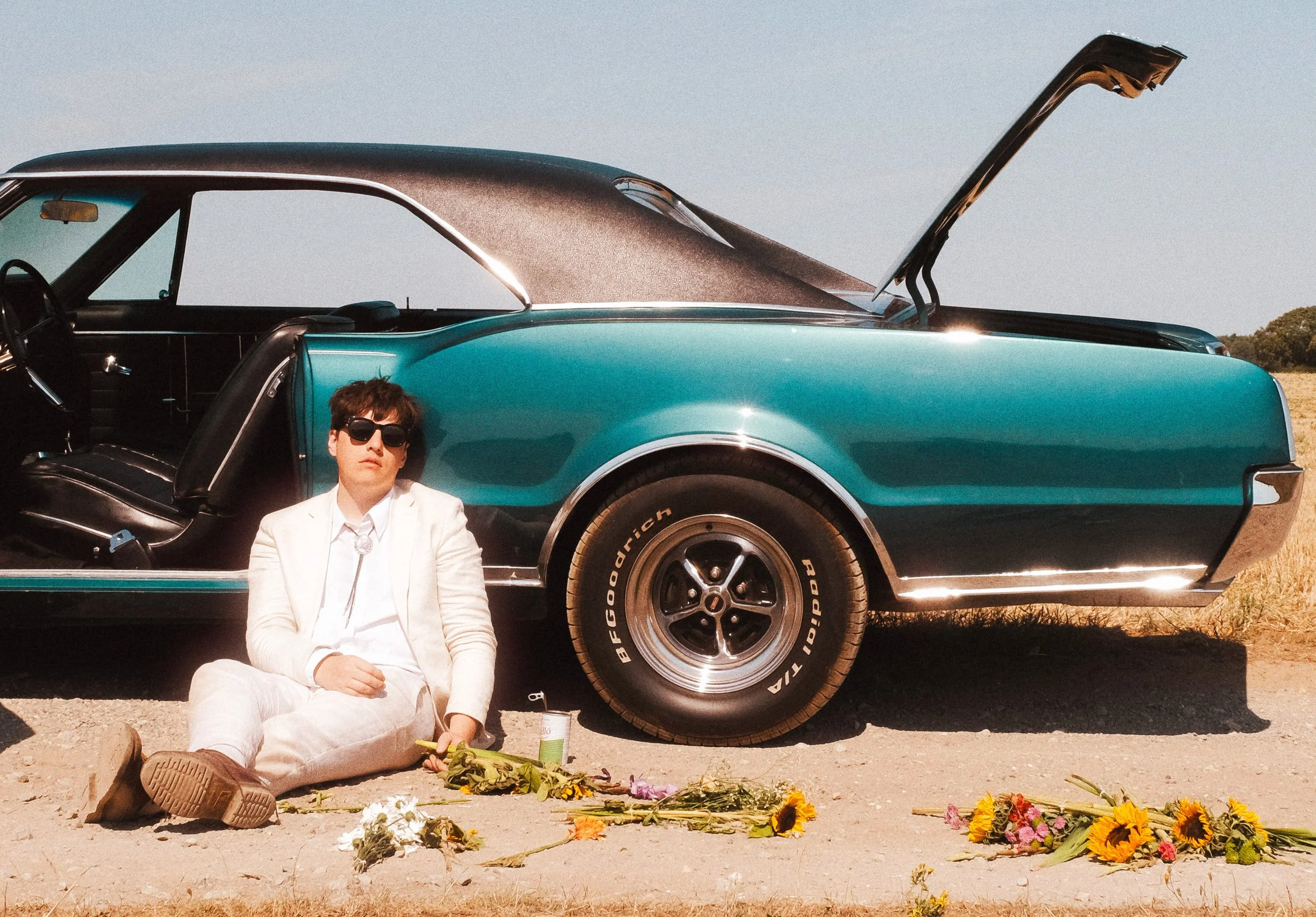
Over the last year you've supported artists like The Coral, BC Camplight and Louis Dunford. Have there been any moments from those tours that have stuck with you?
Yes - city centre parking is exorbitant. Buy my record…
Some of the songs on the EP deal with fairly heavy subjects, but there's also a lot of humour running through them. Is finding that balance something you consciously think about?
Yes, the interplay between tragedy and comedy is a theme that grounds most of the lyrics I write at the moment. And I think that is just reflective of where we are at culturally. I am looking at the screen in my hand and I can see a hospital on fire and a slideshow of ducks and a hate march and a men’s fashion segment and all of it is given an equal platform and all of it sits together very uncomfortably.
You played The Great Escape and have continued touring since. What have the last few months taught you about the sort of artist you want to be?
One that can afford to pay exorbitant city centre parking fees. Buy my record…
What do you love right now?
Myself.
What do you hate right now?
Myself.
Name an album you’re still listening to from when you were younger and why it’s still important to you?
The White Stripes - White Blood Cells. It was the first CD I owned and it’s the reason I learnt to play guitar. Me and my pal used to play along to that album in his bedroom. We didn’t know any of the chords, mind. One of us would strum open strings whilst the other hit a wooden spoon against a set of aluminium window blinds.
When someone hears your music for the first time, what do you hope sticks with them?
I read a lot of books, and with books there is an understanding that when you’re reading a narrative in the first person, it’s not from the perspective of the author. There seems to be less license with that when it comes to songs. In a climate of withering media literacy, I would like you to know that these songs aren’t autobiographical. Mostly.