
Start Listening To: Dolly Doops
At her Strongroom EP launch, Dolly Doops reflects on the women who shaped her, the friendships behind her music and the realities of doing it independently.
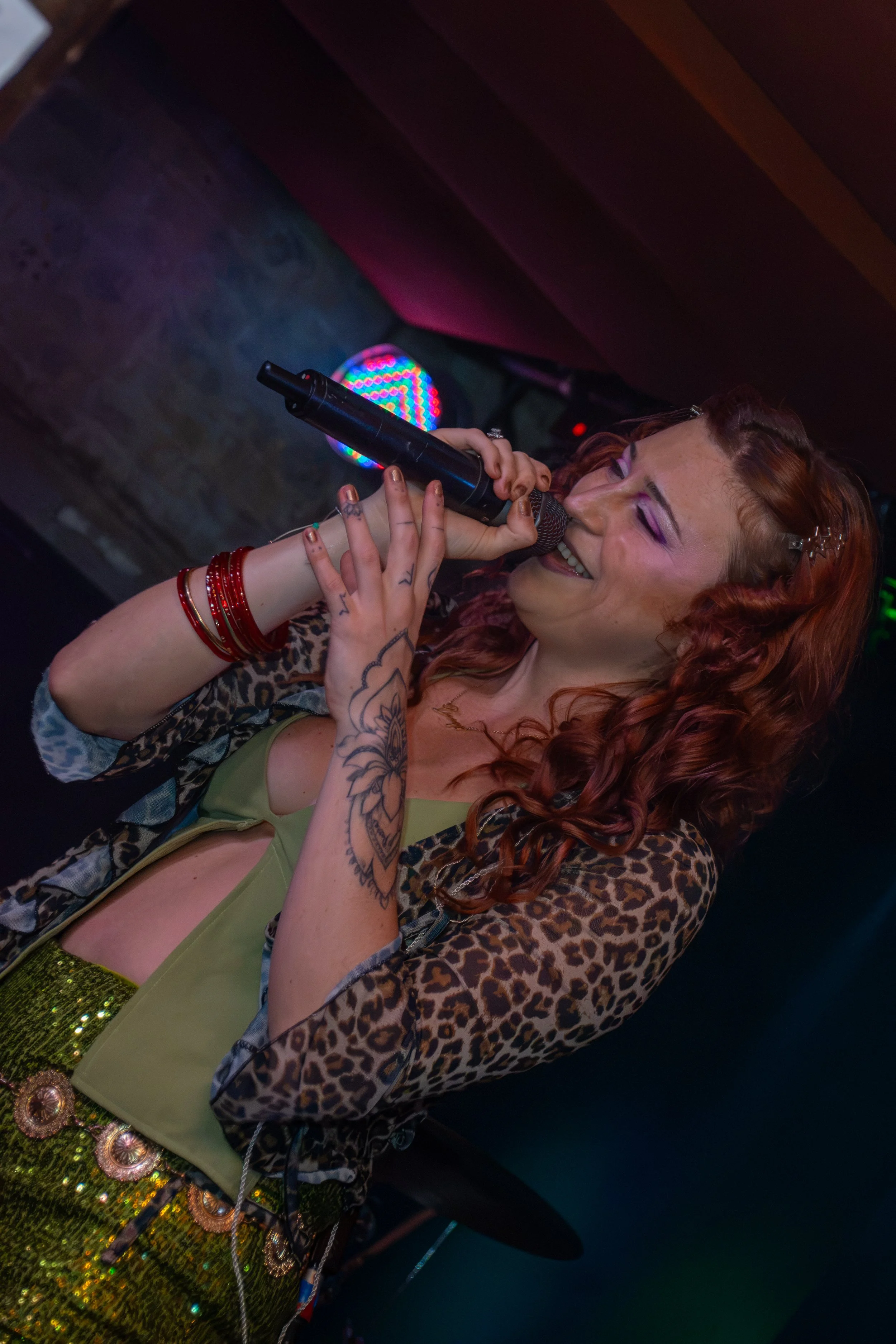
At midnight on 4 September, I was on my way home from another event at the O2 when Dolly Doops’ debut EP The View From Here came out. I was in an Uber, and having already heard five of the six tracks, I told the driver we had to play it. It was a must. Later that day, I was at Strongroom for Dolly’s headline launch show.
The room was packed, intimate and full of energy. Everyone was dancing, and quite a few people clearly weren’t at their first Dolly Doops gig. They knew the songs, the little moments, and exactly what to do when Dolly asked them to join in. Even her entrance felt like a proper moment. She came through the crowd before appearing on stage, making a very convincing superstar entrance in a small room. The set was around 50 minutes, although it genuinely felt like about five. By the end, the crowd wanted more, and Dolly delivered.
One of the highlights was ‘shoulda coulda woulda’, where Dolly gets the audience to clap and stamp along to the beat. Somehow, everyone was completely on beat. Some people knew the lyrics too. Watching an independent artist fill a room with people singing her own songs back to her is pretty special. It’s something Dolly has clearly worked hard for. The View From Here has been in the making for 18 months, starting with bedroom-written, self-produced ideas before growing into the six-track project it is now, alongside executive producer Seegz.
But interestingly, Dolly says there wasn’t really a plan for what the EP would become. ‘At the beginning, there was no vision,’ she explains. ‘It was crafted as each track came into play.’ Eventually, though, those individual songs started to feel like they belonged together. Dolly compared the process to writing a book, with the EP exploring different parts of life: love, loss, self-discovery, sexuality, joy and the things you end up battling with yourself.
For me, that comes through in the way the tracks move between different moods. It doesn’t feel like six songs trying to do the same thing. There are highs and lows, different tempos and different levels of vulnerability, but they still make sense together. And if I had to pick one, ‘What’s It To You?’ is still my favourite.
I asked Dolly about the song, and our conversation quickly turned into a much bigger one about the women in her family and what they’ve taught her about being a woman now. ‘I come from like a very strong line of very independent women.’ She spoke about her grandmother, who grew up with far less financial freedom than women have today, but who was always curious about the world and determined to experience it for herself. ‘My grandmother’s always been that way and always gone out and been curious about the world and not let that change anything for her and still explore life in the way she wants to.’
Her mum has been another example of that independence. ‘My mum, she’s done so much in this world and in what she does, and for our family and me.’ Growing up with those examples, while also being surrounded by the expectations that women are still often given, showed Dolly that there are other ways to live. ‘Having that as an example whilst being paired in a society that wants you to get married, to have kids, to do this... it’s really nice to have that being like, oh, you know, there’s more to this.’
That conversation made me hear ‘What’s It To You?’ slightly differently. It’s still a ridiculously catchy song, but underneath it is this idea of working out what actually matters to you instead of simply following the version of life you’ve been handed. That balance between something personal and something you can actually dance to is probably the best way to describe The View From Here. As Dolly puts it: ‘I can talk about something quite intimate or vulnerable, but I pair it with something that makes me still want to dance.’
‘I Need A Doctor’ is a good example. The song deals with feeling overwhelmed and having too much going on in your head, but the production keeps it moving. The emotional weight is there without turning the song into something heavy. That same contrast works particularly well live.
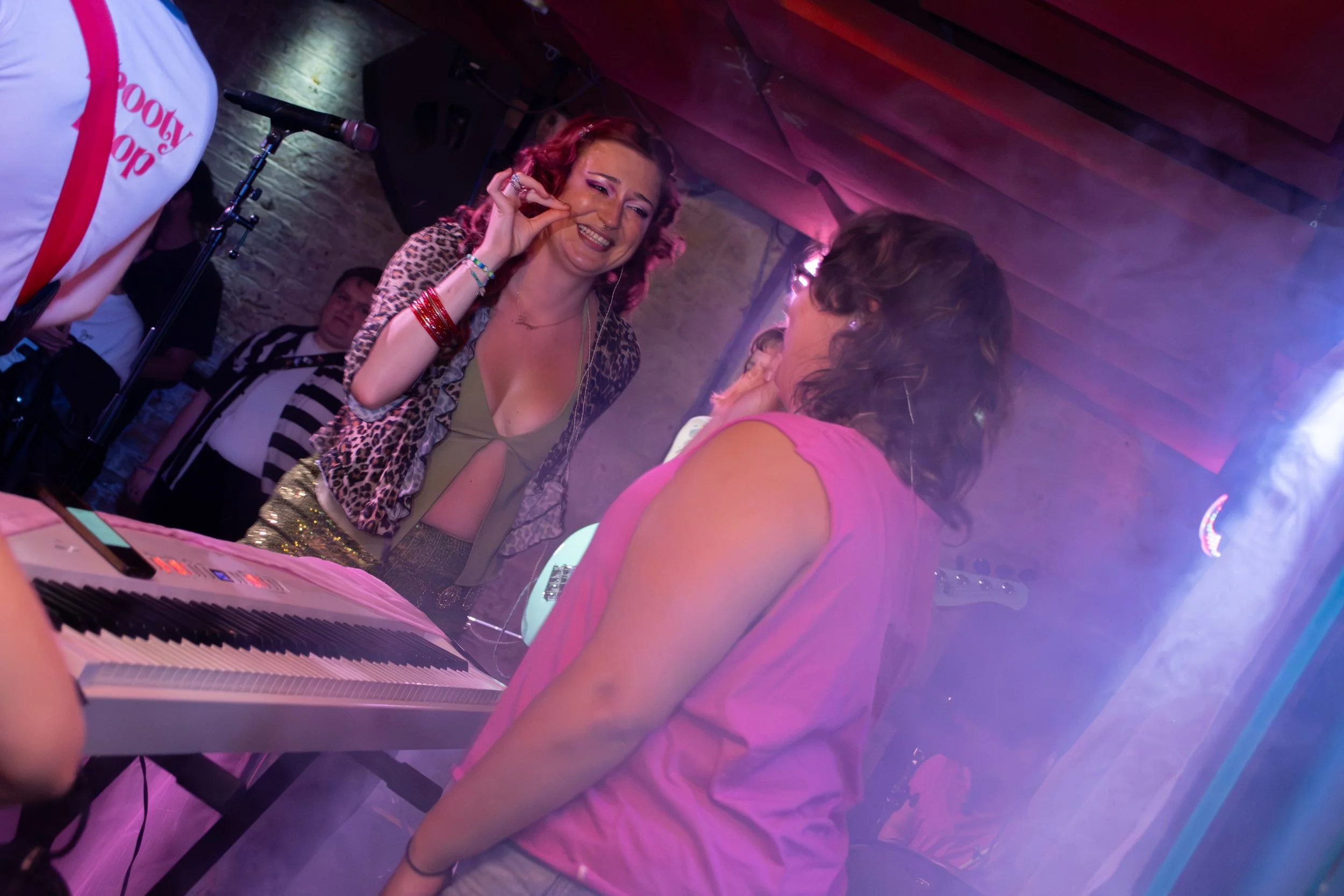
And then there’s The Frooty Loops. It’s obvious that Dolly and her band are close friends. There’s a natural chemistry between them throughout the set, and it never feels like they’re just doing their jobs and going home. Dolly told me how important that friendship is to her. ‘Music is hard, and having people that you can bounce ideas off and support and soak things up with means a lot.’
She also explained that being around people she trusts allows her to be more herself. You can see that on stage, particularly between songs. She’s chatty, funny, emotional and slightly chaotic, constantly going off into stories before finding her way back to the next song. It makes the whole thing feel very personal.
That’s especially important because behind the fun of the show is the reality of making music independently. Dolly currently has four jobs, including teaching piano and producing music. She also set up a GoFundMe to help fund the EP and was open about the side of the music industry audiences don’t always see. She pointed out how often the financial support behind an artist can be invisible, whether that’s label money, distribution, family money, or simply having the financial freedom to focus on music full-time.
‘Being independent is both exhausting and joyful,’ she says. The freedom matters: ‘I make all the decisions.’ She isn’t against having a team around her, either. She wants collaboration, just with the right people. And judging by Strongroom, she’s already surrounded herself with quite a few of them. There was a real sense of community in the room that night, with longtime followers alongside people discovering the music as it happened.
It’s also something Dolly feels strongly about as a woman in music. When I asked her what the best thing about being a woman in the industry was, she didn’t hesitate. ‘Girls supporting girls. Women supporting women.’ She spoke about the connections women make through music and how much that support means to her. ‘Women carry me through everything I do.’
And perhaps the most Dolly Doops answer of the whole interview came when I asked what she would say to a 15-year-old girl who feels like an outsider and wants to get into the music industry. ‘Girl, don’t change a thing.’ Her advice was to stay within yourself, listen to yourself and surround yourself with people who make you feel good, instead of people who make you feel like you have to change. After watching her spend the night doing exactly that, surrounded by her best friends, her audience and songs that are very clearly hers, it feels like she’s already taking her own advice.
On release day, after hearing the EP in an Uber and then watching those same songs come alive in Strongroom, one thing was pretty clear: Dolly Doops has found her people.