
Start Listening To: Elanor Moss
Ahead of the release of The Knife, The Needle, Elanor Moss discusses rediscovering her intuition, embracing quietness and why the most truthful songs aren't always the most literal.
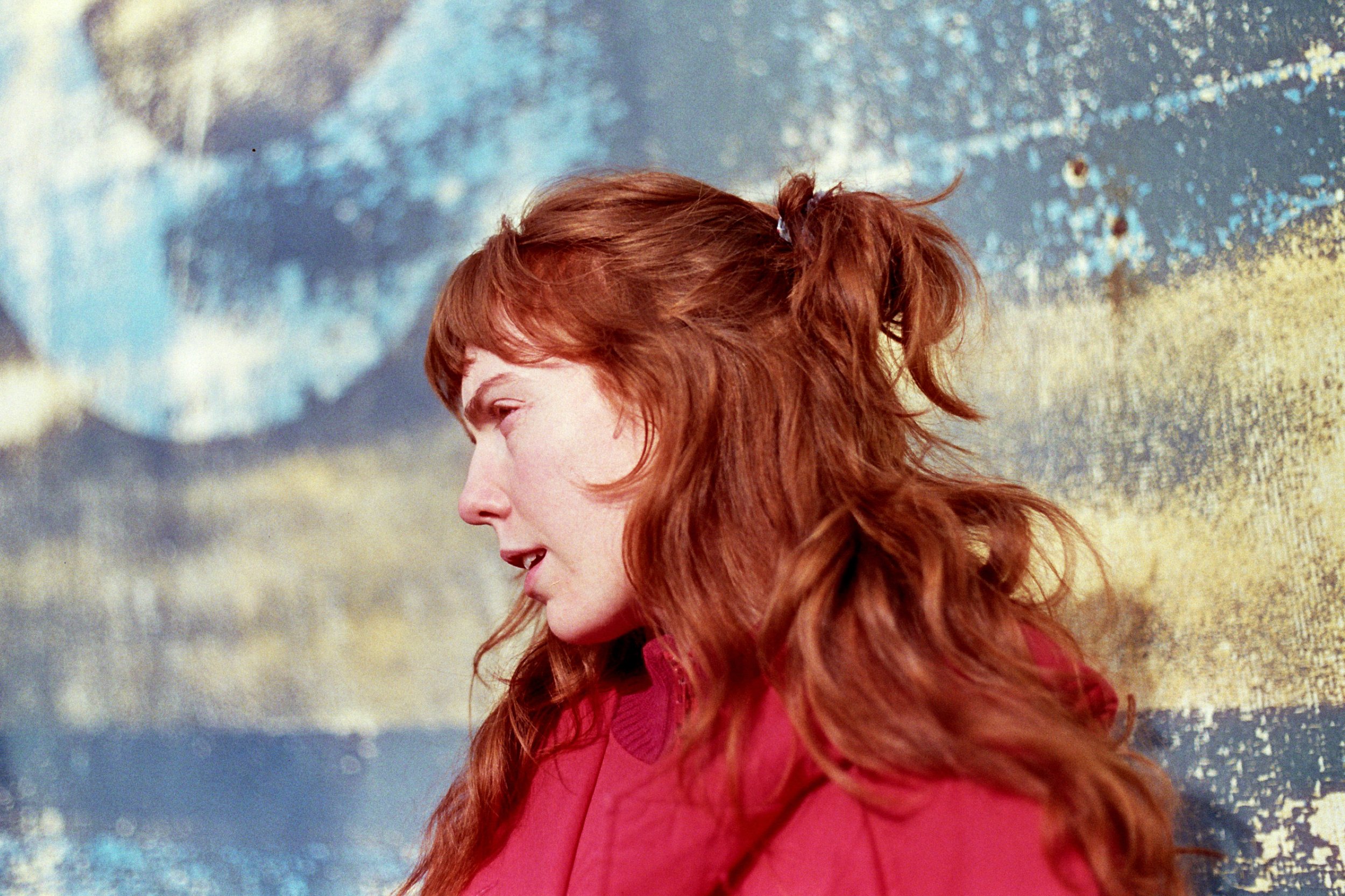
After stepping away from an almost-finished version of her debut album, Elanor Moss trusted her instincts and started again. The result is The Knife, The Needle, a quietly devastating collection of psych-folk songs that finds beauty in restraint, contradiction and the blurred line between memory and fiction. We caught up with Moss to discuss rebuilding her relationship with songwriting, the records that guided her back to herself and why sometimes the bravest creative decision is to begin again.
For those unfamiliar with your music, can you tell us who you are, where you’re from and about the music you make?
Hi! I’m Elanor Moss - I’m based in London, though I grew up in Lincolnshire and studied in Yorkshire, which is where I started to write songs. My mother is American and my father is British, and I grew up in the UK. I write what I would call “psych-folk” - a kind of guitar-based folk music with an interest in character-work and interiority.
The Knife, The Needle feels like an album that embraces quietness instead of fighting against it. Was there a particular moment where you realised the record needed to become "quieter, weirder, more English" than your original vision?
A couple of months after the initial recording session I played a show in London opening for a friend of mine. The band I usually play with for band shows were not all available for the performance, so I had the idea to ask my dear friend and brilliant songwriter/ saxophonist friend who plays in my band, Matthew Herd, if he could write some arrangements that fit everyone’s second instrument. They’re all excellent players with multiple talents, and it just so happened that we could make a chamber ensemble out of those who could make it to the show. Saxophone (Matthew Herd), horn (Marcus Hamblett), horn (Jools Owen), violin (Andrew Stuart-Buttle). We rehearsed the day of the show, and as we were performing at (the now-closed) Lafayette in London, I was struck with the depth of Matthew’s arrangements, how much of the ache and nuance they pulled out of the music. I remember giving him the references of Judee Sill and Nick Drake arrangements-wise, and he just knocked it out of the park. I knew as I was performing with those arrangements that there needed to be a version of that recorded. We also had Reid Jenkins on fiddle, without a score, improvising a second violin part. Months later we got in the studio to “try it out” and ended up with the new album. We had Matthew’s arrangements and a few new songs without arrangements, which the ensemble arranged together in the room, improvisationally. We also had Linus Fenton on double bass for that session.
You spent three years writing these songs after feeling disconnected from your music. Looking back now, what do you think you were searching for during that period?
I think I was looking for a new way of relating to writing music, that I felt I had lost in the time in which I was releasing those early EPs. I wanted to have the space and time to find something that really excited and challenged me in the writing process. To build a writing practice that I could lean on that was to do with engaging deeply with my life and paying great attention. To fall back in love with the struggle of writing! Now I see my whole life as writing, even when I’m not actually writing. When I am frustrated in the queue at the chemist, too hot and wishing everyone would go away so I could be served faster (unflattering portrait of me there); or when I’m ecstatically happy, swimming out into the cool blue sea, when I’m at my worst and at my best. All of that can be metabolised if you have a relationship with a kind of practice in place, which at the time I did not have. I was looking to re-calibrate my relationship with writing. And I do think that the process of writing this album gave me a lot in that way.
You've said you wanted to return to "the music that made me really feel something". Were there any particular artists or records that helped guide you back towards that place?
There were a few, including the aforementioned Matthew Herd’s unreleased debut that he was writing and sharing with me at the time. The main one I kept coming back to in this period was Paul Buchanan’s Mid Air. He’s the frontman from The Blue Nile, and it's his only solo record. The writing is sublime, and so domestic. Nothing is too small of a topic for him to cover that he isn’t able to make into something profound. And he’s not afraid of darkness in his writing either, but he makes our human failures feel so tender and forgivable. It’s a hopeful record. The music itself is also very direct - it’s just piano and voice with some synth strings. The whole record is like being put under a spell for forty minutes. There is very little sonic variation in the album, in lots of ways it’s the same thing the whole way through. When I was thinking about making my debut I knew I wanted to try to make something that had a similar effect - that was like stepping into a whole, complete, other world for a while. It reminded me not to be afraid of just doing one thing and doing it well, and with as much specificity and detail as you can bring to it.
The album explores how love can heal, wound and transform people, often all at once. Did those themes emerge naturally as you were writing, or did you only begin to notice those connections once the record was taking shape?
I definitely began to notice these connections as the album took shape. Motifs started to come up between the songs; for example, one thing transforming to another by the end of the song. In Secrets of the Universe there’s the wall that becomes a door, and in Fixer, the titular knife that becomes a needle. In Sarah there’s the tenderness that turns to violence. In Again, My Love, the growth from emptiness. Most of these were accidents, but I think in writing the songs for the album I was learning how to do something in songwriting I hadn’t learnt how to do yet, so as I got the hang of it it became a bit of a container for the expression of certain ideas. So, it was through doing that the connections came up. I never knew where a song was going when I started it, which left me very free in the making of the world across the songs. It was an exciting way to work, just going “what happens next”? It let me enjoy it more, and get playful with it.
'Sarah Waiting in the Car' is an incredibly striking introduction to the album. What made that song feel like the right place for listeners to begin this journey?
We actually released Again, My Love at the end of last year between tours with Foxwarren and Flyte - I was coming back to live performance and getting lots of good opportunities to play so we wanted to get something out there that gave a taste of the record without announcing it. It felt like a good preview - not giving too much away!
Sarah felt like a good official introduction because it was the first song I wrote for the album, but also because I think it so directly and succinctly captures one of the main concerns of the album; how often we experience opposites that feel as though they cannot coexist, and yet somehow they do. In Sarah this is how violence and tenderness can exist in such close proximity, and how complicated everything can get. How the story we tell ourselves about things and the truth can be two very different things. It’s clear in the song that the narrator is experiencing violence at the hands of a romantic partner, but by the end as a narrator she is getting everything blurred, she is saying that she is the violent one. Everything you hear after this song on the album is a less brutal listen, so it starts heavy and softens if you listen to Sarah first!
Your lyrics are incredibly vivid and intimate, but they never feel over-explained. How do you decide how much of yourself to reveal within a song, and how much should remain unsaid?
It’s interesting, I very much feel that the narrative voice I use in songwriting is a “fictional I”. Songwriting is a very emotional art-form, and it’s very embodied as it uses the physical voice to convey the contents of the song, and so the only way I know to write songs is in the first person. That said, my songs are either all auto-fiction, or first-person fiction. I always draw from my real experience, but I metabolise that and put it into the voice of a character who then sings the song. Developing a voice that uses the fictional I has been brilliant for me, because it gives me so much more license to take something of my personal experience and make sense of it in a way that has potential to be more universal and meaningful to others. For example, the relationship in Sarah is similar to a relationship that I was in, but the details, the “facts” are pure fiction. I don’t have a friend called Sarah and she never waited for me outside a pub in a car. Does it make the song less impactful to know that? Maybe, I don’t know, but I hope not. It would be so restrictive to always have to stick to the facts of your life. I do not write music for myself, I write it for others, and so I do not feel bound to the facts of my life, only the truth as I understand it, and search for it in writing. It is more important to me that listeners see themselves in my songwriting than that they leave with a sense of having seen me. I would like my writing to be a vessel for that. Detail, even fictional detail, can be really helpful in that way, as it gives the listener sensory data to pick up on and insert themselves into the song via. Ideally, listeners can tune into a song that sounds like the most specific heartbreak ever and see themselves in that. That said, the starting place is almost always something that I have directly experienced, and it grows and develops from there. Maybe by the next album I’ll have changed philosophies completely, we’ll see!
You made the difficult decision to set aside an almost-finished version of the album and start again. That must have been daunting. At what point did you know it was the right decision?
I knew it was right when we were in the studio and I was listening back to the takes. It felt imperfect and a little scary for me as the artist to listen to because it was so unpolished. But it felt right for this collection of songs, and Matthew Herd’s arrangements captured the heart of it so well. It was definitely a risk, but it was just an intuitive feeling.
The arrangements throughout the record feel beautifully understated, with every instrument serving the song rather than competing for attention. How collaborative was the process of building those arrangements with the rest of the ensemble?
There were about 5 or 6 of the arrangements that were written by Matthew Herd, and it was just the bassist and second fiddle (Linus Fenton and Reid Jenkins) that then had to figure out their parts around the written score for those songs. Then there were some new songs, such as Clothes in a Hotel Sink and You Are Coming Home Tonight that didn’t have arrangements, which the ensemble just improvised together in the studio. Improvisation is an instrumental track that was an exercise in that. I had a vague idea of some guitar chords, and the main sax motif, which I sang to Matthew. We did three or four takes and kept the best one. By that point, even the tape machine itself got involved on the arrangement! The tape was nearing the end of the reel and something went wrong where it was warping, which caused these big key changes up and down throughout the piece. It was wonky and unpredictable and Pete the engineer was so worried it had ruined everything, but we thought it was awesome so we kept it.
Therapy seems to have played an important role during the writing process. Did it change the way you approached songwriting, or simply help you better understand what you already wanted to say?
I think the main thing it did for me was help me to better access my intuition. For various reasons, my relationship with my intuition had gone through some damage, which was making being creative very difficult and confronting. Making stuff requires you to make so many decisions, and if you think too hard about them all you just get stuck. So, making those choices from an intuition place instead of a thinking place is always ideal. Not having access to my intuition made this basically impossible. It was slowly and one thing at a time, but having weekly therapy really gave me a place to work through and untangle some blocks. I’m sure it also helped me metabolise some things that ended up in the songs, too.
What do you love right now?
Claire-Louise Bennett and Marguerite Duras! I’m obsessively reading through their work and it’s making me excited to write songs. Both of them have a voice as writers that just leaps off the page and feels intensely personal, like you are living inside the psyche of the character from whose perspective they are writing. They write so well about women and solitude. They are also both quite startling and strange in ways that I find really exciting. There’s also searing insight there. Duras has a devastating short story about an old woman who is “killed” by her daughter-in-law in what can only be described as a slow campaign of shame… It’s so insightful and precise, it just cuts right through to an understanding of the way things are.
What do you hate right now?
The heatwave in London and AI generated art/music. Boo.
Name an album you’re still listening to from when you were younger and why it’s still important to you?
Feist - The Reminder. My big sister Kate used to play songs from this album around the house, and it is probably one of the albums that made me want to sing.
When someone hears your music for the first time, what do you hope sticks with them?
That they are not alone in their experiences in the world!
Photography By: H. Hawkline