
Start Listening To: Evann McIntosh
A chat with Evann McIntosh about their new album, Fantasy Fuel, their brilliant return to the music industry written over the span of a three-year hiatus.
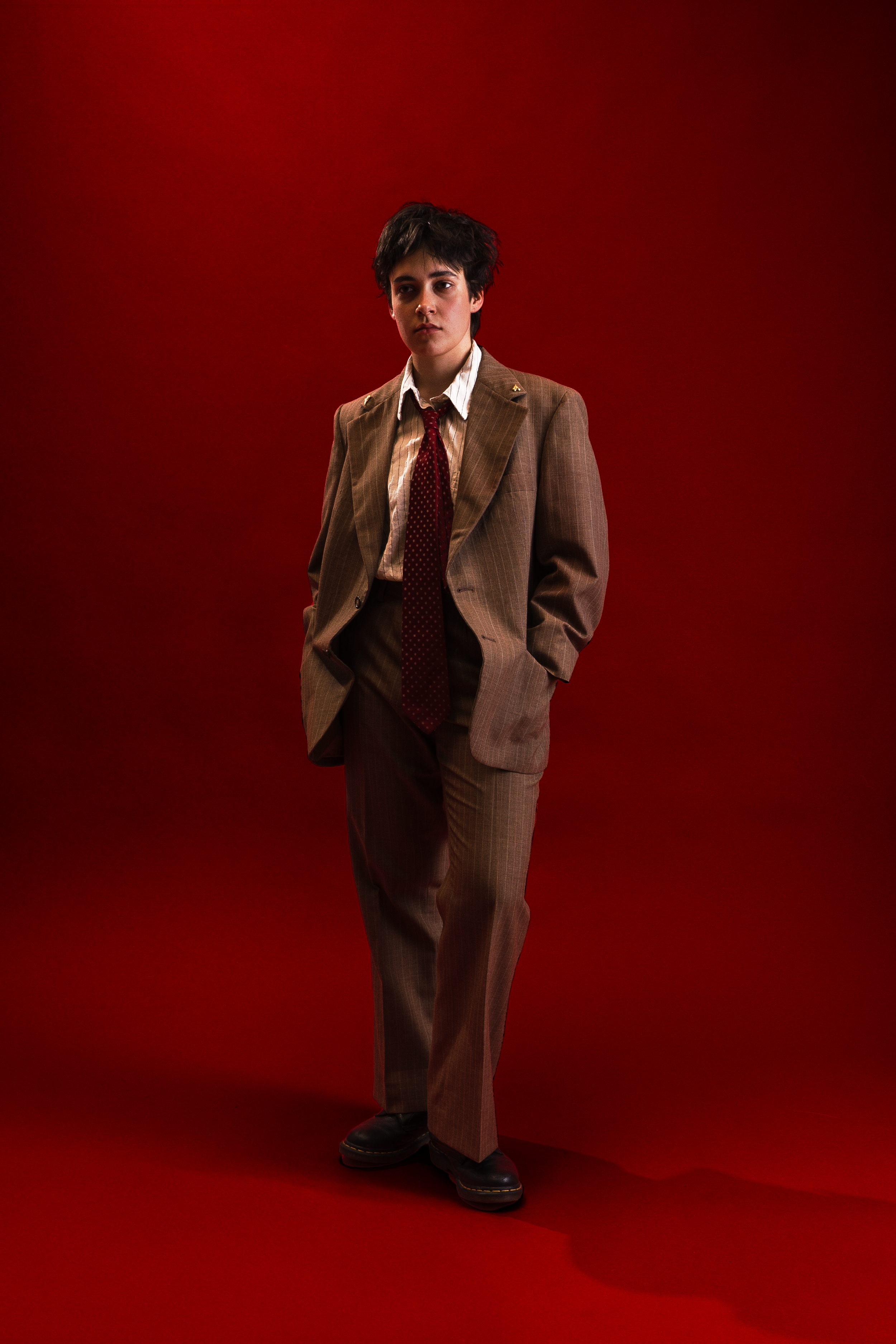
Fresh from the chaos of St Patrick’s Day celebrations in Chicago, I caught up with Evann McIntosh: an artist inspired by everything from the surreal literature of Kurt Vonnegut to the sun-soaked songwriting traditions of Laurel Canyon. With their latest album, Fantasy Fuel, McIntosh draws on the city’s vibrant live music scene, weaving jazz influences throughout the record with the help of live musicians and a collaboration with the incomparable Meshell Ndegeocello. One thing is clear: this marks a new era for Evann McIntosh, stepping away from their past online identity and embracing a warmer, more experimental approach of “art for arts sake”, and the result is captivating.
If someone starts with Fantasy Fuel, what version of you are they meeting?
They’re meeting a lot of new versions of me. I think it all came together over the span of about three years – from 2022 through 2025 is when we recorded everything. So it really depends on which song you’re listening to. But in a broader sense, it’s about me moving out of Kansas City and going to Chicago, and leaning into experimenting more with different genres, especially more of a jazz influence.
“Fantasy Fuel” as a concept leans into the idea of building something out of what you want to see rather than what’s actually there. How did that idea come about?
I think as I was moving to a new place and adjusting to a new environment, I was having all these new experiences. A lot of it was shaped by internal things that were going on. It just felt thematic, it matched how my life was moving at the time.
You’ve mentioned listening to a lot of classic soul and jazz while making this. Was it the musicality you were drawn to, or the way those records carry emotion without over-intellectualising it?
Yeah, definitely the musicality. I had gone to a bunch of shows here in Chicago, a lot of jazz or avant-garde free jazz shows, and seeing the way people treated music and approached their instruments as a form of expression really inspired me. It made me want not only live musicianship on this record, but also jazz players specifically.
Were there any specific artists you were influenced by, or a particular creative work or era?
I watched a ton of movies and read a lot while I was making this. I’m trying to think of any that really stuck out. I know I was reading a lot of Kurt Vonnegut books, and a lot of that influenced my writing. I’ve always been playful, but I think I leaned into that a little more on certain songs. As for who I was listening to, it was kind of all over the place. I went through a lot of classic rock and pop, and a lot of jazz as well. I started going back to the ’60s, starting with The Beatles, then Bob Dylan, and then all the Laurel Canyon people.
Working with collaborators like the iconic Meshell Ndegeocello, what did you take or learn from working with them? Also why did they feel like a good creative addition to this project, being the only other featured artist?
That one actually came about pretty naturally. Abe Rounds, who produced the album, is her percussionist. He played her a few of the tracks and she liked ‘Better’, so she played on it. I didn’t get the opportunity to be there when she recorded it, but I remember being super stoked when it came back. Later I had the chance to go to a couple of shows she was doing out here in Chicago and meet her and talk to her about it.
‘Better’ never fully resolves, it kind of sits in that loop of trying to understand someone who’s inconsistent. What made you choose to stay in that liminal space rather than pushing the song towards a sense of closure?
That’s an interesting way to put it, I don’t think I ever thought about it like that when writing. I wrote it while I was in a relationship where we were having communication issues, so it felt like a cycle. Maybe that influenced it. But yeah, I guess I just never really thought about resolving it.
I guess that’s sort of an answer in itself in a way?
Yeah. Just that cycle of endless communication and no resolution.
You’ve had a pretty visible trajectory quite early on. Has that sense of being perceived shaped the way you present yourself in your music, or have you become more resistant to that?
I think it definitely influenced how I approached this project, especially the rollout. The last project was so visible, and I took a three-year gap from being very present on social media. It felt like a good time to take space and grow, and just move through the world without my online identity being at the forefront of who I am. That made me want to step outside of myself and just be in the studio with people, working with musicians and having live musicians play on the album so they felt really present. It was also just a very formative time in my life, so it influenced everything.
Your earlier work felt quite inward-looking. This record feels more outward-facing, and more willing to let other people in. What shifted?
I think I just wanted to flip the coin. I’d only ever experienced things one way creatively. That time in my life did a lot for me and it was really beautiful in a lot of ways, but it also started to feel like growing pains. I felt like I needed to get through that and see what was on the other side.
You made this while moving between Chicago and LA. Do you write differently when you’re back and forth, versus when you’re settled somewhere?
Chicago definitely influenced it. There’s so many shows there and a big indie scene, and a lot of people are influenced by folk songwriting. In LA I didn’t do a ton of the writing – I mostly brought songs from Chicago and then fleshed them out properly in LA. But going to shows and absorbing new kinds of music definitely influenced the process.
If you could describe this project as a still from a film, or just a visual scene, what would it look like to you?
That’s a great question. I made so many mood boards for this album. It would definitely be some sort of warm space. I want to say a jazz club, but I don’t think that’s quite right. Maybe you’re in a major city, at the top of a huge building, looking out over everything at sunset. Warm colours, a warm evening. Maybe you’re in Chicago and you can see the river — and you’re listening to Fantasy Fuel.
And finally … What's next for Evann McIntosh?
I’ve got a lot of ideas about how I’m going to approach the next thing. But for now, I'm playing a lot of shows. Playing this album live, having a good time, and then making the next one.
Album streaming link: https://dvlpmnt.ffm.to/fantasyfuel