
Having recorded their debut album In Living Colour on four-track tape, Godzooki discuss the records, films and friendships that shaped its creation.
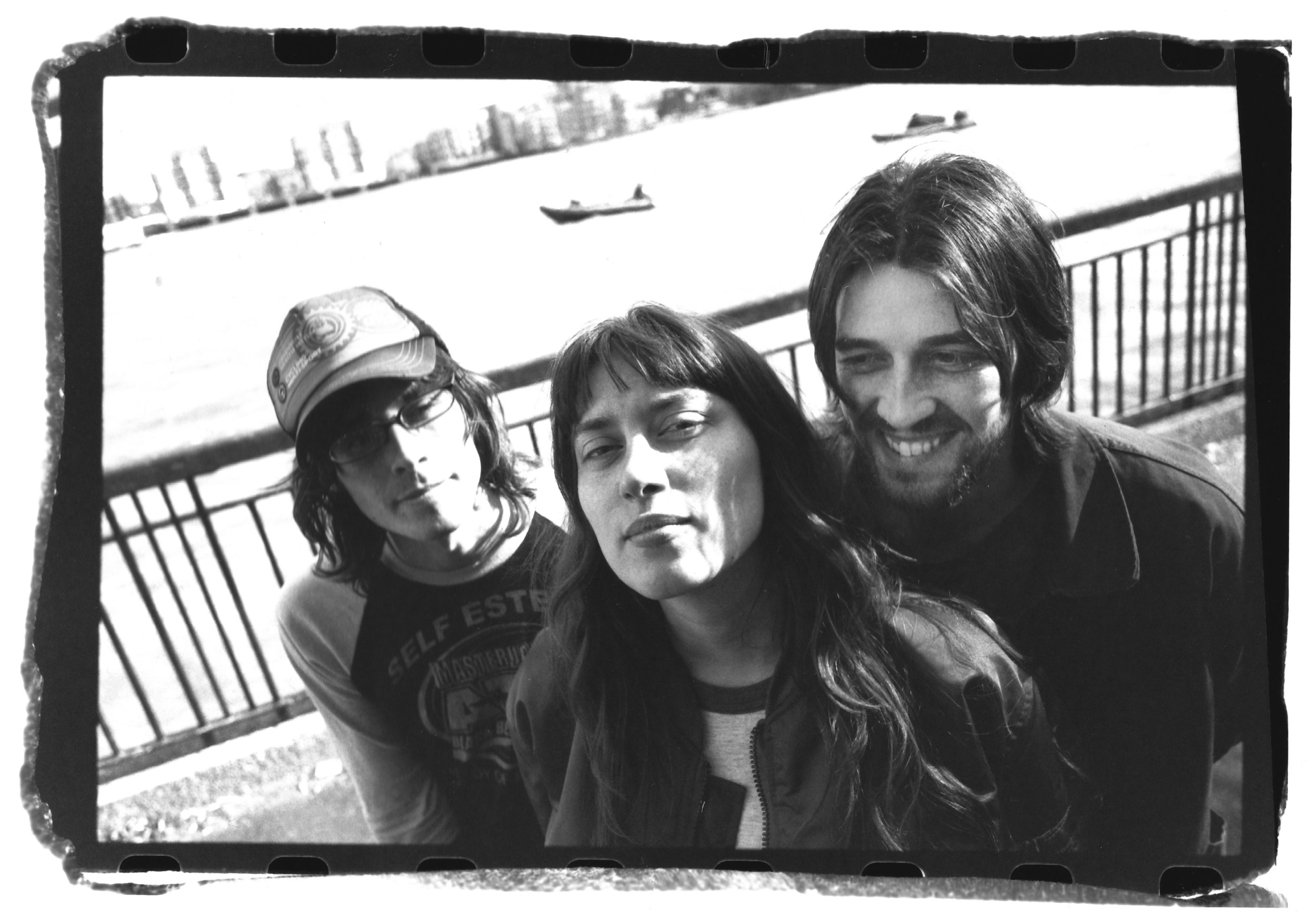
Having first met in Brighton before relocating to London, Godzooki have found common ground in their love of lo-fi indie rock, unconventional songwriting and the DIY approach of bands like The Clean, Sparklehorse and Tall Dwarfs. Their debut album, In Living Colour, was recorded across two four-track sessions, with the band embracing the limitations of tape recording and keeping things as simple as possible. It's an approach that leaves plenty of room for the personalities behind the music, drawing on everything from Mark Linkous' lyricism to cult films and old skateboarding videos. We caught up with Cole and Lottie to discuss making the record, the influences behind it and why sometimes a little tape hiss is worth keeping.
For those unfamiliar with your music, can you tell us who you are, where you’re from and about the music you make?
Cole: We’re Godzooki. We all met in Brighton but live in London. For me, Flying Nun is a huge influence on my input with the music we make, so if you like bands on that label you’ll hopefully like Godzooki!
You started Godzooki while looking for something that felt more natural, musically and ideologically. What did you want to do differently, and what happened when you first started playing together that made you think this could be it?
Lottie: I wanted to start writing songs that felt like the sort of thing I’ve consistently listened to my whole life. Simple songwriting and good lyrics. That’s what came together so easily when we started playing together.
Which records did you first bond over? Was there a particular song or artist that helped you explain to each other what you wanted Godzooki to sound like?
Cole: We made a shared playlist of the direction we wanted to go in and so many of the bands we both already knew and loved. Bands like Sparklehorse, The Magnetic Fields and Tall Dwarfs, a lot of that kind of thing. We never really had to discuss the sound, it sort of just fell into place.
Your first EP was recorded in Cole’s bedroom. What did those early recordings teach you about working together, and what did you want to carry through to In Living Colour?
Lottie: It meant we had to be really open and unfazed about sharing lyrics and singing in front of each other, which for me was a big deal. But that level of trust in each other’s songwriting ability carried through into making and recording the album.
You write your songs independently. What usually happens when you bring one to the other person, and how much does it change before you consider it a Godzooki song?
Cole: Usually one of us will bring an initial idea and build on it. Sometimes the guitar parts change a bit. It tends to just come together really quickly. Playing the recorded stuff live, we have to get a bit creative because there’s only three of us, but I always add another guitar when we tape anything.
Lottie: It’s just a Godzooki song if we wrote it. There’s definitely been songs I’ve written that haven’t felt appropriate to what we’re making as a whole, but they’ll probably get used at some point in the future.
You recorded the album yourselves across two four-track sessions. Can you talk us through the setup and what a typical recording day looked like?
Cole: I’ve barely ever recorded in any other way. I’ve been using four-tracks for about ten years and I just feel like you end up with a song that sounds so natural and pure. You learn some techniques over the years to add another mic or multitrack something, but you physically can’t overcomplicate things, so it works for our more minimal approach.
Lottie: In terms of recording this record, we spent three hours in a practice space and only recorded each song one or two times!
With limited equipment, was there a sound you had to work particularly hard to get, or an accident you ended up keeping because it suited the song?
Cole: There’s some tape hiss on a few of the softer tracks that we could’ve got mastered out, but we decided to keep it because it celebrates that it was recorded on tape rather than trying to hide it.
When you’re recording yourselves, how do you decide a take is finished? Are you generally in agreement, or does one of you tend to want another go?
Lottie: No complaints yet! There’s things that we’ve tried and mutually agreed that they didn’t work, like adding more synth parts, but in the end the raw takes are usually the best.
The album draws on quite a broad range of influences, from Beat Happening and The Clean to Sparklehorse and The Cardigans. Were there things you learnt from those records that had more to do with songwriting or attitude than the actual sound?
Lottie: So much of the influence isn’t just in the sounds but the lyrics too. Mark Linkous is one of my favourite lyricists and the way he’s able to convey such strong emotions with such bizarre stories will always be a big inspiration. The Cardigans’ covers of Black Sabbath songs were also a big influence for some songs on this album too. The way that they transform the meaning of those songs into something completely different and personal is so cool.
You’ve also mentioned films, comics and other culture feeding into the record. What’s something outside music that found its way into a song, perhaps in a way a listener wouldn’t immediately spot?
Lottie: We’ve got some samples on the record, one from this mental Sam Raimi film Crimewave, a Henry Rollins quote, and some snippets from an anime. It’s fun having these characters and personas setting the tone for the music.
Cole: I grew up skating, so one of the big visuals we came across was a Keith Hufnagel advert that came out in the 90s. To be honest, it’s where we lifted the album title from!
What was the starting point for ‘Acrelane’, and how did you arrive at the version we hear on the album?
Cole: It was actually a song I wrote for my old band C Turtle before anyone else joined that band. When everyone else joined, it didn’t really suit that sound, so I’ve been saving it for something ever since.
There’s a playfulness to Godzooki alongside the more emotionally direct writing. Does humour make it easier to approach something personal, or do those sides of the songs tend to emerge separately?
Lottie: I wouldn’t say that it makes it easier to approach, it’s as natural as any other emotional stuff in life, so it’s hard to leave out.
Why did In Living Colour feel like the right title for this collection, and what can you hear in the finished album that you didn’t know about the band when you started making it?
Lottie: We both love films and in the early days of colour movies, trailers would say ‘in living colour’, so it’s sort of a reference to that. Also, the album feels vibrant and colourful, so it kind of just made sense to us.
What do you love right now?
Cole: Lottie.
What do you hate right now?
Lottie: Cole.
Name an album you’re still listening to from when you were younger and why it’s still important to you.
Cole: Alien Lanes by Guided by Voices. I first heard it when I was sixteen and it still gets me as hyped as it did back then. They’re probably my favourite band. I met Robert Pollard in Chicago and it might be the only time I’ve ever been starstruck.
Lottie: Clap Your Hands Say Yeah’s self-titled album. I’ve been listening to it since I was probably about 10 and I’ve never really stopped listening since. I got to see them perform the album in full last year at EartH, which was a crazy full-circle moment.
When someone hears your music for the first time, what do you hope sticks with them?
Cole: I just hope people love it! It’s a tribute to the kind of music we love doing and the music we listen to, and hopefully it puts people onto everything that inspired us.
Lottie: I hope the people that fuck with it stick around for what’s next.