
Leeds producer Jessie Marcella talks about the making of ‘Aventurine’, what she learnt in the studio with Bicep and how the single fits into her debut album.
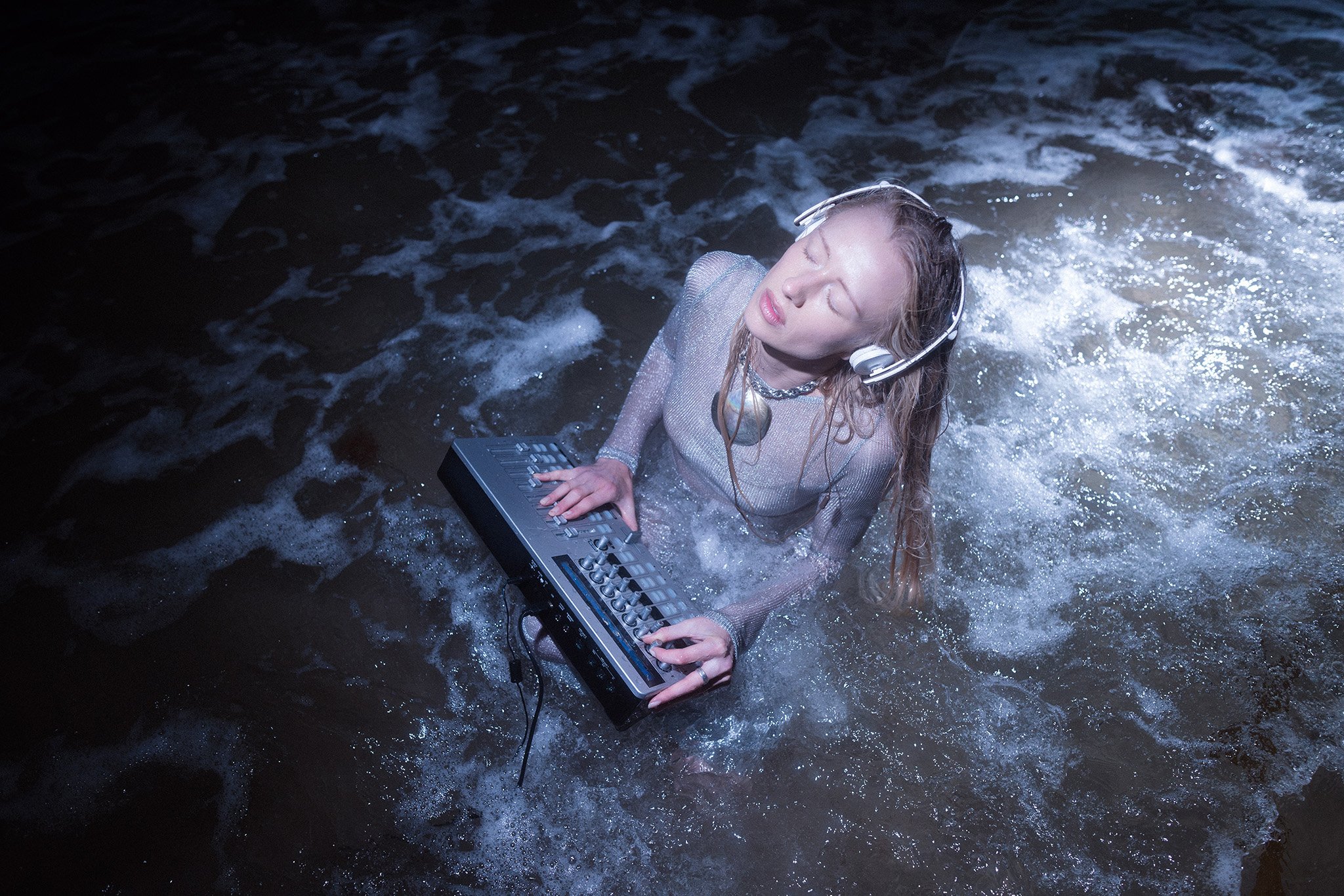
Jessie Marcella grew up hearing John Tavener’s choral music alongside whatever electronic music her dad had found. Free parties later introduced her to jungle and drum and bass, while she was discovering composers like Ólafur Arnalds and Nils Frahm. Those interests meet on ‘Aventurine’, which began with Marcella filming herself writing string parts on a camera she’d got for her birthday. By the time she took the track into the studio with Bicep, she’d already written much of it, including a lead synth line played on a borrowed Moog.
For those unfamiliar with your music, can you tell us who you are, where you’re from and about the music you make?
I’m Jessie Marcella, a producer and composer based in Leeds. I make music that moves between cinematic, ambient-leaning pieces and high-energy dance music. I’m drawn to music that has a certain energy to it, regardless of genre. All Feeling, No Theory best describes my approach. Emotion over logic, instinct over intellect.
Your work brings together electronic production and orchestral sounds. Were those interests there from the beginning, or did one lead you towards the other?
Honestly, as far back as I can remember, I’ve always listened to both. I grew up in a household where you’d hear, like, choral pieces by John Tavener or something by Sigur Rós, but the next thing playing would be some new electronic music my dad had found.
During my teenage years I got really into electronic artists like Jamie xx, Burial and Crystal Castles, and I was also going to a lot of free parties, which introduced me to jungle, drum and bass and that whole world. At the same time, I was discovering composers like Ólafur Arnalds and Nils Frahm. So I think my sound is really just a combination of all those influences.
You’ve described the ocean as a reminder of your own smallness, and found something freeing in that. Was there a particular place or experience that sparked ‘Aventurine’?
There wasn’t one particular experience that kickstarted the idea. My music doesn’t usually come from a specific place or moment. I tend to just write and produce quite freely, without thinking too much about what I’m trying to create. Once something starts to take shape and has a bit of a structure, I’ll begin to envision what it was that I was trying to express.
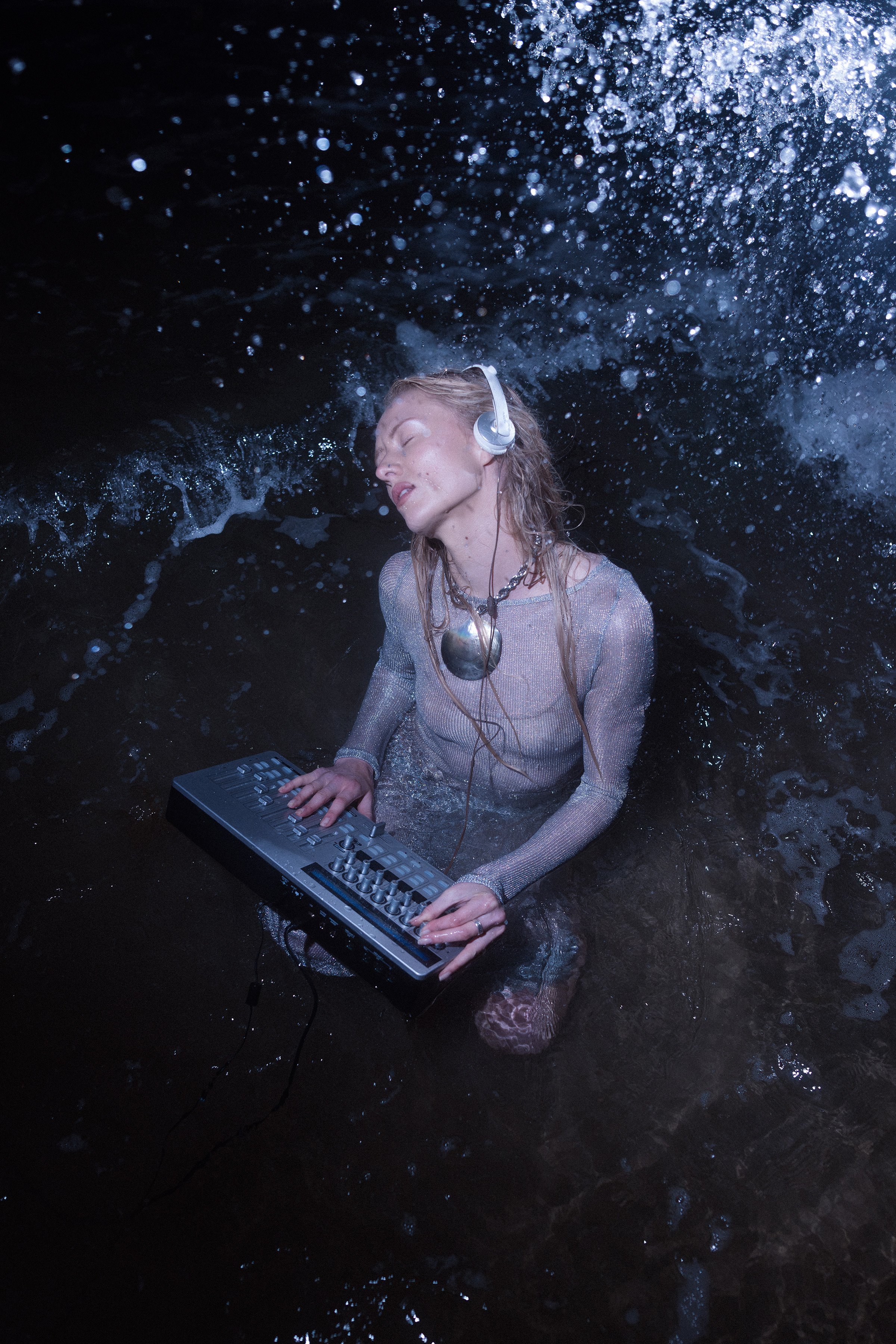
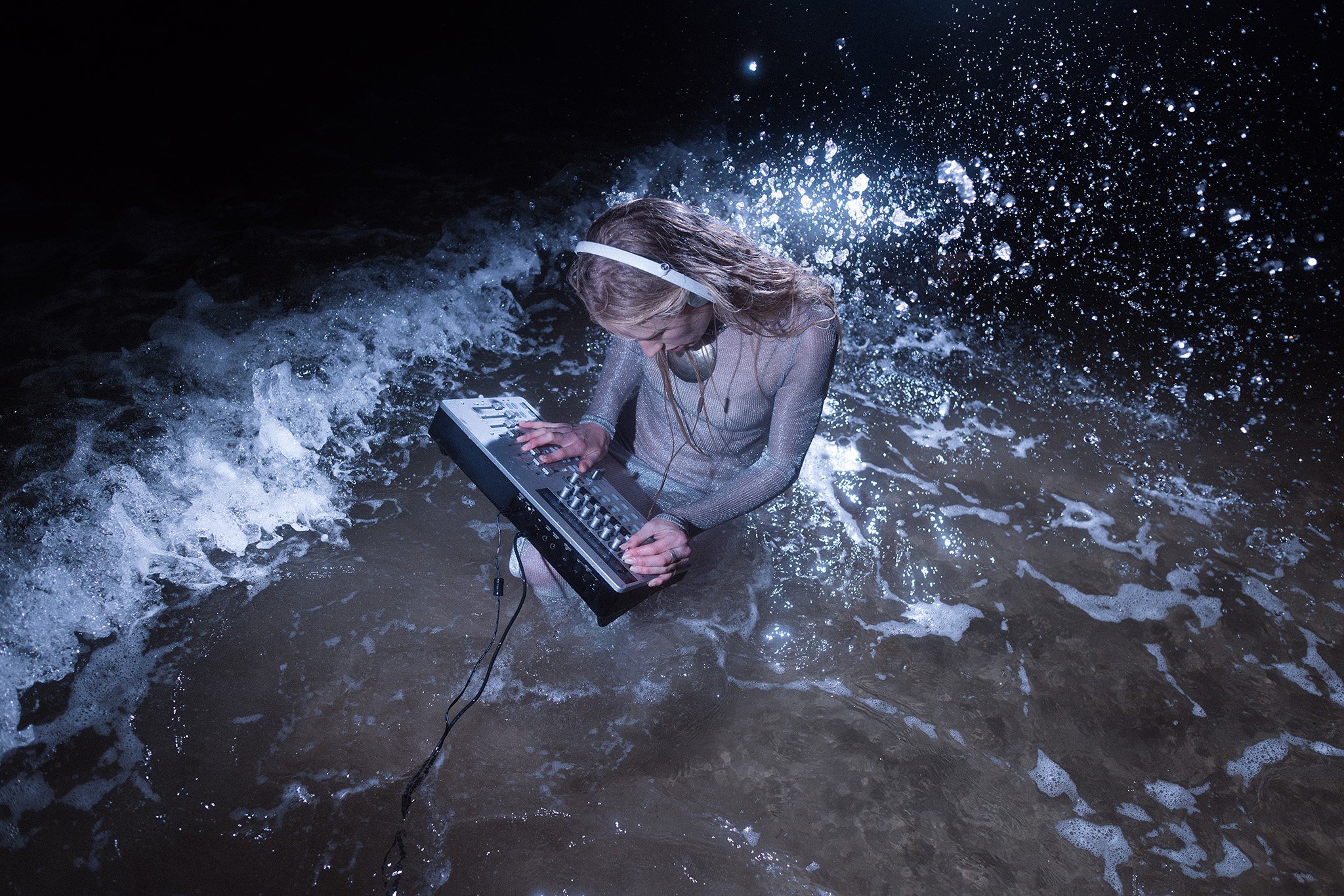
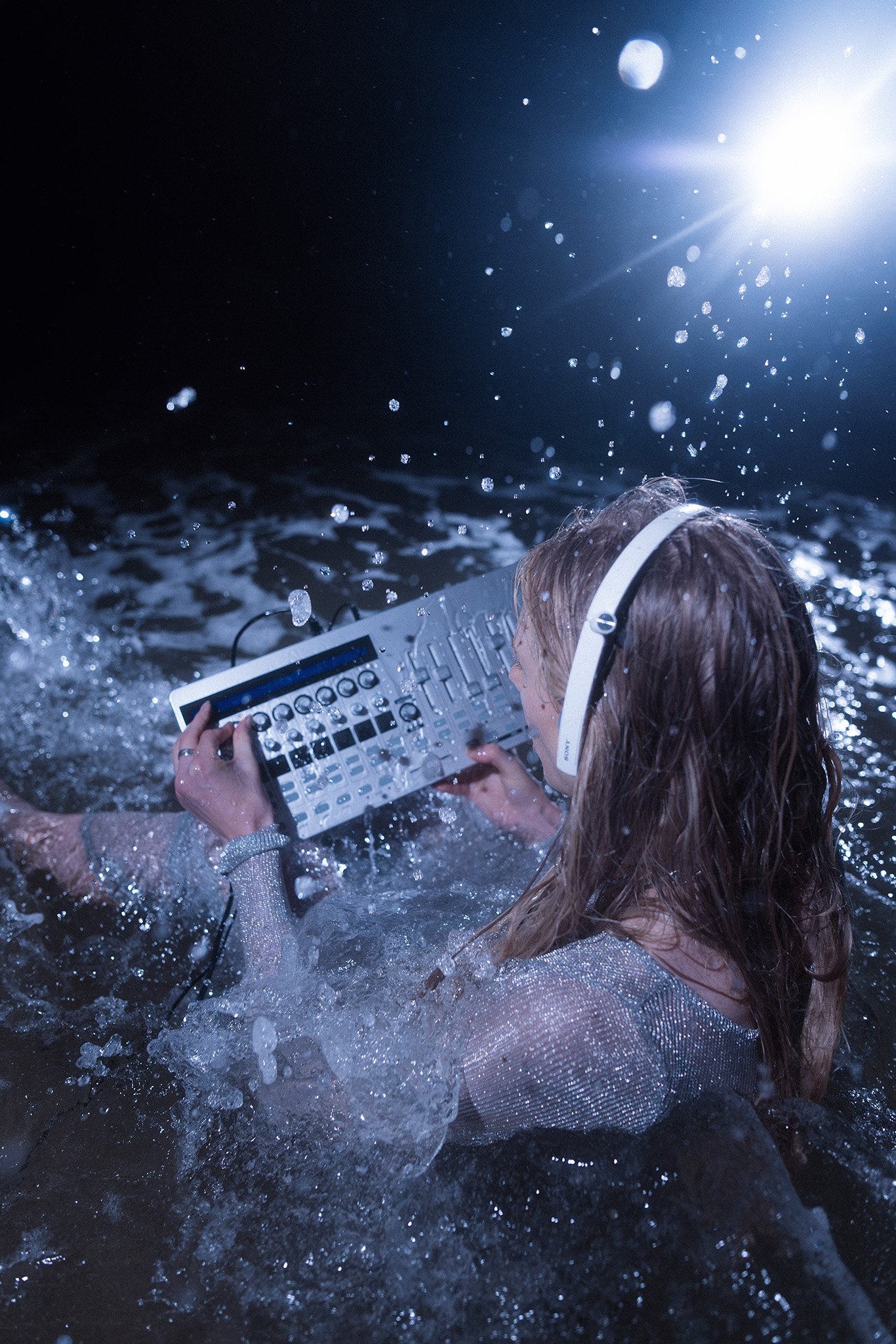
With ‘Aventurine’, I think the imagery of huge crashing waves came quite naturally. It’s less about a particular place and more about a feeling. The ocean is one of those things that makes you feel so incredibly small, and I find that really comforting. I’m at my most content and inspired when I’m aware that I’m part of something so much bigger than myself.
There’s so much about the universe that we don’t understand, and I think we’d be quite ignorant to assume that we do. Rather than finding that frightening, I find it kind of freeing. It’s a feeling I experience a lot in nature, and I think that naturally found its way into the track.
When you’re working from something visual or a feeling, where do you actually begin in the studio? What was the first part of this track to take shape?
This track honestly had about a million different versions. It actually started out as a session called ‘Handy-cam Strings’. I remember using the new camera I got for my birthday to film myself writing some different string parts, so that was where the original session began.
As things developed, I borrowed a friend’s Moog Mother-32 and wrote the lead synth line over the top of another part of the track. I became completely obsessed with it, and it slowly started growing into its own thing.
I never really sit down with a plan of what I want to make that day. I think that’s probably the most limiting way for me to work. I need to feel completely free to experiment. I’ll just play around with sounds and ideas until something appears that I want to start shaping. Sometimes it turns into something, sometimes it doesn’t, but that’s always been the process.
You brought ‘Aventurine’ to your session with Bicep. What do you remember about walking into that room, and how did you get past the introductions and start making something together?
The session actually came about through winning the Producer Award with Youth Music. As part of the prize, I could either choose a load of studio equipment or spend a session with one of my favourite producers, so obviously I chose the session!
I’d already written quite a lot of ‘Aventurine’ by that point, so I took the track in and we spent time re-recording some of the parts through their studio equipment. They had so much amazing gear to play with, and it gave the track some extra warmth and texture. We also experimented with a few new ideas along the way.
It was a really lovely experience, especially because I look up to them so much. It was quite surreal to be in a room making music with people whose work I’ve admired for years.
Was there anything about the way Andy and Matt worked that surprised you, or a tip from that session that you still use now?
I think the biggest thing it gave me was confidence in working with other people. Before that, I’d never really collaborated or spent much time in a studio with other producers. A lot of what I do is very solitary, and actually, I really enjoy working that way because I feel completely free to experiment without worrying about anyone else.
But the session made me realise that working with other people doesn’t have to compromise that freedom. Everyone’s essentially in the same boat, and there’s something really nice about experimenting together and bouncing ideas around.
The other thing that really stuck with me was just how lovely they were. Despite being artists I’ve looked up to for so long, they were so down to earth and genuinely sound. I think that goes a long way in this industry. You can make incredible music, but being a nice person and treating people well is just as important.
There’s been some distance between that session and the release. How much did the track change along the way, and what finally made it feel finished?
The track definitely evolved quite a lot over time, and it went through so many different versions. But interestingly, I’ve actually had it finished for quite a while. The delay was less about trying to get the track right and more about finding the right moment and the right project around it to release it.
There was always an understanding that it would come out eventually, but it was a case of waiting until the timing felt right. I’ve written so much music since finishing it, including the 1111 EP, so in a way it’s quite strange releasing something now that belongs to an earlier period of my writing.
But I’m really happy it’s finally coming out. I’ve been wanting people to hear it for such a long time, so it feels good to finally let it go.
With those big builds and drops, how do you judge when to keep holding something back and when to let everything hit? Is that something you work out instinctively or spend ages adjusting?
I’d say it’s mostly instinctive, although with ‘Aventurine’, one of the hardest things was actually making the drop live up to the build. The build has this really euphoric, rising feeling to it, and I wanted the drop to feel absolutely huge when it finally arrived. It took quite a long time to get that moment feeling right.
Generally, though, I’m quite instinctive when it comes to arrangement. I’ve always had a strong sense of when things should come in and out, and I tend to just follow that feeling rather than overthink it.
You could probably argue that at certain points, especially when mixing, there’s too much going on, haha, but that’s always been part of how I like to write. I love layered textures, movement and things constantly evolving, so it’s just a natural part of my sound.
Tim Reaper has taken ‘Aventurine’ into different territory with his remix. What made you want to hear his take on it, and what caught your ear when he sent it back?
I absolutely love the Tim Reaper remix. It’s got such a proper groove to it, and it’s almost cheekier and happier in energy, which I really love because that’s not necessarily an energy I bring to my own music very often.
He’s added this really earworm synth line, alongside a really bouncy bassline, and obviously his drums are so distinctive. There’s such a lovely rolling groove to the whole thing.
I didn’t have a particular direction in mind for him. I’ve been a fan of his for such a long time, so I was more than happy to let him do his thing. It was a total honour to have him remix the track. We actually got to play it at ADE at the launch party, which was really special, and it sounded amazing. It’s such a fun version!
What has being based in Leeds meant for your music? Are there particular nights, venues or people who have helped shape what you do?
I absolutely love Leeds. I’d say it’s only been more recently that I’ve started scratching beneath the surface of the electronic music scene here, mainly because I’ve always been quite reclusive in terms of how I like to work and how much time I spend in the studio.
I came to university here, and after graduating I got involved with an organisation called Music:Leeds, who run an amazing programme called Launchpad+. That was a real catalyst for everything at the beginning of my career. The music industry can feel like quite a maze when you’re starting out, but they gave me so many opportunities and helped me find my feet. I’m super grateful to them.
There are also some really great nights and communities here. It’s been heartbreaking seeing some of my favourite venues, like Wire and Old Red Bus Station, close, but there are new spaces opening up and I feel positive about the scene. There’s such a lovely community bubbling away, with amazing nights, record shops and people doing really interesting things.
We hear a debut album is taking shape. What are you enjoying being able to explore across a full record, and where does ‘Aventurine’ sit within that?
‘Aventurine’ is actually the lead single from the album, which is really exciting. I’d say the album is a bit of an expansion of my sound and explores lots of the different energies that exist within my music.
It’s definitely not a straightforward dance record. It’s a very electronic project, but it moves across different moods, textures and feelings. It allowed me to explore those different sides of my writing without feeling like everything needs to fit into one particular sound or genre.
‘Aventurine’ feels like a really good introduction to that world. It captures quite a lot of what the project is about, both sonically and emotionally.
What do you love right now?
Surfing!
What do you hate right now?
AI music.
What album are you still listening to from when you were younger, and why is it still important to you?
Burial’s Untrue. This may be an obvious answer, but it’s completely timeless and so influential. Such an incredible record.
When someone hears your music for the first time, what do you hope sticks with them?
I think that’s really up to them. I hope it helps people to feel something without necessarily having to think too much about it.