
Start Listening To: Maria Mihailik
Maria Mihailik's music is a raw exploration of identity, vulnerability, and the delicate dance of growing up.
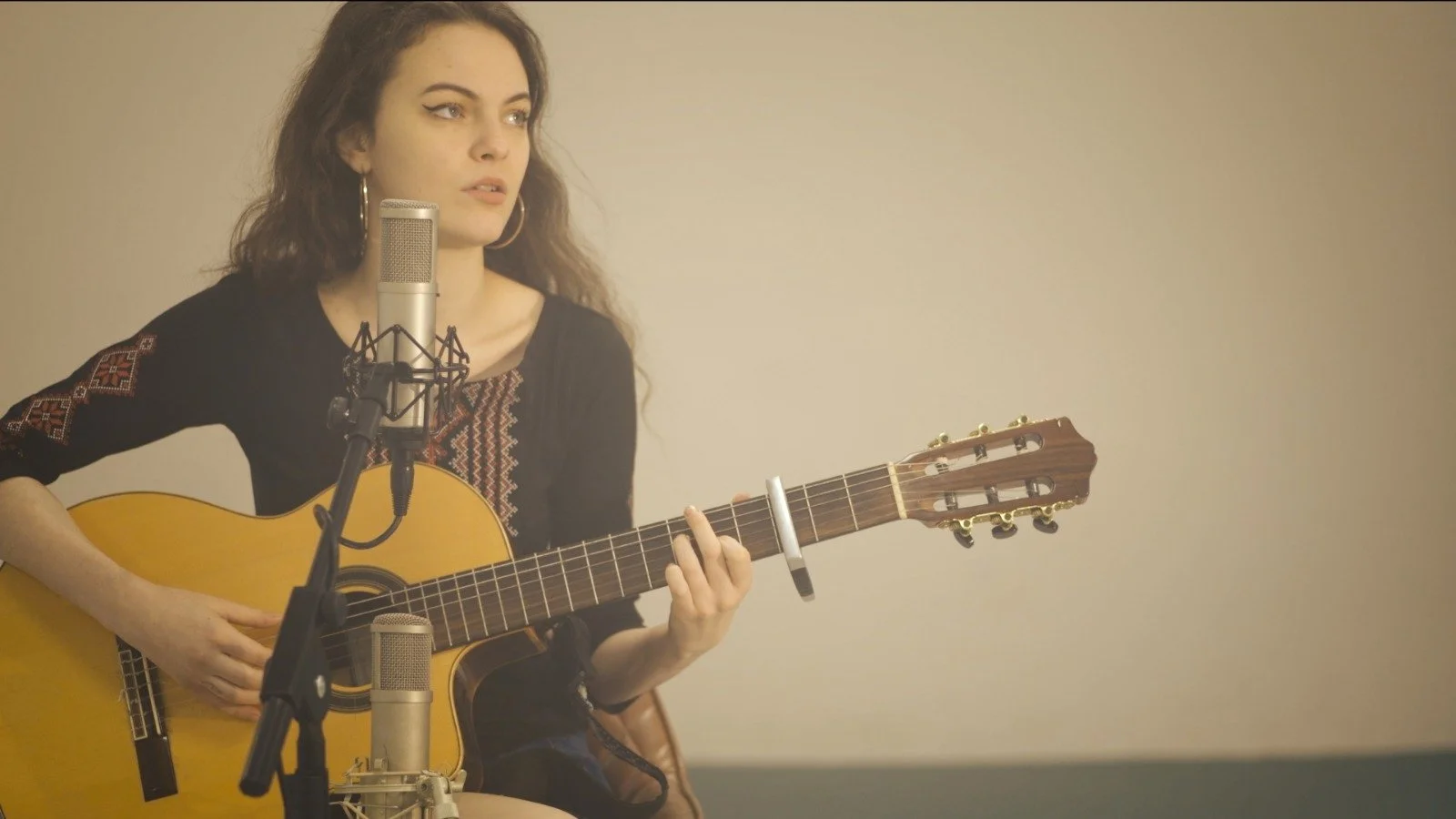
Born in Kyiv and now based in South East London, Maria Mihailik makes music that feels both deeply personal and quietly expansive. Rooted in folk but shaped by everything from Paul Simon to the emotional push and pull of growing up, her self-titled debut captures a moment of figuring things out in real time, where vulnerability, identity and instinct all sit side by side.
For those unfamiliar with your music, can you tell us who you are, where you’re from and about the music you make?
My name is Maria, I was born in Kyiv and grew up in South East London where I'm living at the moment in a flat in Deptford with my friends.
When I was in music school at sixteen I got completely obsessed with Paul Simon's early music, it was the first time I really fell in love with songwriting like that (and I think it was probably the perfect kind of angsty for me at the time), which eventually led me to fall in love with folk music as a way of storytelling.
Since then, it's a world that I've just been completely immersed in and is a big part of my sound, as well as whatever else I'm feeling connected to in the moment and anything I feel I have to say or express that feels true in some way.
Your self-titled album feels very personal, what made this the right moment to put something like this out under your own name?
I began writing for this project during a sort of coming of age time in my life where I was discovering who I can be and what I want, so I kind of had a bottomless well of things I wanted to explore and capture.
I think it was the first time I felt really excited about something I was creating, like it was really coming together. During its formation, going to the studio and recording it felt like an almost magical experience where I felt these parts of myself becoming solidified.
Even though it's all very personal in a way that almost feels uncomfortable at times, it's less of a diary entry and more of an exploration of different emotions and experiences that belong to more than just my life- it feels like something from within me that now lives outside of me that I want people to see and hear.
The songs feel very stripped back and exposed, was that always the intention or did it emerge through the recording process?
When I think of the records that feel the most special to me, a lot of them feel really vulnerable and intimate because of just how stripped back they are, so when I write on my nylon string acoustic guitar, I often don't have any other instrumental additions to the songs in mind that would be necessary for it to feel complete to me.
After sending over my demos to him, which were just guitar and vox, my producer Cameron showed me some albums and tracks that had a really subtle, intentional way of enhancing the atmosphere and storytelling of really acoustic stripped back songs with very delicate, almost 'adorning' instrumental parts which I was super keen on (loads of Juni Habel, Linda Perhacs and Adrienne Lenker of course).
He came up with loads of really cool little additions- there are loads of organ and woodwind parts on the project that he's playing himself, and some strings too that we got Alice and Maya in for, who are great- and I initially got a bit overexcited and wanted to keep them all in, but eventually decided to keep them quite subtle and textural.
There’s a strong sense of identity running through the album, what were you trying to understand or work through while writing it?
When I was writing the album, I'd quite recently finished school and had just started to try pursuing music seriously. I'd had a quite hard time growing up (I suppose everyone does) and had spent a large chunk of my life basically just taking it one day at a time- I was a very sensitive, emotional person, sometimes quite emotionally volatile.
With time, I'd begun to understand myself and had started feeling strong in some ways for the first time, whilst still being a very very young woman trying to look out for myself in a big city and feeling very aware of my own fragility.
I've always looked up to women who harness their vulnerability almost as their greatest weapon - I think there's such a strength in honesty and introspection.
So much of this album comes from conversations I've had with the women in my life in which we feel a private mutual recognition of the things that are complicated and difficult about each other- my songwriting is often really naked and vulnerable, but also I think often sharp, biting and ironic.
I have a really great friend called Bea and I reckon most of my thoughts and ideas that I express creatively are born from our conversations about identity, sexuality, power and life. I don't know where I would be without being able to have that in my life. I really hope she enjoys the album and that it feels familiar to her.
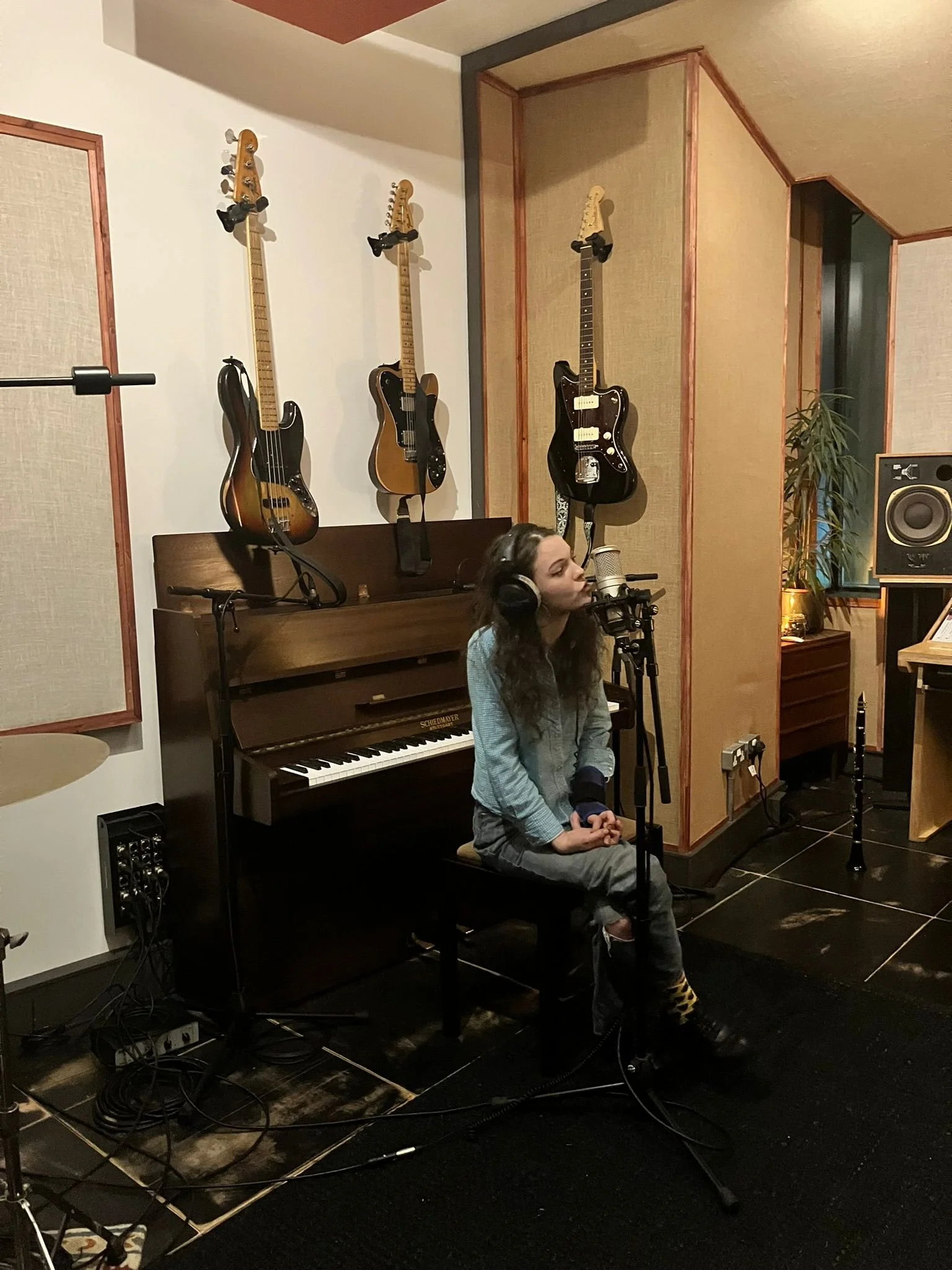
You recorded with Cameron J Niven in a very minimal setting, what did that environment allow you to capture that a bigger setup might not?
While I'd be really interested to work with a bigger team of musicians in the future, I really liked creating the vast majority of the project solely with Cameron, as it allowed for our vision of how it should sound and feel to be quite focused. In a lot of ways, our process was largely trial and error and neither of us came into it knowing exactly what we wanted it to become, but not feeling like we had 'too many chefs to a pot' definitely made the outcome still feel intentional and whole.
It gave us space to bounce off each other and form what I think was a very strong working relationship, because we really got to sit with and explore each other's ideas. I remember for one of the tracks I really wanted this one organ sound I heard in some early version of Bob Dylan's Idiot Wind, so we ended up spending about an hour listening through a bunch of bootleg recordings of the track until we found it, and it was so worth it and was perfect for the song. I don't think I would've been able to do that in a bigger setup. I ended up really trusting his judgment on decisions about what works for the songs, which is rare for me, as they're so personal to me and I'm attached to them.
The analogue warmth really shapes the feel of the record, how important was it for you to keep that sense of space and imperfection?
I absolutely love idiosyncratic and imperfect recordings and when I think of the singer-songwriter music I listen to, it’s almost a part of the package of what makes it feel so raw and profound if the recording is a bit shoddy, like all the real magic is poured into the story being told and the emotion being translated and everything else is just a vessel.
I'm in a lot of trad-folk spaces aswell and I think there's something really primal about making or hearing music in a room where the acoustics are frankly often a bit crap- it belongs to the moment you're in.
The formation of the songs on the album was very intricate and intentional, but I always felt it important that it never felt almost too perfect in a way that made it characterless and soulless. Cameron's studio is really professional and gorgeous, I honestly felt a bit like a fish out of water, so ironically, for there to be any kind of analogue feel, it kind of had to be manufactured, which we did by running the recordings through a tape machine and I think ended up working quite well.
‘Mary’ introduces a very intimate, storytelling style, what draws you to writing in that way?
I think honestly just the music I love, which I probably love because it dwells on discomfort and chaos in a way that transforms it into something bigger than itself, maybe even into some kind of observation or question about the dance of existing. My favourite records allow me to contextualise my life and explore my feelings in a way that isn’t even describable and I think being on the other end of that, creating something out of my own big feelings and private fears and wants kind of allows it to exist in a place without consequence, in a way that it cannot in the context of life. That’s probably why something like Mary has some pretty morbid imagery that is written in a way that’s almost ironic and tongue-in-cheek in its drama- it brings an element of play into it.
A lot of the album feels like it’s about growth and resilience, did those themes come naturally or were you consciously returning to them?
Probably mostly the latter. I was trying to communicate a sense of being stuck between trying to protect parts of oneself and searching for connection and understanding, and the clumsy way those two instincts can coexist. I reckon that finding that balance is a big driving force in growth and change in life, in whatever direction.
While I was writing it, the central narratives and themes that were in the forefront of my mind were different exchanges of power and the curation of myself into something commodifiable and digestible (which can be a poisonous kind of resilience as a means of survival), as well as attempting to belong to myself above everything, sometimes just by being able to observe my instincts and temptations, kind of like taking myself ‘in sickness and in health’.
When you’re writing something so personal, do you think about how it will be received, or do you try to block that out?
I definitely do to some degree, especially when I think about people I know listening. There are also probably people that I’ve written about that I’m afraid might understand what certain lines or songs are about in a way that would be maybe more revealing than I’d like to be.
Ultimately, my philosophy is to never make anything in order to create any kind of impression about myself, or for anyone or anything else- it can be about someone or something, but never dedicated or in service to it. That definitely leads me to feel exposed at times when playing music live or releasing it, but I don’t think I’d be able to create anything worth making if I allowed it to be dishonest.
You’ve already been getting strong reactions to your live shows, how does performing these songs in a room change them for you?
I didn’t use to love playing live, but I’ve learned to absolutely adore it, even though I’m still somewhat shitting myself every time. As cliche as it sounds, it feels like a conversation, especially when I feel like the audience is really listening and if I feel locked in. It feels like bringing the songs alive again and again to play them on a stage. Now I’ve gotten the hang of really being in the moment on stage, the adrenaline is a high in a way that makes the experience almost feel like being in a flow state with the rest of the room at the best of times. With that feeling and space for spontaneity, there’s opportunity for the songs to really become something else.
What do you love right now?
My flatmates and I made a shrine to Princess Diana by our front door that has steadily become more and more garish. It is my pride and joy.
What do you hate right now?
Having a job. But I’d also hate to be unemployed. You can never win. One thing I could never hate is complaining.
Name an album you’re still listening to from when you were younger and why it’s still important to you?
I remember when I first listened to Back to Black by Amy Winehouse when I was about thirteen, it was like it changed my brain chemistry. It’s so raw and devastating and nevertheless, she sounds so in her element and so incredibly, ridiculously cool. She also had that kind of voice where no matter what words she’s singing, you can understand exactly what she’s trying to evoke just from her choices in phrasing and intonation. A lot of her live and acoustic versions of the songs are even better than the recorded versions to me, for that reason.
I’ve listened to it so many times and return to it so often that it often feels like as much of a part of me as any place I’ve ever lived or any person I’ve ever met. It honestly gives me goosebumps to even think about.
It’s completely different sonically from the kind of music I make and yet if I think of what my closest reference is to how I want my music to feel, it might be that album.
For someone hearing your music for the first time through ‘Mary’ or ‘What I Mean’, what would you want them to take away from it?
I think more than anything else, all that I can hope for is that it makes people feel. It’s such a beautiful thing that art can do that to people and all I could ever want is for what I’ve created to be able to achieve that.