
Start Listening To: Noah Hill
After years making music as one fifth of Parcels, Noah Hill steps out alone with Ok ok now, a deeply personal debut shaped by heartbreak, memory and the strange freedom of starting again.
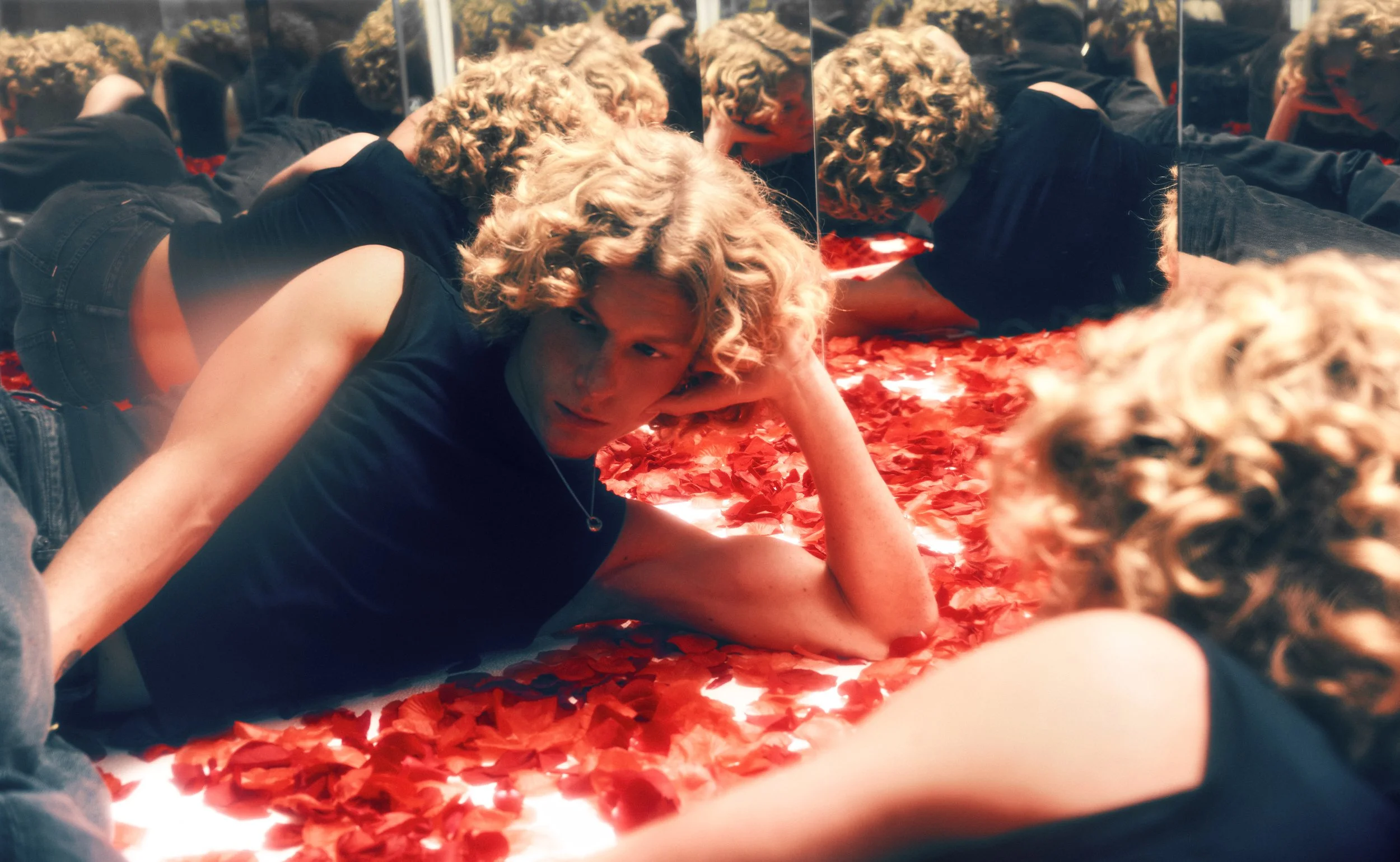
For most of his adult life, Noah Hill has made music as one fifth of Parcels, but his debut solo album finds him somewhere considerably more exposed. Written across almost a decade and eventually taking shape around the end of a relationship, Ok ok now strips away much of the polish and collective precision associated with his band in favour of something intimate, folk-rooted and unmistakably personal. Hill played almost everything himself, as well as mixing and mastering the record, following his own instincts from beginning to end for the first time.
What emerged wasn't initially intended to be a break-up album. Instead, songs written years apart gradually revealed themselves as pieces of the same story, moving non-linearly through falling in love, incompatibility, heartbreak and the strange rush of freedom that follows. We caught up with Hill to discuss making sense of those memories, learning to trust his own creative instincts, the difference between love and compatibility, and why sometimes the clearest thing a relationship can leave behind is the acceptance that there might never be a clear answer.
For those unfamiliar with your music, can you tell us who you are, where you’re from and about the music you make?
I’m Noah Hill, originally from Australia, and I’ve spent most of my adult life making music as one fifth of Parcels. Ok ok now is my debut solo album, although some of the songs have existed in different forms for nearly ten years.
It’s much more stripped-back than the music people probably associate me with. The songwriting is at the centre of it, and there’s more folk music in its DNA, which is actually much closer to what I grew up with. It’s an album about love, the end of a relationship and the strange freedom that comes afterwards. I didn’t plan for it to be about those things, but apparently I had quite a lot to say about them.
You’ve said you didn’t intend to make a break-up album, but eventually realised everything you were writing kept coming back to the same relationship. At what point did you stop fighting that and realise it was the record you needed to make?
This person was such a big part of my life, and everything I seemed to write was about her. I couldn’t really help it. Some loves are like that.
I don’t think I ever fought it exactly. It was always heading in that direction. When you’re heartbroken and writing music, you’re probably going to end up in a fairly predictable place.
It was when the voice notes came into the album that I really decided to lean into what it was about. They summed up the intimacy of it and made it feel very real. Once they were there, it felt pointless trying to disguise what the record was.
Ok ok now moves through the relationship non-linearly, with beginnings, endings and aftermath all sitting alongside one another. How did you decide on the final sequence of the album?
Chronology and musical flow often aren’t the same thing. We’ve tried sequencing things chronologically in the band before as well, without much success.
I tried it with this album, but in the end I just went with what felt right musically. Once In A Lifetime always felt like the start of something to me, like a man walking out into the wilderness. And Like You Do always felt like the end of a really big night, when the sun is starting to come up.
Once I had those two bookends, I just had to fill in the gaps.
‘Sympathise’ dates all the way back to when you were 18, before the relationship at the centre of the album had even begun. Did the meaning of that song change once you placed it within Ok ok now?
It’s interesting because that song is really about my younger self having very little self-love or softness towards myself. But in the context of the relationship, it resonates in a different way too.
I can have pretty critical self-talk and very high expectations of myself and other people. In the end, that’s just not particularly healthy, and it definitely wasn’t productive in the relationship.
I suppose putting the song on the album made me realise that some of the things I was struggling with at 18 were still there years later, just showing up in different forms. That’s definitely something I’m trying to work on.
There’s something very true to memory in the album’s fragmented structure, where good and bad moments can suddenly sit beside each other regardless of when they happened. Was recreating the way we actually remember relationships part of what you wanted the album to do?
Yeah, that was very intentional. When I look back at the relationship, I get these little sunlight flashes and moments. Being down at the beach, on a hill, in a low-lit room. Certain things just poke out and linger more than others.
That seems to be how memory works, and I wanted the album to reflect that. Memory can also be pretty deceiving, especially with relationships that aren’t working. You can romanticise all the best bits and forget the worst ones, or do the complete opposite depending on what kind of day you’re having.
I think the album moves around in that same way.
The record opens with ‘Once In A Lifetime’, written during a period when you were questioning the relationship, but closes with ‘Like You Do’, which takes us back to the excitement of its beginning. Why did you want to end the album by returning to that point?
Like You Do was written early on, but I rewrote the first verse towards the end of making the album. By then it became more about trying to give myself some hope for the future. I was encouraging myself to move on, try new things and stop living so much in the past.
I wanted to leave the album in a positive place, for myself as much as anyone else. I like that it has the feeling of a new day after a pretty chaotic and emotional night. Nothing is necessarily solved, but the sun has come up and you have to keep going.
You played almost everything on Ok ok now, as well as mixing and mastering the record yourself. After years of making music as one fifth of Parcels, what did you discover about yourself by having complete creative control?
I learnt to trust my instincts. There was a lot of indecision about whether I could actually do all of it myself, particularly producing and mixing. Seeing a project all the way through to the end on my own was just not something I’d done before.
Eventually I realised it’s all taste anyway. You just make something the way you want to hear it, and that’s kind of it. There aren’t really any special tricks.
I definitely got tripped up sometimes though. I went a bit insane mixing things a million times and completely losing context. One day you love it, the next day it sounds terrible, then the day after that it’s good again. At some point you have to stop listening to yourself and just make a call.
Some of the album feels caught between heartbreak and the strange euphoria that can come with suddenly being free again. Was that tension something you consciously tried to capture musically, or did it emerge naturally from the songs?
Yeah, that was the relationship in a nutshell really: heartbreaking and freeing at the same time. Constantly coming together and coming apart.
So I don’t think I consciously tried to create that tension. It was just there in the songs because it was there in my life. There’s grief in something ending, but there can also be this huge rush of possibility. Suddenly your life is your own again, which can be both exciting and terrifying.
I think I wanted the music to be allowed to feel both things without having to decide which one was true. They were both true.
On ‘Love You Now’, you explore the frustrating clarity that only arrives once a relationship is already over. Do you think making this record gave you any of that clarity itself?
Definitely. Although I think making the record also confused me a lot before it gave me any clarity.
Songs are strange because you can write something before you really understand what you’re saying. Then six months later you listen back and realise you were telling yourself exactly what was going on.
There are things I can see very clearly now that I couldn’t see when I was in the relationship. But I also think that’s just what distance does. You’re no longer fighting for something or trying to prove anything, so you can see it for what it actually was.
I don’t think the album gave me some big answer. It probably just helped me accept that I wasn’t going to get one.
You’ve spoken about believing love could transcend the everyday incompatibilities between two people. Has going through this relationship and making Ok ok now changed what you think love actually is?
Yeah, I think so. I probably used to have a more romantic idea that if two people loved each other enough, everything else could somehow be overcome. And I still think there’s something beautiful about believing that.
But love and compatibility aren’t necessarily the same thing. You can really love someone and still not be particularly good at being together. That was quite a difficult thing for me to accept.
I don’t think it’s made me cynical about love. Probably the opposite. I just think I understand now that loving someone isn’t always the same as being able to build a life with them. Sometimes loving someone also means accepting that it isn’t working.
What do you love right now?
Swimming in the ocean. Playing guitar. Being somewhere without my phone. My friends. A really long dinner. The feeling after playing a show when it’s gone well.
I’m also loving music in a pretty uncomplicated way at the moment. I spent so long making this record and thinking about every tiny detail that it’s nice to just put something on and enjoy it without wondering how it was made.
What do you hate right now?
My phone. Or maybe more accurately, my relationship with my phone.
I think we’re all being asked to give far too much of our attention away all the time. Especially as a musician now, there’s this strange expectation that you should constantly be presenting yourself and whatever you’re doing. I find that pretty exhausting.
I’d like to be a little more bored.
Name an album you’re still listening to from when you were younger and why it’s still important to you?
John Martyn’s Solid Air. His music played a lot in my house growing up, and it’s still something I come back to all the time.
When I started learning those songs myself, I think I found something that felt like my own musical language, even though it was also deeply connected to what I’d grown up hearing. There’s something so loose and human about the way he plays and sings. It doesn’t feel overly considered, but there’s so much feeling in it.
I think that idea has stayed with me — that something can be imperfect and relaxed and still completely devastating.
When you played the finished record to the people closest to you, they told you that it “couldn’t be more you”. After spending so much of your career as part of Parcels, what does it mean to release something that feels so completely and recognisably yours?
That was probably the nicest thing anyone could have said about it.
Being in Parcels has shaped almost my entire adult life, and the five of us have made so much music together. When you work like that for so long, you get very used to your ideas being challenged, changed and improved by other people. That’s one of the great things about being in a band.
But I think I needed to know what would happen if I followed my own instincts all the way through without having to compromise or explain them to anyone.
There was something quite scary about that, because if people don’t like it, there’s nowhere to hide. But the opposite is also true. When somebody connects with it, it feels very direct.
I don’t see the solo project as me trying to get away from the band at all. It just gives me somewhere else to put a different part of myself. And hearing the people who know me best say that the record sounds completely like me made me feel like I’d managed to do what I set out to do, even if I didn’t really know what that was when I started.
Photography By: Macami