
Start Listening To: Really Good Time
The Dublin-based band known for their riotous shows has finally put together a record of people-pleasers; lead singer Diolmhain lets us in on their debut album, 'Affirmations'.
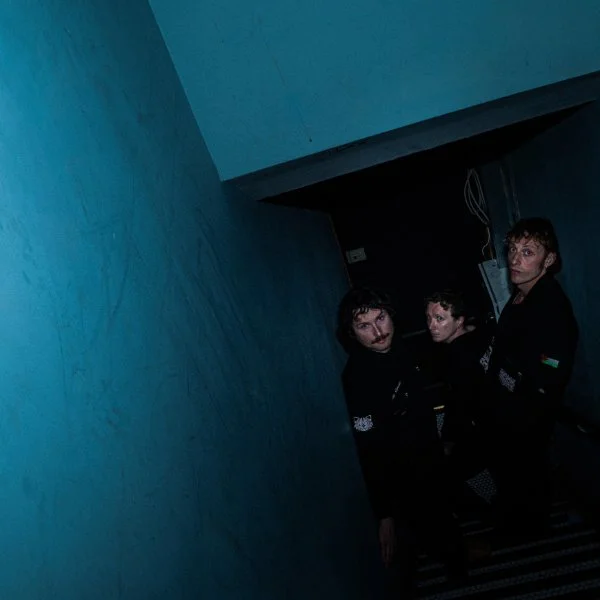
The bone-dry, grayscale drums; the ‘world is ending’ guitar lines pitching a rude fit at the top of the soundscape; the vocals that belong in venues with 360-degree speakers, to make their cries sound just as imminent as the problems they warn us about.
Such are all classics in Really Good Time’s doomsday-rock arsenal - and yet, you would be remiss to let the good-naturedness that floats above their heads float above yours. Despite their broadcasted warnings and skew toward a more chafed interpretation of modern punk, ‘Affirmations’ carries itself with a sense of humor that exceeds the expected wrist-flicking irony - and, yes, is clearly hand-crafted with the hope that you have a really good time in mind.
Known primarily for their relentless live shows and the participants’ post-mosh glow, Really Good Time is releasing their first project, ‘Affirmations’, on August 2nd. For those who have not yet succumbed to the deluge of praise and take pride in being immune to hype until they’ve made up their own damn mind, ‘Affirmations’ will prove that Really Good Time’s sound is undeniably tailored for the stage - but is compelling enough on recording to make people come to the stage in the first place. I chatted with lead vocalist Diolmhain about the upcoming release, their reputation as a live-oriented band, and the search for a massively rich donor to sponsor the actualisation of his dream venue.
You’re consistently described as being a live-oriented band. Would you say you consider how a song will translate live more than how it will sound on recording during the creative process?
Definitely at the start, yes. The band really came out of COVID - we started during the pandemic. The dream of doing a show was a big part of the impetus when we started writing together. I think as we’ve developed and maybe also kind of found who we are as performers more through just gigging a lot in the last few years, it maybe informs our songs in a different way now.
There’s a sort of assuredness that comes from kind of having figured out the live thing. But yeah, there was a real mix on the album that we’ve just done now, which is our first. There was stuff that we kind of were thinking about from that perspective, and then there were a couple of songs, especially on the back end, that we didn’t really fully finish until we were in the studio.
I never like to be fully comfortable on stage. The guitar I have cannot get in tune easily - I’ve just never fixed that and never fully wanted to. I don’t know, there’s something about playing at the edge. And the drummer, John, has a crash cymbal that’s about ten feet above and behind him so that he has to overextend to hit it. It just makes playing have that feeling of being on the edge. When it’s like that, you end up playing things differently than you would when you are sitting in the studio or in the room writing stuff together.
Kind of on that same note - are there any gaps that you want to fill in the live music scene in Dublin?
I don’t feel like what we’re trying to do with live music is necessarily about solving issues because ‘we need to’. There’s just an amazing scene - scenes of all sorts, but certainly of heavy and energetic stuff. And that’s the nice thing about Dublin; it’s small, and the music scene in Ireland is relatively small. It’s really supportive and it feels like people want everyone else to do well.
There have been a lot of venues closing. There are lots of promoters who are doing great multi-band things that fill in, and there are people doing great headline gigs, and everyone tries to support each other on that. But it’d be great to have somewhere, a couple of places. Supersonic in Paris is a great example - it’s like, people just go because that’s where they are going to be, and they trust that the venue’s going to put on great stuff.
We have had places like that in the past. There was an amazing place called Sweeney’s - it’s actually kind of surprising that it matters to stay open for as long as it did. Those are great places for bands that they’re starting out to kind of cut their teeth as well and like, no, there’s going to be a crowd there and stuff. So yeah, it kind of feels like we’re missing out a little bit. But I wouldn’t say that we wouldn’t actually necessarily try to activate change something. Unless someone wants to give us a load of money and then we’ll open a venue.
How would you operate it?
Into the ground, I’d say. Yeah. Pretty quickly.
You mentioned the scene in Dublin as being quite heavy and energetic. Would you disagree, then, with the notion that rock n’ roll is dead?
Yeah, I think I would disagree with that. If we’re gonna talk about it as a movement or something that was a defined scene in the way it would have been in the 20th century, then sure, but so is everything else. Everything is just kind of a slush of something that came before it, right?
But that also goes toward the ability for music to be in a scene that’s wider than a local scene. Nobody defines themselves - or very few people define themselves - as like, ‘I’m the rock guy’, or whatever now. I’m not sure I’ve given it too much thought. It’ll be alive in our bar when it gets funded anyway, though.
So it seems like you and your other bandmates had different musical backgrounds before you came together. Which two members would you say have the most different kind of taste or performance style, and how do we either reconcile with that, or embrace it?
I mean, our taste is a big mashup. The beauty of the band is the fact that we are very different people and still kind of have to meet each other. The way we write is really different. On the two polar ends of the spectrum is me, and Jack, our bass player, is on the other. I’m a bit of an overthinker - it may comes across in some of the lyrics.
‘A bit’ being a slight understatement. The lads would laugh at that. Jack is probably the polar opposite. He’s just immediate - like on ‘Love Song,’ a track that we just put out, which is the first one where he’s singing lead all the way through. If you look at the way it’s lyrics are written versus some of the other tracks, it’s very straight up. He knows exactly what the thing is as soon as he starts doing it - whereas I have to question it and turn it over and hate it, and then love it, and hate it, love it. They’re two great but different approaches.
That translates to a lot of different things. What makes the stuff that we write together interesting is the fact that it comes from having to kind of meld those two things and compromise at every level of what we do - I think anything good that we’ve ever done is is completely a result of the push and pull between that dynamic.
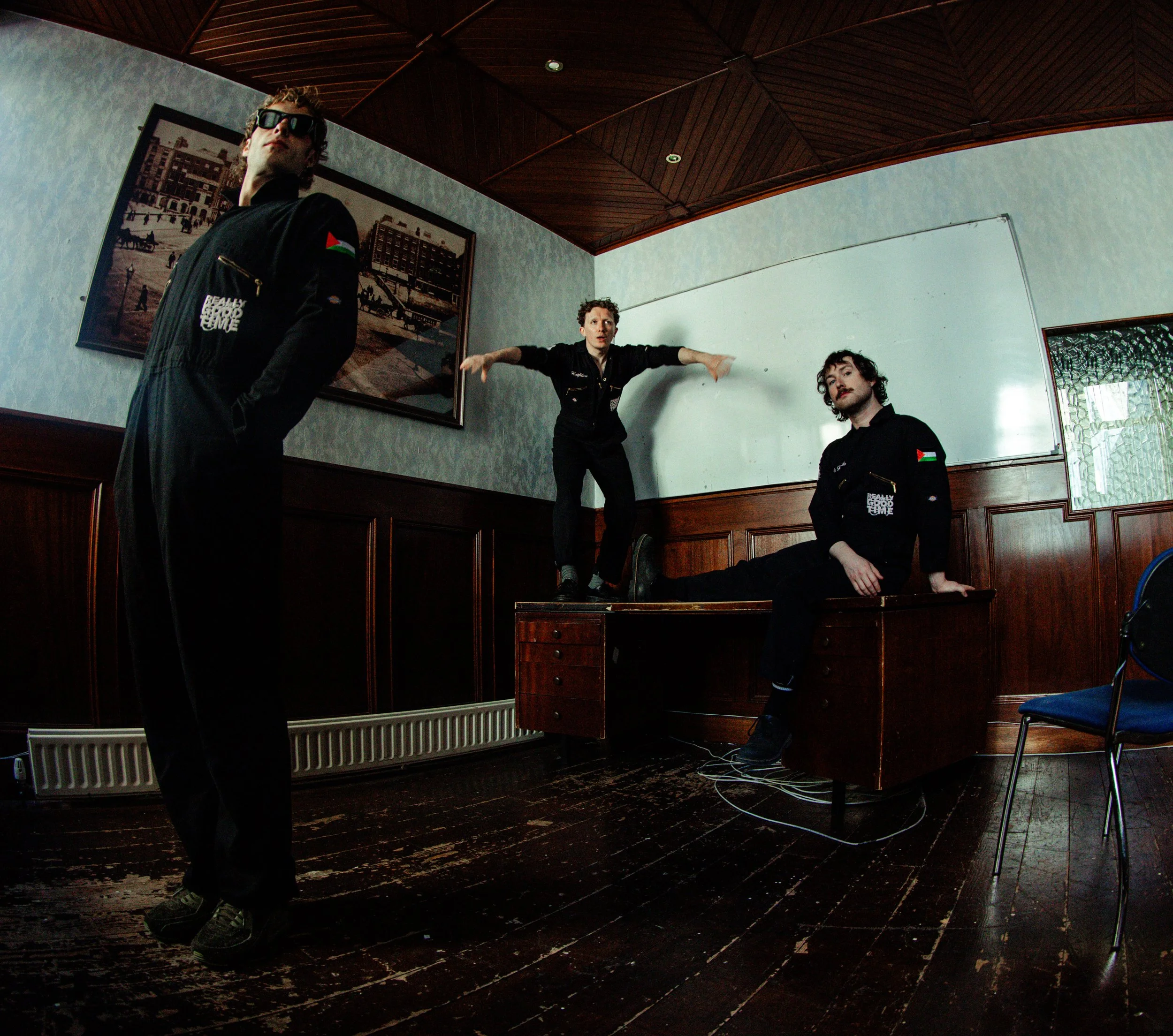
What are you most proud of for pulling off in ‘Affirmations?’, and what was the most difficult part of putting it together?
What I am proud of and what was difficult may be the same thing. We took a long time to even get to the point where we felt like we could do a record; we’d been putting out lots of singles, and kind of figuring out what we actually wanted an album to be.
Once we decided to do it, our dear friend Rian Trench, who produced and recorded the record in his studio, approached us. We’d worked together a few times before, and he basically said, ‘Look, I want to pick a couple of projects this year and really give them a lot of time. Rather than doing set sessions, let’s just commit to making the record and not let time be a constraint.’ So it wasn’t like you’d get to the end of the day and think, ‘Okay, we can’t do this extra thing because the clock’s run out.’
We all have jobs as well, so it’s hard to find a two-week block where we can disappear somewhere between gigging and everything else. That would be a great way to make a record. Hopefully once we get the money to open this venue, and then that takes off...
But yeah, consequently, we ended up making the record over maybe six months, doing a weekend here, a couple of days there, and then having long stretches away from it. That was tough at times because you just want to get in there and do it all. Then there’d be periods where we were really busy gigging, we’d break over Christmas, and you’d start thinking, ‘Wait... is this ever actually going to happen?’ It feels like it’s never going to be finished.
But I also think that ended up being a blessing. We found certain things that I don’t think we would’ve found otherwise, simply because we had all that time to step away from what we’d done. You sit with it for a while, and that ends up informing the decisions you make when you come back to it and continue writing. It really felt like we left no stone unturned, either in terms of the sounds or what the songs themselves could become.
On that note, do you think your best songs tend to come when you get them all down in one swoop and can stay completely immersed in the process? Or does stepping away help you stay objective and keep refining them?
I definitely subscribe to the idea that the things which just flow out of you quickly are usually the best things. You’re in that flow state, and you’re not really questioning anything. But I think any artist or band has to wear two hats. One is completely unthinking and playful - that’s what lets you get into the space where you almost just pluck an idea out of the air. It feels like you’re discovering it rather than constructing it. You’re not overthinking or questioning it. Then you have to be able to take that hat off and put on the other one: ‘Okay, what actually is this?’
Just because something comes out in that real flow state - which is where I think any good idea comes from, really - and you follow it until you’ve gotten as much of it out as you can, doesn’t mean it can’t benefit from stepping away for a while and refining it afterward. They’re two different modes. The danger is trying to do both at once. You haven’t really let the idea come out and breathe yet, and you’re already trimming it and editing it. That’s how you end up endlessly tweaking something for months until you’ve strangled it and it’s not fun anymore.
What’s a sonic risk you took on the record that really paid off?
There were definitely a few. Rian would always be suggesting ideas because I can be very particular about how I want things to sound, and he’s full of amazing ideas. He’d constantly be saying, ‘Let’s try this,’ while they were setting something up, and I’d be like, ‘Ah... I don’t know. That’s not really how I hear it.’
The biggest one was probably the last song on the record, ‘Life Life.’ It started as one of those songs that just came out naturally, but I never really finished the lyrics. We spent over a year batting it around in our studio, trying to figure out what the song actually was or how it should end. It became this sort of Frankenstein creation.
Eventually we went into the studio and basically said, ‘This is going to be the last song on the album. We’ve got these bits and pieces, but we don’t really know how it ends. We’ll just play it, and we trust you enough to tell us what’s working and what isn’t.’ That was terrifying because we were basically admitting we didn’t actually have the song yet.
Rian completely pulled it apart and rebuilt it, especially the ending. It’s about ten minutes long now. It ends with this huge, droning section - the main reference point became the band Swans. I completely destroyed my throat recording it. It’s funny, because before we went into the studio it was supposed to be something much sweeter - almost in that Vertigo-era U2 direction. Then Rian was just like, “No. Strip out all the chord changes. Let’s build these long drones instead.” We recorded all the guitars and bass around one in the morning, and the whole building was shaking. Honestly, it became the centerpiece and capstone of the record.
I guess that was more of a process risk than a sonic one. We genuinely didn’t know whether we had a song before we went in. But, like we were talking about earlier, sometimes the best things happen through collaboration and trusting each other. It just kind of fell into place. Consequently, it’s probably my favorite song on the record because we never had enough time to overthink it.
What are you personally most proud of on Affirmations? Not necessarily how the whole record turned out, but your own contribution as a musician.
I think that song is actually part of the answer because making it meant letting go of this instinct I have that everything has to happen a certain way.
Through that long process, and by trusting the lads more and trusting Rian more, I was able to let go of some of my tendency to overthink and over-control everything, and just let the thing become what it wanted to be. That was a musical lesson, but honestly it was a life lesson, too. On a more individual level, I’m really proud of how the record came together lyrically. I have a terrible habit of only writing about sixty percent of a song before the morning it has to be recorded. That was absolutely the case on this record too - but also, I don’t think you can really see a project’s bigger themes and connections until almost everything is already there.
With this one, I felt those connections really emerged. When little threads start linking different songs together in subtle ways - even ways that maybe nobody else will ever notice - that’s one of the most satisfying feelings I know. It’s like finishing a jigsaw puzzle. Or watching one of those strangely satisfying videos where someone folds slime or something. You get that same little hit of, ‘Ah, there it is.’
I really got that with this record. It felt like, ‘Okay. The whole thing is here now. It makes sense.’ I love records that feel cohesive, and for me those threads are all there. I’m really pleased with that.
Photography by: Sibeal Hanrahan and JASMINE GRACE