
Start Listening To: RY-GUY
RY-GUY talks displacement, rhythm and instinct, tracing the emotional and sonic threads that shape like a river.
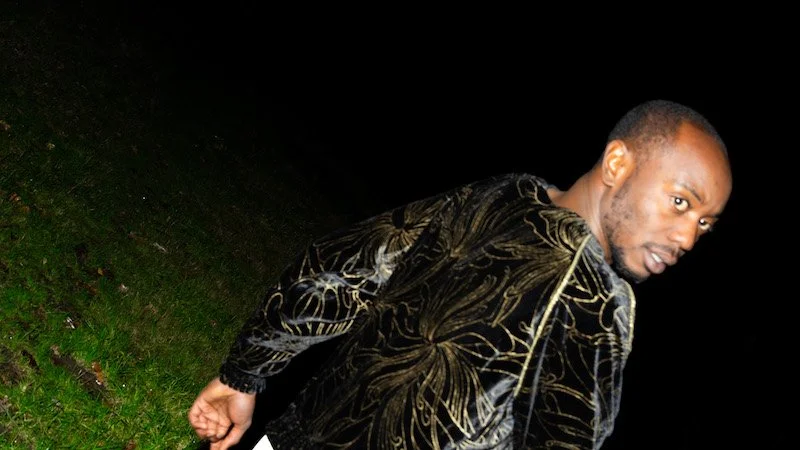
There’s a restless quality to RY-GUY’s music that resists sitting still, pulling from psychedelia, art pop and lived experience in equal measure. On his new EP like a river, those ideas are given room to stretch out, balancing melody with something more unsettled underneath. We caught up with the South London artist to talk about Brixton, djembe rhythms, honesty in songwriting and why sometimes the best songs leave you slightly unsure what just happened.
For those unfamiliar with your music, can you tell us who you are, where you’re from and about the music you make?
I'm RY-GUY, an Art Pop artist from South London. The music I make is rooted in the melodic and experimental side of the 60’s, the more psyched out elements of the 70’s and is dedicated to telling it like it is through my own lens, in my own way.
‘Push Me In The Water’ brings in ideas of displacement and neglect, what drew you to exploring those themes in that track specifically?
Living in Brixton and being surrounded by all of the greatness it birthed was one thing. Witnessing the sheer amount of displacement and homeless crisis in the UK in general is another. I wanted to confront the kind of desensitisation effect I noticed it was slowly having on me and to address that by writing a song about that situation. To put a voice to it, more like I was doing when I first moved to Brixton being involved in activist groups.
You’ve described your new EP like a river as balancing pop sensibility with grit and ambiguity, how do you know when a song has the right amount of each?
I know when a song has enough of each if I can imagine the listener losing themselves in the song, not being sure what quite happened when it ends and yet wheeling it back for more.
The rhythm on that track is influenced by Senegalese djembe patterns, how do those kinds of influences enter your writing process?
I was taking djembe group lessons at the time I wrote ‘Push Me In The Water’. It was something I had tried a couple years prior during a road trip to the Moroccan desert and I knew I had to give it a proper go when I got back to London. The purpose of the drumming having calls and responses to relay messages in the tradition really spoke to me as an instrumentalist that seeks to tell the story through notes and the way you play those specific notes. I got home after a lesson one night and attempted to translate the djembe rhythm I had learnt onto my Roland TR-8S drum machine. The result was this collision of two things that are seemingly incompatible becoming its very own new thing. That’s the chorus beat for ‘Push Me In The Water’.
Your work often references Impressionism and Surrealism, how do those art movements translate into sound and songwriting for you?
When it comes to sound, bearing the concepts of surrealism and impressionism in mind reinforces my approach of how limitlessly and soulfully art should breathe. It’s more of an internal belief than an external influence. It allows me to express myself in an infinite way. Which is probably why a common remark about my music is that each song is really different but there’s still a vivid thread running through it all. Techniques like automatic writing and really personal, imperfect brush strokes in impressionism are practices that I apply in my own music.
There’s a strong sense of heritage running through your music, how do your Guyanese and Barbadian roots shape what you’re making now?
It's largely in the natural mystic of these places. My family, friends, strangers I meet over there, the conversations we have, how dynamically life moves and forms in Guyana especially. It’s more punk than hippy these days because the world is aflame. But for me there are a lot of powerful reminders in this part of the world how chaos and beauty are often linked. It’s perhaps the same reason why I love Miles Davis' 1972 album ‘On The Corner’.
You started out classically trained on piano, how does that foundation still show up in the way you write today?
I listen to classical music every day at the moment. A lot of my favourite artists like Nina Simone, who I also listen to all the time, are highly influenced by classical music. I really enjoy music theory and implement certain composition techniques in my songwriting to shape voicings, conduct performance notes, and guide how sections flow or crash into each other. I love listening to Classical FM, collecting classical records, and going to concerts where possible, but I try not to stare too closely at it.
You’ve worked out of places like Speedy Wunderground and RAK, how did those different studio environments affect the feel of the EP?
I made this EP with Adele Philips who has a real genuine and experienced taste for producing and engineering music. We met through Speedy Wunderground’s Dan Carey, whose studio was already a place I had jammed with a bunch of like minded artists. With that connection already there, switching between studios felt easy. It was exciting because I had never recorded my own music at either of these studios before. Working with Adele was refreshing because we approached the EP collaboratively. Some of the methods were different to how I would usually work, but trusting the process was key as our ethos was aligned. Keeping the rawness, making it direct, and even re-composing parts to create more space were all central to the feel of the EP. You can hear that in the final outcome, it feels like a real step forward.
You’ve called the project an “honest, self-contained artwork”, what does honesty mean to you in the context of this record?
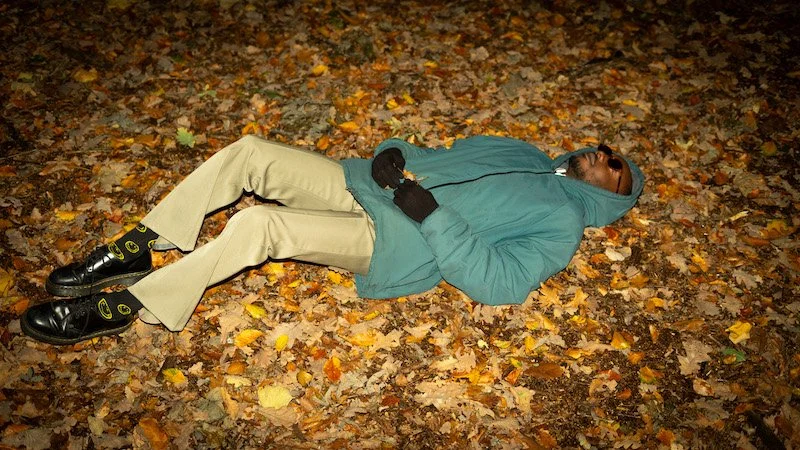
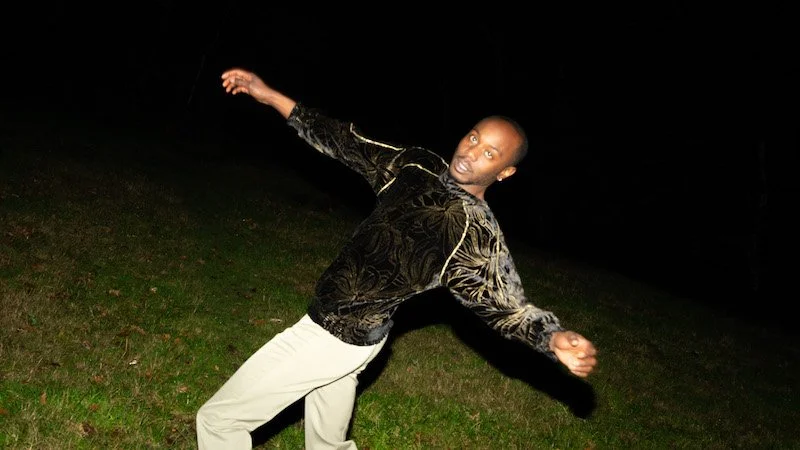
Keeping my storytelling true. Sharing first hand experiences or thoughts. Being conscious about how I put songs into the world that carry personal experiences by talking them through with people I trust. That was a massive part of this record, even the artwork uses my own photographs, in one case literally of the person the song is about. Honesty meant reworking lyrics to make them more focused and genuine, putting the vocals forward in the mix, and trusting my instincts. On ‘Dunja’, which features a slightly buried voice note from Dunja herself, it meant getting permission and then still distorting it so I felt comfortable sharing something that personal. It was about being honest with the listener and with myself throughout the process.
Your lyrics can feel quite abstract while still carrying a clear emotional weight, how do you approach writing in that space?
I often lean towards how things feel rather than using a literal narrative. Other times I’ll go the complete opposite and be very direct, which can end up feeling abstract anyway because life itself is strange.
There’s a clear DIY thread running through everything, from the music to the visuals, how important is it for you to keep control of that world?
Of utmost importance. There’s nothing like bringing depth through what we can or can’t see, hear, wear, or even smell, which is why I burn incense on stage at every show. I’m also working within the budget of being an independent artist, so DIY fits naturally. I’m lucky to work with incredible visual artists like Tina Levy and Tom Walker who share a similar outlook. Working with the right people is key. It’s a delicate balance finding collaborators you can truly connect with, but when it works, it brings everything together.
‘Oil In My Hair’ is positioned as the emotional resolution of the EP, did you always know that was how you wanted the project to end?
When the EP was finished it was clear that it was the only right way for the record to come to a close.
What do you love right now?
That I’m sitting here writing this whilst live streaming four humans travelling at 2,225 mph through space on their way to the Moon in Artemis II.
What do you hate right now?
Trump.
Name an album you’re still listening to from when you were younger and why it’s still important to you?
Al Green – Gets Next To You (1971). If you go to the right areas in London you’ll still hear the oldies playing singles from this one loud enough to remind you how great it is. I still listen to it a lot, especially this past year. It lifts the spirits and the grooves are untouchable.
When someone sits with like a river from start to finish, what do you hope they come away with?
Their new favourite artist.