
Start Listening To: The Homesick
Loose, playful and instinct-led, The Homesick chase rhythm, absurdity and the feeling of something just about to click.
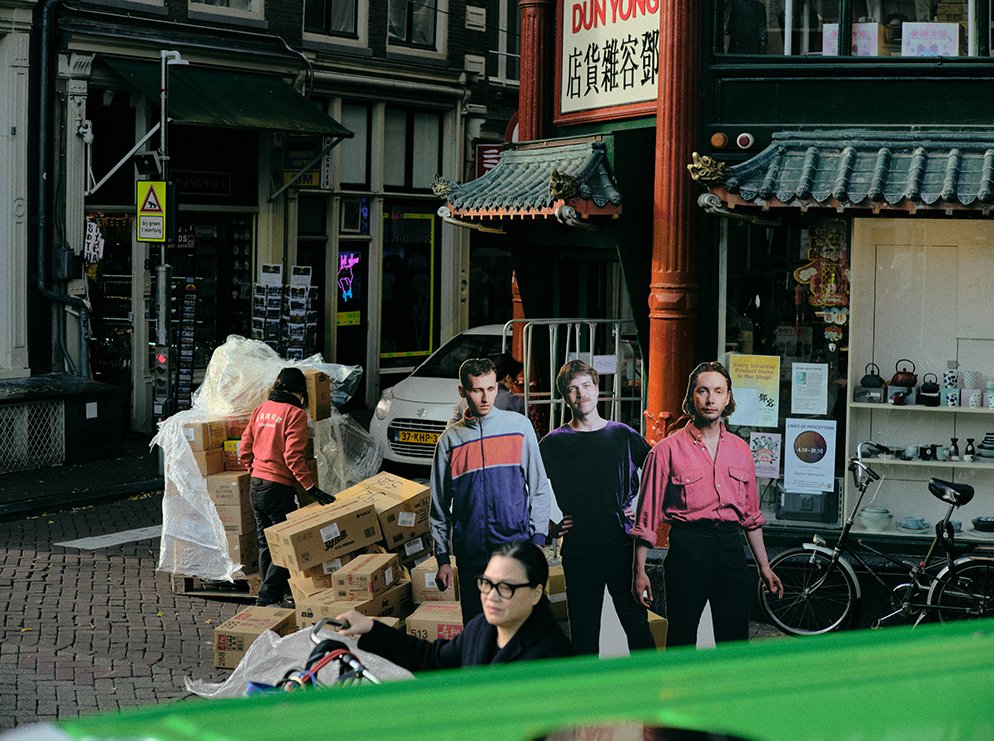
The Homesick have never sounded like a band trying to pin themselves down. Formed between Groningen and Oldenburg, their music drifts through synth-pop, post-punk and club-adjacent rhythms without settling for long, guided more by instinct than definition. That same unpredictability runs through ‘Esperanto’, a track that’s evolved through years of live experimentation, stretching and reshaping itself before landing in recorded form. Here, the band talk about writing on the fly, letting chaos lead the process, and why a bit of absurdity often says more than anything that neatly makes sense.
For those unfamiliar with your music, can you tell us who you are, where you’re from and about the music you make?
We are The Homesick from Groningen (nl) and Oldenburg (de) and we make music in a style that we haven’t (yet) found the perfect genre for, but it’s music that right now floats around in the synth-pop/post-punk realm and that’s oriented towards dance and transcendence.
‘Esperanto’ feels like a particularly kinetic and playful track. What was the starting point for it, and how did it evolve from those early live versions?
Esperanto came about when we were doing two new songs (one of which comes before it), they have the same tempo cus we like to have transitions for the live show. The original (and live) version of Esperanto might be way longer, sometimes we jam it for 10 minutes. The live version is more dark and lightly industrial, the recording feels a bit more compact and has this funny Echo and the Bunnymen style guitar riff at the end.
You mentioned performing the song live with improvised lyrics for over a year. What did that process unlock that you might not have found in a studio-first approach?
Most of our touring since 2015 is playing a lot of unreleased songs without having the lyrics ready, just have a little echo on the voice, see where it goes, write the words when we actually go and record them. Most often certain words or vowel sounds stick and than they naturally become leading for the lyrics later.
The reference to Nostradamus and Lejzer Zamenhof is brilliantly offbeat. What draws you to these kinds of strange historical parallels in your writing?
I didnt write the words for that specific song but I think we both have a writing style that kind of plays with characters and themes that seem unrelated but might connect to the mood, may it be historical figures or religious themes or just random characters we might meet on the street.
There’s a sense of humour running through the concept of ‘Esperanto’. How important is wit or absurdity in your music?
Life is too short to make sense.
Sonically, the track pulls from retrofuturist synth pop through to post-punk and disco. How do you approach blending such a wide palette without it feeling chaotic?
In most of the process we did not really bother with it not being chaotic, especially because most of the music we are making right now mixes together a bunch of different ideas. Mainly the mixing and production is the point where we clean it up and make it a bit less insane.
Signing to Siluh Records marks a new chapter. What made them the right fit for you at this stage?
Bernhard is a nice guy, he enjoys the music, the label is cool, we get to go to Vienna which is a beautiful capital city
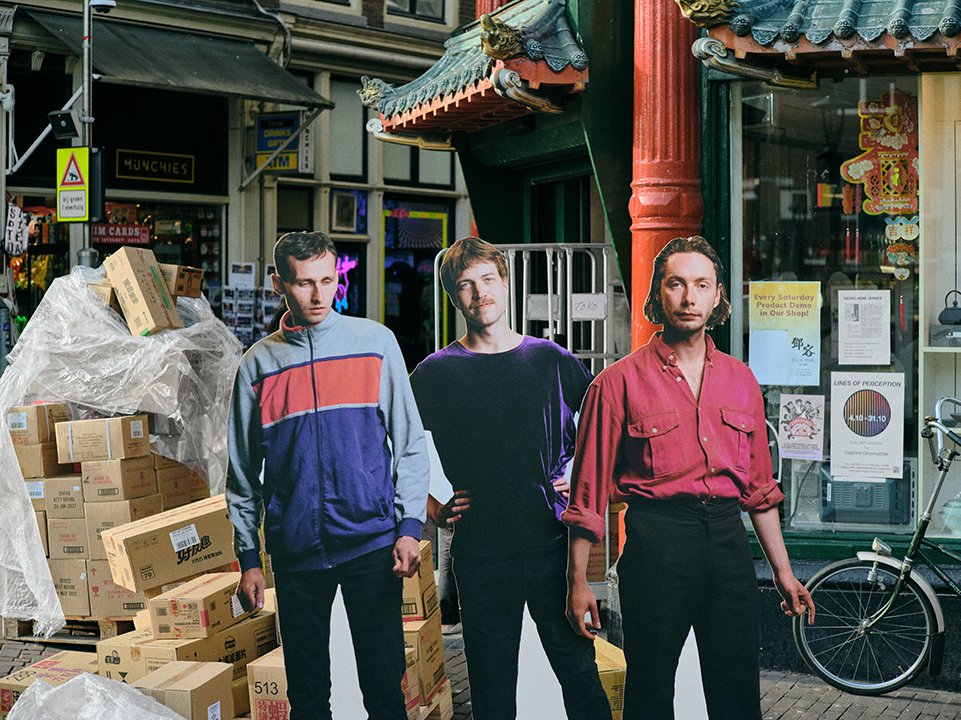
Your work has constantly shifted, from The Big Exercise through to your self-titled record. Do you see reinvention as something intentional, or does it just naturally happen?
It’s both because we like a lot of different styles and instruments and once again life is too short to make the same thing.
There’s been a move towards something more rhythm-driven and club-adjacent on ‘Esperanto’. Is that reflective of where you’re heading next?
Definitely, when we did our last album which is a bit more diffused we started playing these shows where we would do more rhythmic things which made us play more clubby and a bit less psychedelic. Also our best (or most enjoyable) shows would be more in nightclub type of spaces instead of rock venues and those crowds and situations just made us play differently so most of the songs we made with that environment in mind.
You’ve been a band for over a decade now. How has your dynamic changed over time, both creatively and personally?
It’s really different and it never changed.
Being based in Dokkum, away from the typical music hubs, has that shaped your identity or approach in any way?
To keep it really short we just had to figure out a lot of things ourselves and there was no real crowd so we were just having fun making tunes and uploading them to the world wide web.
What do you love right now?
The pleasures of everyday life.
What do you hate right now?
No hate, only love.
Name an album you’re still listening to from when you were younger and why it’s still important to you?
There’s a lot, probably a lot of ‘classics’, Beach Boys, Cocteau Twins, DAF, CAN, too many.
With this new era beginning, what can listeners expect next? Are you building towards a larger body of work?
There’s an album coming after summer and we might work on some new stuff in the meanwhile, it’s never really sure where we go next creatively.