
Start Listening To: Those Holy
Irish-Welsh duo Those Holy drag Celtic tradition into the murk with tape, industrial electronics and a healthy distrust of perfection.
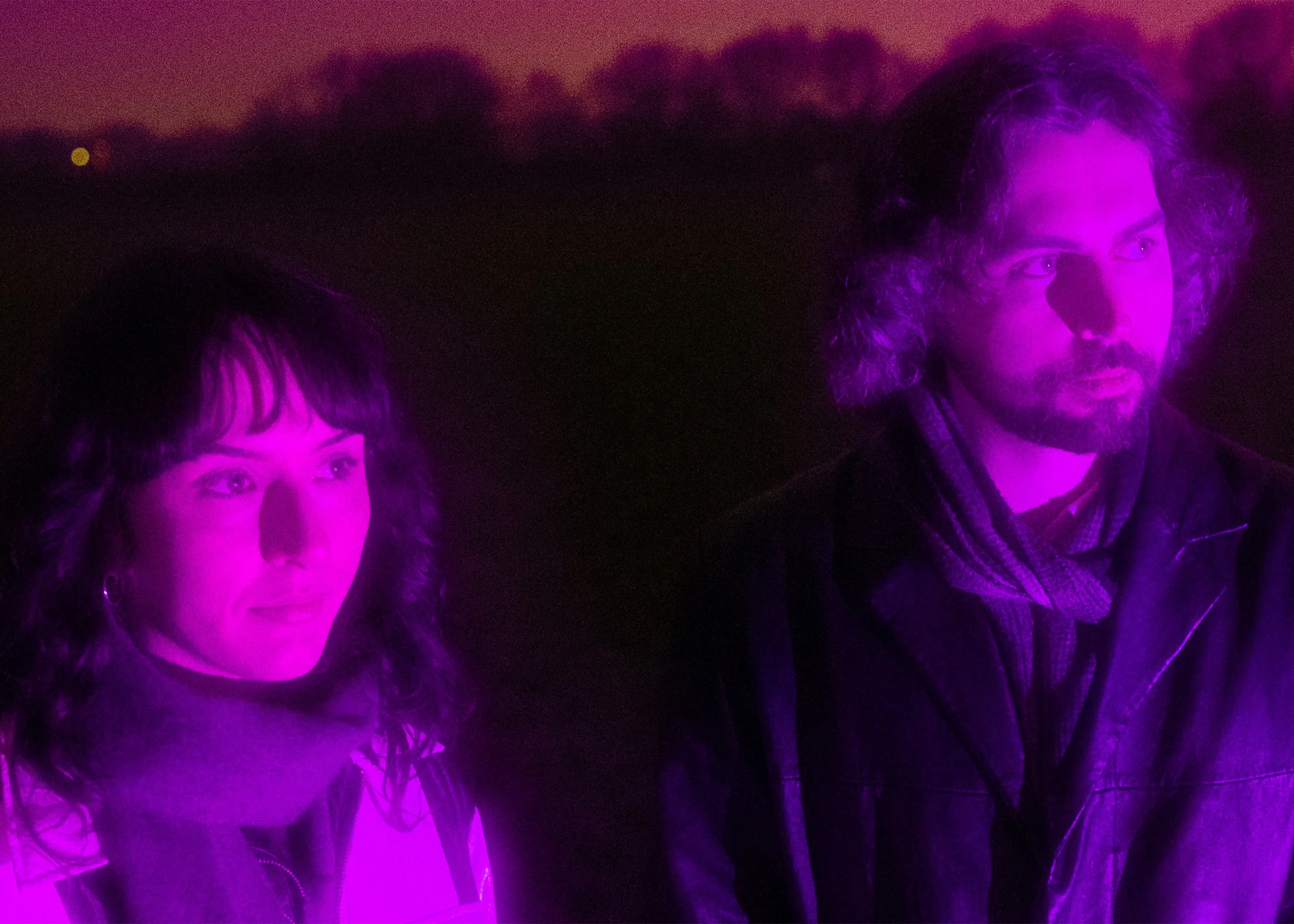
There are uilleann pipes lurking beneath the noise, ancient horns fighting their way through industrial electronics and, somewhere in the middle, the shared musical histories of Ireland and Wales. Those Holy call it Cold Celtic Electronics, a term coined after goth, cold wave, industrial and EBM all failed to quite explain what Chrissy and Lucy were making.
Their debut EP New Skin thrives in that ambiguity. Scrapping an earlier version for sounding too clean, the duo re-recorded the music live to tape, leaving mistakes and audio artefacts intact in pursuit of something murkier, stranger and distinctly human.
We caught up with Those Holy to talk Celtic identity, singing in Welsh, unpredictable hardware, the importance of atmosphere and why sometimes art is better left unexplained.
For those unfamiliar with your music, can you tell us who you are, where you’re from and about the music you make?
Chrissy: We are Those Holy, an electronic duo making what we describe as Cold Celtic Electronics.
Cold Celtic Electronics is such a striking phrase. At what point did you realise those three words perfectly described what you were trying to create?
Chrissy: We had been struggling to find the right term to describe our music - our music takes influence from goth, cold wave, industrial and EBM, but none of these terms seemed to capture what we were doing. Cold Celtic Electronics felt right.
The EP takes ideas people often associate with Celtic music and pulls them into a much darker, more industrial world. What interested you about subverting those expectations instead of embracing them?
Chrissy: We are both very proud of where we come from in Ireland and Wales, and the music cultures of each. We wanted people to know that the term Celtic could be used to describe more sounds or feelings than what people are used to.
You both speak about growing up feeling like outsiders in Newry and rural North Wales. Do you think Those Holy could only have existed because of those experiences?
Lucy: Growing up on the fringes physically and socially has affected our approach to making music. There are no limits for experimentation because we’ve had chance to erode those boundaries.
New Skin explores obsession and losing control. What drew you towards that subject, and why did it feel like the right introduction to the band?
Lucy I’ve always been interested in the powerful animalistic side to humans and how they’re almost completely involuntary and beyond our control. This feels like one of those things.
Lucy, you've said that singing in Welsh adds a texture that English can't quite capture. How do you decide when a lyric belongs in Welsh rather than English?
Lucy: I usually prefer to have Welsh lyrics as a secondary voice in the tracks, at the start or in the back of the mix. I prefer it texturally spoken.
Chrissy, you've described the Celtic influence as something that's "lurking" beneath the surface rather than sitting front and centre. Are there particular sounds or details on the EP that you hope listeners slowly discover over time?
Chrissy: There definitely are, but I wouldn’t want to reveal it all. If you know what you’re listening for it’s clear, part of the fun is the ambiguity - we don’t need to explain art all the time. I was drawn to the harsh sounds that I could think of. Ancient horns and uilleann pipes, amongst other sounds, found their way into the music.
You scrapped an earlier version of the EP because it sounded too clean and re-recorded everything live to tape. Was there a specific moment where you realised perfection was actually getting in the way?
Chrissy: Yes, I hate making music in front of a screen, and we wanted the music to sound like humans were making it, not something pieced together. The original multi-track recordings didn’t sound like how we heard the music, and the thought of spending hours mixing it wasn’t sitting right. When we recorded to tape, mistakes and audio artefacts included, it immediately felt more like us - there was an energy to it.
You've described wanting the record to feel "murky... like a bog." How important is atmosphere to Those Holy compared to traditional songwriting?
Chrissy: Atmosphere always comes first. We both love and listen to a lot of ambient music, and I think that influences our approach a lot. We’re not afraid of introducing extended 'noise-out' sections when we're playing live if it feels right. Atmosphere in music is as important to us as rhythm or melody.
Hardware and unpredictability seem central to the band's identity, particularly with instruments like the Lyra synth. Do you enjoy working with equipment that refuses to behave exactly how you want it to?
Lucy: the unpredictable and ever changing nature of the Lyra-8 and the GR1 is what makes our music sound human despite us using hardware.
There's a growing appetite for darker, more experimental electronic music at the moment. Do you feel part of a wider scene, or does Those Holy deliberately exist in its own world?
Lucy: we are lucky to be a part of a growing and supportive community of dark experimental artists in the UK.
What do you love right now?
Lucy I’ve been loving the recent trip hop revival that seems super exciting right now.
Chrissy; The Fleadh being hosted in a Belfast this year - it was very inspiring.
What do you hate right now?
Lucy polarization feels like it’s affecting every aspect of life right now including boundaries around music and people’s approach to listening to music.
Name an album you’re still listening to from when you were younger and why it’s still important to you?
Chrissy: The Downward Spiral by NIN I first heard when I was 12, and that album is still very important to me - it kickstarted what has become a long journey through industrial music.
When someone hears your music for the first time, what do you hope sticks with them?
Lucy I hopethey’re able to escape and to lose themself in it.
Photography By: Em Lomas