
Start Listening To: The Blood Arm
The Berlin-based four-piece reflect back on their 2004 debut record, ‘Bomb Romantics’, ahead of its reissue onto streaming platforms.
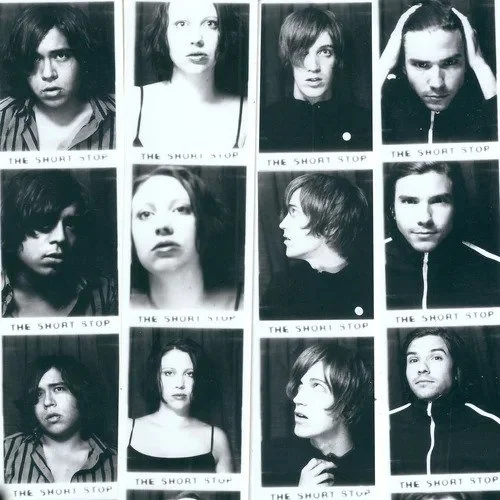
The true ‘throwback factor’ of 2000s guitar rock isn’t in the music itself, but in its harkening of the playground game ‘Kiss, Marry, Kill.’ Regardless of the particular Noughties band, they are all seemingly connected by a nihilistic carnality that, occasionally, is apologized for with a grandiose romantic declaration. Perhaps they dispense the occasional bit of affection just to keep you sweet, and the odd romantic phrase is indeed but a phrase: akin to how, when aware that the object of your enamor and sparsely-defined romantic affair may genuinely dislike you, even the little bursts of effort can feel enormously considerate.
Such is the default dynamic of that era’s relationship with the listener - affronting physicality blotted out by greyspace and drunken slurring, and somehow chesty enough to land as endlessly personal and endearing - and The Blood Arm is no exception. Their trademark stabbing guitar attacks, headache bass, and declarative statements sung too close to the microphone keep you young; but right when they feel detachment impending, hopelessly disarming piano sequences unfurl over their briefly rekindled garage riots. With a plot twist in each song - about one or two per piece, often at the close - they are free to enter another with a clean slate and a dangling carrot.
Though they have long expanded from the success of their seminal record ‘Bomb Romantics’ - even keeping it off of streaming platforms due to ownership difficulties - the four-piece are now redonating the album to the public, with a release onto platforms such as Apple and Spotify. As one of the few bands putting forth a patchwork-indie rock sound in the independent L.A. scene at the time, the successful release earned them a slot supporting Franz Ferdinand, who went on to call The Blood Arm their “favorite band.” Below, they’ve shared their take on the ‘indie sleaze revival’, L.A. vs. New York’s early-2000’s guitar scene, moving to Berlin, and more.
You’re reemerging with a solid discography and a bit of a hiatus during an ‘indie rock revival’ of sorts. Now that the guitar-led sound has reemerged into the mainstream, in what ways does the album still sound distinct to 2004 - and which sound quite contemporary?
We would actually challenge the idea that a guitar-led sound has reemerged in the mainstream the way it existed back then. In 2004, it felt like a strange and unusual phenomenon that guitar music was getting so much airplay on mainstream radio amidst a totally pop-dominated landscape. Nowadays, there may be an indie-rock revival, but the contrast isn’t so extreme, as guitars never really went away (and with streaming being so prevalent now, we don’t have the same monoculture that we did back then in which a few influential radio stations could actually spur a cultural shift).
What makes Bomb Romantics sound distinctly like 2004 is its raw energy - the fact that it was recorded in just two days in an era before digital audio workstations (DAWs) and home recording tech were highly accessible. Back then, you had to go into a professional studio to record anything. Today, musicians spend months over-polishing tracks at home, and many simply wouldn't risk releasing something with that level of unvarnished, raw power. The remastering that we did before this release definitely makes it sound contemporary alongside modern music.
Between all of you, whose styles or tastes clash the most - and how do you either reconcile or embrace that difference?
It really comes down to a classic case of structured training versus self-taught chaos. In the band, there are some of us with a classical training background, while others are completely self-taught. Early on, that meant some of us would make musical choices that felt technically "wrong" to the others, but then ended up being incredibly interesting. And on the other hand, pulling the chaos into more of a structured form made for a really interesting balance.
As a band, we rely on a medium between control and chaos. If any of us did this completely on our own, we would push too far in our respective directions. We also pushed each other away from mere pastiche and imitation toward true originality. When we were younger, these differing approaches caused more clashes, but now we've learned to embrace them as the exact balance that makes the music work.
Have you ever heard ‘Bomb Romantics’ described in a way that surprised you?
Honestly, it’s surprising to hear people call it an "indie classic" or, as a publication recently put it, "Indie Rock's Lost Holy Grail." It’s fantastic praise, and it was a bit of a lost record for a while, which is why we’re bringing it back out. It gives newer listeners a chance to see our progression leading up to our second album, ‘Lie Lover Lie’, which a lot of people mistakenly think was our Debut.
This particular record was born from frustration with feeling trapped in ‘the daily slog’: do you still relate to the material, or do you think the thematic throughline resonates most with early young-20s getting their start?
The "daily slog" is a universal reality, unfortunately. Whether you're a 20-year-old full of testosterone and energy just trying to see the world, or you're older, married with children, and have traveled extensively, economic and structural anxiety hits everyone. In fact, the older you get, the more deeply you might relate to those themes depending on your circumstances.
Listening back now, we appreciate the material even more than we did at the time when we were just rushing to write the next song.
L.A. and Berlin - quite different places. If the album had been made in Berlin, how might it have turned out differently?
It would 100% have had a heavier electronic and techno influence if we had grown up or recorded it there. Berlin has fantastic punk, indie, and metal scenes, but the biggest revelation for us from living here over the last 15 years is electronic music and how it unifies diverse crowds. In a techno club, DJs build moments of community and connection over six to eight hours. With our rock and roll shows, we were trying to build that exact same concentrated feeling of togetherness, but packed tightly into a one-hour live set.
Franz Ferdinand called you their favorite band after opening for one of their shows. Are there any aspects of your sound that you feel can only be fully understood or appreciated live?
We started out strictly as a live band, and that was our greatest strength for a long time. It actually took us a couple of albums to figure out how to properly translate our stage energy into a studio environment.
At the time of this record, we viewed the live show as the true document of the band. We famously never played the same setlist twice, and we left massive windows in the show to stretch songs out, improvise, or make things up on the fly. You simply can't capture that fluid experience on a studio record where everything has to be fixed in place.
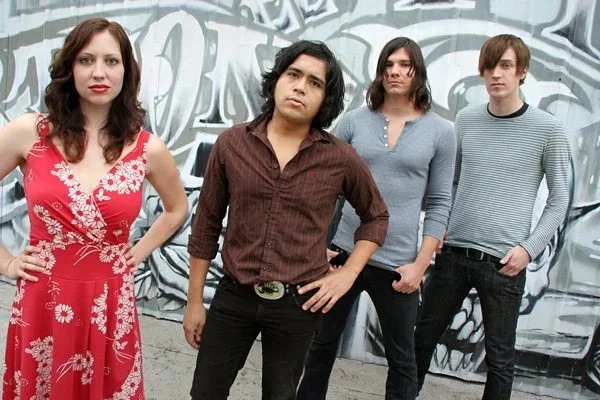
You originated in L.A., but your sound, at the time, was far more adjacent to the early-noughties New York scene. Did you see this slight misalignment as an asset, a setback, or a bit of both?
To be fair, we didn't think we sounded like the definitive New York bands of that era - like The Strokes, Interpol, or Yeah Yeah Yeahs. We were certainly influenced by them, and by bands like The White Stripes, but more in the sense that we loved seeing young people making raw music that could successfully resonate across America and overseas. Musically, we felt isolated from New York, but we used that. There wasn't a standout, singular "L.A. indie band" capturing the zeitgeist at that exact moment, and that’s exactly what we wanted to be.
Expounding upon that; how do you think your sound differed most from the dominating L.A. scene at the time?
Visually and culturally, nobody looked like us in the L.A. indie scene back then. We didn't see other Latin musicians taking it seriously, trying to carve out a career in indie rock, and actively weaving those cultural backgrounds into the music (with the notable exception of Omar
Rodríguez-López and Cedric Bixler-Zavala of At The Drive In and The Mars Volta, who were very influential for us). Doing so helped us stand out and deeply connected us to an incredibly diverse audience, particularly kids from Latino backgrounds who finally saw themselves in the crowd and on stage.
Sonic-wise, our secret weapon was the driving, dominant piano. No other guitar bands around us were doing that. The piano made it much easier to pull in chord progressions and riffs drawn from Latin jazz and salsa, which gave us a distinct edge people latched onto.
You’ve made a good few albums since this record. Listening back, what would you say are the main points of growth you’ve made in your sound and technique since ‘Bomb Romantics’?
The technical leap in our production value is massive. On Bomb Romantics, our approach was essentially to record everything we wrote and release it all immediately, tracking it loud as if we were standing on a stage. Over five albums and a couple of EPs, we learned the art of "cherry-picking" and refining only our best songs.
We also learned how to write in quiet, nuanced spaces rather than just trying to play over each other in a loud room to be heard. Later records allowed for a lot more distance, space, and digital collaboration. Moving to Berlin, cycling through different bassists and drummers, and working with various producers also forced us to evolve. We never made the same album twice, but looking back, the pure urgency of Bomb Romantics remains something special.