
25 Years On, Is This It Still Sounds Like The Future
A quarter of a century after its release, we look back at the album that reignited rock music and changed a generation forever.
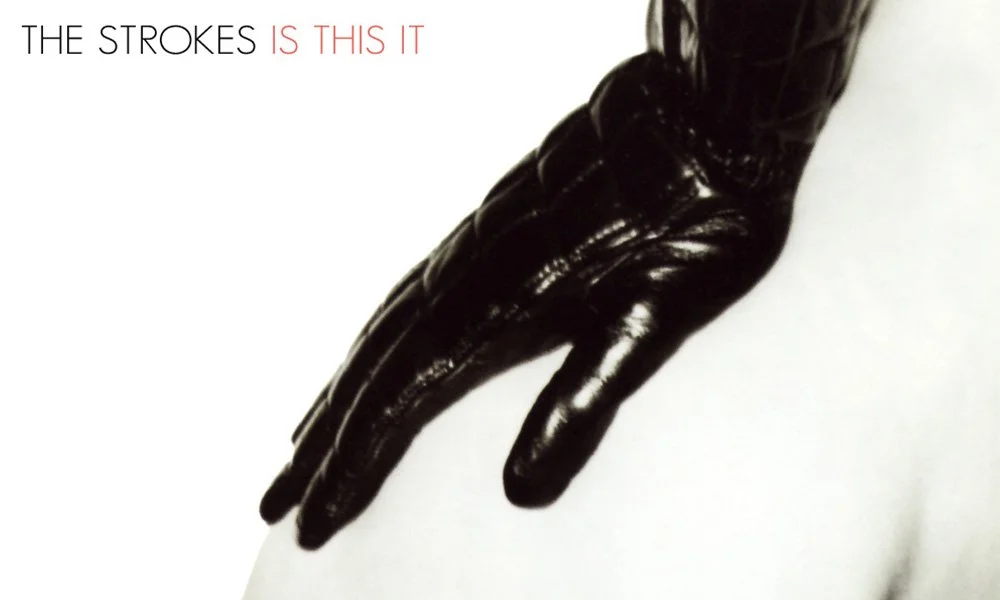
This year marks 25 years since The Strokes released their seminal debut album Is This It. Now regarded as a modern classic, it kickstarted an indie rock revolution and triggered a seismic shift in the direction of popular music.
The band’s only previous release had been The Modern Age EP. Released six months before its successor, these three introductory demo tracks had already ignited a bidding war between a host of record labels keen to sign the New York five-piece. The Strokes eventually signed with Rough Trade in the UK before joining RCA in the US.
When Is This It arrived later that year, nu metal and rapcore, which had dominated the airwaves, suddenly sounded bloated and stale. The overproduced guitars and faux-tortured vocals that had defined an era were losing their grip. In their place came something leaner, sharper, more immediate and considerably better dressed. The garage rock revival had officially begun, and Is This It was leading the charge.
Looking back now, 2001 was a strange year, wasn’t it? Apple launched the iPod alongside iTunes, changing the way many of us listened to music forever. Wikipedia and Microsoft’s Xbox also made their debut, cementing America’s dominance of the early noughties tech boom.
Back in Blighty, however, we seemed to be stuck in some kind of perpetual medieval period as the foot-and-mouth outbreak devastated the countryside and John Prescott famously punched a protester after having an egg thrown at him. No wonder we were all so excited when we first heard The Strokes. To us mere peasants, it was like witnessing electricity for the first time.
The year began with the US invading the UK music scene and ended with the US invading Afghanistan. What had started amid a haze of post-millennium, blurry-eyed optimism ended in tragedy as the world watched the horrors of 9/11 unfold live on television. It was a moment that changed everything.
Terrorist atrocities aside, I thought 2001 was bloody brilliant! Liverpool won a treble (okay, not THE treble, but a treble nonetheless), The Fellowship of the Ring arrived in cinemas, I got a PS2 for Christmas and The Strokes kickstarted a musical revolution. It was also the year I turned eighteen, on the 11th of September no less! That was a strange birthday, but at least nobody forgets it anymore.
Like many people, my first experience of The Strokes was the Seventies-inspired video for “Last Nite”. I was an instant fan, but I was also slightly confused. The video was so convincing that I wasn’t sure whether I was watching a brand-new band or an old one my dad had somehow forgotten to tell me about.
Either way, it proved to be a pivotal moment. After the post-Britpop wilderness years, I had grown increasingly disillusioned with the overproduced and overhyped guitar music that radio and television had been subjecting me to. The Strokes felt like a welcome reset.
The story behind Is This It is almost as compelling as the album itself. Producer Gordon Raphael had been handing out business cards to bands playing New York’s Luna Lounge, hoping his offer of quick, affordable demos would drum up business for his modest basement studio. Ironically, he was reportedly more interested in the opening act than The Strokes, but they were the only ones who got in touch.
Soon afterwards, Raphael recorded the three-track demo that would provide the blueprint for their sound and send record labels into a frenzy.
Unfortunately for Raphael, his methods weren’t quite as popular with the label as they were with the band. The Strokes were encouraged to swap his basement studio for famed producer Gil Norton, with RCA hoping to transform Raphael’s stripped-back minimalism into something bigger and more commercial. Thankfully, the band weren’t convinced. After recording just three songs with Norton, they walked away, believing the essence of what made The Strokes sound like The Strokes was being lost.
Against the label’s wishes, they returned to Raphael, recording Is This It in less than six weeks. His approach was refreshingly simple, a minimal microphone setup, minimal equipment, minimal overdubs and the band playing together live in the same room. He also found a way to realise Julian Casablancas’ famously cryptic instructions. “Make it sound like we rehearsed, but not too much” and “This track needs its tie loosened” remain two of my favourites.
Raphael’s production also gave Casablancas’ voice its distinctive blown-speaker quality, allowing it to weave effortlessly between Albert Hammond Jr. and Nick Valensi’s interlocking guitars, Fabrizio Moretti’s precise drumming and Nikolai Fraiture’s pulsing bass. It sounded both completely fresh and oddly familiar.
Ironically, RCA reportedly dismissed the finished album as “crappy-sounding and unprofessional”. History, of course, had other ideas. Is This It would become one of the defining records of its generation, proving that rock music didn’t need bigger budgets or bigger choruses. It simply needed better songs.
For a brief moment in 2001, it felt as though The Strokes were the epicentre of cool. The musical pendulum had swung firmly back towards America, and they were soon joined by bands such as Yeah Yeah Yeahs, Black Rebel Motorcycle Club and The White Stripes. Before long, the rest of the world joined in too, with The Libertines, The Hives, Jet and The Vines helping to soundtrack one of the most exciting periods guitar music has enjoyed this century.
The first time I saw The Strokes live was at Leeds Festival, almost a year after Is This It had been released. They had been hastily promoted from a smaller stage to a headline slot following their meteoric rise. The night before, Slipknot, Puddle of Mudd and Incubus had supported a weary-sounding Guns N’ Roses. Twenty-four hours later, The Strokes made that entire era feel obsolete. They weren’t louder or heavier than the bands they had followed. They were simply cooler.
They rode the hype effortlessly, delivering an almost flawless set. I say almost because Jack White joined them on stage at Reading Festival, whereas we got Bob Pollard from Guided by Voices instead. No offence, Bob, but it’s something I’ve never quite forgiven either The Strokes or Jack White for.
Despite occasional hiatuses, The Strokes have remained relevant. Their sound has evolved over the years, as all great bands should. The New Abnormal proved they were still capable of producing career-defining work two decades later, and I’ll happily defend Angles until the day I die. Even so, you’d be hard-pressed to find many people who don’t still return to the raw, effortless brilliance of Is This It.
For me, and many others, the album will always mean something more than that. Whenever I listen, I’m instantly transported back to Temple Newsam Park in Leeds, standing in a rain-soaked field, clutching a warm can of Carling and watching The Strokes at the peak of their powers.
There have been, and there will be, other moments I’ll remember forever. I know there will be. But it’ll never be 2001 again, and I’ll never be eighteen again.