
Thirty years on, the soundtracks to Trainspotting and its sequel offer a window into changing British culture, from the optimism of Cool Britannia to the uncertainty of the Brexit era.
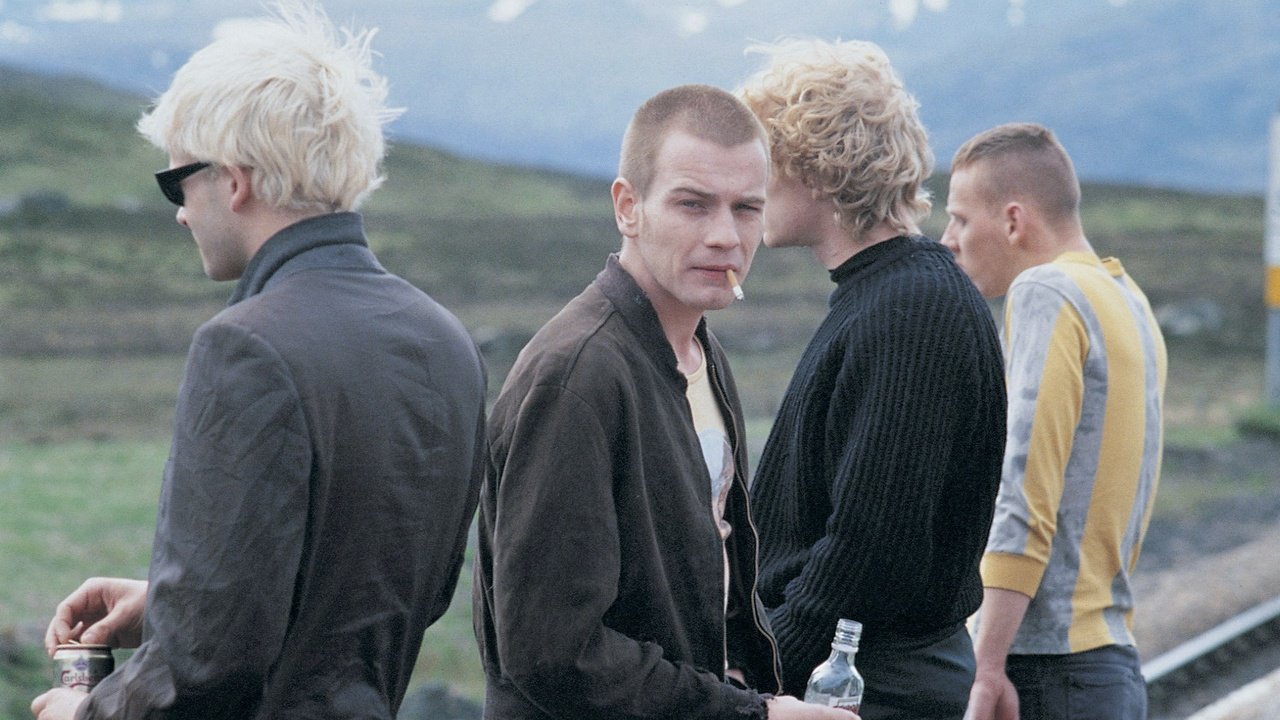
For many people, the word Trainspotting brings a flood of images to mind. There is Renton's 'Choose life' monologue, and the baby crawling across the ceiling to Underworld's 'Dark & Long (Dark Train)'. The film has etched itself into the memory of a generation. Yet one other aspect of Trainspotting is talked about constantly, and is sometimes praised even more than the film itself: the soundtrack.
The 1996 picture brought together emerging and established artists of the day. Britpop was becoming prominent, while techno and jungle were steadily climbing the ladder. The songs were chosen to emulate life in the 1990s as closely as possible, but they also became a time capsule of sorts. They captured the spirit of a country and, in hindsight, served as a warning of worse things to come.
This article goes through the soundtracks of both films, Trainspotting and T2: Trainspotting, paying respect to each. Through the lens of film and sound design theory, it explains why these songs still resonate with audiences today.
The theory: Empathetic and anempathetic music
It is best to get the theory out of the way first, since it may seem confusing to new readers. The soundtrack of the first film resonates with viewers on an emotional level, largely because so many songs play during pivotal moments.
Michel Chion, the French film theorist and composer of musique concrète, discusses this kind of emotional manipulation in his book Audio-Vision: Sound on Screen. He distinguishes two effects that music can have on a viewer. The first is empathetic music, which takes on the rhythm, tone and phrasing of a scene and so participates directly in its feeling. It draws on cultural codes for sadness, happiness and movement, and its name comes from 'empathy', the ability to feel the feelings of others.
The second is anempathetic music. Here, the music shows what Chion calls 'conspicuous indifference to the situation', progressing steadily like a machine while the scene plays out against it. Chion's point is that this contrast does not freeze emotion but intensifies it, by setting it against a cold, cosmic backdrop (Chion 1994).
A second theoretical lens comes from Danijela Kulezic-Wilson, whose work on sound design and aesthetics argues that the relationship between sound and image is a complex one. For her, sound can be a conduit to the layers of meaning in a film. Soundtracks are not background noise but powerful cultural signifiers: they convey themes and immerse us in the world of the story.
Kulezic-Wilson questions the habit of separating music from the other elements of a soundtrack, such as ambient sound and effects. She observes that this separation positions music outside the soundtrack's overall design. The blurring of these categories produces an integrated, cohesive soundscape that engages the audience on several sensory levels. She also writes about the 'musicality' of a soundtrack, in which sound, music and effects merge into a single whole. This invites us to look past the 'habitual divisions between its constitutive elements', divisions she notes were often established out of economic or practical necessity rather than artistic need (Kulezic-Wilson 2020).
The Trainspotting films fit this idea well. In both, music is not layered on top of the action but is a central part of the soundtrack's design, and that is what deepens the viewer's emotional engagement with the story.
Music against the image: 'Lust for Life' and 'Perfect Day'
The first film offers two prime examples of music pulling against the action on screen.
The first is 'Lust for Life' by Iggy Pop. A pounding drumbeat is synchronised with the first shot of Renton and Spud sprinting through the streets of Edinburgh, pursued by store security. Over it, the 'Choose life' monologue begins. The result has become one of the best-known opening sequences in modern cinema. The song is upbeat and drives the energy of the chase, and its title promises an adventurous way of living. The actions on screen show life from a new angle, but a self-destructive one, full of reckless, over-the-top behaviour. Strictly speaking, this is less pure anempathetic music than ironic counterpoint: the rhythm matches the chase, while the song's celebration of life sits uneasily against what we see.
The song also fits because of Iggy Pop's persona as a wild, unrestrained party animal. The carefree attitude, the shoplifting, the partying and the drugs all sit comfortably alongside a song that evokes easygoing days, hopefully similar only in energy to what the lads from Scotland were getting up to.
The second example, 'Perfect Day' by Lou Reed, is used in complete contrast to what is happening on screen. Renton, played by Ewan McGregor, returns once more to Mother Superior, the local heroin supplier played by Peter Mullan, for one last hit. After several failed attempts to quit, which have led him to believe each time that this is the end of his addiction, the dose turns out to be lethal. What follows is a dreamlike sequence that still haunts viewers.
The 'perfect day' Reed sings about arrives for Renton with dire consequences. He sinks into the floor while Mother Superior half-heartedly tries to save him. The point of view keeps returning to Renton, yet we do not simply see through his eyes: we sink into the floor with him. The effect is a feeling of being buried alive while watching life carry on without us, powerless to act. It is frightening, and yet the gentle melody of 'Perfect Day' reassures the viewer that things are not as bad as they seem. Renton is, after all, resuscitated at the hospital. This is the indifference Chion describes: the music carries on calmly while the scene falls apart, and the horror is heightened rather than softened.
Music joining the image: 'Born Slippy (Nuxx)'
On a more positive note, the film's ending is an example of empathetic music, and it already has a life of its own whenever the film is discussed. The reason is the use of the mega-hit 'Born Slippy (Nuxx)' by the electronic duo Underworld. As soon as the opening synths are heard, the viewer is immediately transported back to the 1990s. Director Danny Boyle weaves the track into the ending brilliantly.
In terms of plot, the lads have pulled off a drug deal and come away with a huge sum of money. No matter how ecstatic everyone is, Renton cannot stop turning over everything that led them to this moment. To leave his drug-fuelled past behind, Renton betrays his friends and steals the money. In the middle of the night, he wakes, and those same synths begin to play. As he walks out, he notices that Spud is awake and watching him. The song cuts out and loops its blaring drums, imitating tension and making us wonder what will come next.
Renton then walks along a bridge towards a brighter future. The execution is where the genius lies. Frame after frame, the camera moves closer to Renton as he delivers his monologue, while the song returns to its calmer sounds. He tells us that he is 'cleaning up' and 'moving on', and that he will be 'choosing life'. Through these words, we not only see but also hear the long-awaited change in the main character.
Yet the monologue also circles back to the opening of the film. By choosing life, Renton accepts every choice that life on offer demands. Things may look brighter, but he will become a cog in the machine in one way or another. This theme feeds directly into the legacy the UK built for itself in the 1990s.
The UK in the 1990s: Cool Britannia
To understand the cultural significance of these films, we need to look at the UK of the 1990s. According to Matt Glasby, Cool Britannia was a cultural and political phenomenon of the mid-1990s, marked by national pride and a celebration of British popular culture. It gave the country a new, more optimistic image, in sharp contrast to what it had experienced before.
In general, it was a massive segue away from the bleak years of Margaret Thatcher's government and from the punk scene that had given voice to anger and resentment towards the establishment. The 'New Labour' government, helped by the rise of Britpop, ushered in more hope and joy than the country had known in earlier decades. Cool Britannia represented a break from the austere, reserved culture of the past and celebrated British creativity and identity.
There is an irony here. Trainspotting was released in 1996, at the height of this optimism, but it is set in the grim, working-class Edinburgh of the late 1980s. Its soundtrack mixes the new sounds of the 1990s with older artists such as Iggy Pop and Lou Reed, who are American, and so sits between two Britains: the one that was fading and the one that was celebrating itself. The film is the shadow beside the party.
A line from Diane, a character who appears in both films, captures the shift: 'The world is changing, music is changing, even drugs are changing.' She tells Renton he cannot stay in all day dreaming about heroin and 'Ziggy Pop'. The line is a joke on the surface, but it signals that an era is ending and that the characters will have to move with it.
T2: Trainspotting and a changed country
Fast forward twenty-one years to T2: Trainspotting (2017), and we find a different UK. The optimism of Cool Britannia has given way to a more sombre and reflective mood, shaped by economic uncertainty and the political climate around Brexit. How, then, does the soundtrack reflect these changes?
The first film represented a new and bright future for Britain. The sequel contrasts that optimism and renewed hope with a country that has slid back into what it was before. It also adds themes of maturity, letting go of the past, and nostalgia.
The soundtrack revisits some of the artists from the original, creating a sense of continuity. This reunion of musicians from the 1990s underscores the film's engagement with the lasting legacy of Cool Britannia. This time, however, Britpop is largely absent. The artists who return do so with a twist, and the two main ones are Iggy Pop and Underworld.
'Lust for Life' receives a remix featuring The Prodigy, an electronic act that came to prominence alongside Britpop but outside it. The remix shows the legacy of the first soundtrack, acknowledged by a more modern artist. 'Born Slippy (Nuxx)' gets a total makeover as 'Slow Slippy'. This reimagining expresses longing for what used to be, and it is also a sign of time flying by, with the surroundings changing and maturing alongside the main characters.
The sequel also introduces contemporary artists such as Wolf Alice and Young Fathers. They are not Britpop, but their inclusion reflects how British society and music have changed since the 1990s. These new voices demonstrate a shift in the cultural and political landscape, and they highlight the passage of time and the characters' struggles with ageing and changing circumstances.
Thirty years on, the Trainspotting soundtrack endures because it does far more than accompany the story. In the first film, music works against the image in 'Lust for Life' and 'Perfect Day', intensifying the characters' self-destruction through contrast, and it joins the image in 'Born Slippy (Nuxx)', where sound and picture finally move together. In Chion's terms, the songs shape what we feel. In Kulezic-Wilson's terms, they are inseparable from the film's overall sound design.
The soundtracks also record their moment. The first film's mix of Britpop, electronica and rock heritage captured a country caught between hangover and celebration. Its quiet warning that choosing the safe, conventional life might simply mean becoming part of the machine was borne out by the more subdued Britain of the sequel. T2 answers the original with remixes and new voices, and its mood is memory, ageing and what has been lost.
Together, the two soundtracks show how a collection of songs can become a cultural document. For the generation that grew up with them, the first synth line of 'Born Slippy' still carries a whole era with it.