
Every Beck Album Ranked From Worst To Best
From the lo-fi experiments of Golden Feelings to the kaleidoscopic brilliance of Odelay and beyond, we rank every Beck studio album from worst to best.
I've always been a massive indie kid. I was obsessed with The Strokes throughout the mid-2000s but, bizarrely, I wasn't properly introduced to Beck until 2012, when an old mate from my uni halls put on a few songs from Sea Change. I thought it was beautiful and immediately kicked myself for having glazed over Beck for so long.
I think Beck gets cruelly dismissed as a one-hit wonder in some circles because of the enduring success of 'Loser', but his discography is one of the most rewarding rabbit holes you'll ever fall down. After that fateful night, I went online searching for "The Best Beck Songs", made a playlist of about 20 tracks from across his catalogue, and couldn't believe how consistently brilliant they were. What was even crazier was that I'd waited so long to properly dive in.
I actually think Beck's songs are the best place to start, so maybe a companion piece will follow, ranking those tracks at some point. But with a new album arriving later this year, it felt like the perfect excuse to work my way through his records and figure out which ones are most worth your time.
I've shared so many great moments over the years with Beck's music as the soundtrack. He also once walked straight past me at Primavera Sound in 2022 while we were desperately trying to get into his midweek circuit gig. (Spoiler: we did not get in.) He's collaborated with obscure artists I absolutely adore too, including Tobacco, which always felt like the most gloriously unlikely pairing. Then, after interviewing Thomas Fec (Black Moth Super Rainbow / Tobacco ) last year, it was brilliant to learn that Beck had been listening to Cobra Juicy to get himself hyped up, and that's what ultimately led to the collaboration.
He also runs an album club where he invites other musicians to perform classic records in full, which felt like another wonderfully Beckian discovery. (I'm counting "Beckian" as a real word.) So, for anyone who still thinks Beck is just a character from Futurama, hopefully this list will convince you otherwise. His catalogue is packed with records that barely sound like they came from the same person, and that's exactly what makes it so special.
I'm still holding out hope for a full Beck and Tobacco album. Stranger things have happened in the world of Beck.
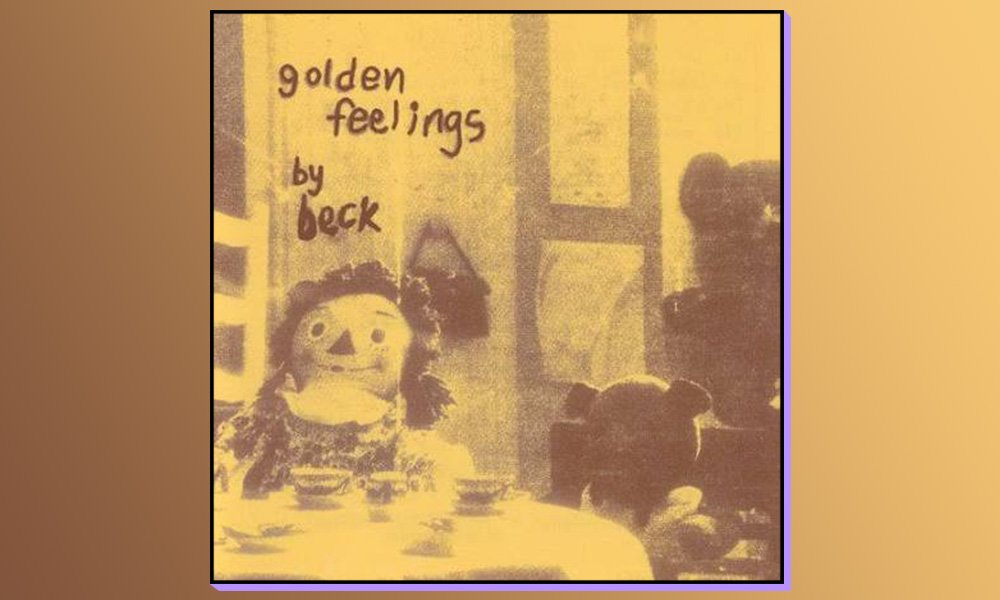
14) Golden Feelings (1993)
To be honest, writing album rankings is always difficult, but Beck's is made a little easier by the fact there's a very obvious early period where he was still figuring out who he wanted to be as an artist and was hugely limited by the tools he had at his disposal. There was no GarageBand back then. So, unfortunately, Golden Feelings has to come last.
This was Beck's first full-length album but, much like Stereopathetic Soulmanure, it feels more like a sketchbook than a finished statement. You can hear ideas forming that would later blossom into the incredible run of albums that followed, but they're rarely fully realised here.
Released in 1993 on the tiny independent label Sonic Enemy, Golden Feelings captures Beck before anyone outside the Los Angeles anti-folk scene really knew who he was. Only around 2,000 copies were originally pressed, which, considering how gloriously ramshackle the album is, actually feels like quite a lot. Once 'Loser' turned Beck into a star, those original pressings quickly became collectors' items.
Interestingly, Beck himself has never seemed particularly keen on revisiting the record, reportedly viewing it as juvenilia and resisting attempts to give it a proper reissue for years. Several of the songs date back to the late 1980s, making this the closest we'll probably ever get to hearing Beck teach himself how to write songs. Tracks like 'Heartland Feeling', 'Gettin' Home' and 'Fume' already contain the surreal humour and stream-of-consciousness lyrics that would become Beck trademarks.
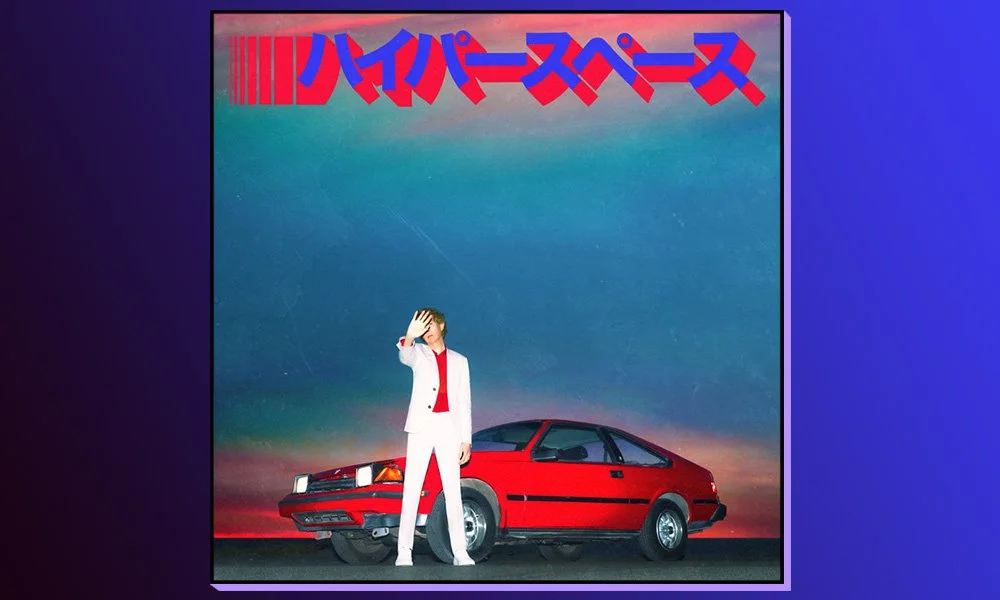
13) Hyperspace (2019)
Okay, so if Colors is Beck's fun pop record, then Hyperspace is Beck's moody pop record. Sadly, it just never worked for me. I could forgive Colors for occasionally veering into cheesy pop territory because, at the end of the day, it was packed with ridiculously catchy songs. Hyperspace, on the other hand, feels like the moodier, less interesting sibling. It just never resonated with me in the same way.
A big part of that comes from Pharrell Williams, who co-produced seven of the album's eleven tracks. Beck and Pharrell had wanted to work together for years, and this finally became that collaboration. On paper it sounds like a dream pairing. In practice, I'm not convinced it brings out the best in either of them.
Beck has said the album was inspired by modern anxiety and what it feels like to live in a world of endless information, social media and constant stimulation. "Hyperspace" isn't outer space, it's the mental space we all occupy now. I like that idea, but compared to Modern Guilt, which explored similar themes, this record just doesn't have the breeziness or sense of playfulness to let those ideas breathe.
Chris Martin also pops up with backing vocals on 'Stratosphere', although they're subtle enough that most people probably wouldn't notice. Which is probably for the best because, for me, a Coldplay collaboration is taking things a step too far.
Ironically, the only song I really connected with is the closing track, 'Everlasting Nothing', which wasn't produced by Pharrell at all. Instead, it reunited Beck with his father, David Campbell, whose string arrangements immediately recall Sea Change and Morning Phase. It's easily the emotional high point of the album.
Hyperspace is the first Beck album that genuinely leaves me a bit cold. It's not a bad record by any means, but for an artist whose entire career has been built on throwing curveballs, this one feels surprisingly safe. Pharrell's production is very polished and the songs are pleasant enough, but too much of the album drifts by without the weirdness, humour or left turns that make Beck... well, Beck. There are flashes of brilliance, particularly on the gorgeous 'Everlasting Nothing', but compared to almost everything else he's released, Hyperspace never quite escapes orbit.
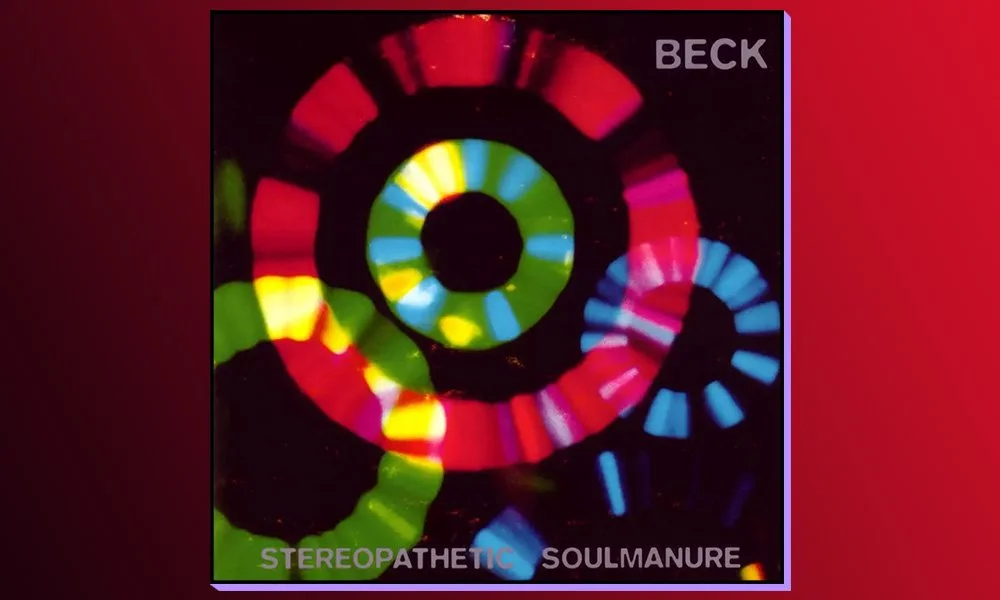
12) Stereopathetic Soulmanure (1994)
Okay, this is a weird ass record. But I'd still rank it above Hyperspace because, if nothing else, it's a hell of a lot more interesting.
Stereopathetic Soulmanure wasn't recorded as one coherent project. Instead, it's a collage of home recordings, cassette demos, live takes and studio sessions spanning almost six years, from 1988 to 1994. It's basically Beck's musical scrapbook. Even the title doesn't actually mean anything. "Stereopathetic Soulmanure" is just classic Beck nonsense, mashing words together because they sounded good.
There are some brilliant moments buried amongst the chaos too. 'Rowboat' would later be covered by Johnny Cash on Unchained, something Beck has described as one of the proudest moments of his career. 'Satan Gave Me a Taco' somehow became a cult favourite despite being exactly what it sounds like: an absurd spoken-word folk song about buying a taco from Satan. Then there's 'Jack-Ass', which would later be completely reinvented for Odelay.
The album is littered with field recordings, barking dogs, random conversations, tape experiments and found sounds. Beck was making records like this years before "bedroom pop" became a thing.
In a funny way, the album accidentally predicts Beck's entire career. Folk, hip-hop, blues, noise, spoken word, tape collage, comedy and Latin influences all pop up somewhere along the way. Almost every rabbit hole he'd later disappear down first appears here in some rough, half-formed state.
Stereopathetic Soulmanure is like being invited to rummage through Beck's attic. It's messy, unfinished and often completely baffling, but every few minutes you'll stumble across something that reminds you why Beck became one of the most inventive artists of his generation.
11) One Foot in the Grave (1994)
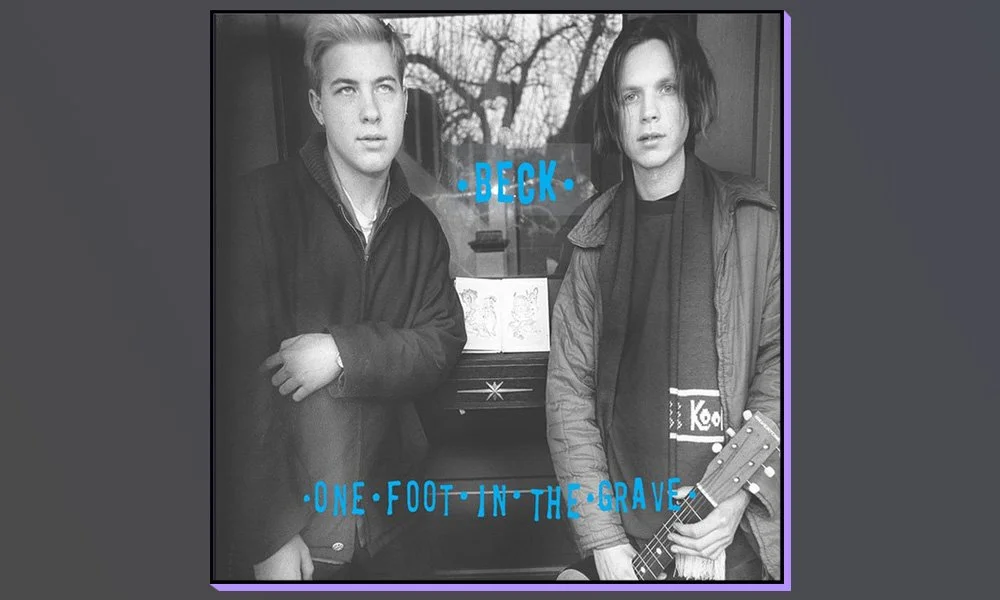
One Foot in the Grave is a really interesting record in Beck's catalogue. It was recorded in just three days with Calvin Johnson, founder of K Records and frontman of Beat Happening, at Dub Narcotic Studio in Olympia, Washington. The whole thing was recorded live to tape in a relaxed, lo-fi environment that perfectly suits the songs.
What's fascinating is that although the album was released a few months after Mellow Gold, it was actually recorded before 'Loser' turned Beck into a household name. In many ways, it's the last real snapshot of Beck as a cult folk singer before he became an alternative rock star.
The album also helped lay the foundations for what would become known as the anti-folk movement. Alongside artists like The Moldy Peaches, who would come a little later, One Foot in the Grave became a touchstone for traditional songwriting delivered with humour, imperfection and a proudly DIY spirit.
It also contains some of Beck's oldest surviving songs, many of which were written years before he signed to Geffen. Because of that, it offers a fascinating glimpse into his early songwriting, while quietly foreshadowing albums like Mutations and Sea Change. People often think of Beck as the guy who chopped up samples and bounced between genres, but this record reminds you that underneath it all was always an incredibly gifted folk songwriter.
What I love most about One Foot in the Grave is that it doesn't sound lo-fi because it's trying to be cool. It sounds lo-fi because that's simply how Beck was living at the time. The tape hiss, missed notes and rough edges aren't aesthetic choices, they're just the sound of a young songwriter with a guitar and a tape machine. I think that's exactly why the album has aged so well.
10) Colors (2017)
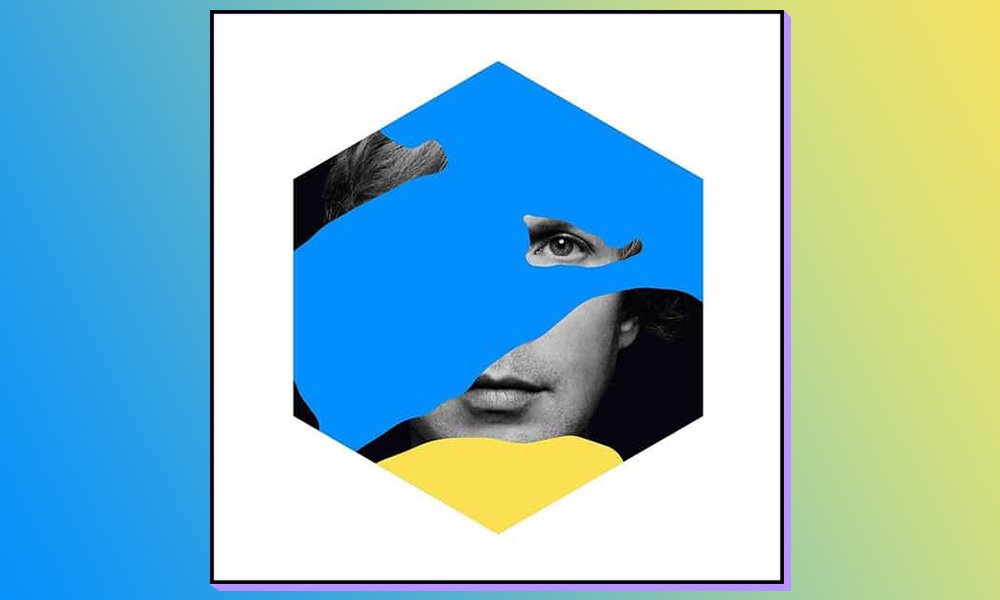
I feel like this album gets a bit of unnecessary hate. If you grew up with Odelay and Mellow Gold, I can see why you might look at Colors and think Beck was selling out. But I'd say: get a grip. This is Beck trying to have some fun, for Christ's sake. Do you really think he was taking himself that seriously when he wrote 'Wow'? The song built around pan pipes and wonderfully daft lyrics.
The best part is that 'Wow' was basically an accident. Beck was working on another song, possibly 'Dreams', when he stumbled across the pan-pipe riff, grabbed a microphone and started freestyling. He later admitted, "Most of this song was completely off the top of my head. I didn't write any of it." That's Beck at his best, just following an idea to see where it ends up.
Colors is probably Beck's poppiest record, and it was one I was ridiculously excited for. After Morning Phase, we got 'Dreams', which is about as close as Beck has ever come to sounding like The Strokes. I seem to remember Beck even saying he wanted to write something with that kind of energy, and as someone who spent far too much of their teenage years obsessing over that sound, I was completely on board.
Beck co-produced the album with Greg Kurstin, who by then had become one of the biggest producers in pop thanks to working with Adele, Sia, Foo Fighters and Lily Allen. Despite that, the pair played almost every instrument on the record themselves. 'Dreams' also arrived more than two years before the album because Beck kept delaying Colors, convinced it wasn't finished. He later admitted the songs were much more complicated than they sounded and took far longer to complete than he'd expected.
His children also played a surprising role in shaping the record. Beck has said they encouraged him to embrace a brighter, more colourful direction and even gave him the confidence to release songs like 'Wow', reassuring him that the playful side of the album connected with people.
This might not be Beck's coolest album, but it's definitely one of his most fun and easily his strongest straight-up pop record. If I had the guts, I'd probably rank it even higher. It isn't quite as consistent as the albums above it, but when it lands, it really lands. Beck described Colors as an attempt to bottle optimism and joy after the reflective atmosphere of Morning Phase, and that's exactly what it feels like.
I also don't buy the argument that this was Beck chasing pop trends. He's always written ridiculously catchy songs. Midnite Vultures and Guero proved that years before. Colors is simply what happens when Beck fully commits to writing an album built around hooks, colour and euphoria instead of irony or experimentation.
9) Modern Guilt (2008)
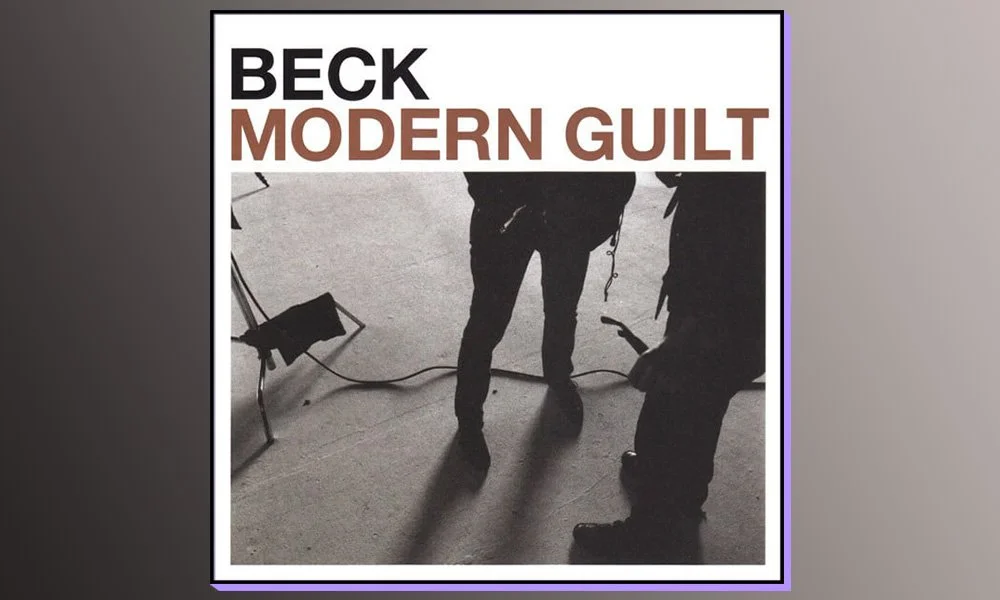
Modern Guilt was probably one of the first Beck albums I ever dipped into. It came out right around the time I started becoming obsessed with music. There was a record shop in Edinburgh where you could pick up free promotional posters. Honestly, they were incredible. I wish I'd kept them. My mate's garage ended up completely covered in them, and one I always remember was the poster for Modern Guilt. It eventually persuaded me to check out some of the singles. I was still kind of glazing over Beck back then, but I distinctly remember loving 'Gamma Ray'. I think it might have even been on one of those Guardian compilation CDs. Remember when newspapers used to give those away?
Coming back to the album years later, it really struck me as one of Beck's most underrated records. It's a straight-up indie rock album in many ways, but that's exactly what makes it interesting. 'Modern Guilt', 'Gamma Ray', 'Chemtrails' and 'Walls' are all brilliant songs. It might not be Beck's most adventurous or left-field release, but I actually think he needed a record like this at this point in his career. It quietly slotted him into the indie landscape of 2008 without ever feeling like he was chasing it.
It's also Beck's only album with Danger Mouse, who had just come off Gnarls Barkley and The Grey Album. Beck has said they spent the first week of sessions doing little more than talking about obscure late-'60s and early-'70s records before they even started recording. It's quite funny really, because despite those influences, this ended up being one of the most straightforward indie rock albums Beck ever made. Modern Guilt also marked the end of an era. It was Beck's final album for Geffen, the label that had released everything from Mellow Gold onwards, before he moved to Capitol for Morning Phase.
The thing I like most about the album is that it feels darker than it sounds. Songs like 'Chemtrails' and 'Gamma Ray' deal with environmental anxiety, paranoia and modern alienation, even though the melodies are often bright and deceptively breezy.
More than anything, Modern Guilt feels like Beck's "less is more" album. After the sprawling maximalism of The Information, he suddenly delivered a concise, tightly focused record where almost every song comes in under four minutes. It doesn't have the fireworks of Odelay or Midnite Vultures, but that's kind of the point. It's Beck proving he can still say a huge amount without throwing everything at the wall.
8) Morning Phase (2014)
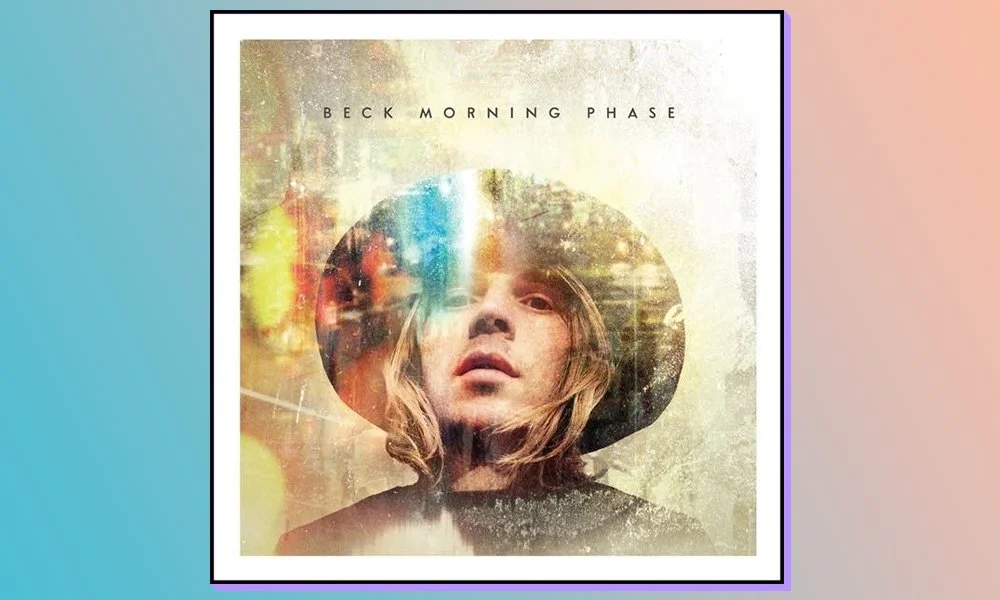
Morning Phase is beautiful. Maybe even as beautiful as Sea Change. It's essentially that album's companion piece, reuniting Beck with producer Nigel Godrich, his father David Campbell, who once again arranged the strings, and many of the same musicians who played on Sea Change. Emotionally though, it's a very different record. Where Sea Change is consumed by heartbreak, Morning Phase replaces that sadness with acceptance.
It also took nearly a decade to come together. Although it wasn't released until 2014, Beck had been writing many of these songs for years. Unlike Sea Change, which arrived in a sudden emotional burst, Morning Phase slowly came into focus over a long period of time.
The album famously won Album of the Year at the 2015 Grammy Awards, beating Beyoncé, Ed Sheeran, Sam Smith and Pharrell Williams. It was one of the biggest surprises in recent Grammy history, with many expecting Beyoncé's self-titled album to take the prize. Kanye West even jokingly started walking towards the stage, referencing his infamous interruption of Taylor Swift a few years earlier, before turning around and sitting back down.
Like Sea Change, the album was recorded almost entirely with live musicians. Rather than relying on loops or programming, Beck leaned into organic performances, layered harmonies and lush orchestral arrangements, giving the whole thing a timeless feel. Even the title reflects that sense of renewal. If Sea Change captures emotional collapse, Morning Phase is the morning after, the point where healing begins. Beck himself has described it as an album about moving forward rather than looking back.
I also have to give a special mention to 'Waking Light'. It's comfortably one of my five favourite Beck songs. That sprawling finale, slowly filling with euphoric guitars, gets me every single time. For me, it's one of the finest pieces of music he's ever written.
7) Guero (2005)
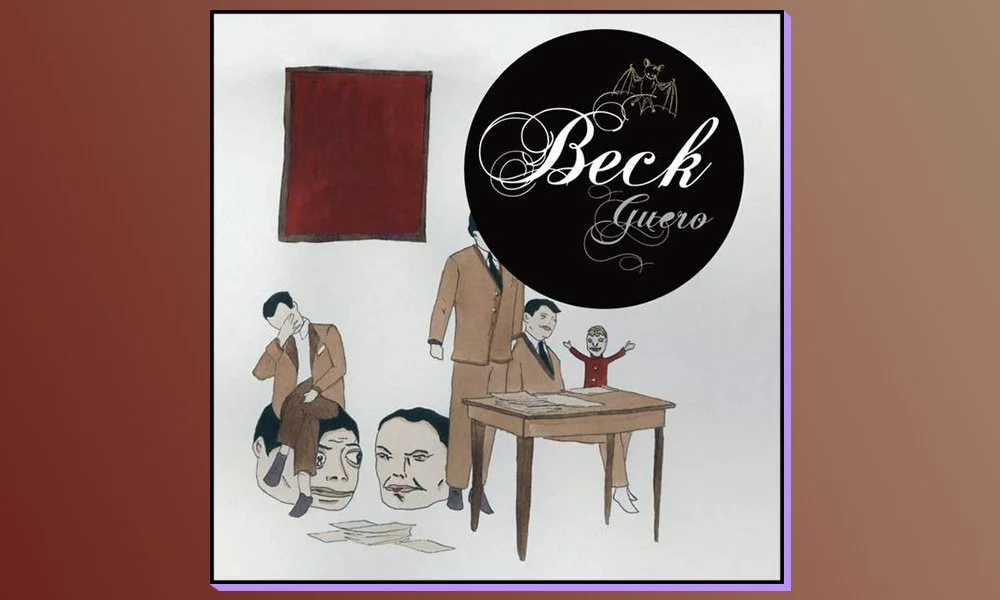
You could easily call Guero, Odelay 2. Beck reunited with The Dust Brothers to make another record built around sample-heavy hip-hop production, but it never feels like a lazy retread. If anything, it's Beck taking everything that made Odelay great and filtering it through the experience he'd gained making Mutations and Sea Change.
This album is absolutely stacked with bangers, too, songs that somehow sound even better live. It opens with 'E-Pro', whose riff somehow feels even beefier than 'Devils Haircut'. Then you've got 'Qué Onda Guero', the brilliantly catchy 'Girl' with its bit-crushed synths and driving slide guitar, and one of Beck's most underrated singles in 'Hell Yes'. Honestly, this could probably sit even higher on my list depending on the day. That's the problem with ranking Beck albums.
The title comes from Beck's childhood. "Güero" is Mexican slang for a fair-skinned or blond person, and Beck grew up in a predominantly Chicano neighbourhood in Los Angeles where he was regularly called "güero". The album became a nostalgic nod to that part of his upbringing.
There are some brilliant collaborators here too. Jack White plays bass on 'Go It Alone', Beastie Boys keyboardist Money Mark pops up throughout the record, and Christina Ricci provides the spoken Japanese vocals on 'Hell Yes', which might be one of the most random guest appearances in Beck's catalogue.
The album was also made during one of the busiest periods of Beck's life. He got married, became a father and was still processing the death of his friend Elliott Smith. The beautiful 'Broken Drum' is dedicated to Smith, giving the record a quieter emotional centre beneath all the swagger.
So yes, Guero shares a lot of DNA with Odelay, but I don't think it's simply Odelay 2. It's the sound of Beck rediscovering his playful side without feeling like he has anything left to prove. It's looser, warmer and more confident, and I think that's exactly what makes it such a great record.
6) Mutations (1998)
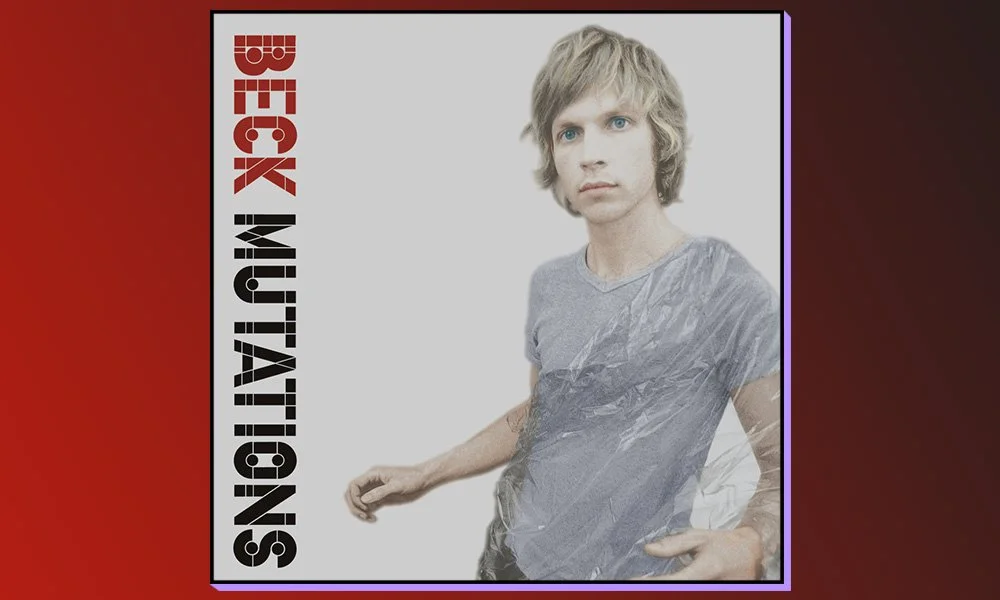
Mutations is an interesting one in Beck's catalogue. It almost feels a bit White Album-y. Where a lot of his other records stick to a fairly consistent musical identity, this one happily wanders all over the place. You've got the Brazilian rhythms of 'Tropicalia', 'O Maria' opening with a melody that always reminds me of The Beatles' 'Oh! Darling', and folk, country, psychedelia and blues all rubbing shoulders. It's also one of Beck's most stripped-back records, letting the songwriting do most of the talking.
After the huge success of Odelay, Beck wanted to make something much quieter. He and Nigel Godrich recorded Mutations quickly, almost as a palate cleanser before diving into what would eventually become Midnite Vultures. Geffen, however, didn't really know what to do with it. They viewed it as a smaller, understated release rather than Beck's next big statement and even wanted to delay it because they couldn't hear any obvious singles. Beck publicly criticised the label, arguing they'd effectively buried the album, and the fallout became serious enough that he even considered leaving Geffen altogether.
Godrich recorded Mutations immediately after OK Computer and before Kid A, and you can hear some of that same spacious, organic production style here, only applied to Beck's folk, country and psychedelic songwriting. Unlike the sample-heavy collage of Odelay, this record leans heavily on live instrumentation. Mariachi horns, strings, pedal steel, acoustic guitars and Latin percussion all give it a warmth that feels almost handcrafted.
Beck has since spoken really fondly about making the album because the sessions were relaxed and largely free from commercial expectations. In many ways, Mutations also laid the foundations for Sea Change. It's the first time Beck truly embraced sincere, emotionally direct songwriting, with Godrich's understated production giving those songs room to breathe. Sea Change would take that idea even further, but this is where you first hear Beck discovering that side of himself.
5) Mellow Gold (1994)
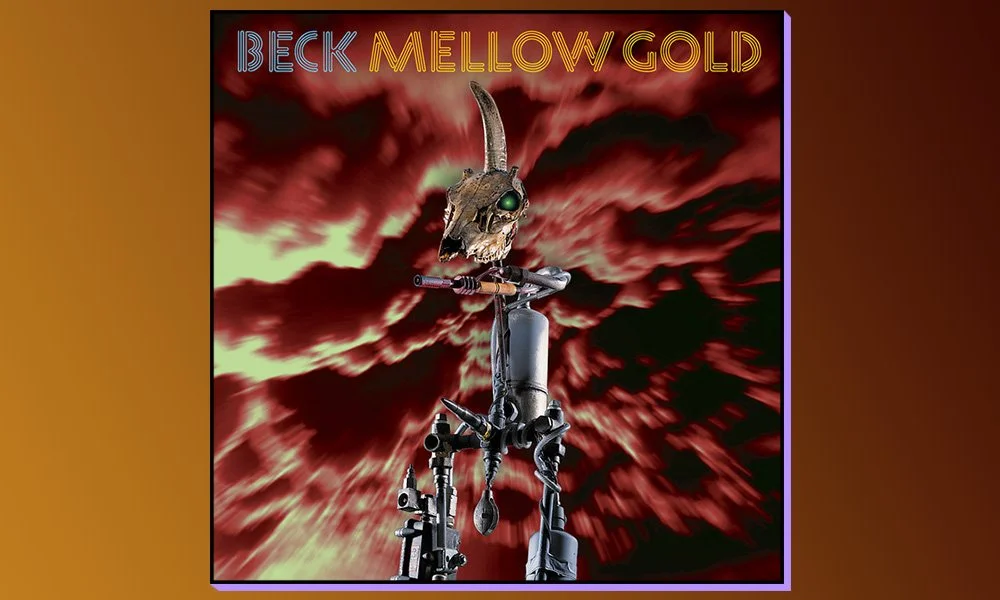
Mellow Gold is Beck's breakthrough album. After years of being an underground weirdo in Los Angeles, he created something that completely cut through at a time when grunge and rock dominated the charts. This was the beginning of Beck as most people know him.
The funny thing is that his biggest hit, 'Loser', was basically an accident. Beck recorded it during an impromptu jam in producer Carl Stephenson's living room on an 8-track recorder. Convinced his rapping was terrible, he jokingly sang, "I'm a loser baby, so why don't you kill me?" That throwaway line ended up becoming one of the defining alternative hits of the decade.
Even crazier, only 500 copies of 'Loser' were originally pressed by indie label Bong Load. It slowly spread through college radio before sparking a major-label bidding war that eventually landed Beck at Geffen. Around the same time, Beck was living in a rat-infested shed behind an alley in Los Angeles, scraping by on odd jobs, including blowing leaves. You can hear that outsider perspective running right through Mellow Gold.
It's easy to forget now because 'Loser' became such a novelty hit, but Mellow Gold's genre-hopping approach would go on to influence everyone from Gorillaz to Animal Collective and countless indie artists that followed.
Everyone remembers Mellow Gold for 'Loser', but that's actually selling the album short. Once you get past the hit, it's a wonderfully strange, inventive record where Beck is already laying the foundations for everything that would come later. 'Pay No Mind', 'Beercan', 'Soul Suckin' Jerk' and 'Steal My Body Home' all hint at the fearless artist he'd soon become.
4) The Information (2006)
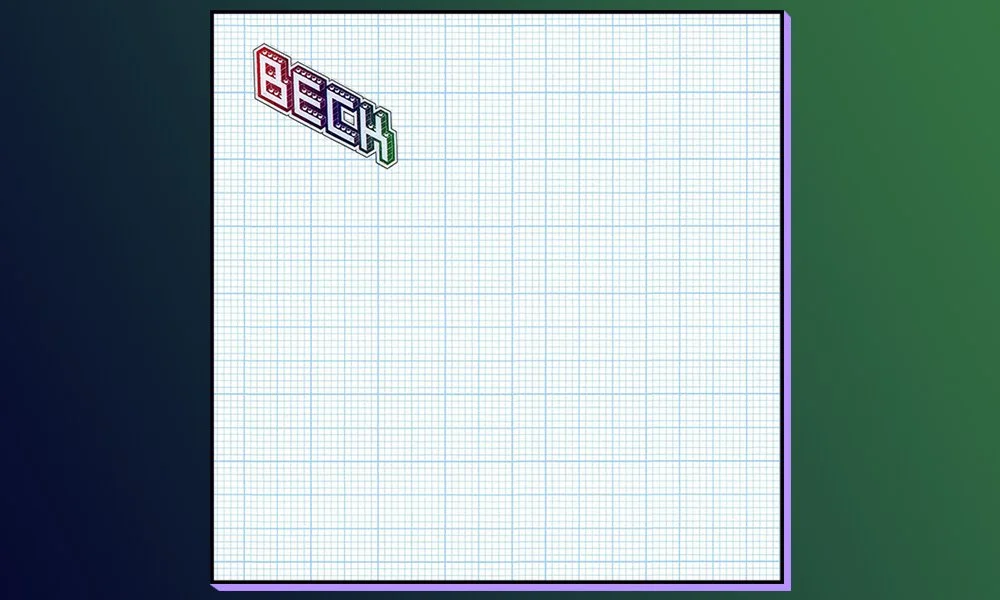
This might be a contentious pick, and I know Beck and Nigel Godrich have both spoken about how difficult this album was to make. They spent years obsessing over it, throwing away huge chunks of material in the process, but I honestly think it's one of Beck's most ambitious and rewarding records.
I also can't think about The Information without remembering driving around Edinburgh in a car my former mate had stolen while blasting '1000BPM'. Drivers in the lane next to us were staring like we'd completely lost the plot. In fairness, they probably weren't wrong. Maybe we shouldn't have been playing something that obnoxious in a car that definitely didn't belong to us. Thankfully, he never got caught. But that chaotic, unapologetic energy is exactly what The Information feels like.
Even the physical release reflected that attitude. No two copies were designed to look the same. The album came in a blank sleeve with one of four sheets containing around 250 stickers by 20 different artists, leaving fans to create their own artwork. It was such an unusual idea that the Official Charts Company actually ruled it ineligible for the UK Albums Chart, arguing the stickers and bonus DVD gave buyers an unfair incentive to purchase it. Beck knew that was a possibility and released it that way anyway because the concept mattered more.
The music itself was just as unconventional. Rather than writing traditional songs, Beck and Godrich began by recording 20 to 25-minute psychedelic improvisations inspired by early-'70s Miles Davis and Herbie Hancock, before cutting those sprawling jams into finished tracks. Michel Gondry directed the brilliantly surreal video for 'Cellphone's Dead', while Spike Jonze and author Dave Eggers both appear on the album during the suite 'The Horrible Fanfare/Landslide/Exoskeleton'. Even the title has a philosophical edge, with Beck describing "the information" as "the thing that occupies our minds, so we won't have to deal with silence which may make us think."
For me, this is the album where Beck finally figured out how to merge all of his different personalities into one record. It has the emotional weight of Sea Change, the playfulness of Odelay, the funk of Midnite Vultures and the musicianship of Mutations. It's probably still the most underrated album in his catalogue.
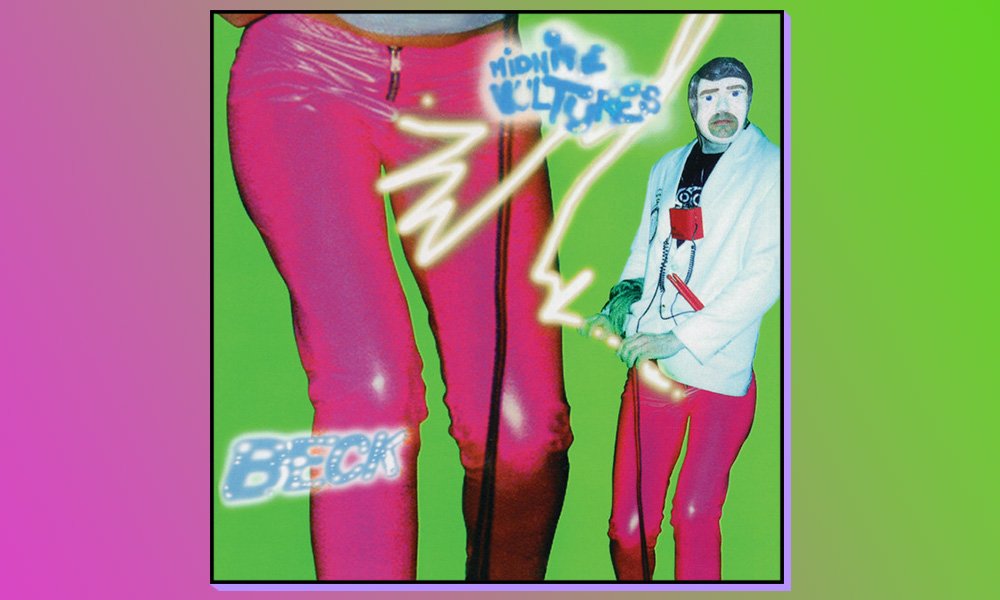
3) Midnite Vultures (1999)
Midnite Vultures is a special album in Beck's discography, and another brilliant example of him doing whatever the hell he wants. The whole thing really grew out of 'Debra', which Beck had been playing live during the Odelay tour. It quickly became a fan favourite thanks to its hilariously over-the-top Prince-esque vocals, and you can hear that same energy running through the entire album.
Honestly, this record is just great. It's Beck at his sexiest, crooning lines like, "I wanna define the logic of our sex laws", while surrounding them with the kind of wonderfully unhinged lyrics only he could get away with. There are bangers everywhere you look: 'Sexx Laws', 'Mixed Bizness', 'Milk & Honey'... it's easily one of the most fun albums he ever made. And 'Debra'? That's a top five Beck song without question.
After the introspection of Mutations, Beck deliberately set out to make what he called a "dumb party album". Naturally, because it's Beck, his idea of a dumb party album ended up being ridiculously intricate and musically ambitious. Johnny Marr even pops up on the gorgeous 'Beautiful Way', one of the most underrated songs in Beck's catalogue.
It's also one of Beck's most divisive records. In 2006, Q somehow included it in its list of the 50 Worst Albums Ever. Seven years later, NME named it one of the 500 Greatest Albums of All Time. I'd say history has been much kinder to it. The influences are all over the place too, from Kraftwerk-inspired electronics on 'Get Real Paid' to nods to Grandmaster Flash, Prince and David Bowie elsewhere. It's basically Beck throwing his entire record collection into a blender and somehow making it all stick. Even the artwork embraces the chaos, with Japanese artist Eye of Boredoms designing the cover and Michel Gondry contributing collage work to the packaging.
The only thing I can fault about Midnite Vultures is that Beck still hasn't reissued it on vinyl after promising one for what feels like a decade. Hurry up and press it already, Beck. The demand is definitely there.
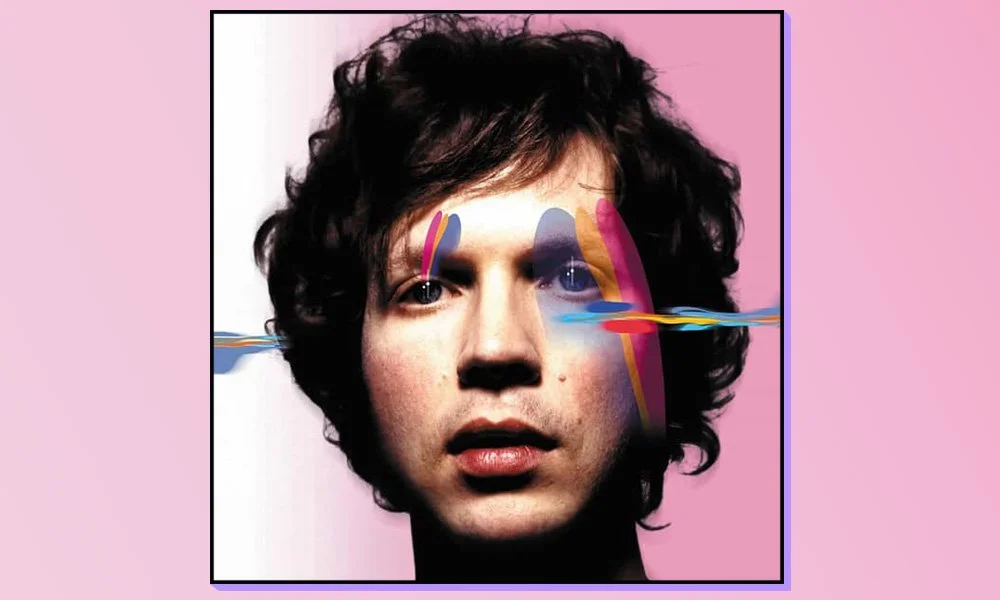
2) Sea Change (2002)
Sea Change is the album that got me into Beck. It's glorious. The production is intricate and beautiful, while the songwriting is absolutely drenched in pain and heartbreak. Beck had recently come out of a long-term relationship when he started writing it, and enlisted Nigel Godrich to produce, best known for his work with Radiohead. Oh, and he also produced Natalie Imbruglia's 'Torn'. Maybe that's the lesser-known kinda lame fact, but it's a fun one nonetheless.
Most of the album was written in just a week. After the end of his nine-year relationship with Leigh Limon, the songs came pouring out. The interesting part is that Beck then sat on them for almost two years because he didn't want to make such a deeply personal record. Much like Odelay, Sea Change almost never saw the light of day. Beck later admitted he didn't want to "strew my baggage across the public lobby". It was only when he realised the songs were about something much bigger than his own heartbreak that he decided to record them.
It's also one of the best-sounding albums of the 21st century. Audiophiles have been using Sea Change to test hi-fi systems for years thanks to its incredible detail, huge dynamic range and warm analogue production. Recorded with live musicians and string arrangements from Beck's father, David Campbell, the whole album was built around a philosophy of keeping things "simple and clean".
Anyway, this is pretty much a perfect album from start to finish, but it's especially perfect if you've got a relationship to cry about. What made Sea Change so startling wasn't that it was experimental, it was that Beck dropped the irony. For arguably the first time in his career, he let the songs speak without hiding behind surreal lyrics or left-field production. That vulnerability is exactly why it still hits as hard today.
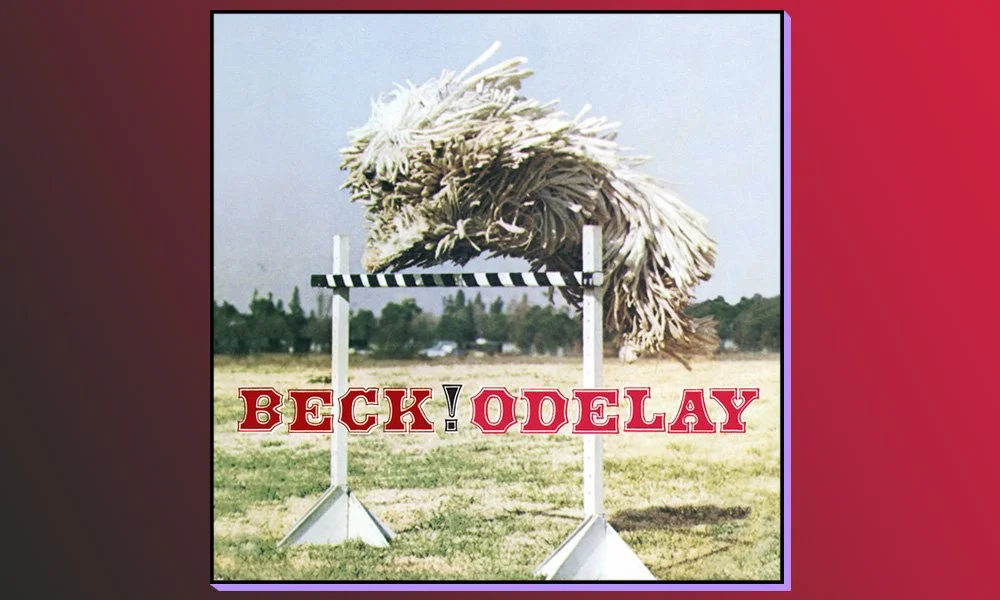
1) Odelay (1996)
Where do you even start with Odelay? There aren't many albums I'd call genuinely perfect, but this is one of them. From the explosive opener 'Devils Haircut' to the sun-drenched closer 'Ramshackle' (which has one of my favourite chord progressions Beck has ever written), this thing is ridiculous. Track for track, it just never stops delivering.
It also felt like a huge risk, but one Beck absolutely had to take. While so many of his '90s contemporaries were chasing the grunge gold rush left in Nirvana's wake, Beck was teaming up with The Dust Brothers, whose sample-heavy, cut-and-paste production transformed these songs into something that barely sounded like anything else at the time. It could have been a complete mess. Instead, they found the perfect balance between Beck's oddball folk instincts and hip-hop production. More importantly though, the songs were simply there. Strip away all the samples and sonic experimentation and you'd still be left with an incredible album.
I also love the story of Beck thinking he'd completely blown it. After playing an early version of the record to a respected producer, he was told to scrap it and "go back in and make a real album with real songs". Beck later admitted he went home "discouraged and scared", convinced he'd just wasted around $300,000 and would be paying it off on a minimum wage job if the album flopped.
Instead, here we are. Odelay stands as a genuine classic, more innovative and influential than a huge chunk of the grunge and alternative records that filled the mid-'90s. Beck made exactly the right call by abandoning his planned folky follow-up to Mellow Gold. His earlier records had always been weird, but this feels like the moment he realised he could do whatever the hell he wanted. And because of that, almost everything that followed became its own universe, whether it was the sleazy funk of Midnite Vultures, the heartbreaking beauty of Sea Change or the controlled chaos of The Information. Odelay opened every one of those doors while still retaining the creativity, confidence and sheer joy that make Beck such an important artist.