
Every My Chemical Romance Album Ranked From Worst To Best
From scrappy post-hardcore beginnings to one of rock’s great concept albums, we rank My Chemical Romance’s four studio records from worst to best.
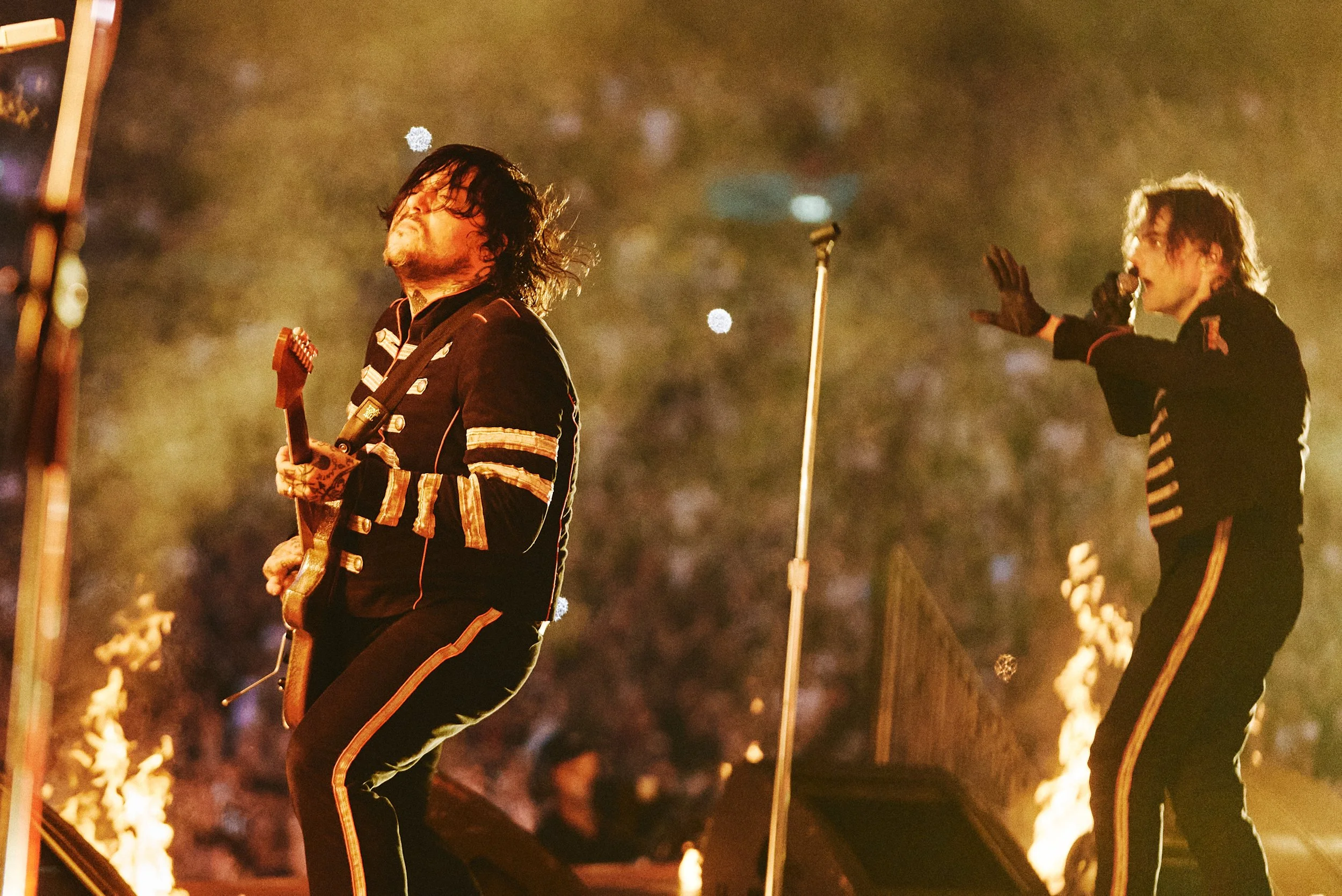
I recently went to see My Chemical Romance live and it completely reignited my love for the band. So what better time to rank their albums than now? It also happens to be the 20th anniversary of The Black Parade, so why not?
My relationship with My Chemical Romance has changed a lot over the years. I completely embraced them when I was 14, before quickly abandoning them, although I think I always had a bit of a soft spot for them even when I thought I was too cool for them. It wasn’t until my mid-20s that I started going back to all the emo music I loved as a teenager, and it quickly became obvious just how well written, fun and immediate MCR’s music still is.
I also don’t think I fully appreciated just how ambitious My Chemical Romance were when I was younger. Their visual identity gripped an entire generation of teenagers, while their music created a place where weirdos, outcasts and losers could find some kind of solace. Nearly two decades later, it’s remarkable how much of that still resonates.
Writing an album ranking for My Chemical Romance should be incredibly easy because they’ve only actually released four studio albums. There was a sort of singles box set thing, but we don’t talk about that. Despite such a small discography, every MCR album feels completely distinct, with its own sound, aesthetic and world attached to it.
Like many fans, I’d love to see them finally put out a fifth album. At the same time, when you’ve got a catalogue as strong as theirs, I’m almost glad they haven’t saturated it in the way some of their contemporaries did. Green Day, Panic! at the Disco and Fall Out Boy have released album after album, while MCR’s discography remains this remarkably compact little thing.
Still, though. Give us a new album, MCR. C’mon. Please.
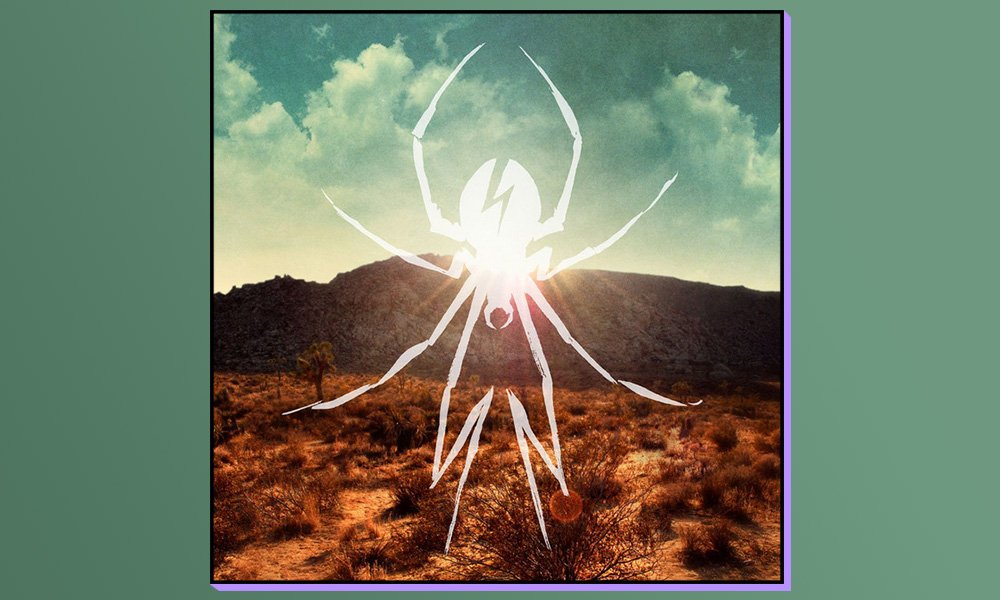
4) Danger Days: The True Lives of the Fabulous Killjoys (2010)
Maybe it’s unfair of me to put Danger Days last, but hey, it just never resonated with me in the same way the other three albums did. Perhaps part of that is down to timing. After the massive worldwide success of The Black Parade, an album that basically defined a generation and gave emo its crown jewel, I’d started moving on. By the time Danger Days arrived in 2010, I wasn’t really a proper emo anymore. I’d become an indie kid, and MCR very quickly became something that, at the time at least, I probably didn’t want to be associated with. But to be fair, Danger Days has that really annoying ‘Na Na Na’ song on it. That’s enough to put it at the bottom.
The story behind the album is fascinating, though. After The Black Parade, MCR initially wanted to make a much more straightforward, stripped-back rock record with producer Brendan O’Brien. They eventually became dissatisfied with what they’d made, scrapped the project and essentially started again. Much of that abandoned material would eventually emerge as Conventional Weapons in 2012 and 2013.
That discarded record was almost the philosophical opposite of what Danger Days eventually became. The band were exhausted by The Black Parade and initially wanted to escape the elaborate concepts, characters and theatricality that had come to define them. Ironically, scrapping those sessions ultimately freed them to go even further in the opposite direction, swapping the gothic melodrama for something colourful, ridiculous and completely over the top.
There’s still plenty here that I love. ‘Bulletproof Heart’ has one of the biggest choruses they ever wrote, ‘DESTROYA’ is brilliantly weird and ‘Summertime’ shows a much softer side to the band. ‘Vampire Money’ is a great, scrappy rock ’n’ roll closer too. The brighter production and electronic elements might not hit me in quite the same way as the rawness of Three Cheers or the grandeur of The Black Parade, but there’s no denying how much fun the whole thing sounds.
Danger Days is another concept album, although its story is much looser than The Black Parade. Set in a colourful post-apocalyptic California in 2019, it follows the Killjoys as they fight the authoritarian Better Living Industries. Gerard becomes Party Poison, Ray is Jet-Star, Frank is Fun Ghoul and Mikey is Kobra Kid, while pirate-radio DJ Dr. Death Defying guides you through this strange dystopian world.
The story even carried on beyond the album. The videos for ‘Na Na Na’ and ‘SING’ form part of its narrative, while Gerard Way and Shaun Simon later expanded the universe through The True Lives of the Fabulous Killjoys comic series. It’s probably MCR’s most extensive attempt at building an entire fictional world around one of their records.
Whatever I think of the album itself, you have to admire just how committed MCR were to completely reinventing themselves. MCR could very easily have followed their biggest album with The Black Parade II. Instead, they scrapped a whole record, threw away the black uniforms, dyed their hair, picked up ray guns and made the brightest, poppiest and weirdest album of their career.
And in retrospect, knowing this would become their final studio album before the breakup makes ‘The Kids From Yesterday’ hit considerably harder.
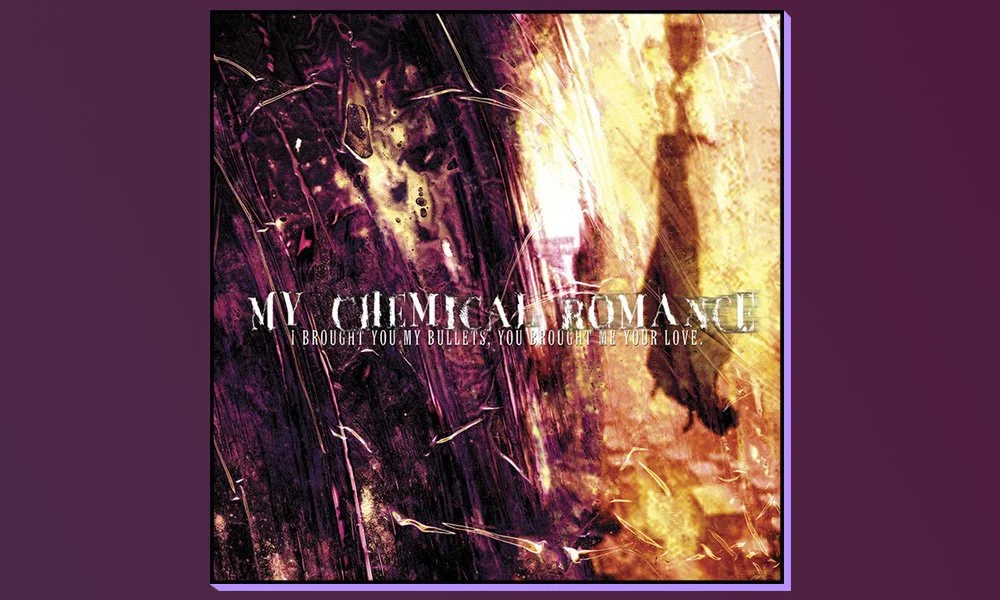
3) I Brought You My Bullets, You Brought Me Your Love (2002)
Their debut album, I Brought You My Bullets, You Brought Me Your Love, catches My Chemical Romance still finding their feet and figuring out exactly what they wanted to be. It’s much rawer and messier than what would follow, but there are already moments of brilliance that point directly towards their next two albums.
I'll admit this is probably the MCR album I've spent the least time with over the years. I came to it after falling in love with the much more polished records that followed, and I've never had quite the same attachment to it. But going back to it now, what's fascinating is just how much of what would make MCR special was already there.
MCR had formed in the aftermath of 9/11. Gerard Way witnessed the attacks while working in New York, an experience that pushed him to reconsider what he was doing with his life and start a band. One of the earliest songs he wrote was ‘Skylines and Turnstiles’, directly inspired by what he had witnessed.
‘Vampires Will Never Hurt You’ feels like one of the first moments where MCR’s identity really starts to emerge. Gerard has spoken about it as an important song in figuring out what the band could be, and you can already hear the gothic imagery and theatricality that would become such a huge part of their music.
Across the album, all the hallmarks that would come to define MCR are beginning to emerge: the melodrama, horror imagery, doomed romance, death and Gerard Way’s increasingly unhinged vocal performances. It doesn’t yet have the immediacy of Three Cheers for Sweet Revenge or the gigantic ambition of The Black Parade, but you can hear them getting closer.
There’s something quite exciting about hearing MCR before everything fully clicked into place. They sound rougher, heavier and considerably less polished, without the major-label production that would eventually make them sound massive. At times that works in the album’s favour; at others, you can understand why it was the next record that really sent them into the stratosphere.
‘Demolition Lovers’ is particularly important to what comes next. The nearly six-minute closing track introduces the doomed lovers who would become central to the imagery surrounding Three Cheers for Sweet Revenge. The cover of Three Cheers depicts those same Demolition Lovers, meaning the final moments of MCR’s debut essentially plant the seed for album two.
That’s what makes Bullets such an interesting record to return to. MCR’s entire DNA is here in miniature: horror movies, doomed lovers, death, gothic imagery, theatrical vocals and huge emotional swings. They just hadn’t quite figured out how to turn all of that into huge pop songs yet.
That would come next.
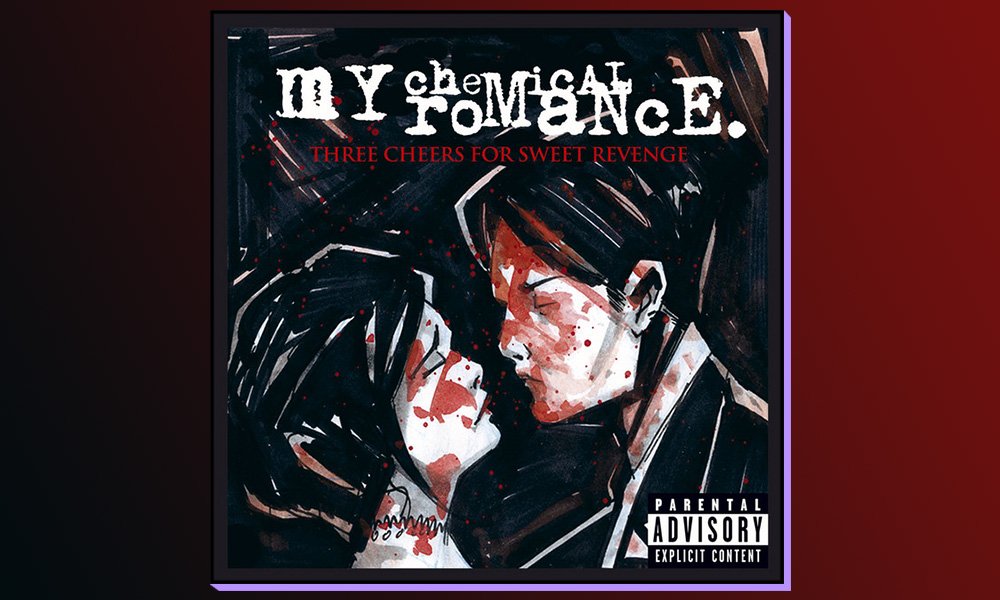
2) Three Cheers for Sweet Revenge (2004)
Here’s where the band finally broke through into the mainstream. Three Cheers for Sweet Revenge is the album where My Chemical Romance found the sound that would define them. It’s absolutely stacked with bangers and, track for track, you could argue it’s even more consistent than The Black Parade. In many ways, you could easily put this at the number one spot.
It’s a concept album, although a much looser one than The Black Parade. Gerard Way described the story as being about a man and woman separated by death. The man makes a deal with the Devil: if he brings him the souls of 1,000 evil men, he can be reunited with his lover. The catch is that after killing 999, he discovers that he himself is the thousandth. That story of revenge, death and doomed romance runs through the record, even if every song doesn’t fit neatly into a linear narrative.
The cover was drawn by Gerard himself. Its characters, generally known as the Demolition Lovers, tie the album back to the closing track of I Brought You My Bullets, You Brought Me Your Love. In that sense, Three Cheers picks up an idea established at the very end of their debut and blows it up into something much bigger.
It was also MCR’s major-label debut. After Bullets came out through Eyeball Records, the band signed to Reprise, but rather than sanding off their weirdness, they somehow became more theatrical while making their music considerably more accessible. That tension is a huge part of why the record works.
‘Helena’ and ‘I’m Not Okay (I Promise)’ might be two of the greatest “emo” songs of all time, while ‘The Ghost of You’, ‘You Know What They Do to Guys Like Us in Prison’, ‘The Jetset Life Is Gonna Kill You’ and ‘Thank You for the Venom’ barely give you a second to breathe.
Musically, the whole thing just sounds immense. The guitars are filthy, Gerard Way’s vocal delivery is absolutely ferocious and the album really highlights what a unique singer he is. He can go from snarling and completely unhinged to delivering these huge, genuinely beautiful melodies within the space of a single song. The choruses are ridiculously immediate too, packed with the kind of earworms that seem permanently lodged in your head after a single listen.
This is also where MCR’s wider vision and remarkably cohesive visual identity really kicked into gear. The videos for ‘I’m Not Okay’, ‘Helena’ and ‘The Ghost of You’ became almost as iconic as the songs themselves. Director Marc Webb played a huge role in shaping that world, particularly with ‘Helena’, where the Catholic funeral imagery, choreography, black suits and flashes of red helped establish a visual language that people still immediately associate with My Chemical Romance.
Ultimately, Three Cheers for Sweet Revenge is the moment MCR figured out how to make their weirdness enormous. Bullets contains many of the same ideas, but they’re raw, messy and underground. On Three Cheers, the murder, Catholic guilt, horror, romance and melodrama suddenly get packaged into massive pop-rock songs without losing what made the band interesting in the first place.
The Black Parade would take that ambition even further, but Three Cheers is where My Chemical Romance truly became My Chemical Romance.
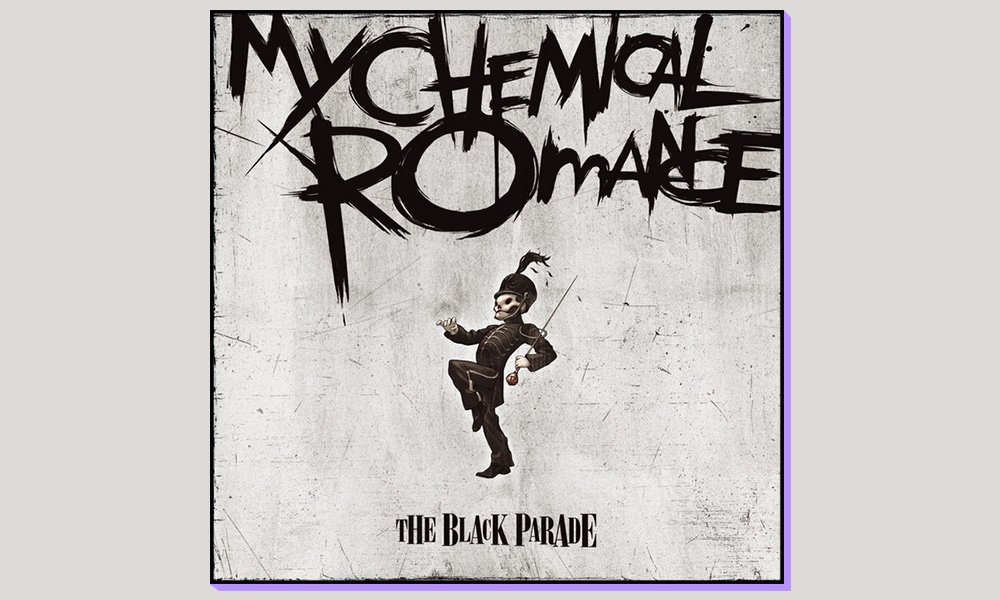
1) The Black Parade (2006)
Well, we all knew this was going to take the top spot. What an incredible album. The Black Parade has aged like a fine wine, somehow getting better and better with every passing year.
It’s an unbelievably ambitious record, both in its concept and the sheer scope of its songwriting. At its centre is the story of the Patient and the Black Parade arriving to carry him towards death, but musically it goes almost everywhere. There’s the piano-led devastation of ‘Cancer’, the twisted cabaret of ‘Mama’ and, of course, the monumental ‘Welcome to the Black Parade’, still one of the best rock songs of this century. That final stretch is pure euphoria, a proper get-your-lighter-out-and-start-swaying moment.
The central idea is also much stranger and more interesting than simply “a man dying of cancer”. Gerard Way’s concept was that death comes to you in the form of your strongest or fondest memory. For the Patient, that’s the parade his father took him to see as a child. Hence The Black Parade.
The album keeps delivering even outside its obvious centrepieces. ‘Dead!’ coming straight after ‘The End.’ is ridiculous; ‘House of Wolves’ is one of their nastiest rock songs; ‘Sleep’ is absolutely colossal; ‘Disenchanted’ gives the final stretch some melancholy before ‘Famous Last Words’. Gerard Way’s theatricality is arguably at its absolute peak here. He’s playing characters throughout, snarling, screaming and crooning his way through the record, embracing full-on rock-star bombast whenever a song calls for it.
The Black Parade itself was also conceived as an alter ego for the band. MCR weren’t simply presenting this as their new album; for a period, they effectively became The Black Parade, complete with the uniforms, characters and an entirely new visual identity. In that sense, the album almost feels like MCR inventing their own fictional glam-rock band and then making that band’s one and only record. It helps explain why The Black Parade feels like such a dramatic stylistic leap from Three Cheers for Sweet Revenge.
There aren’t many albums that can still make the hairs on my arms stand up, but The Black Parade is one of them. By the time you reach the endlessly cathartic ‘Famous Last Words’, everything feels absolutely gargantuan. It’s the perfect ending to an album that spends its entire runtime swinging for the fences and somehow pulls it off.
Twenty years later, The Black Parade deserves to be talked about alongside the greatest concept albums of all time.
Photography By: Bryce Hall