
Richard Clarke of War Child Records: "We Really Bottled Lightning with This Project"
Help (2) is evidence of why a charity record only works when the entire industry agrees to suspend itself.
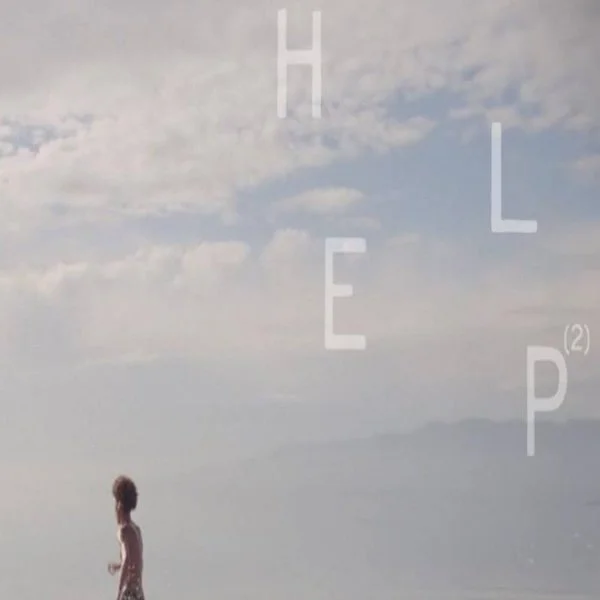
The occasionally overwhelming strength of a charity record directly correlates with why they are hardly ever made.
At once, the stadium-filling artists with infinite sway to their name are the most likely to sign onto a charity record due to the luxury of funds and autonomy with the projects they select; yet, the mechanisms around these artists are far more bureaucratic, and logistical matters are diffused across labels, PR teams, and managers of their other commitments.
Furthermore, someone with industry ties - so, someone very busy - has to step forward to envisage the project and convince others to pool their expertise for little to no pay. War Child Records’ recognition and subsequent conquest of this conundrum have operated under the same foundation since 1995: largely focus on smaller fundraising pursuits, while hiring their small conglomerate of well-connected music industry professionals to orchestrate occasional flagship projects. From this strategy, the label earns protection from being perceived as industry anklebiters; and when it does put forth a record, it becomes a naturally-occurring public spectacle.
War Child has lain low for a while, mostly locking its vision on the fundraising potential of live shows and putting out a couple of smaller projects. Nearly thirty years past its predecessor Help, Help (2) seized upon a festering desire for philanthropic efforts inside the music industry, as well as the cresting rock revival. With Fontaines D.C. arguably at the helm of a guitar resurgence, they naturally headlined the compilation marketing campaign - alongside Damon Albarn, who asked ‘What he needed to do to be most helpful’ immediately after receiving a soft-launched request to work on the record. Other highly notable cosigns on Help (2) include Olivia Rodrigo, Ezra Collective, Big Thief, Cameron Winter, Pulp, Arctic Monkeys, and more. The project raised funds for its projects in fourteen countries, a mission that included both the provision of supplies to war zones and the funding of psychological assistance necessary for adolescent victims of war to survive beyond preliminary necessities.
“The first 1995 record captured a beautiful snapshot of British music at a time when it was in rude health”, Richard Clarke, Head of Music at War Child, tells me. “What I loved about the edition was that it wasn’t just Britpop - or simply Oasis versus Blur. It really reflected the breadth of British music at that moment.
Going into this project [Help 2], we wanted to try to do something similar. We felt that if anyone could help us achieve that, it was James Ford. Our roots are in indie music, and our audience naturally leans that way, but James has always worked across a much broader spectrum. He’s just done the last Fontaines D.C. record; he’s worked with Arctic Monkeys since day one, and everybody wants to work with him. We felt that if James signed up, we were already halfway there.
Toby L, doing A&R at Beggars, put together a marketing campaign: the ask was to come with their best song. Once you take that commercial pressure off, they can indulge the creative side a little more. You’re not making Single number three that you know Radio One needs to like because if you don’t get the A-list, your marketing campaign is going to suffer. That’s quite compelling for an artist.”
Due to their scattered nature, even star-studded compilations often have a way of landing with a dull thud on release day; worse, making money off of their placement on streaming platforms is a disproportionately hopeful aspiration. Anticipating this obstacle, Richard and James Ford sought to loop a coherent sonic statement through the record rather than accept the project’s merit as the sum of its individually strong parts. “Us and Beggars were fairly bullish, but I think it’s because we had a great record. James and the A&R team had been working with a lot of the artists for a fair while, so we had a sense of what the music would sound like; and knowing James was producing it, it would feel like a body of work rather than just an hour compilation.
I think we felt quite confident with that, as well as with the caliber of artists on it. What we’d had from everyone getting involved was like, it was almost like an antidote to this feeling of I need to do something because the world’s on fire. I don’t quite know what to do, and this is a creative outlet. And we think we felt that that was touching an area of the buying community as well. People would not just buy this record because Wet Leg or Arctic Monkeys are on it, but because it’s a positive action in a dark time - it’s like, ‘With that £25, I’ll get a great record, but I’m also making a difference in something I don’t really know.’
A lot of the retailers have been incredible, too. They buy the record at a dealer price and sell it at a retail price, but many of them have actually donated their margin. They’ve sold copies and then donated from what they would normally take as an independent record store, which is amazing, because making it as an independent record store is so challenging.
A lot of the digital service providers have done something similar, making donations in lieu of what they would normally earn from the release. So we’ve been very fortunate. It really felt like everyone had gotten behind it. And I think once people like Arctic Monkeys, their management, and Beggars are all saying, ‘We’re doing this for free,’ it encourages everyone else to get involved too. It creates a feeling of ‘Well, we should do our bit as well,’ which has been great.
The initial groundswell of support was powerful in its own right, but the mechanics of the modern music industry mean the project’s value is not confined to a single release cycle. “There is a doom to the economics of streaming - in 1995, you put out records, pressed your CDs, and sold all those copies. You gauged the market demand. If there was demand for more, you pressed more; but eventually, that demand runs out. So at that minute, the record stops earning money for War Child. Since we’re in a perpetual streaming era now, every single one of those 23 tracks will generate income for War Child until the end of time. We did a live recording album with Arctic Monkeys in 2018, and Domino released the recording of it in 2020. Everyone was incredibly generous and donated all the income to War Child; we still receive a royalty check every 6 months. It’s six years on, and that record is still generating funds.
Olivia Rodrigo’s cover of the ‘Book of Love’ might crop up on the most popular yoga playlist in two years”, he continued, “And suddenly you’ll get a royalty check that goes through the roof. Those moments can happen that couldn’t thirty years ago, so that’s cool. Those sorts of records don’t happen that often. But I think if you’re a smaller agency, certainly it’s more challenging. That’s an amazing part of modern technology.
Towards the end of April, we’d done about 40,000 physical units. We had the European scores sell out, America was sold out, and then we naturally had a lot more for the UK. But, yeah, around 40,000, I think, was on the initial run.” He expounded upon the charity’s strategy to raise money from physical sales: We’re also on our sixth year of collaborating with labels for Record Store Day. Each year, it raises somewhere between 20,000 and 40,000 pounds, depending on the unit runs and what releases they are, and the scarcity, et cetera. But the lift from War Child, resource-wise, is really light.”
Whilst each new rock revival marinates for its later (benevolent) harvesting, War Child casts their net toward live fundraising collaborations. “We’ve got thirty-three years of heritage with the music industry, which comes with a level of trust in recorded music projects, as well as live gigs. War Child works very closely with the BPI and AG Presents, but ultimately, we book all of the acts, build the marketing campaign, and obviously work hand-in-hand with our partners to deliver the shows. We were very fortunate to get Olivia Dean at the peak of her powers and Robbie Williams this year, whom we’d kind of been begging to do it for years and years, and it just came around this year because he was doing the Ozzy Osborne tribute. We raised over £10,000 in income from those.
But if you can’t book the artists, there’s a vulnerability there. There are years you’ll get Robbie Williams, and there are others where you will be dealing more with sort of arena-size acts, which just creates a different kind of ticket price and demand and income profile. Live music is tough.
When I asked about the ‘charity festival industry’, he broke his spiel to briefly chuckle; I take it as suggesting my inquiry revealed my freshness in the industry for the first time in the interview. ‘Festivals are just hard, full stop. You’ve got a lot of risk, and then if you don’t sell your tickets, you kind of, the risk sits with the charity they’re putting it on; we’ve never done one. We’ve had some talks, but the risk has just been a bit too high, I think.”
Listening to the everyday accounts of a charity label is equal parts disheartening and inspiring. The former on the account that, irrespective of how hard one works, nobody could repeatedly pull off a financially viable record like this - and the latter on the account that it did happen, and they didn’t do it alone. “We were exceptionally fortunate on this record. Almost everyone involved has done this pro bono.
Abbey Road Studios was incredible to us, too. They donated all of the studio time, and all of their engineers worked for free. It was amazing; most of the traditional costs associated with a recording campaign were either waived or heavily reduced. We received huge discounts on vinyl pressing, although there were still some unavoidable expenses. Some things simply can’t operate for free.
The biggest uncertainty was just James’ illness. He has been battling leukemia for a long time. He had a turn of ill health just before we recorded, so he couldn’t physically be in the studio because there was too much danger to his immune system. He was actually back in the hospital having blood transfusions, but he could be in the room on a laptop talking to Olivia Rodrigo or Abigail from the Last Dinner Party live. “That’s the great part about working with modern technology.” Tacking onto the assets of modernity, he beamed over the efficacy of their ‘by children, for children’ marketing campaign: ‘Remote cameras were set up in Abbey Road, and children were given handheld cameras. Then the academy films put up all that content together. You know, that wouldn’t have been possible in the same way in the 90s.’
The original plan had been to release the record on September 9th, 2025, which coincided with the thirtieth anniversary of the original album. When James’ health became a concern, there were conversations about whether we should bring in other producers or simply wait. It quickly became clear that we had to wait for James. He was creatively vital to the entire project.
One moment I’ll never forget came when Fontaines D.C. were recording ‘Black Boys on Mopeds’. Originally, they were planning to contribute a new song, but they decided instead to cover Sinéad O’Connor. I only found out a couple of days beforehand. That same day, James Ford’s wife and son arrived at Abbey Road after spending the morning with him in hospital. They were waiting on test results. As Fontaines recorded the string parts, we sat in the control room listening. It was jaw-droppingly beautiful and incredibly emotional given everything that was happening around James at the time. That’s a moment I’ll carry with me forever.
Again, we’ve been very fortunate. Everybody who came on board with the project did so with the same goal: raising as much money as possible for the charity. So the only real costs were the unavoidable hard costs - things like catering at the studio. If artists are there all day, lunch still has to be paid for. Compared to a traditional campaign, though, it was nothing. Everyone pulled together to make it work.
We really bottled lightning with this project, and that doesn’t happen every year. There have been other records between Help ‘95 and Help 2 that stand on their own merits, but this felt different. Because of that, I don’t think we’ll be looking at another large-scale multi-artist compilation for at least three to five years. It needs space, and this campaign still has some life left in it. There are plans for a visual documentary and potentially a deluxe edition later in the year, so we want to let all of that breathe first.”