
From glam-rock favourites to overlooked soul cuts, we revisit the David Bowie songs that became part of our lives, and attempt to put them in order.
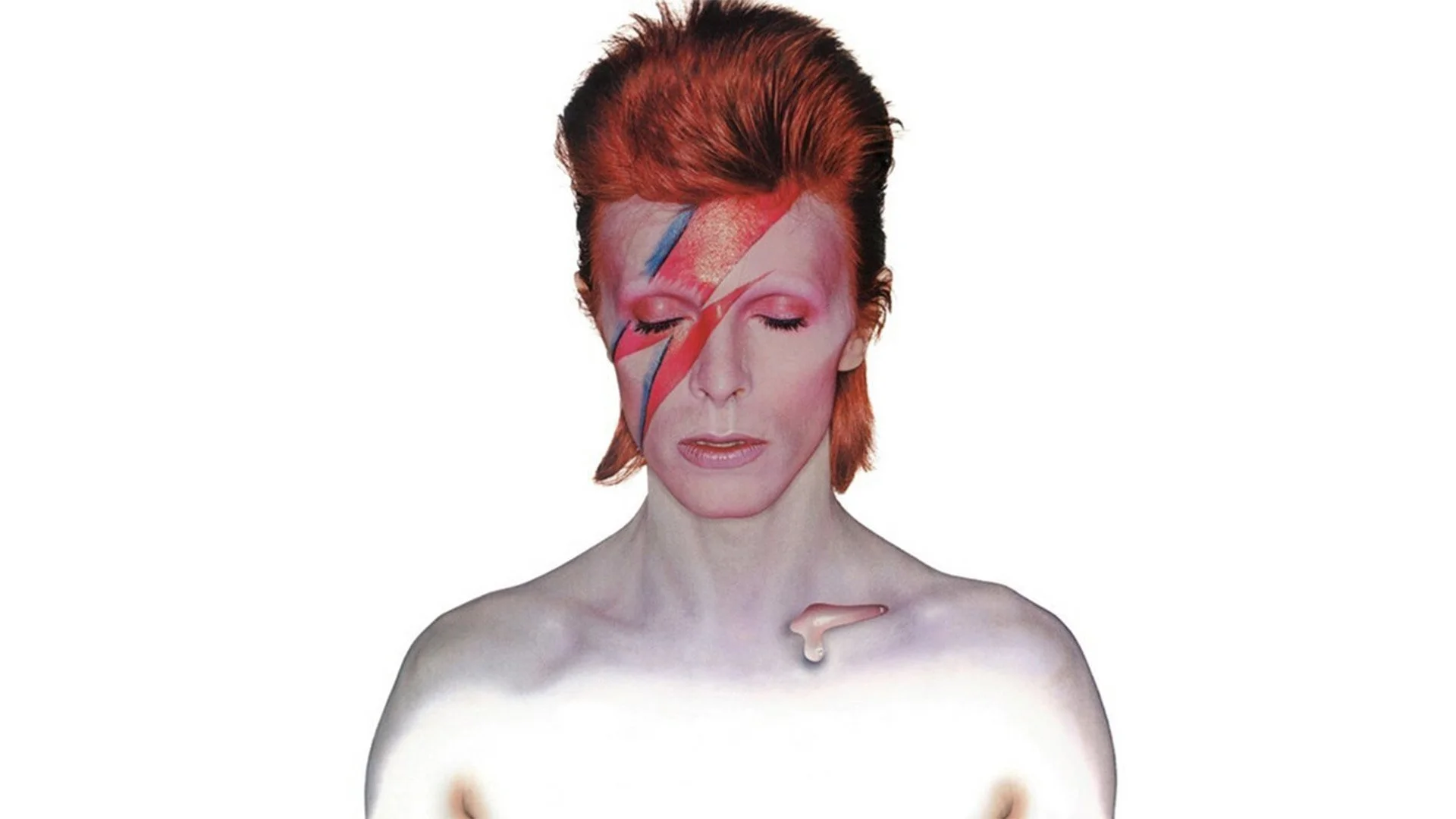
When ranking the top 25 David Bowie songs, I thought it would be a straightforward task. Few figures in modern culture have left a mark as profound or far-reaching as David Bowie. Whenever a contemporary artist makes headlines for blurring gender lines or radically changing their sound, my instinct is always to point back to the source: Bowie did it first. An artist that completely changed my life and continues to influence how I view the world, David Bowie is, without a doubt, a genius. I quickly realised the absurdity of the challenge: I wasn’t just ranking one artist, but a dozen distinct musical personas across a dozen different genres. From glam rock and plastic soul to Berlin avant-garde and art-pop, every era feels like evaluating an entirely different musician. This is not going to be an easy task.
Any list trying to capture a legacy this monumental is bound to be a snapshot of a lifetime’s obsession rather than a definitive science. But, after diving back through decades of masterpieces and immortal hits, I’ve managed to assemble a journey through what I believe are the very best of his genius. So, without further ado, here are my top 25 songs by the man who fell to Earth, David Bowie.
25) Ziggy Stardust
To begin with, we already have a point of contention. Funnily enough, ‘Ziggy Stardust’ was one of the harder songs to rank on the list, as it only just beat ‘Sound and Vision’ and ‘Lazarus’ to slide its way into the top 25. Although a tight call, there are few riffs in rock history that command attention quite like the opening chords of ‘Ziggy Stardust’, which for me is a defining reason why it makes the top 25 over others. From that very first iconic guitar crunch, the song launches into a masterclass in myth-making. It serves as the central narrative pillar of Bowie’s seminal 1972 album, The Rise and Fall of Ziggy Stardust and the Spiders from Mars, introducing the world to the doomed, alien rock star who would define an entire generation of glam rock.
What makes the track so enduring isn’t just its killer hook, but the tragic, theatrical story woven into its lyrics that detail Ziggy’s meteoric rise, overinflated ego, and ultimate downfall at the hands of his own band. Bowie created a legendary persona that blurred the lines between performance and reality that would be remembered for an eternity.
24) Station to Station
Station to Station, the album, is one many believe to be his best. In terms of this track, oh, it’s one of the best. Clocking in at over ten minutes, ‘Station to Station’ is a sprawling, shape-shifting epic that captures Bowie at his most brilliant and volatile. Driven by the introduction of the Thin White Duke persona, the track seamlessly bridges the gap between cold, Krautrock-infused art rock and slick, funk-driven soul. What makes the song so unforgettable is its raw, uninhibited lyricism, anchored by my favourite line: ‘It’s not the side effects of the cocaine / I’m thinking that it must be love.’ It is a daring, utterly unique masterpiece that captures an artist pushing his physical and musical boundaries to the absolute limit. In the 1981 movie Christiane F., directed by Uli Edel, there is a brilliant concert scene where this song is performed by Bowie. Quentin Tarantino called David Bowie’s performance of ‘Station to Station’ the single best concert scene in cinema history.
23) Rock ’n’ Roll with Me
A lesser-known gem tucked away on Diamond Dogs, ‘Rock ’n’ Roll with Me’ often gets overshadowed by huge hits like ‘Rebel Rebel’. Yet, this tender power ballad serves as a crucial bridge between Bowie’s theatrical glam era and the plastic soul sound he would fully unleash on Young Americans. Originally written for an aborted Ziggy Stardust musical, I believe it stands as one of his most deeply emotional, intimate love letters to his fans, with his vocals front and centre.
22) Ashes to Ashes
‘Ashes to Ashes’ is instantly recognisable as quintessential Bowie. The genius lies in its devastating callback to ‘Space Oddity’s protagonist: ‘Ashes to ashes, funk to funky, we know Major Tom’s a junkie.’ By stripping away the heroic romanticism of his earlier era, Bowie transforms past nostalgia into a brutally honest reflection on addiction and fame, wrapping it in an art-pop track. Also, that line is just cool.
21) Space Oddity
Without a doubt, the single greatest space song ever written. Beyond its undeniable legacy, the track possesses a rare cinematic magic, best captured in the opening sequence of Luc Besson’s otherwise underwhelming 2017 sci-fi epic, Valerian and the City of a Thousand Planets. As Bowie’s transcendent acoustic chords kick in, the scene chronicles centuries of human progress, from the Apollo-Soyuz handshake in 1975 to the steady expansion of the International Space Station as it greets endless generations of alien civilisations in peaceful diplomacy. It’s a hopeful montage that I always think back to when I hear this song. It matches the cosmic, melancholic grandeur of Major Tom’s launch perfectly, serving as a powerful reminder of how Bowie’s music can elevate imagery into pure poetry.
20) Who Can I Be Now?
Widely regarded as a hidden gem in Bowie’s vast discography, ‘Who Can I Be Now?’ is a track I discovered relatively late in my obsession with his music. Intended for his unreleased The Gouster album before being shelved during the Young Americans sessions, it stands as one of his absolute finest soul cuts. Bowie’s vocals here are completely on point and the track is beautifully rich with layers of backing vocals. The saxophone surges through the song, elevating it into pure magic. It is such an overlooked masterpiece.
19) Waiting for the Man (Live Santa Monica ’72 / BBC Sessions)
Put this down as one of my most controversial takes: I genuinely believe Bowie’s blistering live cover surpasses the Lou Reed and Velvet Underground original. It shouldn’t be ranked this high (or maybe it should be even higher), but the raw, glitter-rock urgency Bowie injects into it is unmatched. I first fell in love with this track through Cameron Crowe’s Almost Famous (one of my absolute favourite films). There’s that brilliant moment where Bowie’s rendition plays as the band’s bus arrives outside the hotel, surrounded by glamorous, hyper-stylised Bowie fans screaming, ‘It’s Bowie!’
18) Let’s Dance
Although the Let’s Dance album is often viewed as David Bowie commercially selling out, the title track remains one of his best. Produced alongside Nile Rodgers, it captures the sonic signifiers of the 1980s without ever sounding dated. Sure, it might be slightly overplayed after decades of heavy radio rotation, but the second that bassline kicks in, resistance is futile. If this comes on in a bar or out on a night out, you simply can’t help but move and sing along to every word. And if you want a super niche reference for where this song is brilliantly used, look no further than Sackboy: A Big Adventure. The video game features a dedicated musical level called ‘Choral Reef’ set entirely to ‘Let’s Dance’, where every platform, hazard, and enemy bounces in perfect sync to Nile Rodgers’ iconic groove. It’s an absurdly joyful, brilliantly executed piece of game design that proves the track’s rhythm is completely irresistible.
17) Rebel Rebel
That instantly recognisable opening riff is arguably the greatest in glam rock history and, for me, better than the one in ‘Ziggy Stardust’. Bowie actually wrote the opening to ‘Rebel Rebel’ himself, with guitarist Alan Parker coming in to refine and polish it. Serving as a swan song to the glam era he helped build, ‘Rebel Rebel’ is a rebellious anthem celebrating non-conformity, gender-bending style, and youthful defiance.
16) Rock ’n’ Roll Suicide
As you’ll see throughout this list, I’m a sucker for tracks where Bowie pours his emotion into his voice. ‘Rock ’n’ Roll Suicide’ feels similar to ‘Rock ’n’ Roll with Me’ on Diamond Dogs, starting quiet and intimate before swelling into a massive, theatrical crescendo. I think ‘Rock ’n’ Roll Suicide’ executes that slow burn even better. The songwriting is magnificent, building to one of those transcendent climaxes as Bowie passionately screams: ‘Oh no, love! You’re not alone! / No matter what or who you’ve been / No matter when or where you’ve seen... / Gimme your hands, ’cause you’re wonderful!’ It’s a tear-jerking grand finale that offers genuine salvation, cementing Ziggy’s farewell as an absolute triumph.
15) Changes
We’re entering territory now where a lot of tracks are heralded as masterpieces by Bowie fans. For many, Hunky Dory and ‘Changes’ are in that territory. Written just before his leap into Ziggy Stardust, ‘Changes’ is a beautiful melodic declaration of his intent to constantly shapeshift and redefine the rules.
14) Life on Mars?
A cinematic triumph, ‘Life on Mars?’ is often held up as Bowie’s absolute crowning achievement. It’s the song’s subtle production details that get me and make it truly unearthly. At the very end, as the sweeping orchestration fades into silence, the delicate decay of the piano is left, the keys slowly fading along with the ring of a telephone echoing through the studio space. Matched by Mick Rock’s iconic music video featuring Bowie in that striking ice-blue suit and shock of red hair against a stark white backdrop, it remains a timeless classic of cosmic glamour.
13) Suffragette City
An absolute, unrelenting banger from start to finish. Originally written for Mott the Hoople (who famously turned it down in favour of ‘All the Young Dudes’), ‘Suffragette City’ is pure, high-octane rock ’n’ roll joy. You can’t not mention that immortal, cheeky false ending punctuated by ‘Ohhh, wham bam, thank you ma’am!’ It is physically impossible to listen to this track without wanting to say that line. It features in one of the best subtle music moments in Gilmore Girls season 3: as Jess and his estranged father, Jimmy, sit in an intensely uncomfortable silence at Luke’s Diner, ‘Suffragette City’ plays softly on the radio in the background. Just before Jimmy bolts, the track hits that famous ‘Wham bam’ line, a brilliant, wink-and-you’ll-miss-it bit of TV soundtracking that perfectly underscores the chaotic, fleeting nature of the scene.
12) Memory of a Free Festival
This might seem like a curveball so high up the list. Tucked away quietly at the back end of David Bowie, aka Space Oddity, it’s a hypnotic, strangely repetitive track that doesn’t rely on complex lyricism, mostly because one single phrase carries the entire second half of the song. But wow, do I adore this track. I’ve never quite worked out what that strange, droning buzz that runs under the first half of the track actually is, but apparently Bowie used a child’s Rosedale Electric Chord Organ he bought second-hand to create this sound. It gives the song an almost sacred, carnival-like warmth.
I first fell in love with this track watching Brett Morgen’s 2022 masterpiece Moonage Daydream (in my opinion, one of the greatest experimental music documentaries ever made). It closes out the film with absolute perfection. And while it might not align directly with Bowie’s original hippy-commune origins for the track, I can’t help what it triggers in my own imagination. Whenever those triumphant organ chords come in and that chant takes over, all I picture is sitting on the hill at Glastonbury, which I will be attending in 2027, watching the sunrise break over the Worthy Farm valley. ‘The Sun Machine is coming down, and we’re gonna have a party’ feels like a communal ritual, one that I have to be part of.
11) Watch That Man
Opening Aladdin Sane with a wallop, ‘Watch That Man’ is easily one of Bowie’s most underrated tracks. It gets somewhat overlooked in the shadow of the album’s bigger hits, but as an opener, it sets a gloriously chaotic, swaggering tone. The whole song feels like a booze-soaked, backstage party spiralling delightfully out of control. My absolute favourite moment comes when the energy spikes and Bowie delivers those killer lines: ‘Yeah! It was time to unfreeze / When the Reverend Alabaster danced on his knees / Slam! Well, it wasn’t a game / Cracking all the mirrors in shame!’ The emphasis on the ‘Yeah’ and ‘Slam!’ gets me every time.
10) Cracked Actor
Kicking off the top 10, ‘Cracked Actor’, also on Aladdin Sane, boasts one of the dirtiest, most sinister guitar riffs Bowie ever put to tape. That explosive opening line of sleazy harmonica and distorted guitar perfectly embodies that chaotic, cocaine-fuelled chapter of Bowie’s life as he toured America. Cynical, exhausted, and peering through the dark underbelly of Hollywood glamour. I’ll always associate this track with walking through the streets of where I’m originally from, Nottingham, on a wild Saturday night. Watching all hell break loose around the city while Mick Ronson’s heavy, filthy groove was blasting through my headphones just fitted the moment perfectly. It’s gritty and theatrical and encapsulates that era of Bowie perfectly.
9) Five Years
When it comes to pure vocal emotion, ‘Five Years’ is unmatched in Bowie’s discography. As the opening track to The Rise and Fall of Ziggy Stardust and the Spiders from Mars, it sets an apocalyptic stage with nothing more than a simple, heartbeat-like drum pattern. It’s the ultimate masterclass in the slow-burn crescendo that I love from some of Bowie’s best songs. Building from a hushed, observant narrative into an absolute storm of existential panic. By the time the song reaches its climax, Bowie is practically tearing his vocal cords apart, screaming the title over and over again with such terrifying intensity that it sounds like he’s breaking down into tears. That sheer visceral vulnerability makes for one of the most powerful vocal performances ever recorded.
8) Modern Love
If there is a single track in Bowie’s entire discography that guarantees an instant hit of adrenaline, it’s ‘Modern Love’. Serving as the opening track to Let’s Dance, it kicks off with those famous staccato guitar chords, before launching into a call-and-response horn section that never lets up. God, I just love the saxophone in this. It is, quite simply, the ultimate ‘getting ready’ song. Whether you’re putting an outfit together for a big night out or pacing around your room trying to build up energy, those driving drum rhythms will always get you going.
7) Starman
For people all over the world, ‘Starman’ is the quintessential David Bowie song. It’s arguably his most recognisable and the track that famously galvanised a generation of British youth when he draped his arm around Mick Ronson on Top of the Pops in 1972 and pointed straight down the lens of the camera. It’s a song filled with hope, warmth and alien salvation! But for all its legendary vocal hooks, the best part will always be the euphoric acoustic-and-electric guitar refrain that carries the track into its fadeout. That glorious, shimmering ending never, ever gets old, no matter how many times you hear it.
6) Lady Stardust
A sweeping, piano-led ballad that sits at the very emotional heart of Ziggy Stardust, ‘Lady Stardust’ is Bowie at his most tenderly theatrical. Driven by the rich and emotive piano, the track tells the tragicomic story of a gender-bending performer captivated by an audience that doesn’t quite know whether to love him or mock him. What makes it so remarkable is the warmth in Bowie’s vocal delivery; he sings with an affectionate reverence for his own alter ego. As the chorus expands, it morphs from a character study into a triumphant celebration of eccentricity and performance art. It’s a gorgeous, glittering gem of a song that proves Bowie’s theatrical genius was always grounded in genuine heart.
5) Moonage Daydream
This was one of the very first David Bowie songs I ever heard, and it holds a massive personal resonance for me. I distinctly remember hearing it for the first time back in 2014 while watching Guardians of the Galaxy in the cinema with my dad, right around the time I was first discovering my real, deep passion for music. Beyond this core memory, ‘Moonage Daydream’ remains the ultimate glam-rock anthem and for me a gateway drug into the Bowie universe. It’s also one of my mum’s favourites. She isn’t a Bowie fanatic like me, but still loves the song, showing just how broad and irresistible its appeal truly is.
4) Oh! You Pretty Things
Now this actually was the first ever Bowie song I discovered. I can’t quite remember how or where, but I do remember when. I must’ve been 11, maybe 12, listening to this song on my old iPod whilst cycling my bike home, watching the sun go down. Originally handed to Peter Noone of Herman’s Hermits (who turned it into a UK pop hit), Bowie reclaimed the track for Hunky Dory and turned it into an absolute masterpiece. It paints a picture of humanity making way for a new, mutated species (the ‘Homo Superior’), all delivered over one of the most joyous sing-along choruses in 1970s rock. Maybe it’s high up because of my personal nostalgia, but it remains a monumental piece of songwriting that opened my eyes to Bowie’s world for the very first time.
3) Diamond Dogs
‘This ain’t rock ’n’ roll, this is genocide!’ In my opinion, this is the single best glam rock song ever written, beating out anything on The Rise and Fall of Ziggy Stardust and the Spiders from Mars and anything on Aladdin Sane. I never, ever get bored of it, and there are a million brilliant live versions out there that prove just how timeless it is. Every single time Bowie drags out that vocal on the chorus (‘They caallllll them the Diamond Dogs!’), you literally cannot help but sing along. The lyrics throughout are just unmatched. ‘The Halloween Jack is a real cool cat’, like, what?! What an absolute line. From the murky, crowd-noise intro to Mick Ronson’s absence being filled by Bowie’s own gritty, raw guitar work, the sound, the swagger, and the dystopian imagery make everything about this track pure genius.
2) Young Americans
God, I drove my family and friends completely mad by playing this track over, and over, and over again. I spent an entire day memorising every single word to it, especially that breathless last verse. I know that Bowie himself famously dismissed the era as ‘plastic soul’, and I know it probably doesn’t sit quite this high on a purist’s list for a lot of fans. I know the Beatles nod with ‘I heard the news today oh boy’ might be a bit cheesy, too. But I just don’t care. I love every single second of it and the whole track is just so much fun.
Beyond the recorded track, the live TV performances from this era are completely unforgettable. Watching Bowie perform it on The Dick Cavett Show in 1974 is mesmerising: he looked like an alien in that double-breasted suit, with slicked-back hair, and holding a microphone with that frantic, nervous energy that defined his Philadelphia soul period. It’s a small detail, but I love the moment where he casually slings his acoustic guitar over his shoulder mid-performance, effortless swagger. I also love the added details of a young Luther Vandross featuring on the track. Brilliant sax, brilliant lyrics, a brilliant rhythm: the whole thing comes together in a hit of sheer, infectious euphoria that is pure joy from start to finish.
1) Heroes
Not only is this the greatest David Bowie song ever written, but it is truly the greatest song ever written. This track means absolutely everything to me. Recorded at Hansa Studio by the Wall in West Berlin, the production on ‘Heroes’ is just art. Brian Eno’s synth treatments and Robert Fripp’s guitar lines wrap around that iconic, droning bassline, building a wall of sound that feels both triumphant and deeply desperate. Now, there are many interpretations of this song, but this one is my favourite: you’re sitting in a bar getting drunk with a friend, reassuring each other that when you wake up tomorrow, you’re finally going to get your lives together and you’re going to be ‘heroes’, even though, deep down, you know nothing is really going to change and everything will stay the same when you get up. It’s a slightly melancholic outlook, and one that doesn’t necessarily fit with the way I am, but it’s a feeling almost everyone can relate to at some point in their lives.
Beyond its studio genius, the song is used so powerfully in Stephen Chbosky’s 2012 film The Perks of Being a Wallflower, one of my all-time favourite movies. It features twice throughout the film, but the second time, right at the end, Logan Lerman’s character Charlie delivers that unforgettable monologue: ‘This is happening. I am here and I am looking at her, and she is so beautiful. I can see it. This one moment when you know you’re not a sad story, you are alive. And you stand up and see the lights on the buildings and everything that makes you wonder, when you are listening to that song on that drive with the people you love most in this world. And in this moment, I swear, we are infinite.’ Right at the exact second he utters ‘we are infinite’, the track swells and that bassline and guitar roar kick right in. It is magnificently brilliant, and it embodies everything this song is about.
‘Heroes’ has remained at the absolute top of my list for what seems like forever. It’s a track that is virtually impossible to cover. The raw emotion and sheer power in Bowie’s vocal performance simply can’t be replicated, and I’ve never heard another version that comes remotely close. For me, this song embodies exactly what David Bowie is as an artist. So, when I’m walking through the streets of London where I live, and I see the lights on the buildings and everything that makes me wonder, and I’m listening to this song, I think of David Bowie.