
The 25 Best Songs By The Strokes, Ranked
With Reality Awaits adding another chapter to their story, we rank The Strokes’ 25 greatest songs from across their discography.
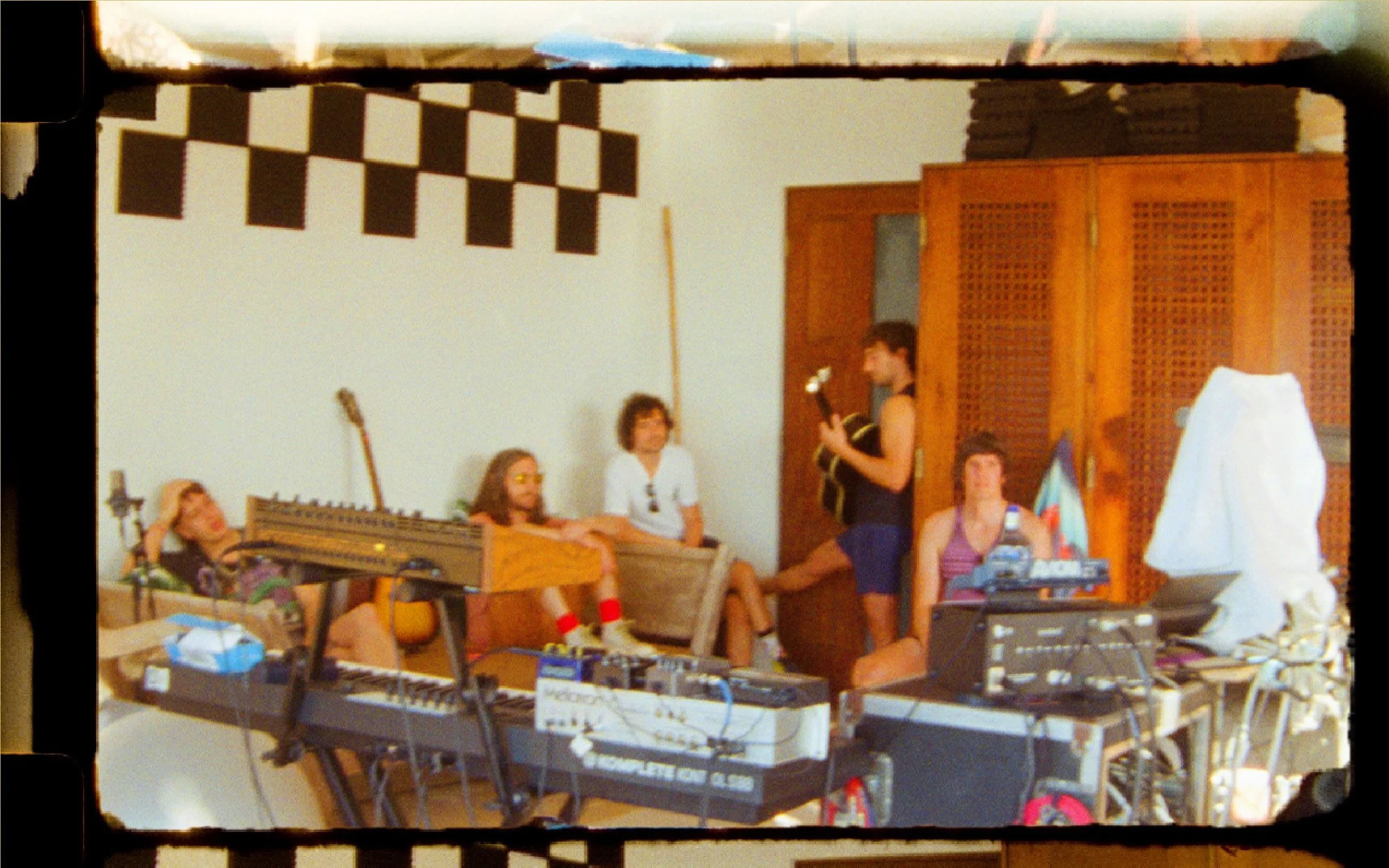
With their new album Reality Awaits out now, what better time to go through The Strokes’ catalogue and attempt to pick out their 25 best songs? Turns out, it’s actually pretty difficult. The Strokes have built such a great catalogue over the past 25 years that getting the order right took some serious deliberation, and I’ve tried to give some love to tracks that don’t always get their flowers alongside the obvious classics.
The Strokes are one of the bands that have defined my life musically. My introduction came through ‘Vision of Division’, which I stumbled across on MySpace as a teenager before working my way backwards through everything they had released. From there, they became a gateway into an entire world of music, and Julian Casablancas remains my favourite male vocalist of all time.
What makes their catalogue particularly interesting to look back on now is just how much exists beyond those first two records. Is This It changed everything and Room on Fire refined that early sound, but First Impressions of Earth went bigger and stranger, Angles and Comedown Machine pushed them into unexpected territory, and The New Abnormal proved nearly 20 years into their career that they were still capable of writing some of their greatest songs. Now Reality Awaits adds another chapter to that story.
So while you’ll find ‘Last Nite’, ‘Someday’ and all the songs you’d expect here, I didn’t want this to become another list dominated entirely by Is This It. There are deep cuts, underrated gems and late-career songs that I genuinely think stand alongside the best music they’ve ever made.
Ultimately, these are the 25 Strokes songs I keep coming back to. I’m sure there will be plenty of disagreements, but that’s half the fun when you’re dealing with a catalogue this good.
25) Lonely in the Future
At least one song from Reality Awaits deserves to be on this list, and for me, ‘Lonely in the Future’ is comfortably the best song on the album. People can complain about the Auto-Tune all they want, but beneath it is an absolute banger: instantly infectious, ridiculously melodic and home to one of Casablancas’ strongest vocal melodies on the record. There’s even a reference to infamous music reviewer Anthony Fantano as part of a wider jab at criticism, with Casablancas arguing that great art is rarely understood or appreciated straight away. Whether you buy that argument or not, ‘Lonely in the Future’ hardly needs defending. This is The Strokes through and through, and proof that 25 years into their career they can still write a song worthy of standing alongside their best.
24) What Ever Happened?
‘What Ever Happened?’ opens Room on Fire in spectacular fashion. I remember driving around in my dad’s car with friends, belting this one out at the top of our lungs. Its opening sentiment, “I wanna be forgotten / And I don’t wanna be reminded”, feels particularly striking considering where The Strokes found themselves in 2003. In just a couple of years, they’d gone from playing tiny New York clubs to being hailed as the band that had supposedly saved rock music, while Is This It was already being treated as an instant classic. ‘What Ever Happened?’ captures some of the exhaustion that came with that sudden fame, making it a fitting way to open their hugely anticipated second album.
23) Welcome to Japan
‘Welcome to Japan’ is easily one of the most fun songs on Comedown Machine, and one of those Strokes tracks where every section seems to have its own hook. The verse is great, the pre-chorus gives us the brilliantly ridiculous “I didn’t know the gun was loaded” and “what kind of asshole drives a Lotus?”, before everything opens up into a huge chorus with some of the best vocal harmonies on the album. Nikolai Fraiture’s bassline is fantastic throughout, giving the song this slinky, almost funky momentum, while Casablancas sounds like he’s having more fun than he does almost anywhere else on the record. Comedown Machine has plenty of strange detours, but ‘Welcome to Japan’ is just a ridiculously good pop song.
22) Ize of the World
How many words ending in “-ize” can Jules fit into one song? Well, ‘Ize of the World’ answers that question with a ridiculous 18, turning what could have been a gimmick into one of the cleverest lyrical sequences of his career. The song keeps escalating as Casablancas moves from the mundane routines of everyday life towards consumerism, violence and eventually complete destruction, before the whole thing abruptly cuts out mid-word. Then there’s the guitar solo, which has a genuine claim to being among the five best in The Strokes’ catalogue. ‘Ize of the World’ is First Impressions of Earth at its most ambitious: weird, anxious, ferocious and completely committed to the bit.
21) I Can’t Win
The closing track on Room on Fire, ‘I Can’t Win’ is the perfect song to put on when nothing is going your way. Casablancas spends the whole thing trapped in a cycle of frustration and defeat, seemingly resigned to the fact that whatever he does, he’s going to come out on the losing side. Yet for a song built around failure, it’s ridiculously fun, with one of the album’s most infectious choruses and a restless energy that never lets up. As a finale, it’s quintessential early Strokes: frustrated, self-defeating and somehow still effortlessly cool.
20) Machu Picchu
‘Machu Picchu’ opens Angles and immediately makes it clear that this isn’t going to be another Is This It-style Strokes record. Written musically by Nick Valensi with lyrics from Julian Casablancas, it’s a product of the more collaborative approach that made Angles such a strange and distinctive entry in their catalogue. Casablancas jumps between relationships, sex, frustration, politics and social control, with ideas of power running throughout: who has it, who thinks they have it and how easily people can be manipulated by the systems around them. Somehow, all of that is wrapped inside one of the catchiest songs on Angles.
19) 12:51
Few songs capture the subtle evolution between Is This It and Room on Fire better than ‘12:51’. Released as the latter’s lead single, it introduced the album with Nick Valensi’s bright, synthetic guitar riff, giving the song its unmistakable new-wave character, while Casablancas turns his attention to something much simpler: it’s 12:51 in the morning, the night is winding down and he wants someone to come home with him. There’s still that familiar emotional distance beneath the invitation, with Casablancas somehow sounding lonely even while pursuing intimacy. Accompanied by Roman Coppola’s Tron-inspired video, ‘12:51’ became The Strokes’ first UK Top 10 single and offered the first glimpse of the slightly stranger world of Room on Fire.
18) Taken for a Fool
One of the highlights of Angles, ‘Taken for a Fool’ emerged from the album’s more collaborative writing process, with Nikolai Fraiture writing the music and Casablancas supplying the lyrics. Its strange, twitchy verses give way to one of the record’s most immediate choruses, while lines like “Monday, Tuesday is my weekend” retain that classic Strokes sense of living slightly outside normal life. It was also responsible for one of the coolest moments of the Angles era, when Elvis Costello joined the band to perform it at Madison Square Garden in 2011.
17) Under Control
‘Under Control’ is one of the most effortlessly cool moments on Room on Fire, slowing things down amid the album’s more frantic moments. It plays like a 1950s or ’60s soul ballad filtered through The Strokes, with the feel of a slow dance at the end of the night. Casablancas’ voice still carries that distinctive distorted Room on Fire treatment, but his performance is unusually tender and exposed, revealing a softer side of the band that makes ‘Under Control’ stand apart from almost everything surrounding it.
16) Trying Your Luck
One of the more emotional cuts on Is This It, ‘Trying Your Luck’ is an underrated gem and one of The Strokes’ oldest songs. The verses feel restrained and almost defeated before everything opens up in the chorus, with Casablancas pushing his voice into something genuinely desperate. It’s a side of the band that sometimes gets lost beneath all the talk of Is This It’s effortless cool and detachment, instead hinting at the more openly emotional songwriting Casablancas would explore on songs like ‘Under Control’ and, much later, ‘Ode to the Mets’.
15) Bad Decisions
‘Bad Decisions’ is The Strokes openly indulging in nostalgia. Built around a progression so indebted to Billy Idol’s ‘Dancing with Myself’ that Idol and Tony James receive songwriting credits, it throws itself into bright ’80s new wave while still sounding unmistakably like The Strokes. There’s something fitting about an older Casablancas singing about continuing to make bad decisions, too. Nearly two decades after admitting he would “say the right thing but act the wrong way”, apparently getting older hasn’t solved much. It’s knowingly familiar, ridiculously catchy and one of The New Abnormal’s most immediate songs.
14) Meet Me in the Bathroom
This is one of the most badass songs on Room on Fire, and one that captures the seedy excitement of early The Strokes better than almost anything else they recorded. Albert Hammond Jr. described ‘Meet Me in the Bathroom’ as “the first new one” written after the debut and revealed that its chord progression was based on an old jazz progression. Lyrically, it’s a snapshot of young, fucked-up New York nightlife: sex, partying, half-remembered conversations and emotional detachment. The title would eventually come to represent that entire era, with Lizzy Goodman borrowing it for her 2017 oral history of the New York scene, later adapted into a documentary in 2022.
13) Barely Legal
Before Is This It, ‘Barely Legal’ appeared alongside ‘The Modern Age’ and ‘Last Nite’ on The Modern Age EP, the three-song release that helped create enormous buzz around The Strokes in the UK. Lyrically, it’s full of the youthful hedonism, irresponsibility and sexual frustration that would come to define much of their debut. Casablancas isn’t particularly fond of it these days, admitting in 2018 that the song makes him “cringe a little bit”, while still describing it as youthful and sassy. Musically, though, it’s an early example of just how deceptively simple The Strokes could sound, and a blueprint for much of what would follow.
12) Life Is Simple in the Moonlight
‘Life Is Simple in the Moonlight’ was the only recording from The Strokes’ abandoned sessions with producer Joe Chiccarelli to survive onto the finished Angles, and it really makes you wonder what that version of the album might have sounded like. There’s a warmth and spaciousness to the production that stands apart from much of the record, while Casablancas delivers one of his most tender vocal performances. The whole thing has a slightly dreamy, melancholic quality that suits its position as the album’s closer perfectly. For an album born from such a notoriously fractured recording process, ‘Life Is Simple in the Moonlight’ feels remarkably complete. It’s perhaps the strongest song on Angles, and makes me wish we’d heard more from those original sessions.
11) Heart in a Cage
By the time The Strokes reached First Impressions of Earth, the effortless cool of their early records had begun to turn into something altogether more anxious. Nowhere is that shift clearer than on ‘Heart in a Cage’. Nick Valensi’s relentless guitar figure races beneath huge distorted chords, while Julian Casablancas sounds increasingly desperate as he sings about feeling trapped by relationships, expectations and his own destructive behaviour. Even the reckless lifestyle that once defined so much of his songwriting offers little escape: “I don’t feel better when I’m fucking around.”
There’s a claustrophobia to ‘Heart in a Cage’ that its title captures perfectly. Everything feels like it’s pushing against something, from Casablancas’ increasingly forceful vocal to guitars that seem incapable of sitting still. Released as the second single from First Impressions of Earth, it also came backed with ‘I’ll Try Anything Once’, the beautiful early version of ‘You Only Live Once’. Twenty years later, ‘Heart in a Cage’ remains one of the clearest examples of The Strokes taking the precision of their early sound and turning it into something bigger, heavier and far more desperate.
10) The Modern Age
Before Is This It, before ‘Last Nite’ and before The Strokes were being hailed as the saviours of rock music, there was ‘The Modern Age’. Released alongside ‘Barely Legal’ and ‘Last Nite’ on their debut EP in early 2001, the song helped ignite the enormous buzz that would follow them across the Atlantic. There’s also something wonderfully appropriate about one of Casablancas’ defining early lines: “Work hard and say it’s easy.” Few phrases better describe The Strokes themselves, a band whose apparent effortlessness disguised just how meticulously constructed their music was. ‘The Modern Age’ might be a song about wanting to escape the boredom and routine of young adulthood, but its title proved strangely prophetic. Within months, The Strokes were being treated as the beginning of a new era of guitar music.
9) Ode to the Mets
“Drums please, Fab.” ‘Ode to the Mets’ is one of the best songs on The New Abnormal, and a personal favourite. I love the way it begins with an almost completely out-of-time synth before Casablancas launches into one of his grandest croons. It’s incredibly catchy, but there’s a real emotional weight underneath it.
‘Ode to the Mets’ is essentially built around accumulation. It begins almost skeletal, then the drums arrive, more guitars enter and Casablancas becomes increasingly emotional until everything culminates in that enormous repeating outro. There’s nothing ridiculously complicated about it; it’s the repetition and gradual increase in intensity that makes it so overwhelming. By the final section, Casablancas has abandoned the classic detached Strokes cool entirely. He sounds exhausted and genuinely hurt.
In many ways, ‘Ode to the Mets’ takes one of the defining subjects of Casablancas’ early songwriting, the disappointment and uncertainty of getting older, and finally approaches it from the other side.
8) Call It Fate, Call It Karma
This is such a beautiful and incredibly out-of-place Strokes song, one of the real gems on Comedown Machine and part of what makes that album such an underrated classic.
The instrumentation is muffled and distant, Casablancas sings in an unusually delicate falsetto, and the whole recording has this degraded, almost pre-rock quality. Rather than finishing Comedown Machine with a huge guitar track, The Strokes disappear into something closer to lounge music, bossa nova and an old jazz standard.
The production is particularly important. Casablancas’ voice feels like it’s coming through an old speaker, while the piano and guitar are deliberately softened around the edges. It’s one of those Strokes songs where the texture of the recording is almost as important as the composition itself.
7) You Only Live Once
Few songs demonstrate The Strokes’ ability to completely transform an idea better than ‘You Only Live Once’. It began life as ‘I’ll Try Anything Once’, a sparse and beautiful demo built around Julian Casablancas and an electric piano, before emerging as the bright, propulsive opener to First Impressions of Earth. The melancholy of the original is replaced by crisp guitars and one of the band’s most immediately uplifting melodies, while Casablancas runs through the personalities, religions and countless expectations that supposedly dictate how we should live.
That optimism becomes even more striking in the context of an album increasingly consumed by anxiety, isolation and getting older. Where songs like ‘Heart in a Cage’ and ‘Ize of the World’ find Casablancas trapped by the world around him, ‘You Only Live Once’ offers a rare moment of release. Twenty years on, both versions have become beloved in their own right, but it’s the finished song that captures The Strokes at their most effortlessly joyous.
6) Last Nite
If one song turned The Strokes from New York’s most hyped new band into genuine rock stars, it was ‘Last Nite’. First appearing on The Modern Age EP before being re-recorded for Is This It, its famously simple opening riff bears more than a passing resemblance to Tom Petty and the Heartbreakers’ ‘American Girl’, something Petty himself took in good humour. Lyrically, it’s another classic Casablancas contradiction. A relationship is falling apart and everyone feels misunderstood, yet he responds by pretending none of it particularly matters. That tension between wanting connection and refusing to admit you care runs throughout Is This It, but rarely was it packaged quite so perfectly. ‘Last Nite’ is The Strokes’ entire early philosophy transformed into pop music: immediate, effortless and with absolutely nothing wasted.
5) Someday
Julian Casablancas was barely into his twenties when he wrote ‘Someday’, yet somehow he was already nostalgic for a period of his life he was still living through. Across one of Is This It’s warmest melodies, he looks towards a future where friendships drift apart, relationships end and the messy present becomes the “good old days”. There’s no great tragedy to any of it, just an understanding that the people and places surrounding you won’t always be there.
More than 25 years later, that sentiment has taken on an entirely new weight. The New York scene surrounding The Strokes disappeared, the five friends grew older and Is This It itself became an object of enormous nostalgia. Roman Coppola’s video, filled with footage of the band drinking, smoking and simply hanging out together, now feels like a time capsule of exactly the youth Casablancas knew he would one day miss. The Strokes wrote one of their greatest songs about nostalgia before they had even created the era everyone would become nostalgic for.
4) Juicebox
After Room on Fire was criticised in some quarters for sticking too closely to the formula of Is This It, The Strokes returned with ‘Juicebox’ and immediately blew that criticism apart. Nikolai Fraiture takes centre stage with that enormous, menacing bassline, while David Kahne’s heavier production gives the guitars and drums a force almost completely absent from their first two records. Most striking of all is Casablancas, abandoning his trademark detached drawl as the song builds until he’s practically screaming his lungs out.
Released as the lead single from First Impressions of Earth, ‘Juicebox’ announced a bigger, heavier and considerably less restrained version of The Strokes. Beneath all that aggression is a song about sexual frustration and obsession, with Casablancas sounding increasingly desperate as it progresses. The effortless cool that defined their arrival had been replaced by something far more volatile.
3) The Adults Are Talking
Nearly two decades after Is This It, ‘The Adults Are Talking’ proved The Strokes could still take the foundations of their original sound and create something genuinely new from them. Albert Hammond Jr. and Nick Valensi’s clean guitar lines slot effortlessly around one another, Fab Moretti and Nikolai Fraiture keep everything impossibly tight, while Julian Casablancas moves between his familiar lower register and the fragile falsetto that has come to define much of his later work. It’s classic Strokes architecture without ever sounding like an attempt to recreate the past.
Lyrically, Casablancas moves between relationships and wider frustrations with power, class and those who get to control the conversation, giving the song a scope far beyond the romantic dysfunction of their earliest records. Despite not being one of The New Abnormal’s pre-release singles, ‘The Adults Are Talking’ became the album’s defining song. It isn’t simply a great late-career Strokes song; it belongs alongside the very best music they’ve ever made.
2) Hard to Explain
Released as The Strokes’ first UK single, ‘Hard to Explain’ contains virtually everything that made the band feel so exciting from the outset. Fab Moretti plays with such rigid precision that his drums resemble a machine, while Albert Hammond Jr. and Nick Valensi’s guitars constantly appear and disappear around one another. There’s no enormous solo or dominant riff; the arrangement itself is the hook, every instrument given exactly as much space as it needs.
At its centre is one of Julian Casablancas’ defining early contradictions: “I say the right thing but act the wrong way.” He knows how he’s supposed to behave, yet repeatedly finds himself doing the opposite, unable to properly articulate why. It’s Is This It in miniature: perfectly controlled music about people with absolutely no control over themselves. More than 25 years later, ‘Hard to Explain’ remains one of the purest distillations of what made The Strokes special in the first place.
1) Reptilia
If one song captures everything that makes The Strokes such a thrilling band, it’s ‘Reptilia’. I used to play it outside the botanical gardens in Edinburgh with my school friends DJ and Malbie. Me and DJ would both play acoustic guitars while Malbie played violin, which was probably one of the poshest renditions of ‘Reptilia’ you were ever going to hear. But hey, it made us enough busking money for cigarettes and booze when we were 16, so it was worth it.
All these years later, it’s still the song I come back to as The Strokes at their absolute best. Casablancas is at his most ferocious, particularly as the chorus takes on this almost polyrhythmic feel around him, while the entire band somehow makes a remarkably simple chord progression feel increasingly frantic. Then there’s the build, the precision of Fab Moretti’s drumming and the way Albert Hammond Jr. and Nick Valensi’s guitars constantly push against one another without ever overwhelming the song.
It’s just as good live. Few moments in a Strokes set can match the release of Casablancas screaming “the room is on fire as she’s fixing her hair”, the lyric that would ultimately give Room on Fire its title. There are stranger, sadder and more ambitious songs in their catalogue, but none capture the sheer physical excitement of The Strokes quite like ‘Reptilia’. Everything about it is perfect.