
Sennheiser HDB 630 Review
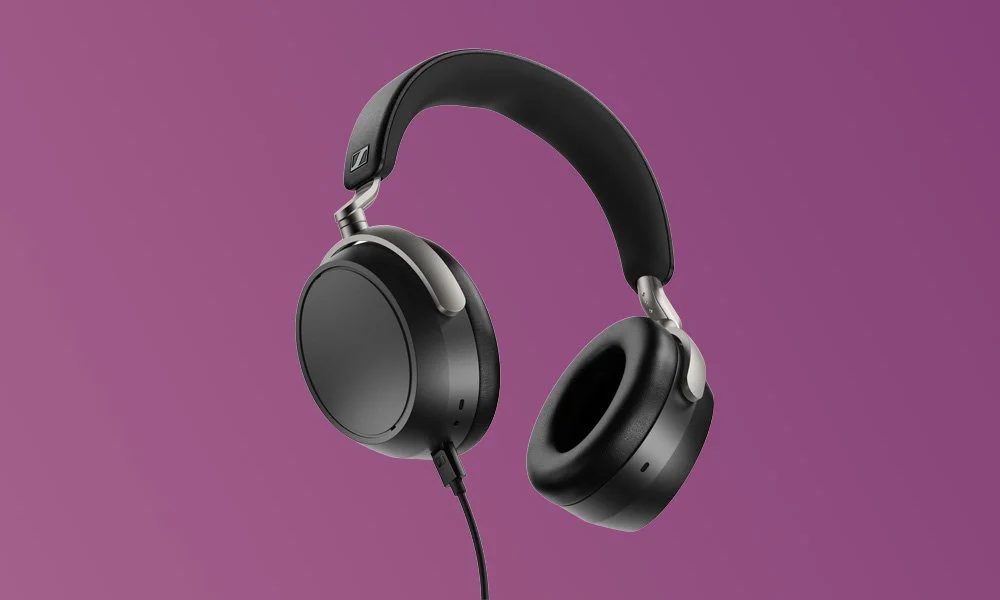
Sennheiser’s HDB 630 put exceptional sound quality at the heart of the wireless listening experience.
For all the convenience wireless headphones have brought to listening to music, there has always been a compromise at their heart. Bluetooth might have freed us from tangled cables and made listening on the move infinitely easier, but wired listening has traditionally remained the preferred option for those prioritising sound quality above everything else.
The Sennheiser HDB 630 are the first headphones we’ve ever reviewed at Still Listening, so it feels appropriate to start with a pair designed so explicitly around the act of listening itself. Sennheiser’s latest premium wireless over-ears attempt to narrow the gap between wireless convenience and audiophile sound, combining active noise cancellation, extensive EQ controls and enormous battery life with an unusually strong emphasis on audio quality. At £399, expectations are understandably high, but after spending the past week listening to everything from Sufjan Stevens and A Tribe Called Quest to Black Moth Super Rainbow and Talking Heads, the HDB 630 have made an extremely convincing case for what wireless listening can sound like.
Features & First Impressions
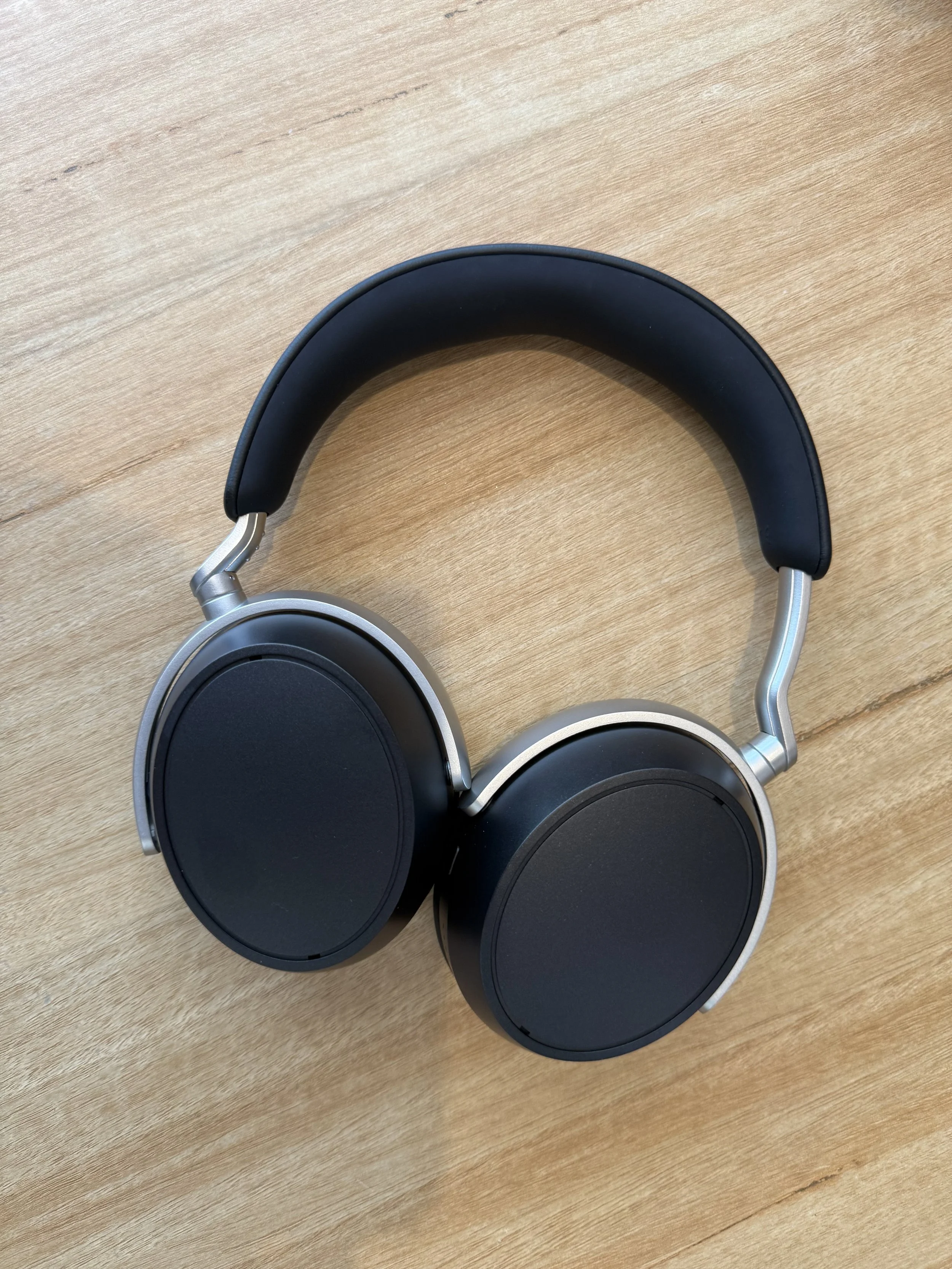
The HDB 630 arrive with pretty much everything you'd expect from a pair of premium wireless headphones. Alongside the headphones themselves, Sennheiser includes a protective carrying case, USB-C charging cable, 3.5mm audio cable and the tiny BTD 700 dongle, which we'll come back to shortly. Getting everything up and running is straightforward, with the headphones connecting quickly over Bluetooth and most of their features accessible through the Smart Control Plus app.
The app itself is intuitive, although the sheer number of ways you can adjust the sound can initially feel a little overwhelming. Alongside a selection of presets, there are extensive EQ options and even the ability to create and save your own preset, giving anyone inclined to tinker plenty to play with. After experimenting with them, though, I kept returning to the Neutral setting. It feels the most natural and versatile across different styles of music, and given how balanced the HDB 630 already sound, I rarely felt much need to mess with them.
The touch controls take a little longer to become familiar. Sennheiser has packed a considerable number of functions onto the right earcup and, during my first few days with the HDB 630, I occasionally found myself having to remember which gesture controlled what. They're responsive, though, and once you learn your way around them, navigating playback without reaching for your phone becomes considerably easier.
Battery life might be the feature I've thought about least, which is probably the greatest compliment I can give it. Sennheiser claims up to 60 hours of playback with ANC enabled, dropping to 45 hours when using the BTD 700 dongle, and after a week of regular use I've only needed to charge the HDB 630 once.
Sound
Sound quality is ultimately where the HDB 630 make their strongest case. One of their most interesting features is the tiny BTD 700 USB-C dongle included in the case. Plugged into a compatible phone, tablet or laptop, it effectively sidesteps some of the limitations of standard Bluetooth playback by enabling aptX Adaptive, allowing the headphones to receive audio at up to 24-bit/96kHz. On paper, that sounds impressive enough. More importantly, the difference is actually audible.
With the dongle connected, there was a noticeable improvement in clarity, separation and, most significantly, depth. That became particularly apparent on more stripped-back recordings like Sufjan Stevens’ ‘Seven Swans’. The close-miked vocal felt startlingly intimate, with more texture in Stevens’ voice and a greater sense of space around it, almost as though he were whispering directly into your ear. Individual details were easier to place within the mix too, without the headphones making the song feel clinical or overly analytical. When the song’s sparse arrangement eventually erupts into that biblical finale of thunderous piano and choir, the HDB 630 handled the sudden increase in scale brilliantly.
A Tribe Called Quest’s ‘Excursions’, meanwhile, demonstrates just how well the HDB 630 handle the low end. It’s a recording I know particularly well, having previously owned an original vinyl pressing before replacing it with the Vinyl Me, Please reissue. Its low end has always had a slightly murky quality, but through the HDB 630 there’s an impressive amount of clarity within that murkiness. The jazzy double bass sample remains clearly distinguishable from the deeper, more sub-heavy bass layered beneath it, with neither bleeding into Q-Tip’s vocal above. The kick doesn’t hit with quite the same intensity, but the separation between those different elements gives the recording a noticeably more three-dimensional quality. Crucially, that extra definition doesn’t clean the track up to the point of changing its character; the murk and warmth are still there, you can simply hear further into them.
One of the most revealing things about the HDB 630 is just how much they uncover in songs I thought I knew like the back of my hand. On Black Moth Super Rainbow’s ‘Sun Lips’, the vocals have far greater separation than I’m used to hearing, exposing subtle harmonies and smaller details buried within the mix that I’d somehow never picked out before. The same is true of Talking Heads’ ‘The Great Curve’, only on a much larger scale. It’s an extraordinarily busy recording, packed with interlocking guitars, percussion, bass, vocals and backing vocals, yet through the HDB 630 every part remains remarkably clear and distinct. There’s a precision to the separation that makes it possible to focus on individual elements without losing the controlled chaos of the song as a whole.
Across everything I listened to, that sense of clarity and separation remained the HDB 630’s defining characteristic. These aren’t headphones that exaggerate the low end or sharpen everything in pursuit of artificial detail. Instead, they create an impressive sense of space within a recording, allowing individual instruments and voices to occupy their own place without pulling the music apart in the process. They sound excellent over a standard Bluetooth connection, but the dongle pushes that performance noticeably further, adding the depth and definition that ultimately makes the HDB 630 feel special.
Design & Comfort
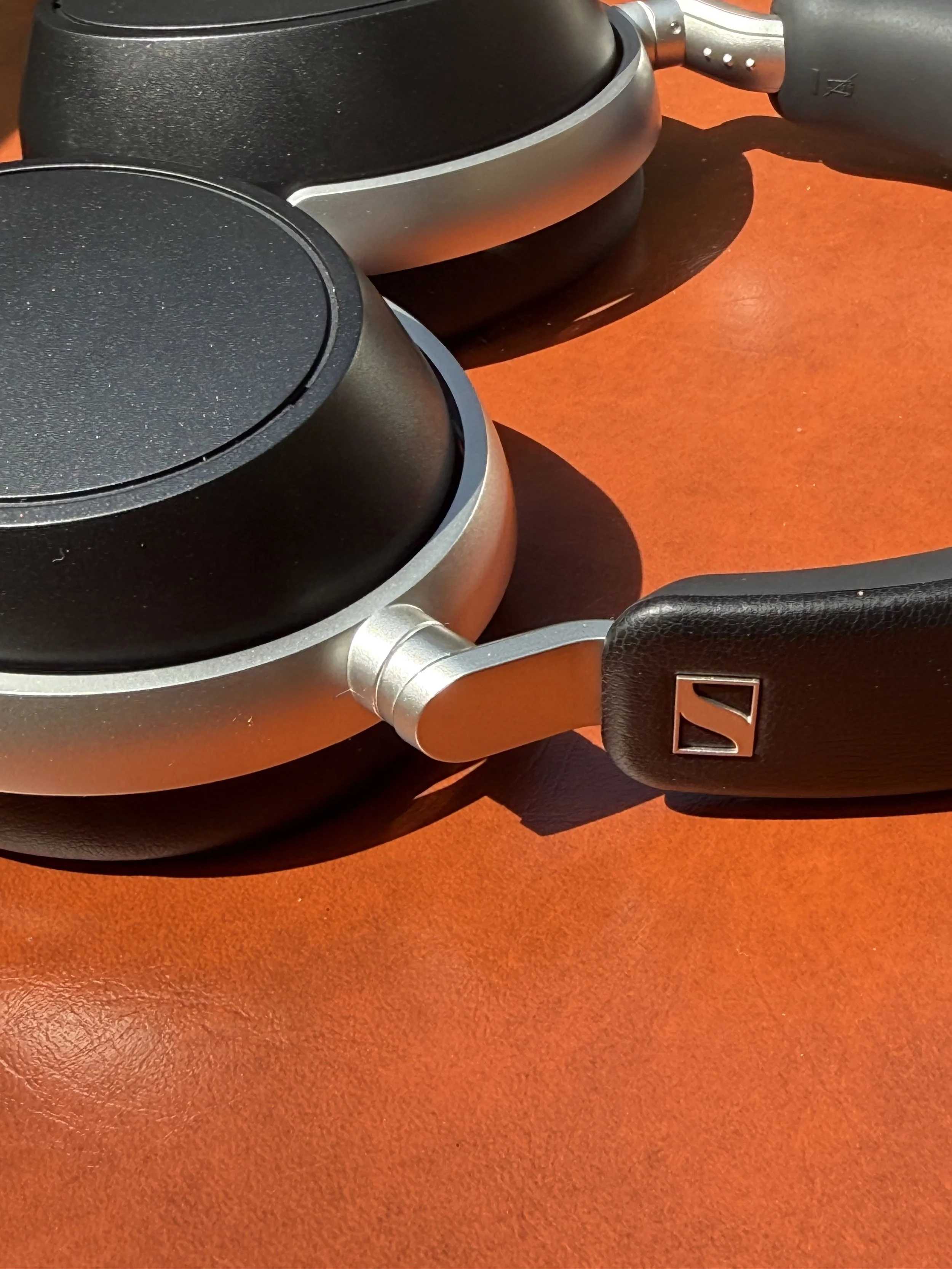
The HDB 630 aren't particularly flashy, especially compared with some of the more style-conscious headphones at this price, but there's something appealing about their understated design. They're sleek and relatively minimal, with little about their appearance drawing unnecessary attention to itself.
Comfort is one of the HDB 630’s strongest qualities. Even across extended listening sessions, I never experienced the pressure or fatigue that can creep in with over-ear headphones, and they’re noticeably more comfortable than my old Bose QC35. The earcups sit softly around the ears without feeling overly tight, making it surprisingly easy to forget you’re wearing them after a while.
There is one downside, although I’m not sure Sennheiser can be held entirely responsible for London’s current weather. After an hour or so, things can get pretty warm beneath the earcups, and on particularly hot days I found myself taking them off occasionally just to give my ears some air. That aside, they’re among the most comfortable over-ear headphones I’ve spent any significant time with.
Noise Cancellation
The noise cancellation has been equally impressive in everyday use. With music playing, someone could speak directly beside me without me hearing them, although strangely, my own voice remained clearly audible when I responded. It creates a slightly surreal sensation at first, but also demonstrates just how effectively the headphones isolate you from what’s happening around you.
The real test came on London’s Northern line, where the HDB 630 did an excellent job of suppressing the harsh mechanical screech and low rumble that can easily overwhelm quieter sections of music. Rather than constantly reaching for the volume as the train picked up speed, I could continue listening comfortably without the outside world fighting its way into the mix. Based on the headphones I’ve personally used, the ANC is the best I’ve experienced, comfortably outperforming my old Bose QC35.
Are the HDB 630 Worth It?
At £399, the HDB 630 are undoubtedly a significant investment, particularly when there’s no shortage of excellent wireless headphones available for considerably less. After living with them, though, the price becomes considerably easier to justify.
Ultimately, that comes back to sound. The HDB 630 have repeatedly made me notice things in recordings I’ve listened to hundreds of times, whether that’s a buried vocal harmony, the space between instruments or simply a greater sense of depth within a familiar mix. The BTD 700 dongle might seem like a small addition, but it pushes that experience noticeably further, while the excellent noise cancellation, exceptional comfort and enormous battery life mean there are few compromises elsewhere.
They aren’t completely flawless. The touch controls can feel overcomplicated at first, and the tiny dongle is exactly the sort of thing I can imagine disappearing into the depths of a bag. But those are relatively minor complaints about a pair of headphones that, where it matters most, are difficult to fault.
If you’re spending this much because music is the priority, the HDB 630 make a remarkably convincing case for themselves.