
The Wit and Wisdom of Alcopop! Records: ‘Just be a Cool Person’
Jack Clothier of the tragically-hip Alcopop! Records talks unconventional release styles, non-opportunistic roster curation, and the moral imperatives of running a modern record label.

For every action, there is an equal and opposite reaction.
This law of motion comes to mind whenever two feedback streams about the state of the music label industry in the UK repeatedly criss-cross over each other. Within the span of one industry mixer, I will hear a semi-fatalistic account about how the reigning distributors cripple independent efforts; and in the same night, someone will affirm that the DIY entrepreneurial spirit is ‘stronger than ever’. Initially, each report sounds mutually exclusive from the other - but then again, the reactive nature of independent entrepreneurship has always depended on inequities existing at scale. This motif of reactivity - against social conventions, unfair treatment for artists, life-changing contracts born out of your father ‘knowing a guy’ - has always functioned as both the head and the heart of the broader independent music industry, labels more than included. However, what ‘reaction’ looked like in the business of taste-curation specifically used to play out far more reflexively.
Before certain temporal and practical shifts in the consumption of music congealed from ‘technological experiment’ to ‘irreversibly integrated’, the label industry was more functionally dualistic. Mega-media conglomerates simply wouldn’t sign certain sounds, meaning independent labels - who purveyed experimental sounds and unharnessed artists from stricter expectations - more than earned their mythological status as the ‘saviors of alternative music.’
However, not only has the average modern label warmed toward experimental records, but artists have found themselves having less need for a middleman at all. This isn’t to suggest that it’s easier to succeed in the industry than ever; as many in the industry bemoan, the supposed ‘democratization’ of artist-consumer relationships in recent years is often glorified far beyond its means. While media access reduced the need to sign upfront - partially disarming labels from their usual defences - most still run into the arms of a socially privileged and financially-lubricated label once they have a couple of decently impressive metrics pinned to their name. Likewise, most labels now adjust their offers based on preexisting social media hype, pushing independent artists toward an almost Panoptocopic form of self-curation. A new equilibrium arises: a lucky few artists can benefit from their newfound autonomy, but most opt to sign to a label after online success anyway - and standout artists who couldn’t or wouldn’t use social media suffer in their dealings due to meager metrics.
Many independent labels also aim for their signed tracks to become digitally airborne, meaning the potential online performance of an artist rarely strays far from their periphery - whether an admitted point of serious consideration or not. Arguably, for the first time in music history, the main difference between the chronically-online independent label and its counterpart can offer an individual artist largely boils down to the amount of money and industry connections included in the deal. Within this absurdist reality lies a larger paradox: while it is easier to start an independent brand than ever, perhaps they have never been less essential merely by default.
The industry-mixer mythology of a robust and alive DIY spirit can be true while not capturing the full story: the ‘independent label’ still wants to stay reactive to the mega-disseminators, but the current equation - digitalized mediums that empower artists more than ever to hold out on signing with anyone, and larger labels that will often tolerate eccentricity anyway - has made it more demanding to walk fully in step with the traditional independent ethos than ever before.
The knifepoint question, then: how can a label be defined as bold by behavior rather than aesthetic in this particular epoch, while still staying financially afloat? Three main objectives come to mind. Under the modern system, an independent label can stand out via a willingness to sponsor artists via speculated cultural contribution rather than digital traction, considering release styles beyond streaming platforms, and via contributions to the local scene that extend beyond individual signings. It seems that many striving independent labels have tried to differentiate themselves by relating to a particularly passionate demographic (typically by getting more serious about their Bandcamp profile) or carving out a ‘niche’ on social media, but social literacy on digital platforms has become more of a baseline skill rather than a distinctive edge. Almost everybody is a marketing genius now - meaning nobody is.
Except for Jack Clothier. If I had to choose one mascot to represent the most purebred version of what all modern DIY labels shoot for in theory - tooth, moxie, a bit of creative restlessness - it might just be Alcopop! Records. If you have heard of them, there’s a decent chance it was following the release of a silent 7-inch vinyl - aptly named The Wit and Wisdom of Nigel Farage - and the label’s Twitter-viral threats to fill the seized radical-right UKIP website with fluffy rotating unicorn emojis. Maybe you’ve seen their pay-what-you-want branded shirts during Christmastime; or perhaps your tragically hip friend has ensured Alcopop! be anything but an unsung hero for its no-questions-asked low-income ticket options at its themed shows. Running on community goodwill and the sort of hypothetical financial optics that should immediately disqualify the credit applications of all involved since 2006, Alcopop! is one of the most on-the-nose cultural trophies of fortune truly favoring the bold remaining in the modern UK music industry.
“We’re actually coming up on its 20th birthday,” co-founder Jack Clothier tells me. “We started in 2006 in Oxford. My roommate Kevin and I had talked a lot about wanting to start a club night that merged new bands we were into with old bands we love because we both had a mad passion for retro, and there were very few people in the industry who absolutely adored that old stuff as we did.
We got more into the idea about turning the idea into a label, and then a demo came through for a band called Encyclopedia - we listened to it and were like, ‘This is the feel-good hit of the summer - let’s put it out.’ I borrowed a few hundred quid from my dad; but because we were young and foolish, we then bet all of the money on a football match. If our team lost, the label would be done for before it even started. The player we bet on scored the goal, which then meant that we had enough money to put our first release out, and we took it from there.
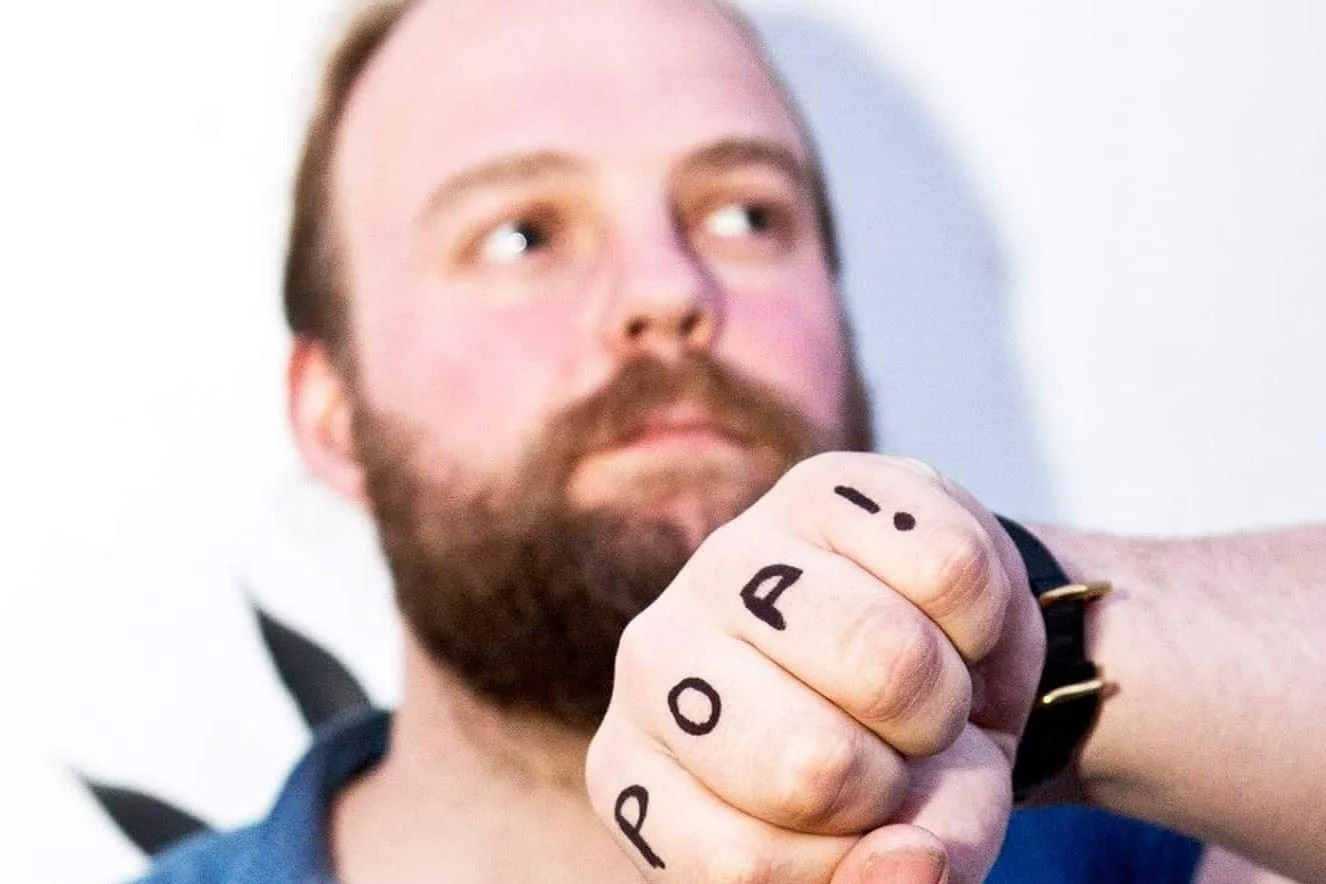
It was very much a passion project - we both had full-time jobs - so it was about 6 or 7 hours a week. But because we made it look good - not super slick - but DIY good - and were putting on branded shows, it felt like we had a presence. People started to see us as a bigger label than we were; some were even coming to us and going, ‘Can I get a job with you?’ I had someone ask me if I had thought about my private plane arrangements for an upcoming event; nobody really knows what’s going on behind the scenes! If I’d have said to people, ‘We really operate 6 or 7 hours a week whilst getting drunk between midnight and 4 AM’, it wouldn’t have sounded very professional - but because we had real output and had a nice little sight with twinkling stars as decor, we looked like we were a DIY label that had it together.
If you want to start a DIY label - and I would really encourage it - you really don’t need loads of stuff. You don’t need to have an expensive press or radio person on board, or a flashy website. What you need is creativity. You need enthusiasm, and you need a real drive to make it work. And I think if you’ve got those things, nothing else matters. Don’t go, ‘But I can’t, because I have to set up this bank account, etc.’ Just do it. Just be a cool person.”
Being a ‘cool person’ helped in many ways: the Alcopop! name spread just as much from general industry respect as associated music or visual aesthetics. “It’s all about building something that feels engaging - something people actually want to believe in and be part of. Even on a tight budget, we managed to do that in a way that felt meaningful. Like for shows, we’ll always try to include a low-income ticket option - sometimes a third of the standard price - no questions asked. There are limited allocations, but it’s about making sure there’s always a way in.
At Christmas, we do a pay-what-you-want sampler of everything we’ve put out that year. We also tend to run a pay-what-you-want T-shirt: you pay a minimum - like 50p plus a couple of quid postage - so we don’t lose money on production, but people can effectively get an Alcopop! shirt for very little. Some people pay more, which balances it out, and in the end, that means a couple of hundred people go to festivals or shows wearing something from the label. That kind of visibility built the brand in a way that feels organic. Yes, you can have a £30 super-deluxe vinyl for the people who want to support you at that level. But you also need entry points that are genuinely accessible - because people want to support things, they just don’t always have the money to do it at full price.
For a pay-what-you-want release with Tigercub, we wrote to every single person who bought the album. Each letter was coded, sent in strange envelopes with ‘Keep Watch’ stickers on the back, and posted out without warning. We got a lot of emails afterwards from people saying things like, ‘What the fuck is this?’ I just got this ‘Keep Watch’ letter through the door and thought I was being watched! Anyway, some people paid £30 or £40 for it, which meant that while a portion of it effectively went out for free, we didn’t lose money overall - which is kind of miraculous”.
But that was 20 years ago: as the verbiage always seems to go, ‘It was easier to do things more inventively back then.’ Or, when the company moved alongside Jack from Oxford to London, someone might say, ‘Welcome to the real world’: thankfully for my narrative arc, Alcopop! has passed the London-based streaming-era test.
“When we started, we were a physical-only label. That was always the plan. Then streaming turned up, and we reluctantly put our tracks on it - back when it was more iTunes than anything else. I do look at the streaming numbers, of course. When I see 200,000 monthlies or something, it’s exciting; but I’ve also signed bands who have 1000 monthlies because I love what they do. There are some bands we work with that I know are never going to be massive. I just love them, you know? And they have a space in a particular scene where I think they can do really well. And even beyond London, the world has such awesome music - I’m glad we can still sign international bands even after Brexit, which made it way more difficult. But ultimately, what I really like in a band is just seeing them do cool things. I don’t mean cool in a vacuous way - I mean seeing them do stuff that they really believe in, you know?
There also has to be a genre vagueness in terms of who we work with, because if we released the same record for twenty years, I’d be so bored. I always said that there’s been a seam of delicious melody going through our catalog, but no particular kind of genre. We’ve worked with sort of super nice acoustic-y, singer-songwriter stuff, and then we’ve taken on a band from Belgium that’s singing in their own language and plays proper metal riffs. We have really skimmed across the genres.
But that’s sort of our job, right? To just see that potential and do things with it. For me, it comes back to the song first and how they are as people second. The numbers will be third and fourth down the line. We can bring all of that joy in without having to dance for those greasy major label pounds.
Artists walk around with numbers around their necks in a way they never used to. Back then, you’d see a band in a packed Plymouth pub and think, ‘They’ve really got it.’ That was your metric. Now, every band has 100s of numbers around their neck, and any one of them can be used as a sort of yardstick as to why not to sign them. ‘They don’t stream very well.’ ‘They don’t sell very well.’ ‘Their engagement score is really sad.’ I think you find that the big labels especially can drop bands a lot quicker than they used to. I’ve seen them say, ‘We’ll feed all of your social numbers and streaming numbers into a calculator, and then it will work out what you’re worth.’ Oh man, you’ve really depressed me now. It’s horrible. But for us, I can happily say that we definitely do not operate like that.
I also hate the “all-in 360 deals” where labels take cuts of merchandise and everything else. I also really can’t stand super long-term deals because I don’t think they suit anyone. Our deals are typically between four and seven years, and I don’t think we’ve ever gone beyond that. Some labels do operate differently, and some have made a lot of money by signing a few megabands and then selling their catalogue. We’d never be able to do that. But I’m fine with that, because I think it’s a better way of doing business ethically.
And don’t get me started on the utilisation of political issues for clout. No names mentioned, but there is a label I don’t like for other reasons that does it a lot; there was a situation where a band was being told, “You need to push more on the Palestine thing”, which I find completely unacceptable. Of course, bands should talk about political issues - but to be told to do so in order to raise sales is awful. That kind of thing genuinely makes me sick. It’s performative, and I know it happens because I’ve had bands we used to work with tell me about similar experiences at other labels. I think it’s disgusting. So that kind of thing sits very high on my list of what not to do.
But the way I see it, our role is just getting the record out and making sure it goes into shops - all of that sort of stuff - with some sort of creative idea. A lot of that comes down to bashing silly ideas back and forth with a singer who likes making that sort of stuff work. I always think that running a record label is a lot about understanding people’s perspectives, right? That guy down the other end of the bar could say, ‘I run a record label,’ and I can say, ‘I also run a record label.’ Why would they sign for me rather than him? I know the magazines. I know how the features work. I know all the stuff you can do to kind of put yourself in a really nice perspective.”
If Alcopop! knows anything, it’s how to rile press attention: amongst other escapades, they have released a compilation on a bike, a ‘Hithikers Guide to the UK’ compilation, a treasure map, and a personalized sonic journey whenever their creative strategy felt due for an oil change. “With Alcopopular 3, the narrative around it was the thing. That one came out on a bike. So in terms of press, fans, and community, it became: ‘Alcopop! have released a record on a bike - what the fuck?’ And suddenly this compilation is £300 with a bike, and you get a whole yellow and red object wrapper built around it.
We did a ‘message in a bottle’ as well, which was bizarre. That one was like going back to being a kid. You know when you’re 5 or 6, and you make a pirate treasure map, tea-stain it, get your mum to bake it in the oven? It was that, basically. We were doing that at home. Great fun. So many nights just making pirate treasure maps to go with the compilations. And again, it worked. It was just like, um, I can't believe I've just spent £5 on it, a bottle with a piece of paper in it. We got an amazing write-up - NME were really positive, basically saying it was one of the coolest things that week. And it shifted a load of records.
Another fun one we did was a menu. It was a properly designed menu where you picked from seven starters, five mains, and three desserts; we’d then assemble the CD personally and send it out in a fluffy burger-style case. We also want to be the first label to release a perfume. I’m not even joking. A scent based on independent venues - cigarette smoke, beer, that kind of thing. It’s sort of like an environmental piece. Like: ‘Once these venues are gone, this is all you have left of them.’ The idea is: ‘If you don’t look after independent venues, this is what remains - a scent of what used to exist.’
See, as we’ve sort of grown up as a label, we’ve found that it doesn’t particularly help to have a set of templated things that we do. Part of the strategy comes down to not having so much money invested in any release or idea that if it completely failed, it would kill the label - it’s just to make sure that we’ve got enough to cover any mistakes we make, because the mistakes will be many.”
Time makes you bolder; especially when one repeatedly manages to tow almost every line possible and manage to stay in the game for years. While its philosophy has clearly skewed humanitarian since the first rollout of accessible offerings, Alcopop! has expressed its convictions even more brazenly in recent years: “I think we’ve become more political as we’ve gone. That works for me, because I feel like the indie music scene tends to be pretty progressive - we will often follow our more political bands when they go, ‘This is what we’re doing.’
I’ve always just been a firm believer that if you see an opportunity that feels even slightly interesting, you should run at it” - he preluded to the story of releasing ‘The Wit & Wisdom of Nigel Farage’, arguably their most implicitly political stunt yet - “The worst case with this kind of thing is usually that nothing comes of it. This one started when I saw a tweet - back when Twitter still felt usable - saying the UKIP website domain had expired and was up for sale. So I bought it. I just put it on Twitter thinking, ‘What am I going to do with this?’, and suddenly it went completely mental. And I don’t mean mildly viral - I mean absolute chaos. Within hours, it was going from people saying, ‘This is brilliant’ to leftist lawyers getting in touch saying, ‘We’re on your side, but you’re going to need us.’
By the end of the day, I was doing interviews with basically every political journalist in the country. My boss at the time was brilliant about it - I told her what had happened, and she just said, ‘Take the day, use the boardroom, do what you need to do.’ We eventually landed on a sort of holding idea for the website: rotating unicorns in every color while we figured out what to do with it. We also had messages from various groups asking if they could use it for campaigning purposes, which added another layer of surreal pressure. Then, by late afternoon, GoDaddy had reverted the domain to its original owners - it turned out to be a cyber-squatting issue - so the whole thing disappeared almost as quickly as it had arrived. But by then, the damage had already been done.
We knew a label that had done something similar years ago in the U.S. - they pressed a record called The Wit andWisdom of Ronald Reagan - and we thought it was such a good idea. So we basically asked: why not do the same with Farage? It hadn’t really been done for decades, so we went for it. We pressed a blank 7-inch: The Wit and Wisdom of Nigel Farage, with a remix of silence on the B-side by Rolo Tomassi, who were kind enough to get involved and just said, “Of course, we’ll do that.” We sent a copy to Farage’s office. I knew someone who was working there at the time said they were… not pleased.
But we’re an indie label, right? So we can push. You can sue us, but there’s not much point, because you’re not going to get an awful lot of money. Plus, the backlash you get would be crazy. I’m sure it’ll all come to bite us one day” - but all roads seemingly circled back to this ethos - “Ultimately, when I’m dead and gone, I just want people to go: ‘Regardless of what I thought about Alcopop!, at least they did interesting things.’”
