
Sincerity, satire, and savouring every moment - An interview with Alex Cameron
“I’m a musician who wishes they were a comedian”.
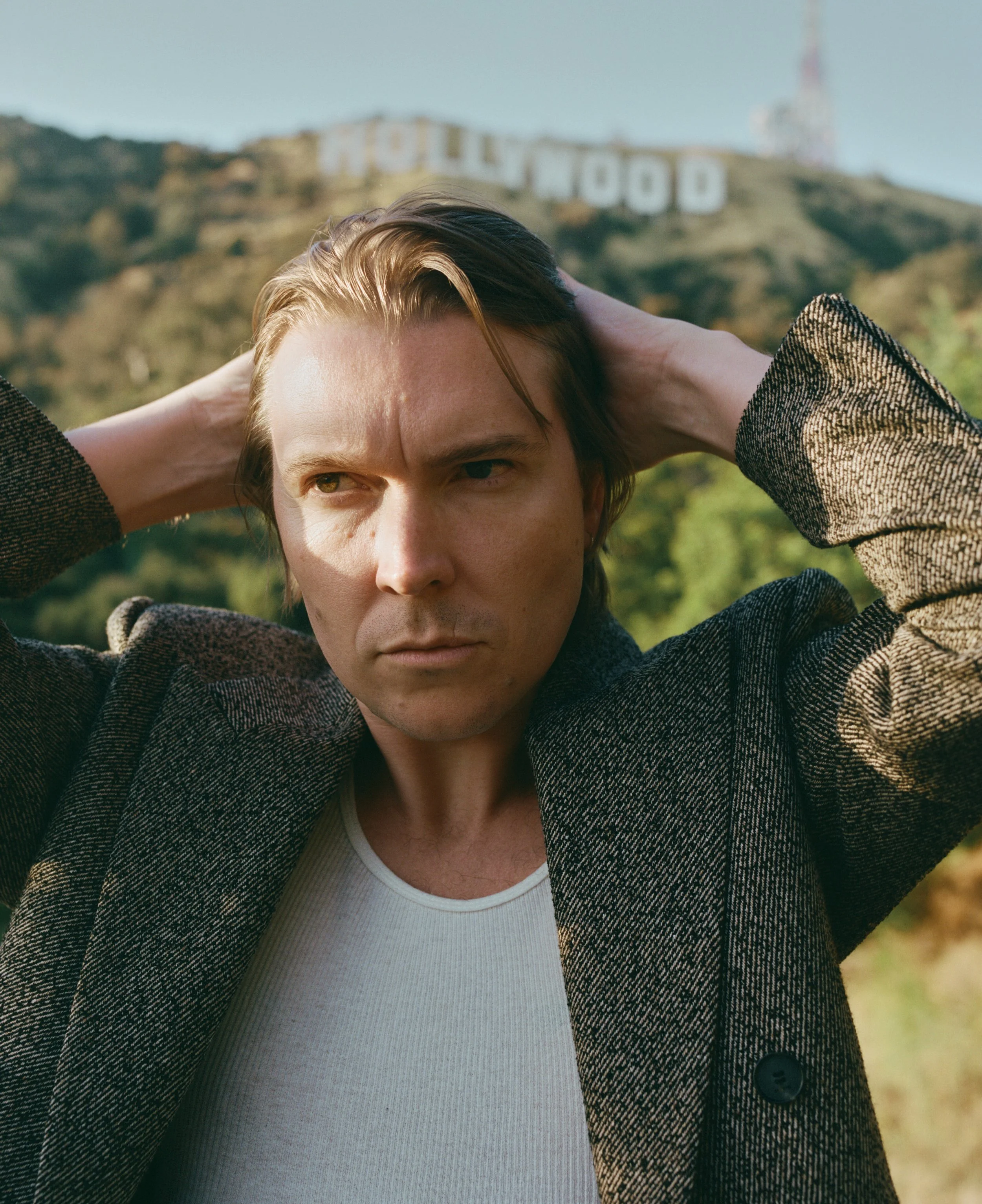
Humour has long been one of Alex Cameron’s strongest calling cards. That, and dancing across the line between satire and sincerity. Since coming out kicking with his debut Jumping The Shark, self released for free via his website in 2013, he has earned and enjoyed a career that the bar-skulking characters he often embodies could only have dreamt of. Consistent critical acclaim, touring with The Strokes, co-writing songs for The Killers; these peaks have been built on a foundation of exploring the depravity of less than savoury men with a wry smile and a glint in the eye that makes you second guess the sincerity of every step. The murky poetry is often held together with some of the catchiest songwriting this side of the millennium, a dichotomy that speaks to Cameron’s consistent space in the more engaging side of modern music culture. The success is fully merited and frankly refreshing to see but it raises the question; what do you do when, through embodying a failed musician, you become a highly successful one?
As we speak in the wake of the release of Late To Set, his fifth studio album and first to be self-released since his debut, it’s clear that the answer, for Cameron at least, is to dive even deeper inwards. The album, whilst still adorned with the humour and characters that we’ve come to associate with his work, feels all together more intimate than anything that has come before. Having “exploded his life in a controlled detonation largely ignored by the universe” in early 2025, today sees Cameron out the other side having rebuilt many elements of his life, armed with an album to tell the tale. Not that the experience has jaded him in the slightest. He loves it too much. “When I'm busy and my music’s out there and I get to perform and play a show on Saturday, that's the happiest I'll ever be”, he says. “If I don't perform once every two weeks I just wilt. I have a deep, deep love for being on stage, and it's taken me a long time to come to terms with that”.
“If I don't perform once every two weeks I just wilt. I have a deep, deep love for being on stage, and it's taken me a long time to come to terms with that”.
You can feel the excitement radiating from the moment our conversation begins. After opening quips about the latest hair products (“I got this thickening spray that’s like sea salt. That’s where it’s at man. You come out of the shower as if you’ve come out of the beach, ocean fresh.”), it quickly becomes clear how much Cameron loves the work he does, and treasures every moment spent doing it.
But this joy does not bely the careful self awareness we’ve come to associate with Cameron. “I guess there’s a part of me that felt, by design, that I was supposed to be ashamed of that. Like you’re supposed to go up on stage in spite of yourself”, he admits. “The mentality, or presentation, of a lot of musical performances, certainly over the last couple of years, is coming back to this whole ‘I wish I wasn't here, but I'm doing it, and it’s beautiful’. And it is beautiful, it's a different performance style to mine, because I typically really wanna be there! I'm far from looking down at my feet. I like to look at people in the face and sing. It’s weird”.
An instinctive charm and wit has given Cameron the ability to explore the more sordid aspects of masculinity and depravity with a levity that stops him from ever falling into the cliche or the clunky. He’s open about the breadth of influence he draws from outside of music, not least from Norwich’s most famed son Alan Partridge. “It’s phenomenal”, he exclaims. “When he’s talking to the bird handler, and she's talking about what she feeds the birds, like live mice, and he says ‘I think that’s technically weird’... I think that is one of my favourite lines ever written”.
Using satire to tread the fine line between the character and the self has always been one of the more intriguing aspects of Cameron’s work, but this delicate dance can lead to questions as to what he genuinely believes. For Cameron, that is all part of the fun. “I can write a character but then also i can write a song about myself, and if you put them in the same record, it's hard to distinguish between them, and I like that. I feel no need to qualify”.
“I think for a while there it was encouraged because it was like ‘well hold on a second, you're saying some pretty gnarly stuff on these albums, we kinda wanna let people know that you don’t think this’ - and I’m like well okay well if you wanna take the fun out of it, sure! If you wanna fucking disinfect the whole fucking thing and make sure it’s perfectly okay lets do that, but is that fun, and cool? I don't know. Is that something people get excited by? I don’t think so. That’s the shit that makes you want to go to sleep”.
This balancing act affords Cameron the space to go deeper with his songwriting. The warmth of the melodies and production can often beguile the dark intensity that anchors his work, and striking such a balance isn’t always the smoothest of rides. “I feel very much like, sometimes when I reflect on my music, I'm going through a house that has burned down”, he admits. “I’m going through the rubble and crying, and I find a song and I'm like ‘Jesus Christ’ …it's a memory, a hard memory ... .but eventually you start to feel stronger because of it.”
“I’m going through the rubble and crying, and I find a song and I'm like ‘Jesus Christ’ …it's a memory, a hard memory ... .but eventually you start to feel stronger because of it.”
This emotional weight, whilst present in all his work to date, has never been more prevalent than on Late To Set. Principally put together at the end of 2024 in the aftermath of personal churn, it feels like we’ve never been closer to the man behind the masks. Cameron’s writing on the album speaks with an unguarded candour that he himself is still learning to live with.
“I’m getting tense talking about it now, my body is experiencing tension. Because it is, unfortunately, emotionally quite strange and difficult,” he admits. “When I fail by my own standards, those failures, they try to form an argument that would weaken me, and cause me to shy away from that which I love. Because I don't deserve it. Because of shame, guilt, and disappointment. So you have to rally and you have to fight against that. And putting out a record IS fighting against that.”
“My friend said this to me yesterday: ‘You touch your own shadow.’ You get to know it. You get to understand what it's trying to say to you. And you're trying to preserve your safety. Why would you step out on stage? Don't do it, it's risky! Why would you put out a song? People might not like it! And it all becomes whether or not you give a fuck about that kind of stuff. And how can you build an artistic practice and craft that assists you through those things. You’re not supposed to avoid those things. You’re supposed to go through the darkness, right?
So, I think, this record is definitely me trying to gather my things from the rubble and go onwards through a completely confusing, dark, lonely time.”
You’d be forgiven for thinking that such a process must come from tortured solitude. But Cameron is keen to stress the joy he finds in collaboration, and to shine a light on the external contributions that brought Late To Set to life. Mark Perkins, Maxim Ludwig, Tyler Parkford, Zach Dawes ; these are just a smattering of the people Cameron lists as vital collaborators, and he is adamant they have their moment in the sun. It’s clear beneath the ego of the characters he embodies that this is an artist who loves nothing more than crafting a song with the people he cherishes. “One of my favourite things is when you go into the studio, and a friend drops by, not to work on the music but just to say hello”, he says. “They hear something and then all of a sudden they’re in the studio and they’re tracking a guitar part. This is how it's done man, if I had a huge budget I would just build out a studio in a house and have people come round.”
“Sometimes I can find myself feeling like I don’t necessarily wanna celebrate myself, so I don't really want to be a part of the promotion or marketing of the record. I just want to make it and put it out and not actually say anything about it. But then you think, ‘Hold on, lots of people worked on this, and you are proud of them for working on it. So do them a favour and be grateful.’”
This ability to bring people in whilst exploring the most sordid depths of humanity is what gives Cameron his everlasting charm and appeal. Despite the success he has enjoyed over the past decade, he has never strayed from the core joy of making music with the people he loves, and bringing the audience along for all of the fun.
“I’m still learning the balance between considering the audience and the listener, and satisfying myself. I don’t think I can speak for the audience personally. I try to. Only because im gambling that I bet they know what I'm talking about. And anyone who doesn't know what I'm talking about is Bad and Wrong.” Using an extraordinarily niche Alan Partridge quote to neatly summarise the challenge of artistry is Alex Cameron in a nutshell: he’s going to explore the deepest crevices of what makes us human, and make sure we have a chuckle along the way.
Late To Set is out now. Alex Cameron will be touring the UK in October, playing The Lower Third in Soho before supporting The Strokes.
Photography by: Mattie Monty