
Laura Misch On Finding Connection Through ‘Lithic’
For Lithic, Laura Misch turned caves, quarries, coastlines and deep listening practices into a meditation on sound, time, and our relationship with the natural world.
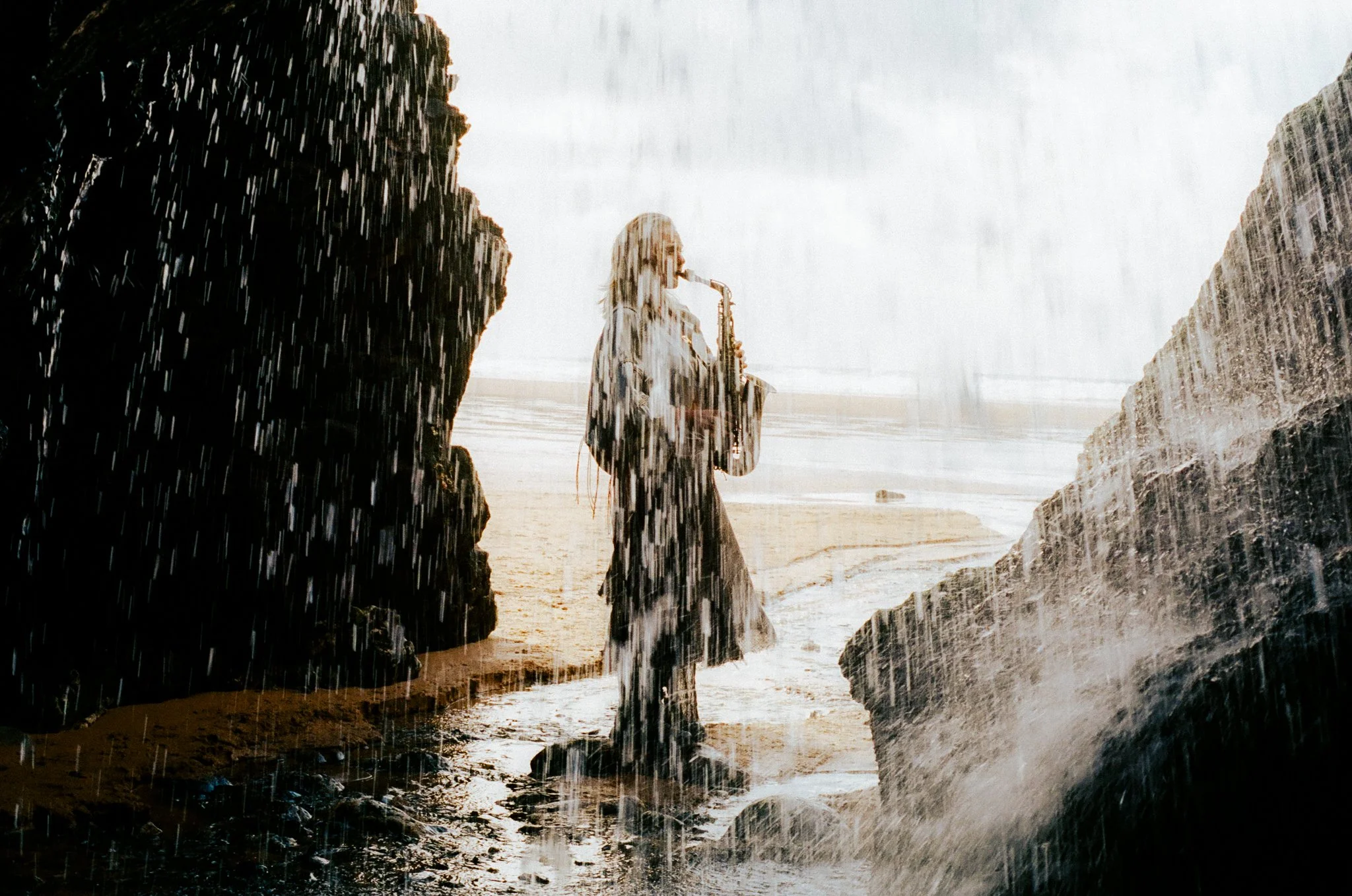
In late 2025, Laura Misch went to Cornwall and listened to the sounds of nature. Caves and quarries echoed as she played her saxophone. Water lapped against shore. She was also unfortunately beset by wind and rain.
“It was such rough weather at times,” she laughs. “At one point I was staying in a tepee, and it was raining through the roof. I was moving my gear along this damp floor, like, ‘why has it got this far?’”
Though it’s not always the easiest option, an experimental approach to music has always felt natural for the south London-born singer, saxophonist, producer, and composer. In 2019, she released a mini-album: Lonely City, created mostly alone on her laptop. Then, during the Covid-19 pandemic, she worked with documentary maker Greg Barnes, who filmed her playing saxophone in London green spaces, broadening her understanding of how music could be made.
In 2023, Misch released Sample the Sky, an album based partly on saxophone improvisations she did in green spaces in-and-around London. The project drew a lot of inspiration from the work of experimental composers like Annea Lockwood. Lithic (released 5th June) is the latest chapter of the story, a project grounded in ideas about sound, time, geology and ‘borderless’ underground space.
“When you look at mountain ranges, you’re like, ‘wow, these lines we’ve drawn are so irrelevant. In one thousand years, they won’t necessarily be there’,” says Misch.
“I think that turning to different frameworks of seeing the world, and exploring them in music, helps me feel less trapped in the world that we live in.”
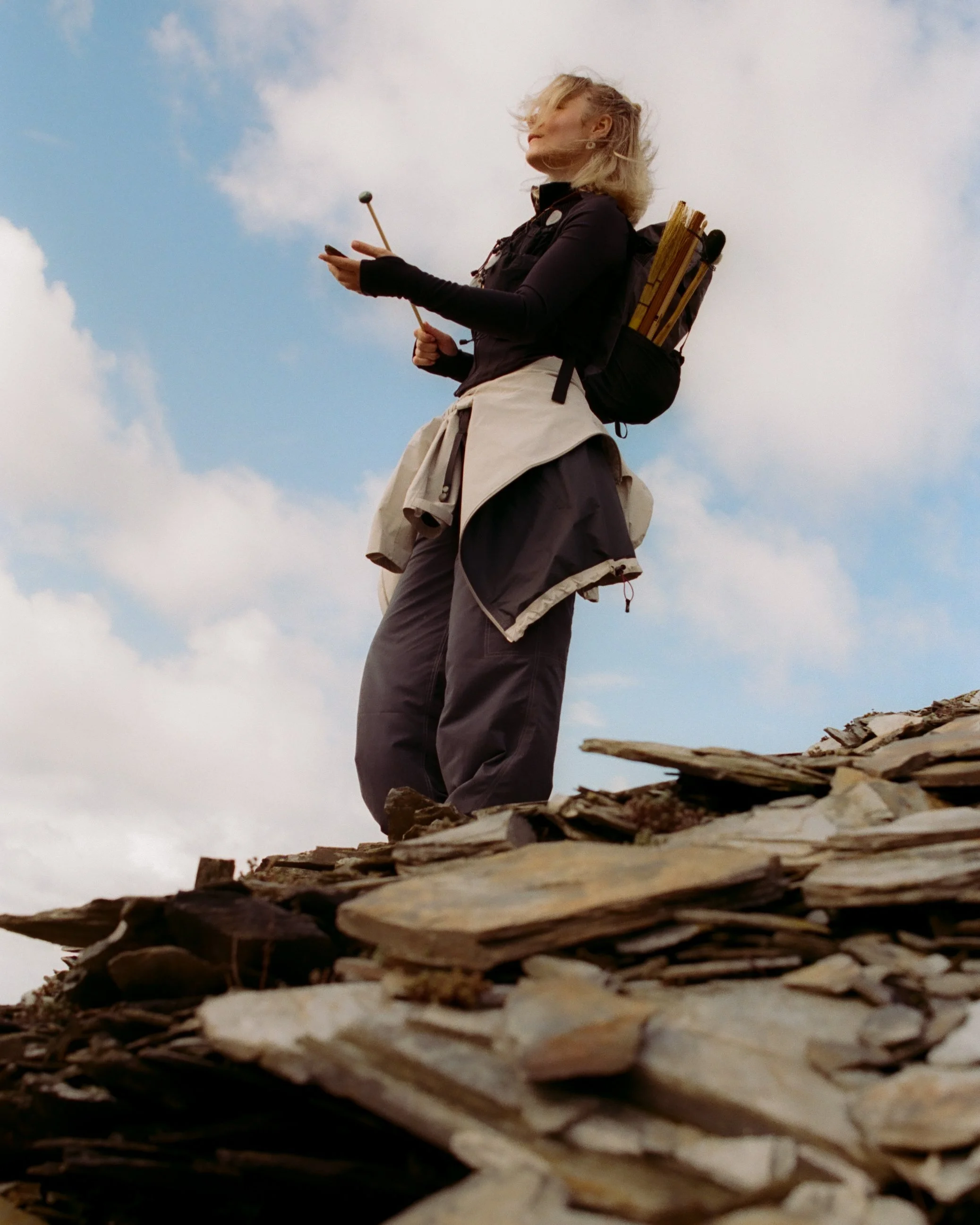
With a background of studying biomedical science, Misch is very well-read; books often inspire her to experiment as an artist. Lithic, for instance, draws from Eco-acoustic theory, and writers like David Haskell, and Ruth Allen.
“[Allen] writes a lot about the therapy and mentoring she does for people – she takes them on walks through the Peak District,” says Misch. “And she’ll use metaphors of going through life and becoming weathered by the elements and storms. She uses geology and the elements to symbolize wisdom and beauty. I found that really moving.”
In March 2025, she also played a set of shows in France, the Netherlands, Germany, Denmark, the UK and Ireland, during what she describes as a ‘slow tour’. She gave herself free time to improvise music in unusual places, like an abandoned railway in Paris, or Amsterdam canalboats. In-between shows, she regularly led ‘deep listening’ workshops. That too, she says, was an influence when, later that year, she started making Lithic in Cornwall.
“I think the biggest thing I learned from that was that there is a movement of people trying to find new ways of existing in relation to their environment,” says Misch.
“The energy, the conversations – so much of that is woven into the new album. For some people, the idea of silence is deeply peaceful and relaxing. And for others, the idea of sitting in silence is terrifying because their brains are hyperactive – they need distraction and noise. I learned about the variety of what we need as humans.”
Oftentimes, the ways that the slow tour inspired Lithic were even more direct than that. During a deep listening workshop in Berlin, a local artist introduced Misch to an Ancient Greek word: ‘Kairos’, a view of time more concerned with the ‘moment’ than typical chronological time: ‘Chronos’. For Misch, that term seemed relevant to her life as a musician. She went on to make it the title of the album’s second track.
“I’m just deeply fascinated by counter-industrial ways of viewing creation – especially in an industry where you’re so funnelled into, ‘this what success is. This is a good timeline, and this is a bad one’,” says Misch, adding, “But none of it is real. You could spend forty years working on one album, but it could be the most incredible piece of work and worth that time.”
While improvising in Cornwall, she used her surroundings to their full extent, digitally recreating the reverb of caves and quarries, recording percussion on slate and rocks, and composing the end section of ‘Kairos’ with saxophone textures improvised in a tree house.
“I’ll be honest, when I went to Cornwall I had very specific ideas of what I wanted to capture sonically,” Misch reflects. “But then we had torrential storms and wind, and I was forced to surrender and just listen a lot of the time. I think the reason that Lithic as an album sounds so different to Sample the Sky is because it was such an embodied process. I was really ‘feeling’ what the environment was like.”
While Lithic’s rhythms mostly emerged from the Cornish outdoors, its melodies coalesced at a coastal studio space on the Isle of Hydra, where Misch watched clouds pass peacefully over the nearby sea while playing saxophone.
With additional percussion recorded on an ancient musical ‘lithophone’, housed at museum in Keswick, the Lake District, lyrics were finished in a final, very cinematic location – a cottage in Dungeness Kent, often called ‘Britain’s only desert’. Lyrics, says Misch, are often what she finds most difficult, but she draws encouragement from a, perhaps not unexpected source – a digital ‘School of Song’ workshop, which legendary indie folk singer Adrianne Lenker facilitated in 2024.
“She had very specific ideas for noticing – lyricism as a way of documenting your experience. Those imperceptible moments. Making beauty or magic from the mundane,” says Misch. “It’s deeply moving, in a world of sensationalist headlines.”
With the Lithic release date fast approaching, Misch has plans to promote the album in spectacular ways, including a grand headline show at London’s Barbican on 3rd July, followed by a European tour in the autumn.
However, she’s still intending to make that tour a ‘slow tour’, interspersed with lots of workshops and ‘sound walks.’ Experimenting with the role that she can play as a musician, she tells me, is what is constantly bringing her happiness.
“It’s about finding nodes of connection, and that could be through music or conversation,” says Misch.
“I think I’m just interested in people and their environments. I’m a constant learner. I think more places when we can be in the room together and talk about things is really precious in times of digital existence.”
As an album, Lithic embodies that will to learn – it’s the sound of an artist who will never stop being curious about the world.
Stream the album here and grab tickets to the Barbican show here.
Photography By: Joya Berrow