
Black Honey On Soak And The Reality Of Life In A Modern Rock Band
Brighton-based Black Honey reflect on the making of Soak and shed light on the trials and tribulations of trying to succeed in an unforgiving industry.
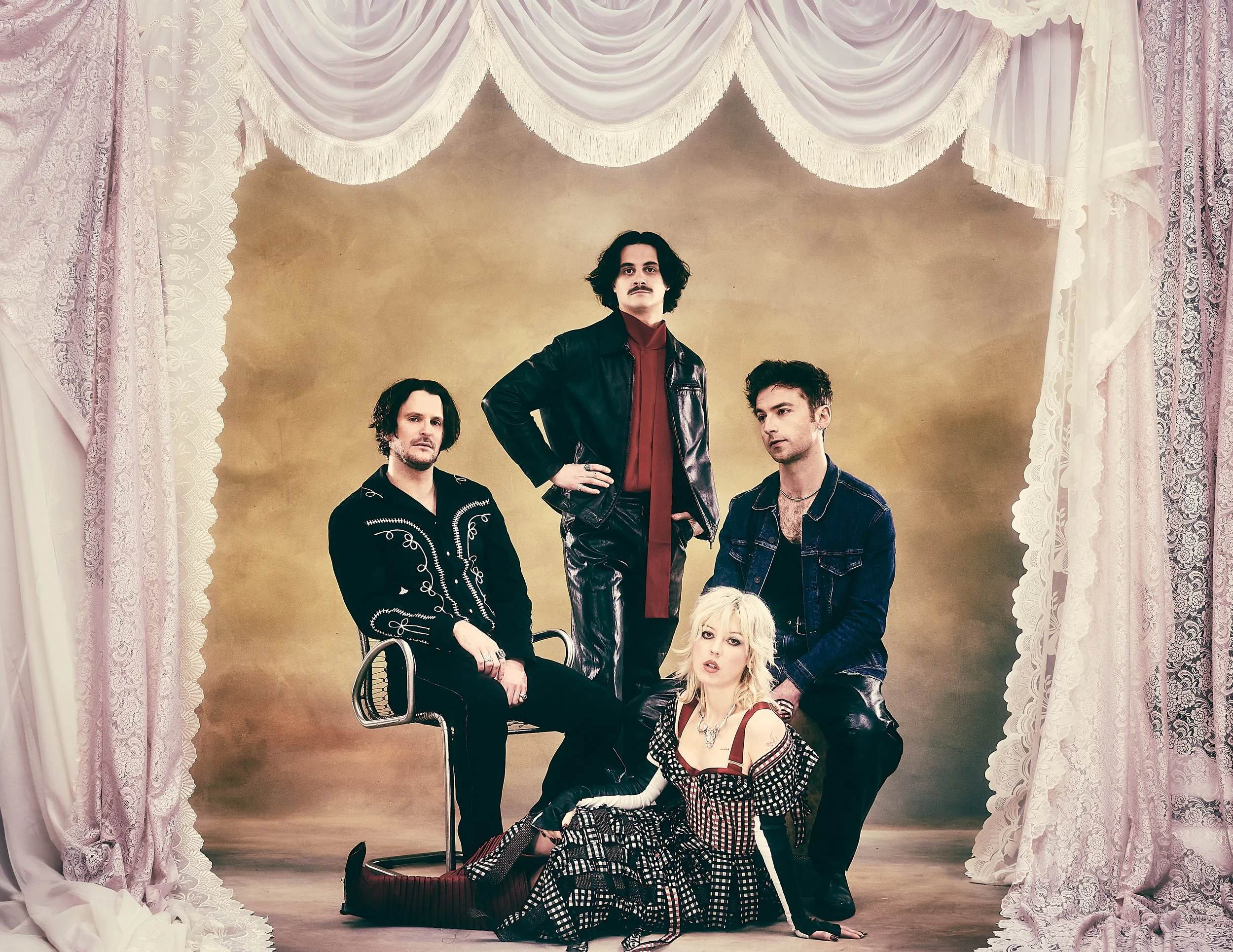
Rock n’ roll exists in a cultural paradox: presumed extinct by listeners, yet persistently claimed by artists as their primary influence. Even leaving aside the perennial offense of the least mysterious pop artists claiming they picked up a guitar after hearing The Velvet Underground & Nico, the performed callousness of bands that truly err towards rock n’ roll lands more as vague citation than embodiment (their inflatable pop-up boundaries guard with a similar fortitude as the thou-shalt-not-pass critter in Labyrinth). Irrespective of which camp an artist may land in, the underpinning point remains steadfast: there is a general tendency in modern bands to oversell their own capacity for risk-taking.
Brighton-based Black Honey have mastered the art of making hook-oriented music that doesn’t cause an interviewer to silently flinch when they mention The Velvet Underground. While their name has been well-circulated in the British independent music scene since the success of A Fistful of Peaches in 2024, the release of their fourth project Soak marked a defter step toward the band’s longstanding directive: a collage of sound that combines the risk and durability of rock with the toothache and emotional tangentiality of pop. Rooted in practicality rather than devotion to one particular genre, the elements of modernism are structurally integral; and when the foreground is scaffolded by guitar-led conventions, the disaffection is earned rather than forced. The most resilient troopers on Soak capture the best from both genre territories, such as lead single ‘Dead’ - hallmarked by Izzy’s “restrained Gwen Stefani” flair for casually tempestuous delivery and stable cores of pop rendered seasick in washed-out reverb. ‘Vampire in the Kitchen’ encapsulates their aversion to plasticine, opening with bone-dry plucks on the guitar before backwards-sliding into a melody both methodical and dehydrated enough to pass for a Courtney Love track at her craftier moments. Frequent mood shifts accounted for, Soak is ultimately a product of its environment: equal parts spiked with decor yet morbidly windswept, the record is the sonic embodiment of Brighton in the winter months.
“We are a rock band at the end of the day, but we don’t want to be cornered too heavily into generic middle-of-the-road rock. Soak actually isn’t as pop-y as what we’ve done before, but the study and craft of pop really is built into what we do - in a rock sort of way. We want pop that is honest - not cheap or plastic - that taps into a feeling with real depth”,
lead singer Izzy-Bee Phelps described of their vision for the record during a pre-show interview in Glasgow. “I don’t know if we’ve ever felt like we fully accomplished that. It’s similar to 90s pop - you just wouldn’t compare it to the modern stuff. Which is so weird for me to get my head around, because we’ve been so in the craft of rhymes and repeats and refrains for so long - meaning I think that pop sensibility is part of the way I make stuff. It’s just inherent to what I do.
My lyrical style is all about not having fear and really saying something as it is, and we’ll lay it out in a rather uncomfortable way rather than disguise it with a machismo lens or double-bluff, which I think a lot of traditional rock music tries for. Everything is designed in rock to not show what’s going on - it’s so metaphor-heavy. I say things in really literal ways, which sometimes comes out in a quite dyslexic route. Although sometimes my style is perceived by others as more poetic, which is very different from my perception.”
When asked whether public validation of their music either coaxes her toward more comfort with emotional exposure or increasing visibility threatens her ability to create honestly, she leaned towards the latter: “I would actually love to be cagier. Even right now, I feel like we’re overexposing everything. That’s the nature of the industry - every band has to be like, ‘Hey, here’s what we had for breakfast’. Because we’ve never -blown up - properly, I’m not sure exactly how more people listening to the music would affect me personally, but I think it would really cripple my ability to share. Even now, I don’t read reviews because I’m so sensitive; even if I don’t want it to, the feedback will stick. Sometimes I’ve heard someone’s take on our music, and I think, ‘What? That’s what you got out of it?’”
While the album marked several breakthroughs for Black Honey, the band continually returned to a shared point of pride - they felt Soak carried itself with more cohesion and meta-level clarity than previous projects, while still embracing their turbulence-prone appreciation for “collaging” sound. “I collage so much music - I’ve always been a collagist kind of writer - so we’re just trying to get that balance of not being middle-of-the-road and also not being disjointed. Sometimes you listen to an album and feel that there are different chapters to it, but this one we did in one batch, so it felt the most cohesive. Also, we did something new - when we worked through material in the earlier stages, we’d examine a song that we all thought was quite fun and ask, ‘If this song were an album, what production techniques would it have?’ It aligns our vision. Since the songs can be so different, we’re trying to be more monolithic with our approach.”
“Since the songs can be so different, we’re trying to be more monolithic with our approach” - Izzy
The palpable cohesiongrounding Soak even in its more ambitious momentscan be partially attributed to flash-recording the album in a two-week residential - a setup that forced them into a deeper kind of collaboration. “We’ve always wanted to do a residential. We lived at the ICP studio for two weeks, and we really did grow as a band doing that. When you watch rockumentaries as a kid, and you see how the record was made - that’s what it felt like. Some of what we were most proud of is just how we really synced up and collaborated in a way we haven’t together.”
“Yeah - for example, we did Vampire in the Kitchen in one take for each section. That’s Chris’s favorite”, interjected Tommy.
“No, Chris hates Vampire in the Kitchen”, Izzy amended (she can run a tight ship).
Finally, I hear from the source: “I don’t hate it, I just can’t listen to it twice. I’m such a perfectionist, and I normally overthink these things - and we just did it in one take. It took a lot for me to just accept the guitar work I did for what it is.”
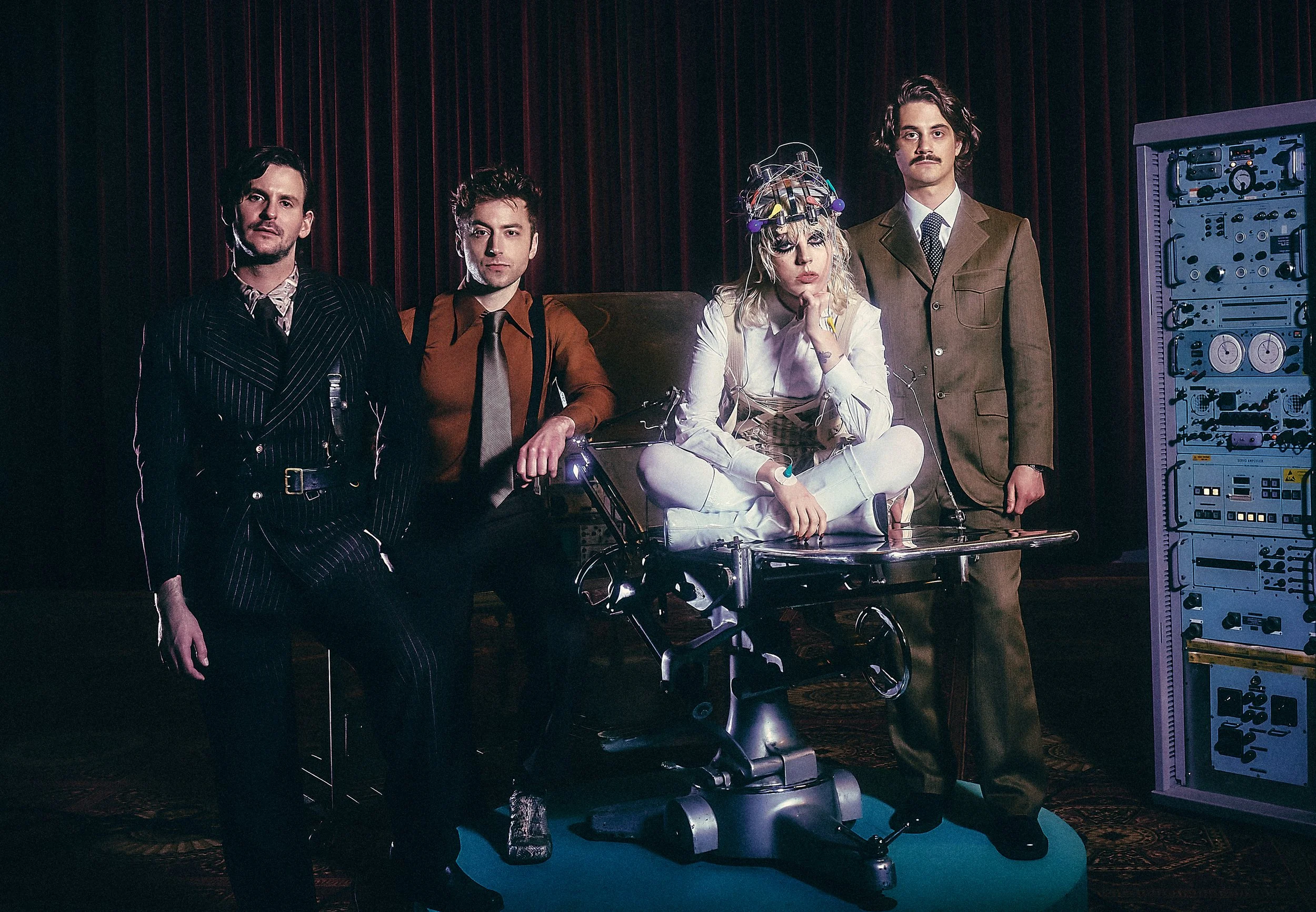
“Sometimes these things work themselves out and sometimes they don’t, and it doesn’t make logical sense”, Tommy continued. ‘But sometimes, as you record a track - we especially noticed this in Soak - it suddenly becomes your favorite when you record it, and becomes bigger in a sense. Not even bigger in a “RAWK” way, but in a more visceral way. There was a moment with recording ‘Slow Dance’ where the lights had gone down and everything, but the song was at its biggest and most palpable.
Izzy shared a similar fondness for the track: “I was so sick in ICP that it was all like a fever dream, but I remember really enjoying ‘Slow Dance’ and ‘Carroll Avenue’. We were all set up in the same room and played everything at the same time, which we’ve never done.”
“Besides beating Tommy at ping-pong, my proudest moment was probably also ‘Slow Dance’. It had been a bit unfinished, and then we sat down in the smaller of the two rooms that we were using. It came quite intuitively”, lead bassist Alex shared of his experience recording the track.
“Being in such a large space pushed me, though, Izzy remarked of the production experience.
“I was always quite intimidated by big rooms, because it’s hard for me to sing introspectively since the massive spaces don’t reflect my actual artistic style. We also had it a bit weird because we did the residency, and then the producer made four different records until the end of the year. For three months, we were just looking at the half-finished stuff. It was terrifying. I thought, ‘Oh God, this sounds horrible.’ It’s like if I pressed record in this room on my phone and hoped it sounds like a finished product - you actually have to produce the thing, especially when it’s more cinematic stylistically. But especially if you’ve made the demos in the exact way that you see a story playing out, it’s so horrifically stressful sitting with a half-cut thing that you’re not sure will pull through”.
That part of the production process is where you just need to have trust; elements get lost, and that feels like fragile gameplay. There is a historical thing with artists having demoitis, and sometimes when I write something with artists, they’ll print up the finished piece, and I’m like, ‘Wasn’t the demo better?’ It’s like staring at an open sandwich for three months.”
Chris, the band-appointed master tracklister, emphasized the need for a deep volume of work to select from: “The most important thing is writing way more than enough songs. So, say for a ten-track album, we’ll write 30-40 songs and then the cream just naturally rises to the top - you scatter the best around to fill the sweet spots, and then you write the album around it. In terms of track-listing, it’s all about the story and the way they move in and out of one another. Go on a journey, grab attention in the right places, and have a breath in the right places. Especially because you never know what the singles are going to be. Well, you might have a feeling. If you wrote Sex on Fire, you’d think, ‘Okay, this is it.’ But, for example, the guy who produced Mr. Brightside didn’t think it was good enough for radio.”
Tommy emphasized the need to detach from individual outcomes for the benefit of the finished record. “Depending on the concept you’re making, sometimes you have songs that might be your favorite, but you try to recreate them and they won’t do the right thing. And you just have to leave it, because doing it the wrong way is doing a great song a disservice. The biggest misconceptions about being at this phase are that you’re loaded - it’s not all private jets - and that by four albums in, you know what you’re doing. I thought it would be easier by now, but it’s actually harder. Every new album is so cyclic”.
Izzy vigorously agreed with the difficulty of being at the career point where the money hasn’t yet matched the ever-rising level of their artistic standards.
“From a business perspective, we are at the level that people are crucified by. We all work full-time; and then when we’re on the road, I still have to build all the merch downstairs and do press before even doing the show. The demands for mid-level bands are higher than ever. Honestly, I’m most proud of the fact that our friendship and team are still so rare. We haven’t flown through, but we have treaded water - and it feels like a really rare thing to have both a business and a friendship and a sort of sibling-dome, and have all of that work as a sort of function together.”
Izzy expounded upon her desired forward trajectory as budgets steadily rise: “My dream would be to work with Mark Ronson on a record; I’d also love to write something with a sort of Pet Sounds string arrangement, but it’s so eye-wateringly expensive”. Tommy and Chris emphasised a Joshua Tree-inspired creative escapade, clearly most energized by the newfound ability to maintain a high-ceilinged soundscape while delivering compelling individual songs. If Black Honey’s recent triumph over the main genres they inhabit are any indication, a Pet Sounds-scale string arrangement floating over the ever-shifting clouds of their sonic soundscape feels less like fantasy and more like delayed self-actualization - Soak is legitimized on the granular level by its rock n’ roll texture, yet most residual when tempered by pop pragmatism and backlit with the subtle patience of broad-stroked cinematographic vision.
Photography By: Frank Fieber