
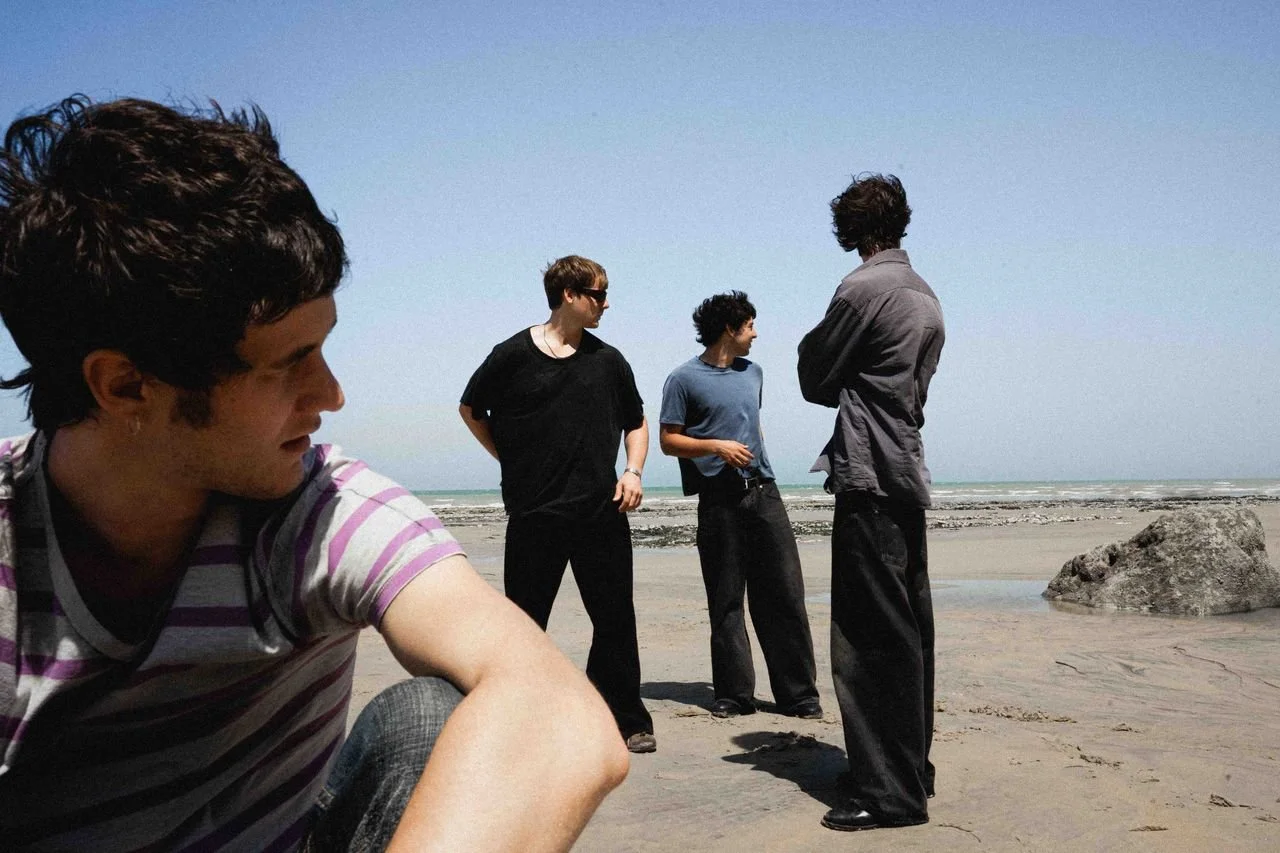
Noah Lermon, frontperson of Australia’s Radio Free Alice, shares his loathing of boring records and fear of making them; thankfully, a listen to ‘What’s in Between’ will confirm that the latter is irrational.
Noah Lermon sort of sings like he’s got a devil on one shoulder and an angel on the other, but they are happily married and far prefer the other to themselves. Even in the moments where he’s simply going on about relatively harmless things, Lermon is all too eager to spike his own tentatively decent mood with a curdling turn of phrase; but rather than leaning into the masturbatory sort of melancholia that banishes many an interchangeable Anglo-Saxon post-punk band straight into the brackish, he seems far more delighted by the sheer pleasure of having come up with the witticism in the first place. To reaffirm my opening analogy: the tension feels less like yet another ride on the peeling ‘man vs. himself’ carousel, and more like it’s coming from a guy who genuinely thinks everything has the potential to be really quite funny, in one cursed way or another.
But I shouldn’t be writing in the typical register that one does when introducing a band that just put out their debut record; Radio Free Alice, anomalous in more ways than one, already has quite a bit of authority surrounding their name despite only just being on their first full-lengther. “We’ve waited so long to put out this album; it has to be good, you know?” Lermon confides. “And if it’s not good, I feel like for the people that have followed this journey for so long, it would be like, ‘What the fuck was I waiting so long for?’” Stubborn fans of Radio Free Alice that have stuck around since their more tender stages will notice a couple of constants in ‘What’s In Between’. For one they’ve kept the vaguely agitated drums and generally punkish love of all that is downtuned and downstroked. Perhaps most importantly, though, their melodic base hasn’t lost its slick rhythmic glide; see, they’re not trying to force you to dance (and definitely don’t want you to embarrass yourself), but the floor is still very much going to slide about under you, unannounced, and you’re just going to have to deal with that.
What’s new, then? The punky guitar, once a bit fresh-wounded but still bright, has fully scabbed over; the team has expanded, namely with Peter Katis - who has worked for acts like Death Cab For Cutie, Interpol, and The National - providing the perfect invisible hand to blend their simultaneous combination of nunchucking rock with a broader panoramic purpose (largely attributed, but not limited to, their distinctly new-wavey approach to arrangement). Thankfully, they’re not trying to trick any of us out of noticing that they enjoy rearranging different, but very established, genres. Further, if any of us did, Lermon would be distinctly unimpressed. “We’re a band that wears our influences on our sleeves”, he shrugs. “You’d have to be particularly musically illiterate to get them wrong. For the first few years of our career we were just constantly going, ‘Is that too Strokes-y?’ We’ve had people sort of say that we’re influenced by, like, Australian surf rock, which is not true in the slightest.”
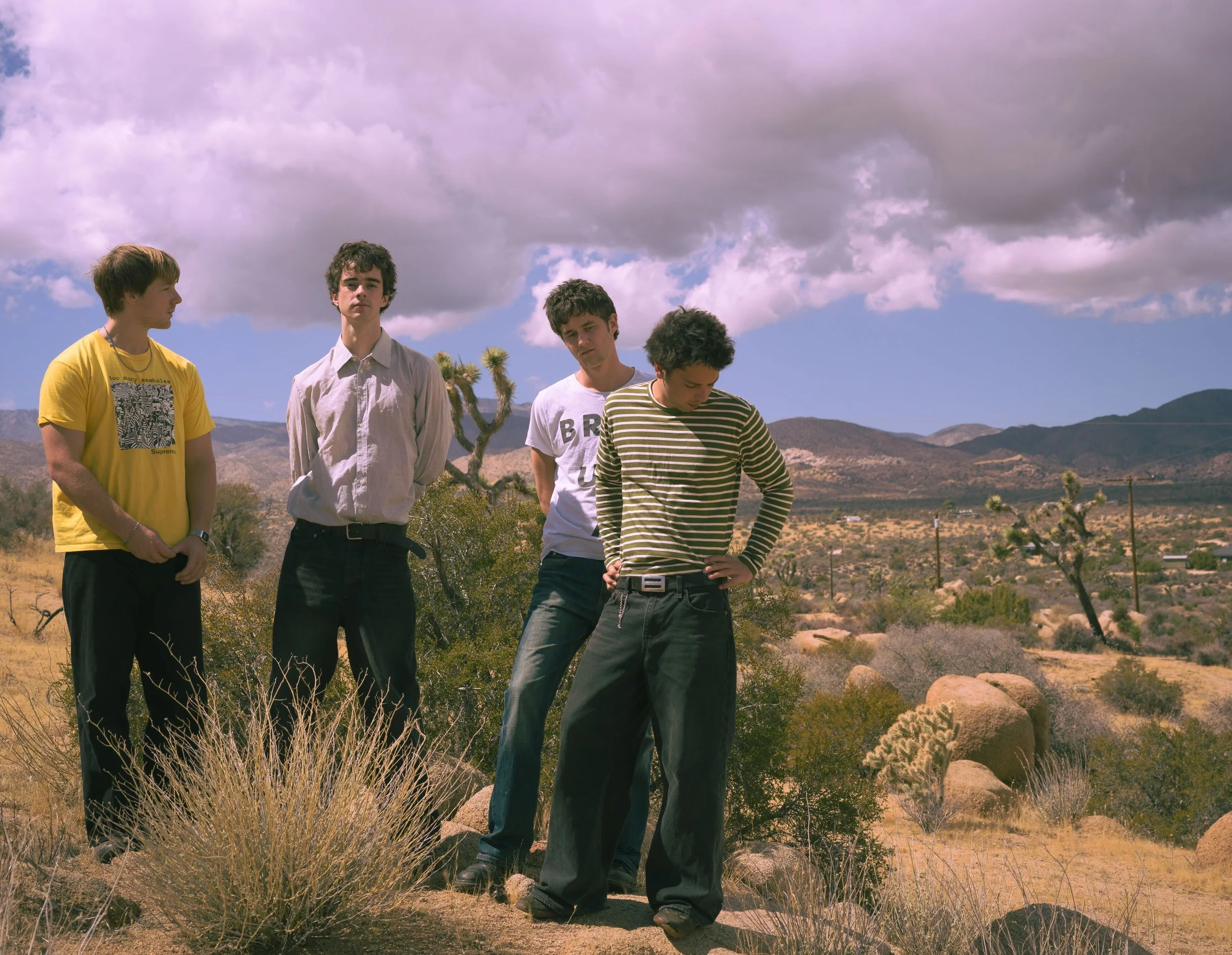
“We always did what we wanted to do, and it wasn’t what other people were doing. In Melbourne specifically, there was sort of an art music scene - we were kind of out of step with that as well”, he continues on finding their place in the Australian scene in their earlier days. “That’s not because we were doing something spectacularly original; it just wasn’t on brand for what was going on at the time. But then it turns out that if you or a few of your friends feel something that the rest of the culture doesn’t seemingly feel, there’s a sort of dormant group of people who want that too but just aren’t expressing it. You know, I got some advice really early on in our career - we supported an English band called Sorry, who I think is, like, the best band ever.
We just started, and we were really lucky to be opening for them, and I was talking to one of the guys in the band. They said that, in London, when they were coming up, there were a thousand bands that were trying to sound like the Windmill bands at the time - like Black Country, New Road, Black Midi, that sort of thing. Instead of trying to sound like that, they were just trying to capture the feeling that you had when you’re, like, eleven years old in the back of the car and a song comes on that you fucking love.”
The more you speak with him, the less surprising it becomes that this particular slice of advice found an audience in Lermon. “I hate boring albums, and I think far too many albums are really boring - and I think they’re largely boring because they’re repetitive”, he shares. “You kind of get to song six, and you realize it’s just twelve different versions of the same song. That was one thing that we wanted this album to not be. We were really conscious of it not being boring, to the point where we wanted to make something that felt eclectic and where each song sort of occupied its own space.”
“I hate boring albums, and I think far too many albums are really boring - and I think they’re largely boring because they’re repetitive”.
Aptly, Lermon’s aversion to stagnation extends beyond the music itself; life on the road, for all its professional dividends, also seems to offer the sort of creative stimulation that he finds impossible to manufacture at home. “People talk about boredom being good for creativity and being bored and, you know, I find that sort of quite a trendy thing to say - that being bored is good for being creative”, he shares. “I find it’s the worst. If I’m in a period of my life where I’m bored, or if I’m having a boring day and then I’ll go on and try to write a song, I know nothing will be able to come out. So I find I’ve got to be sort of enjoying life - well, not enjoying life, but I can’t feel stagnant. We write really well when we’re on tour. The only issue is we just don’t literally have enough opportunities to write - but when we do, it feels really inspired.
“I listened to the first EP we put out the other day recently, and I was struck by how kind of silly and goofy it was”, he reflects on their aversion to overly self-serious records - and self-serious ways of living that fail to make room for humor or, frankly, new shit to write songs about. “Particularly vocally. It was really goofy in a way that I’m generally not now - but I was like, ‘Wow, I kind of feel like I need to bring that back.’ I think I started taking it a bit more seriously, and I can’t sing like that anymore. There was a sort of punky immediacy to the early stuff that I found really fun. When I listen to our early stuff, I’m proud of it. I think it’s good because it’s just, like, really entertaining music. It’s engaging. I never want to lose that.”
Photo credit: Sasha Eisner and HANNAH SHINS