
Sharp Pins’ Kai Slater isn’t a throwback, he’s the future.
The Chicago songwriter on escaping algorithms, preserving the past, resisting AI and why the future of pop music lies in the imperfections.
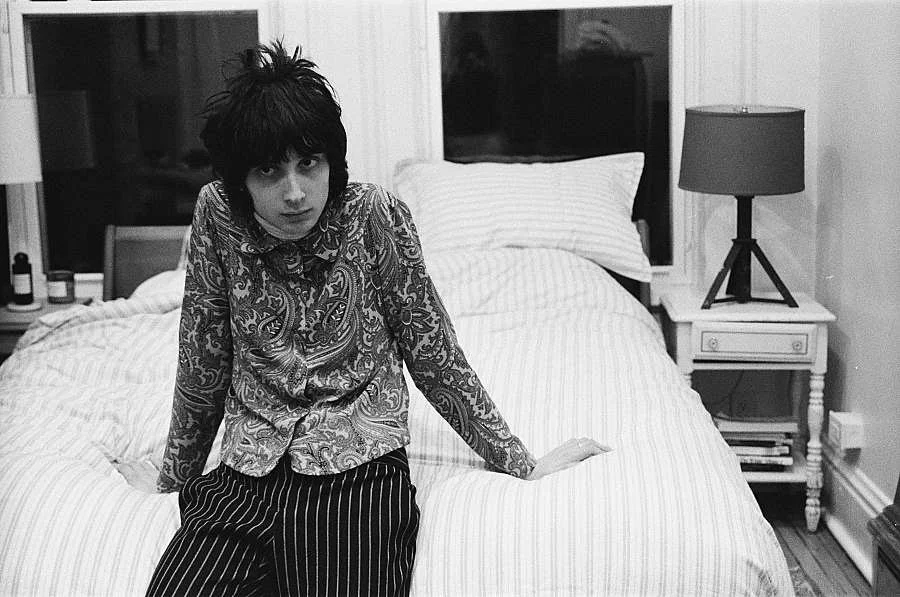
People love to talk about how much of a throwback Kai Slater is. I get it. It’s a fun contradiction to witness: there’s this 21-year-old from Chicago who handmakes zines and records these perfect pop songs on a tape machine and whose fashion orientation was permanently set by watching ‘Quadrophenia’ at the age of eleven. However, to see him as some sort of revivalist would be to completely misunderstand him. Nursing a pint over the road from The Deaf Institute before Sharp Pins’ stellar headline set, Slater is at his most compelling when he is looking forward.
“I’m not doing it because it’s a retro thing,” he says of his ‘Hallogallo’ zine.
“There’s a huge zine boom because you’re not censored and there’s no algorithm. If you’re having a conversation about labradors with your friend, you’re not going to get a zine about labradors that pops up in your inbox. You would with an advertisement on social media. Your zine is not listening to you, it’s a piece of paper in your hand. It’s the perfect vehicle for voicing the truth and saying what would be pushed down by big tech companies.”
Even the current wave of power pop bands, of which Sharp Pins has quickly become the standard-bearer, is something whose trajectory interests him far more than its origins. “There was a reaction to crazy bands like Black Midi where people went ‘oh, I’m just going to do bare bones pop stuff’ instead,” he says. “I think people naturally just missed being able to really sing and write melodies, but there’s still room to grow. We need more bands that have their own sound and aren’t just recognised as part of the power pop revival. It isn’t tugging at my heartstrings. I want more personality in it. I want more inventiveness in it. I want more bands trying to do something new within pop music.”
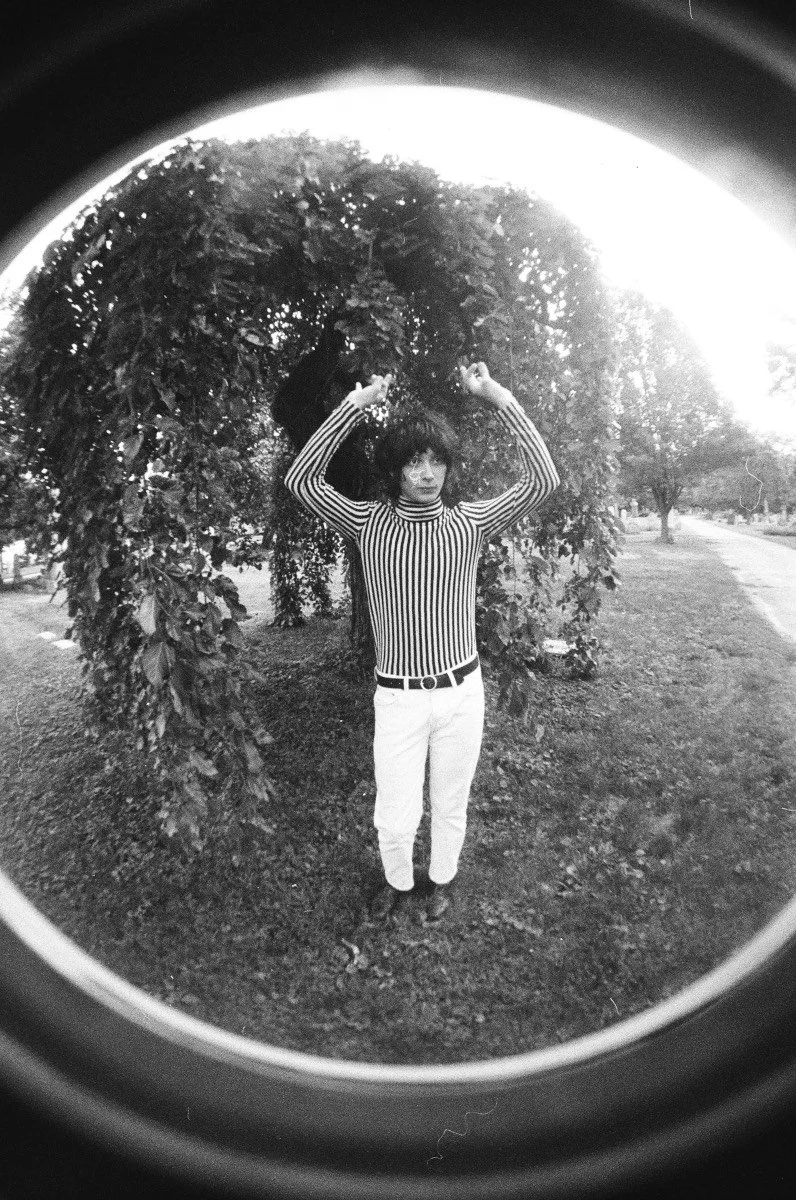
It is surely that deep-rooted pursuit of further creativity that has seen Slater release three LPs (across two projects) in eighteen months, with another on the way in September. Whilst setting himself pretty narrow parameters with Sharp Pins, he’s been able to evolve as a songwriter and a producer. 2026’s Balloon Balloon Balloon was a noted step up from the previous year’s impressive debut Radio DKK and plenty of thought has gone into how that lineage can keep going in the right direction. “I think it’s easy to get depressed or fatigued on tour,” he says.
“I’ve gotten into a groove of writing early in hotel rooms whenever I’m not too hungover. The desire to grow creatively often isn’t satisfied when you’re on the road, so I’ve been making an effort to constantly exercise that part of my brain.”
As a result of those early sessions, another collection of Sharp Pins songs is on its way and due to be announced soon. Before that we have Mod Mayday 23, a cover album of a live album which was something of an archival endeavour. The original Mod Mayday record was a formative influence on Slater, who rediscovered mod music “when (he) really needed it.” “When I first started Sharp Pins, I was trudging around New York after being dumped and I came across these old mod zines, which I read and really went down a rabbit hole with it. I guess a lot of people get it after they get really into punk rock. The mod revival of the 70s was right after punk, so that makes sense.” Between the two Sharp Pins records, he recorded a bunch of songs from that compilation, more to preserve them than reimagine them. “A lot of the originals weren’t properly recorded and the kids aren’t amazing at playing their instruments, they were probably drunk or on drugs, and I thought the songs were great and deserved more,” he explains.
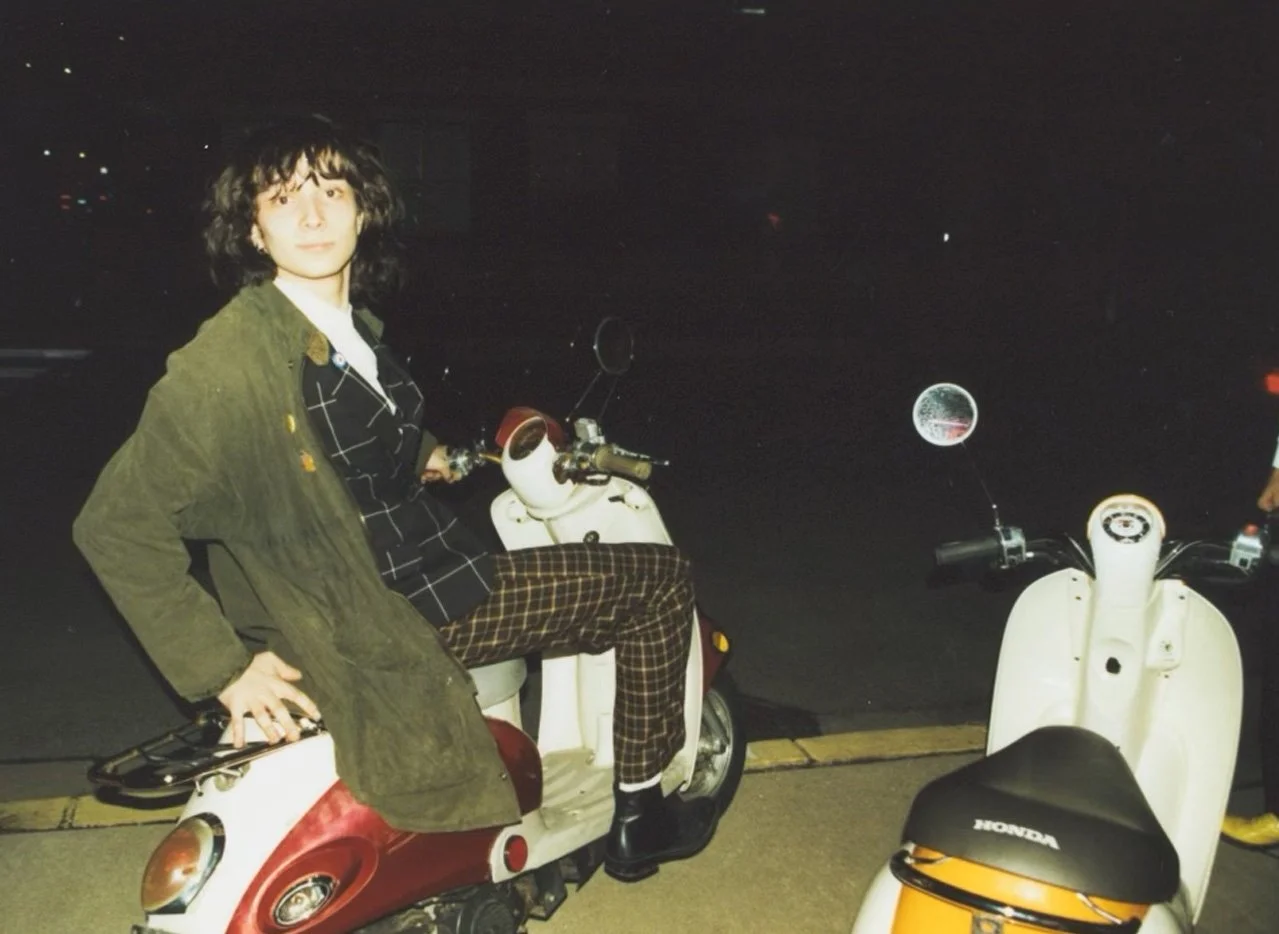
At the same time, there’s a certain charm in those imperfections which is only becoming more endearing as AI becomes increasingly prevalent across the music landscape. “I think part of the reason why the pop thing is so appealing is because the thing that makes a pop song great is not something you can calculate. It’s within the imperfections and the oddness of it, usually. It’s a really human art form, and pop is a really important reaction to the rise of AI,” he says. You can tell by the way he sits forward that this is clearly something he has thought about a lot, and understandably so. Sharp Pins is an incredibly human undertaking: its music influenced by zines and tapes found in thrift stores, recorded on a Tascam and promoted primarily by relentless touring. Whilst Slater has been constructing this world, the industry around him has been inevitably submitting to algorithms and AI. “It’s a fighting battle all of the time,” he admits. “But at least the AI thing gives us a clear enemy, you know? It makes art even more important. It gives you that drive.”
With one of the most productive young musicians around seemingly more fired up than ever, I ask if we’re likely to see any stylistic left turns. “I’ve definitely had phases where I thought ‘I’m going to write weirder stuff,’” he admits.
“I had my art rock phase where I would write super abrasive music, but I’ve always returned to just really wanting to make a really good and well-written song. That’s what I’ve always been the most obsessed with.”
That is perhaps the most endearing thing about Sharp Pins. There’s lots of really big ideas around the project and how it intersects with its musical lineage and the pitfalls of the modern industry, but none of that ever gets in the way of Slater’s ability to write brilliant pop songs.
Photography By: Grace Bader Conrad & Braeden Long