
The Song Kate Bush Called “The Best Thing I’ve Ever Written”
With ‘Breathing’, Bush turned the fear of nuclear annihilation into her own ‘little symphony’, told from the perspective of an unborn child.
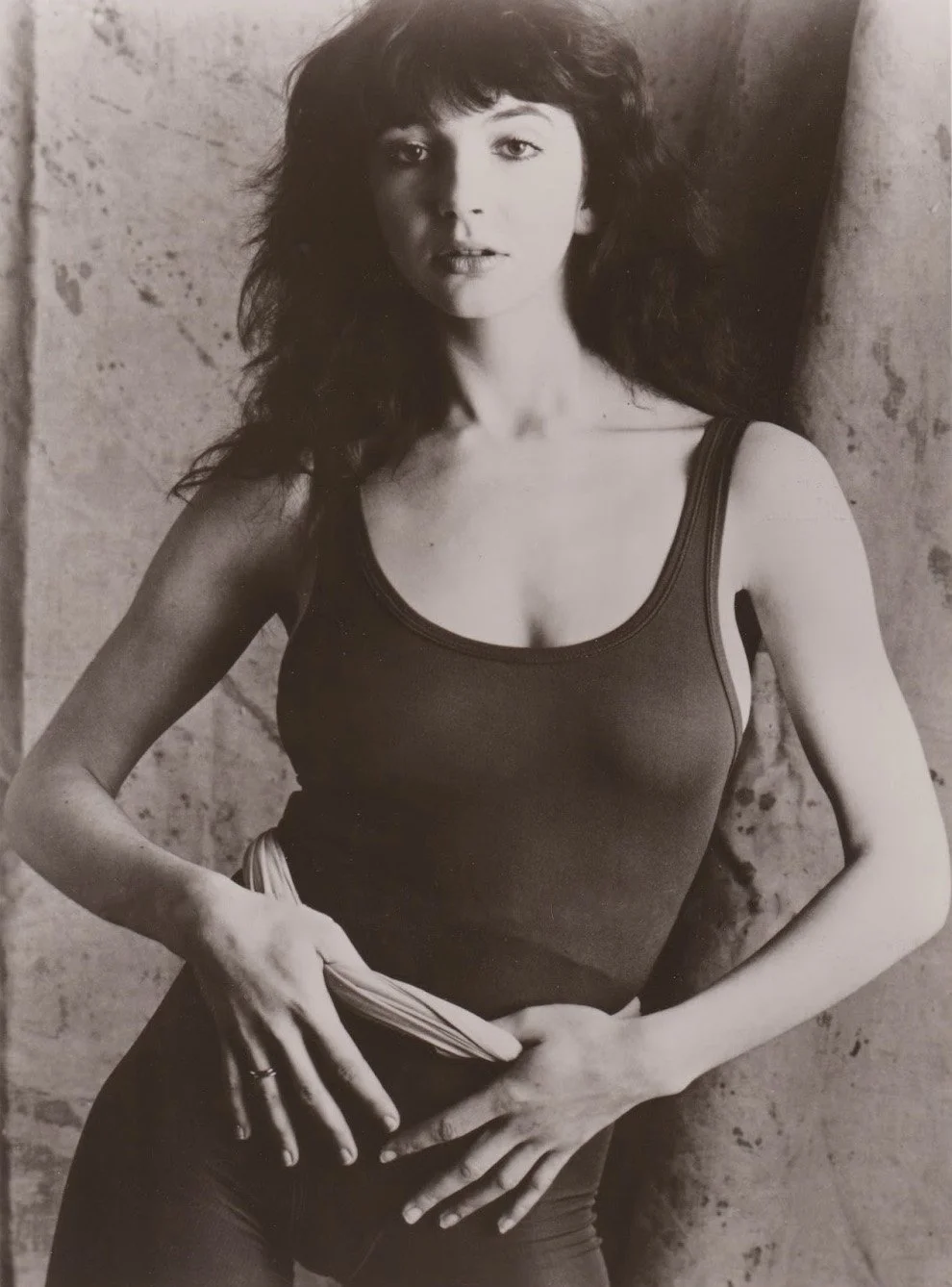
There are plenty of songs you could reasonably call Kate Bush’s best. ‘Wuthering Heights’ remains one of the strangest songs to ever reach number one in the UK, ‘Cloudbusting’ is near-perfect, and ‘Running Up That Hill’ has somehow become even bigger four decades after it was released. For me, though, ‘Breathing’ has always been up there. I first heard the song in my teenage years, and there’s something about it that has never really left me: the awesome bass that runs throughout it, the strange synths, that apocalyptic ending. Most of all, I love the chorus and the way the synth seems to mimic the song’s central image, moving in and out as Bush sings “in, out, in, out”. It’s beautiful and deeply strange, much like the album it closes.
As it turns out, Bush herself thought particularly highly of it too. When Never For Ever arrived in September 1980, she was still only 22 years old and, somehow, already releasing her third album. Her debut, The Kick Inside, had made her a star at 19, while its hastily recorded follow-up, Lionheart, arrived just nine months later. By album three, however, Bush was beginning to take considerably more control over where her music was going, and Never For Ever feels like the point where the possibilities of what a Kate Bush record could be suddenly became much wider.
To Bush, it effectively represented a reset. Speaking to Kris Needs for ZigZag in 1980, she admitted that her first two records already felt distant to her, saying they “really aren’t me anymore”. She described Never For Ever as “the first album on a new level”, while talking excitedly about experimenting with synthesisers, rhythm boxes, digital delay and whatever other new toys she could get her hands on. She was already looking beyond the sound that had made her famous, even suggesting she wanted the freedom to make funk, classical music or bossa nova if that was where her interests took her next.
Nowhere did that new ambition feel bigger than on the album’s closing track. ‘Breathing’ imagines nuclear devastation from the perspective of an unborn child, still inside its mother’s womb and terrified of entering the world outside. Bush had begun engaging with more explicitly political subjects on Never For Ever, particularly with ‘Army Dreamers’ and ‘Breathing’, but she was reluctant to think of them simply as political statements. For her, the subject had to reach her emotionally before she could write about it. Nuclear war only became something she could turn into music once the sheer horror of it properly hit her.
That emotional response is everywhere in ‘Breathing’. The song begins relatively restrained before growing into something enormous and genuinely frightening, with Bush’s voice becoming increasingly desperate as the instrumentation swells around her. The distinction between something beautiful and something horrifying becomes increasingly difficult to find. Even the chorus, arguably the most immediately gorgeous moment of the song, carries this suffocating quality beneath it, with those synthesisers seeming to breathe alongside her. By the ending, everything has expanded into something almost cinematic. It is apocalyptic in the best possible way.
When Needs told Bush that he considered ‘Breathing’ her best work yet, she agreed. “From my own viewpoint that’s the best thing I’ve ever written,” she told him, also describing the track as her “little symphony” and the best thing she had produced up to that point. Bush explained that every songwriter secretly harbours some desire to write their own symphony, and ‘Breathing’ was the closest she felt she had come to achieving that scale. More importantly, she believed the song had allowed her to properly communicate something real in a way that much of her earlier material had only been reaching towards.
What makes her explanation particularly interesting is that Bush didn’t think the song succeeded because everyone played it perfectly. In fact, almost the opposite. She remembered the session musicians initially playing their parts correctly but without the emotion she felt the song demanded. It was only once they began playing with genuine feeling that the backing track suddenly came alive, and listening to the results afterwards made Bush want to cry. For her, slight imperfections in tuning or performance mattered considerably less than capturing something real, particularly on a song whose entire existence depended upon communicating fear.
It explains a lot about why ‘Breathing’ still feels so powerful. There’s plenty happening musically, but none of it feels like complexity for complexity’s sake. The strange electronics, bass, vocals and increasingly overwhelming arrangement are all serving the same horrible image, while Bush’s instinct for putting beautiful music against disturbing subject matter prevents the song from becoming oppressively bleak. It’s an idea she discusses elsewhere in the same interview when talking about ‘Army Dreamers’: if something incredibly heavy is disguised inside lighter or more beautiful music, the realisation of what you’re listening to can hit considerably harder.
Bush was also nervous about how the subject of ‘Breathing’ would be received. Nuclear war was not some distant historical concept in 1980, and she worried that writing about it could be interpreted as commercially exploiting a very real fear. In reality, the song had come from her own sudden realisation of the scale of nuclear destruction and the arrogance involved in humanity potentially destroying a planet it had not created. She imagined the narrator as a kind of future spirit looking through its mother’s womb at the devastation outside, seeing what humanity had done and deciding it didn’t want to enter that world. The womb becomes almost like a cinema screen through which this unborn child watches the apocalypse unfold.
It is an extraordinarily dark idea for a pop song, but ‘Breathing’ is never weighed down by its concept. That’s part of what makes it so good. The chorus is gorgeous, the production is strange, the bass is ridiculous, and Bush manages to make something as enormous as nuclear annihilation feel frighteningly intimate. Then the whole thing gradually collapses towards an ending that sounds like the world might actually be ending with it. There are more immediately recognisable songs in her catalogue, and certainly songs that have enjoyed far greater lives outside their original albums, but there aren’t many that manage to contain quite this much within a little over five minutes.
Forty-six years later, Bush’s claim that ‘Breathing’ was the best thing she’d written becomes slightly harder to settle. There was an awful lot still to come. The Dreaming and Hounds of Love alone would make picking a single greatest Kate Bush song a fairly thankless task, and ‘Running Up That Hill’ found an extraordinary second life through Stranger Things, introducing her music to an entirely new generation. But was ‘Breathing’ the best thing she’d made by 1980? I think she might have been right. If anything, it remains strangely underrated compared with the handful of songs that have come to define her catalogue for a much wider audience.
I’m also slightly glad ‘Breathing’ escaped the same fate as ‘Running Up That Hill’. There’s something nice about it still feeling like one of those Kate Bush songs you have to stumble across yourself, hidden at the end of an album filled with similarly strange ideas. That’s how it happened for me: I found it as a teenager, and all these years later that chorus still sounds just as beautiful, strange and apocalyptic as it did then. Maybe calling it Kate Bush’s definitive best song is impossible, but as far as her first three albums go, I’m firmly with Kate on this one.