
Lia-Pappas Kemps - Winged Review
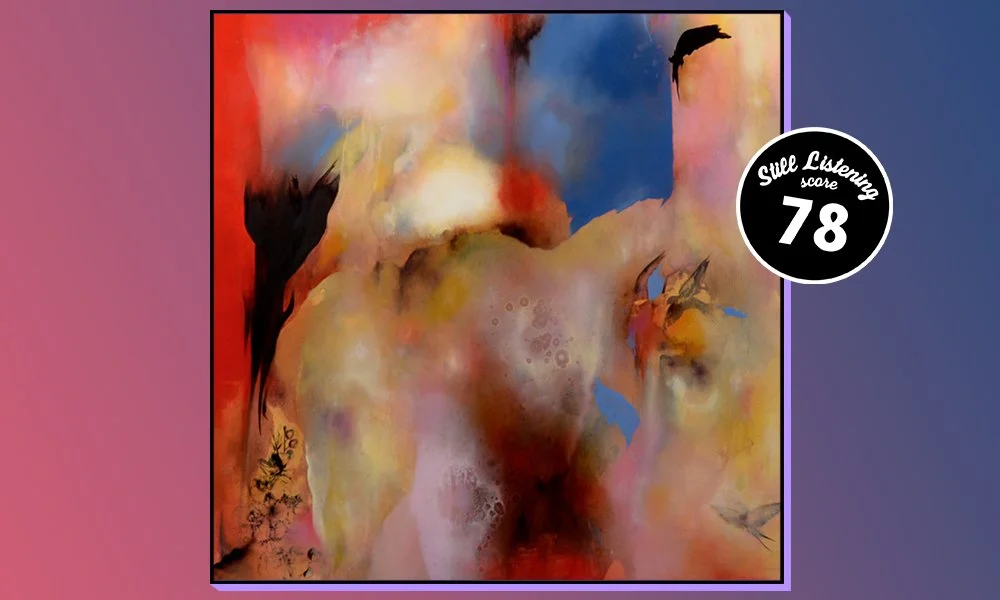
As rising standards for independent artists - and a backlash against polished softness - are reshaping indie’s next wave, Lia-Pappas Kemps has chosen to ‘swim’ rather than ‘sink’.
“Bring back bullying” is a sentiment that has been spread online quite a bit as of late (as though bullying ever left?) in response to the effects of Gen Z’s generally progressive and open-armed culture. The phrase immediately provokes a bit of a negative knee-jerk reaction, but, regrettably, may be worthy of innocent-until-proven-guilty investigation. For instance, the potential payoffs of its proliferation could be aptly analyzed via the arts. The “ukulele-wielding singer-songwriter” zeitgeist turning from guitar music staple to a target of ridicule within the music scene - even from those who lapped up the unoffensive style in 2020 - has resulted in independent young artists being held to a higher standard, yielding undeniably provocative results. With creators in the artery of Phoebe Bridgers and Gracie Abrams facing an increasingly cold shoulder, the message has been received: as a result of the market’s rising barriers to entry, exemplary breakout artists such as Saya Gray and Mei Semones have enjoyed airtime amongst highbrow music snobs and pop fanatics alike.
Primarily recognisable for her recurring role on the Netflix show ‘Anne With an E’, Lia-Pappas-Kemps has navigated the competitive yet largely thankless singer-songwriter circuit before pushing toward a more expansive mode of expression. With her first full-length record ‘Winged’ releasing March 13th, Lia has received high praise in local critic circles for her serrated wit and a willingness to push beyond singer-songwriter conventions: even if those ambitions leave visible growing pains across the record, ‘Winged’ is suggestive of a creator with a high ceiling of potential and a voracity for expansion from Lia’s slightly purebred stylistic roots.
Opening track ‘The Hunches’ makes for a surprisingly taut and bruised choice for the first track on a guitar-led record, quickly establishing its identity as slightly unorthodox. Hard-fought, brassy plucks on the guitar create some semblance of protection and juxtaposition against her wispy voice and surprisingly writerly style; she conveys with the sort of negotiable and cliffhung rhythm that gives one the feeling that she had to re-twist a poem until it finally tumbles off her mouth naturally (think Joni Mitchell in delivery style) rather than begin with a locked-down melody in mind. Similarly capricious ‘Two-Step’ deftly balances breakup storytelling with the inevitable rush of retroactive horniness without sounding pulled from a neon-purple high school diary. Combining the creep of balladry with a refusal to fall into melodrama, each push on a bundle of raw emotional nerves is met with a demurring reality check; it’s this clear aversion to stickiness that sets her apart from most young narrative-forward artists.
By the midpoint, the record reveals a surprising rhythmic range for a singer-songwriter project. ‘Reservations’ leverages sandy kick drums to give a sense of grounded propulsion whilst maintaining a certain sunbeaten garage-rock feel, whilst lead single ‘Towers’ - described by Lia as “the most straightforward on the record” - is deceptively complicated: despite immediately landing as an expected indie-rock track, it has the sort of underlying sonic variety that causes it to become validated rather than dilapidated with replay: its resonance clicks even better when the listener is in a slightly over-alert state, causing the whirring mechanical details at the edge of the soundscape to feel even more enlivened than the center.
The sheerness of the second half invites closest parallels to the pensive, sonically auroral spillover emblematic of Radiohead’s ‘In Rainbows.’ ‘Eight Chambers’ tumbles with a scheming ‘Weird Fishes/Arpeggio’ structure, interplaying oscillating drums with searching, watery strings. Poising a continually-tightening rhythmic structure against an instrumental waterfall before submitting itself to a cacophony of chopped and rescrambled drums stabilised against a vertebrae guitar line, ‘Wound Up and Calling’ is similarly reminiscent of tension-diffusion techniques mastered in Radiohead’s ‘Jigsaw Falling Into Place’.
The closing tracks pivot from nuclearised rock frisson to stew in their more introverted instincts. Liquidated ‘Eight Chambers’ captures a mosquitoes-sketching-over-water feeling of fine-lined performance, pushing the more languid underlying waves of sound around; similarly acoustic-forward ‘Orchid’ sounds reminiscent of grunge staple ‘Nutshell’ in its divey, unscrupulous metallic guitar and strung-along vocalics, whereas the penultimate ‘Moths’ and succeeding ‘How do I get to you?’ return to her more modernised-Laurel-Canyon instincts, bowing out on an uncharacteristically wickered and flickering guitar tone.
At the aggregate level, the record may sound a bit too separated into a three-act structure; while, on a track-by-track basis, its references can feel somewhat borrowed. Repeated as these parallels may be, they are not a result of Lia trying to pull a quick one on her audience but rather the signature of a young, earnest creative eager to dirty their hands. As David Bowie expressed, one must ‘steal like an artist’ to create meaningful contributions to a canon of work; rather than reaching into the ether for an entirely unheralded sound, ‘originality’ breaks through when an artist’s preexisting set of references is diverse enough to amalgamate into an entirely refurbished result.
While Lia is admittedly in the early stages of this metamorphosis, she is clearly situated within a well-documented lineage of powerhouse artists who succeeded due to their similar temperament. Amongst critics, her riding on the shoulders of giants will at least intrigue; for casual listeners, her clear hunger for craft will not fully land at worst but still inspire - and at best, will accomplish both. Irrespective of whether or not ‘Winged’ will fully click for any one given listener, she should be stored in the peripheries of culture vultures and casual listeners’ vision alike: Lia’s prioritisation of forward motion over immediate cuteness is sure to be paid back in compound interest.